As measles resurges across the United States, new surveillance data raise concerns about what happens when the virus strikes during pregnancy and reaches the developing baby.
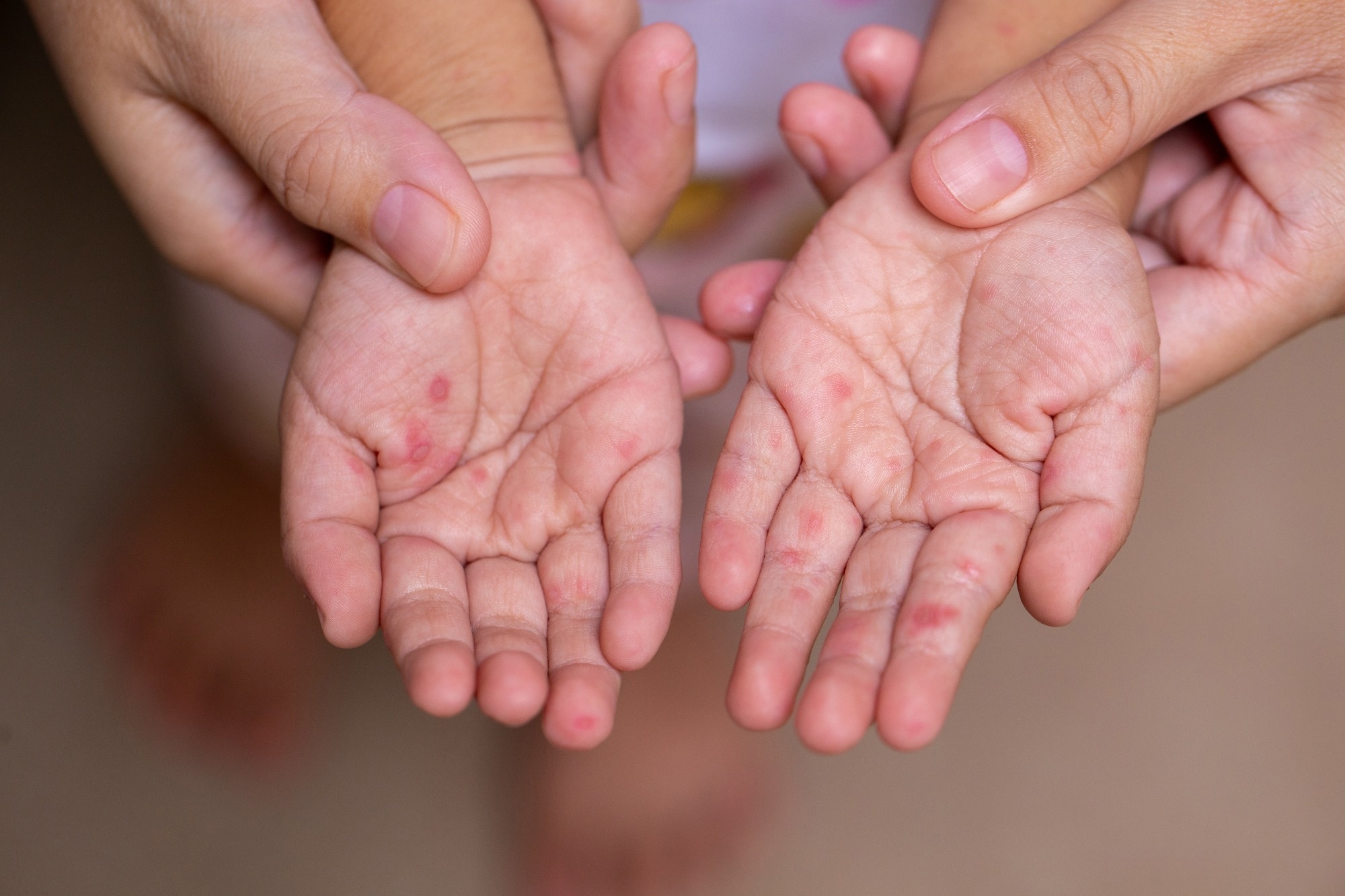
Study: Outcomes among Pregnant Women with Measles and Their Infants in the United States - Preliminary Analysis, 2025–2026. Image Credit: Anucha Naisuntorn / Shutterstock
In a preliminary public health surveillance report published in the journal NEJM Evidence, researchers examined outcomes among pregnant individuals infected with measles virus and their infants in the United States (US). The analysis documented 112 maternal infections and 13 cases of congenital measles, with complications including maternal pneumonia and preterm delivery.
The research was conducted by scientists from the US Centers for Disease Control and Prevention (CDC), primarily its divisions of Birth Defects and Infant Disorders and Viral Diseases, in collaboration with the CDC Foundation and the US Public Health Service Commissioned Corps.
The US has recorded large measles outbreaks in 2025–26, including the first documented measles cases among pregnant individuals since 2019. Measles during pregnancy can lead to severe illness and adverse outcomes, including preterm delivery. The measles-mumps-rubella (MMR) vaccine is a live vaccine and is not recommended during pregnancy. Protection in this population relies on MMR vaccination before pregnancy and high community vaccination coverage.
The Centers for Disease Control and Prevention (CDC) recommends that pregnant individuals exposed to measles virus who lack documented MMR vaccination or other evidence of immunity receive intravenous immunoglobulin as post-exposure prophylaxis (PEP). The virus is not known to cause congenital malformations. Transmission from mother to fetus could result in congenital measles and other neonatal complications. Congenital measles can lead to severe neurological complications, such as subacute sclerosing panencephalitis. The report did not document any cases of this condition.
Evidence on long-term outcomes following measles exposure in the womb remains limited, particularly when maternal infection occurs early in pregnancy.
Maternal infections and neonatal complications
Between January 1, 2025, and September 28, 2026, 16 US jurisdictions reported 112 confirmed measles cases among pregnant individuals to the CDC. Of these, 96% were identified as part of large outbreaks involving at least 50 cases. Public health practitioners collected data on pregnancy and neonatal outcomes, timing of infection, and infection-related complications.
What happened to pregnant women and newborns with measles?
| Outcome |
Cases |
Share |
| Pregnant women (112 cases) |
| Unvaccinated or vaccination status unknown |
110 |
98%
|
| Pregnancy outcome unknown |
56 |
50%
|
| Hospitalized for non-labor causes |
26 |
23%
|
| Pneumonia |
11 |
10%
|
| Respiratory failure |
2 |
2%
|
| ICU admission |
1 |
1%
|
| Newborns delivered within 14 days of maternal rash onset (19 live births) |
| Congenital measles (of 16 tested) |
13 |
81%
|
| NICU admission |
8 |
42%
|
| Preterm birth |
8 |
42%
|
| Birth before 34 weeks |
6 |
32%
|
| Received immunoglobulin |
14 |
74%
|
Note: Percentages use 112 pregnant women or 19 live-born infants as denominators, except congenital measles, which uses 16 tested infants. Six infants had no reported gestational age at birth. Outcomes can overlap. Interpretation: These preliminary surveillance data contain missing outcomes and lack a comparison group. Percentages are not population-level risk estimates. Source: Lewis et al., NEJM Evidence (2026). DOI: 10.1056/EVIDpha2600416
The team defined congenital measles as the development of a febrile rash or a positive reverse transcription polymerase chain reaction (RT-PCR) test result within 10 days of birth in an infant born to an individual with confirmed measles. No national surveillance definition for congenital measles currently exists.
Nearly all pregnant individuals with measles (98%) were either unvaccinated before pregnancy or had unknown vaccination status. Only one individual had received two documented vaccine doses, while another had received only one.
None of the patients had documented receipt of immunoglobulin as PEP. Regarding measles-related complications, 26 individuals were hospitalized for causes unrelated to labor, 11 had pneumonia, one was admitted to the intensive care unit (ICU), and two had respiratory failure.
Pregnancy outcomes were available for 37 individuals and unknown for 56, while the remaining 19 were presumed to have ongoing pregnancies.
Twenty-one pregnancy outcomes, including 19 live births, one stillbirth, and one spontaneous abortion, occurred within 14 days of the onset of maternal rash. Among these 19 live births, eight newborns were admitted to the neonatal intensive care unit (NICU), and eight were preterm, including six born before 34 weeks of gestation. Gestational age at birth was unavailable for six infants. Reasons for NICU admission were not reported.
Nine additional live births occurred more than 14 days after maternal rash onset, while the timing of seven other pregnancy outcomes relative to maternal infection could not be determined.
Among the 19 infants born shortly after maternal rash onset, 16 underwent RT-PCR testing, with 14 returning positive results. Thirteen met the report's definition of congenital measles after testing positive within 10 days of birth. The timing of one positive test result was unknown. Six infants who tested positive developed symptoms, including one with clinical signs compatible with meningoencephalitis.
Immunoglobulin administration at birth is recommended for newborns exposed to measles in the womb to reduce complications. Fourteen of the 19 infants received immunoglobulin, and the administration status of four was unknown.
Protecting pregnant individuals and newborns
Recent US measles outbreaks illustrate the vulnerability of pregnant individuals and newborns to infection, particularly in communities with low vaccination coverage.
The preliminary nature of the analysis, incomplete pregnancy outcome data, and lack of a comparison group limit the ability to quantify measles-related risks during pregnancy. Data collection remains ongoing.
Clinicians and healthcare systems must remain prepared to provide care to pregnant individuals and their infants with measles, especially in undervaccinated communities. The authors call for linked maternal-infant longitudinal surveillance to better understand the impact of measles in pregnancy and for improved community-level MMR vaccine access and uptake to prevent outbreaks.
Journal reference:
- Lewis, E. L., Chang, D., Wiley, N., et al. (2026). Outcomes among Pregnant Women with Measles and Their Infants in the United States: Preliminary Analysis, 2025–2026. NEJM Evidence. DOI: 10.1056/EVIDpha2600416, https://evidence.nejm.org/doi/10.1056/EVIDpha2600416