What separates teenagers who occasionally reach for an energy drink from those who consume them almost every day? A study of nearly 4,900 adolescents examines how their drinking habits relate to sleep, substance use, physical activity, and time spent on screens.
Study: Energy drink consumption and associated lifestyle factors among German adolescents: findings from the EDKAR-study. Image Credit: Yarrrrrbright / Shutterstock
In a recent study published in the European Journal of Nutrition, researchers characterized energy drink (ED) intake and related lifestyle behaviors in adolescents aged 15 to 18 years attending schools in Berlin, Germany.
The research was conducted by scientists from the German Federal Institute for Risk Assessment, Charité–Universitätsmedizin Berlin, the German Center for Cardiovascular Research, and the German Heart Center of Charité in Berlin, Germany.
EDs are caffeinated beverages typically marketed as products that increase energy levels, mental alertness, and cognitive or physical performance. EDs have become substantially popular in recent years and are widely consumed by adolescents and young adults, raising significant concerns about their safety. Previous research also suggests that ED consumption is associated with harmful lifestyle behaviors, including cannabis, alcohol, and tobacco use.
About the study
The researchers examined ED consumption among adolescents attending schools in Berlin. They used data from the cross-sectional study on chronic high consumption of EDs and cardiovascular risk (EDKAR) involving adolescents aged 15–18 years in Berlin, Germany. A comprehensive questionnaire was used to collect information on sociodemographics, consumption of EDs and other caffeinated drinks, leisure activities, health-related behaviors, and media use.
Participants were categorized into ED consumers and non-consumers. ED consumers were further stratified into five groups. Occasional consumers drank EDs one to three times a month, moderate consumers one to three times a week, and regular consumers at least four times a week for less than a year. Chronic low consumers consumed EDs at least four times a week for at least one year and remained within the daily caffeine threshold (3 mg/kg body weight) from EDs alone.
Chronic high consumers were those consuming EDs at least four times a week for at least one year and exceeding the daily caffeine threshold through ED consumption alone. Non-consumers were sub-stratified into former consumers (who did not consume EDs in the past year), once-tried non-consumers (who consumed EDs once in their lifetime), and never consumers. Consumption of other caffeinated beverages, including tea, coffee, and cola, was also assessed.
Sociodemographic variables included age, gender, country of birth, school type, body weight, and height. The following lifestyle behaviors were evaluated: cannabis use, alcohol intake, smoking status, and sleep behaviors. Leisure activities assessed were physical activity, gaming, and video calls or meetings with friends and others. The questionnaire also assessed social network and messenger use.
Findings
The study included 4,893 adolescents, of whom 53.8% were male, with an average age of 16.2 years. About 47% of participants attended secondary schools, 30% attended grammar schools, and 23% attended vocational school centers. Further, 26% had used cannabis, 20% reported smoking, and 67% had consumed alcohol. Around 66% of participants were ED consumers who had consumed EDs within the previous year, and 34% were ED non-consumers.
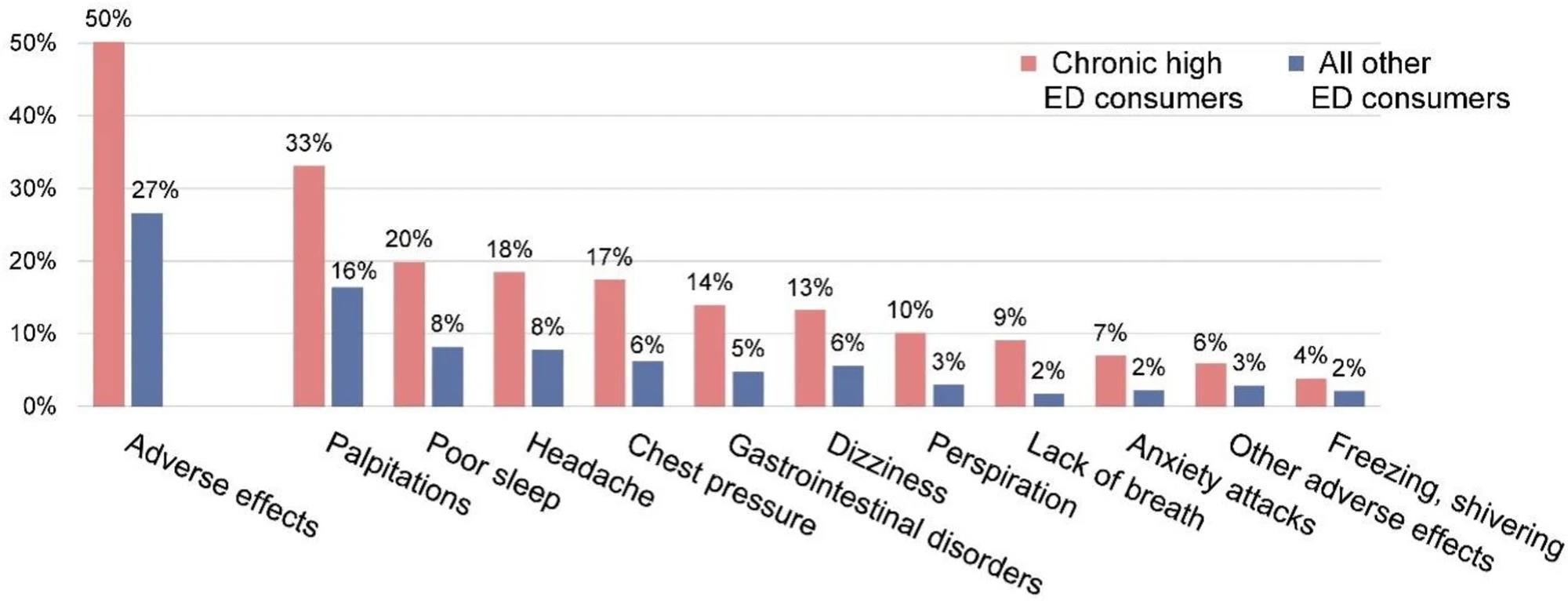
Adverse effects experienced after ED consumption among chronic high ED consumers (n = 287), compared with all other ED consumers (n = 2921). All other ED consumers include the consumption groups occasional, moderate, regular, and chronic low ED consumers. Multiple answers were allowed for the question on adverse effects
Overall, 35% of participants were occasional consumers, 17.9% moderate, and 1.6% regular. Meanwhile, 5.2% and 5.9% of participants were chronic low and chronic high consumers, respectively. Among ED consumers, the estimated median daily intake was 82.9 mL, equivalent to 26.5 mg of caffeine. Chronic high consumers had substantially greater exposure, with median caffeine intake reaching 262 mg/day from EDs alone and 428 mg/day from all caffeinated beverages. Caffeine intake from other beverages also increased with higher ED intake.
Among chronic high, regular, and moderate consumers, 44.9%, 17.5%, and 14.2%, respectively, reported consuming more than one liter of EDs on a single day. The preference for sugar-sweetened beverages was the highest among chronic consumers. Mixing EDs with alcohol was the most frequent among chronic high consumers. Overall, 28.7% of consumers reported experiencing symptoms after ED intake, such as poor sleep, palpitations, chest pressure, and headaches. This rose to 50.2% among chronic high consumers, compared with 23.2% among occasional consumers.
Non-consumers had the lowest median body mass index (20.8 kg/m²) and the lowest proportions of individuals with obesity or overweight. Moderate and chronic low consumers had the highest prevalence of obesity. Never exercising was most prevalent among chronic consumers. Higher ED consumption was also associated with more frequent smoking, cannabis use, and alcohol consumption. Over 70% of ED consumers reported lifetime alcohol intake compared to 54.5% of non-consumers. Chronic high consumers also reported particularly frequent alcohol consumption during the previous year.
The proportion of individuals with shorter weekday sleep durations (5–6 h or < 5 h) increased with ED intake. Chronic high consumers had the highest prevalence of very short sleep (< 5 h). Some adolescents may consume EDs to compensate for insufficient sleep, although the study could not determine the direction of this relationship. Further, social interactions and media use increased with higher ED intake. Nearly 73% of chronic high consumers reported more than eight hours of daily screen time, compared with 36% of non-consumers. Consumers were also less likely than non-consumers to take part in musical activities or read.
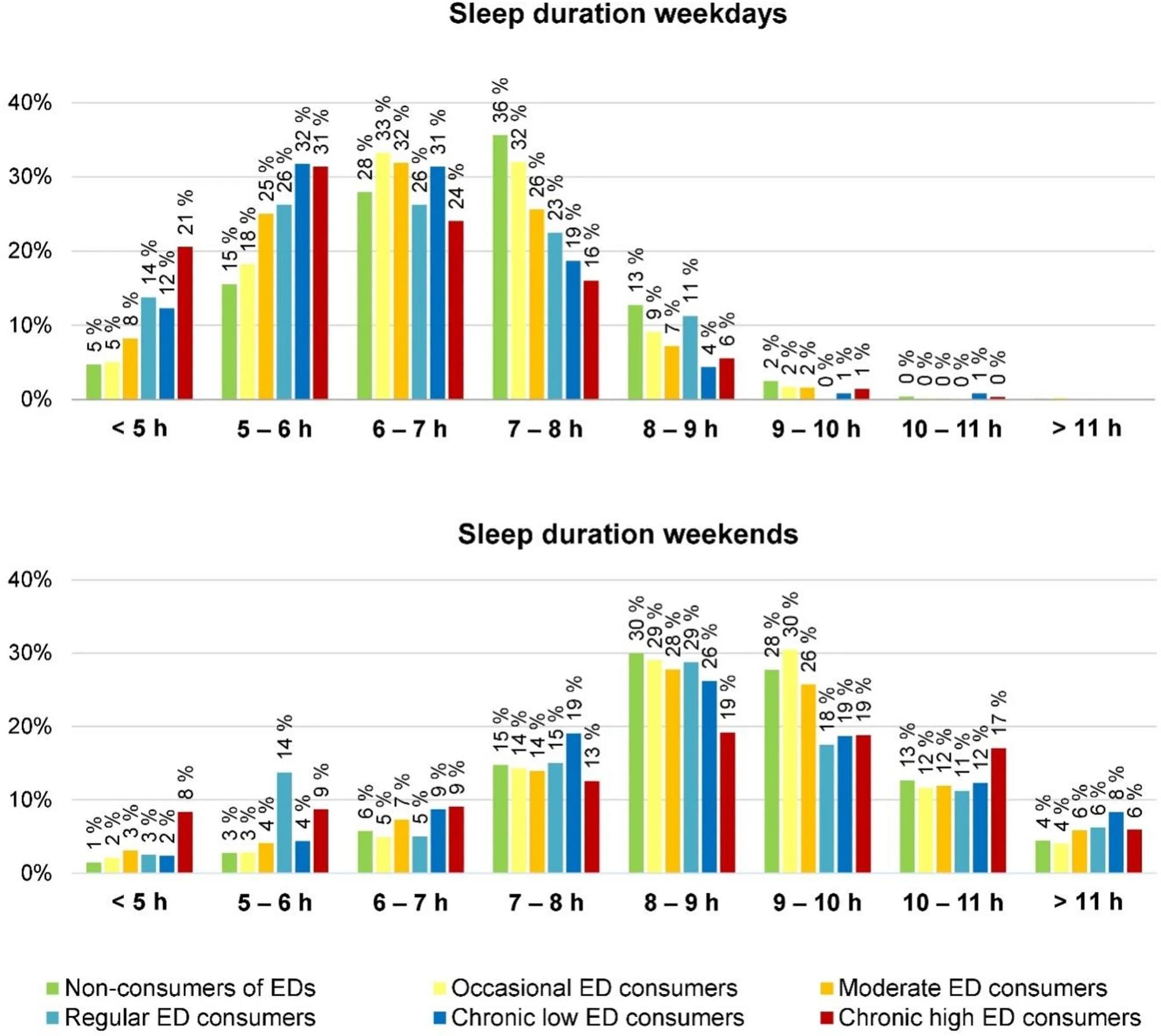
Distribution of ED consumption groups across sleep duration categories on weekdays and weekends.
Conclusions
The findings indicate a high prevalence of ED intake among adolescents surveyed in Berlin, alongside increased caffeine intake, alcohol intake, smoking, media use, and short sleep durations. ED intake and harmful lifestyle behaviors frequently co-occurred, especially among chronic high consumers, supporting the need for targeted preventive strategies. Educational programs are needed to raise awareness about the potential health risks of EDs and related harmful behaviors.
The cross-sectional design cannot establish whether ED consumption contributes to these behaviors or whether adolescents with these lifestyle patterns are more likely to consume EDs. The findings also relied on self-reported data, and the Berlin-based sample may not represent adolescents elsewhere in Germany.
Source:
Journal reference:
 Wireless ECG patch aims to transform long-term heart rhythm monitoring