New experimental findings reveal how statins may push vulnerable muscle cells into a stress state, suggesting future strategies to reduce muscle symptoms without compromising cardiovascular protection.
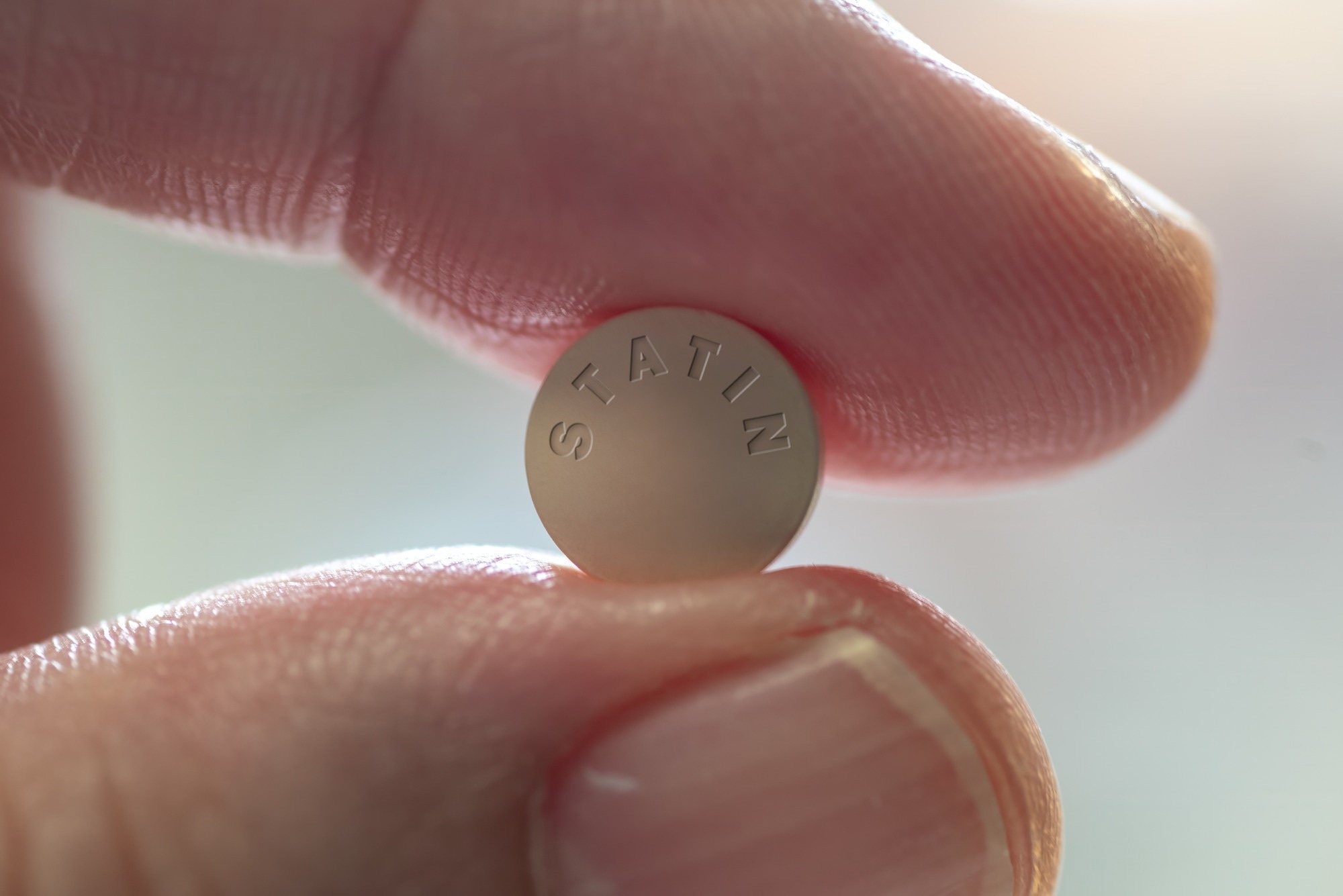
Study: Statins promote muscle metabolic danger and NLRP3-mediated myopathy via lower protein-prenylation and YAP. Image Credit: pimpampix / Shutterstock
A recent study published in the journal Science Advances uncovered biological mechanisms that drive muscle-related side effects following statin therapy. The researchers found that statins reduced isoprenoid production, protein prenylation, and yes-associated protein (YAP) signaling.
In experimental models, statins also activated nucleotide-binding domain, leucine-rich-containing family, pyrin domain-containing-3 (NLRP3) inflammasomes, promoted nuclear forkhead box O (FOXO) accumulation, and increased caspase-1 activity. These alterations increased atrogin-1 levels, promoted muscle atrophy, and reduced muscle function in experimental models. By better defining these pathways, the findings could inform future strategies to reduce statin-associated muscle effects while preserving cardiovascular benefit.
Healthcare providers routinely prescribe statin medications to people with lipid imbalances, such as elevated low-density lipoprotein (LDL) levels. These medications help reduce the risk of heart attacks, strokes, and death. However, some statin users experience muscle pain and weakness. Due to these side effects, they may take reduced doses or discontinue the drug altogether. These side effects may occur even when routine blood tests do not show evidence of muscle injury. However, the biological mechanisms underlying them are unclear. Most previous studies examined complications such as severe muscle toxicity and extensive muscle breakdown (rhabdomyolysis), but these are rarely observed among statin users.
About the Study
In the present study, researchers investigated why some people develop statin myopathy, or muscle-related side effects, following statin therapy. They developed a model of mild statin-related muscle problems for analysis. They exposed mouse muscle cells (C2C12 myotubes) to lipopolysaccharide (LPS), a bacterial component that stimulates the immune system. These LPS-primed cells developed an inflammasome-primed state and became much more sensitive to statins.
With LPS priming, a clinically relevant dose (1 μM) of fluvastatin increased atrogin-1 expression, an effect usually observed with 10 μM of the drug in cells without priming. As a result, lower statin doses could trigger molecular changes associated with muscle atrophy. Within 24 hours, atrogin-1 increased, followed by a decrease in muscle fiber diameter over 48 hours. In LPS-injected, statin-fed wild-type (WT) mice, fluvastatin reduced grip strength even though muscle mass did not decrease significantly, resembling the mild weakness experienced by many statin users. Human-derived muscle cells exposed to LPS and fluvastatin showed a reduction in actin alpha 1, skeletal muscle (ACTA1)-positive areas, indicating muscle-cell atrophy.
To investigate whether the muscle-related problems were due to cholesterol reduction or isoprenoid loss, the team added back an isoprenoid, geranylgeranyl pyrophosphate (GG). They then used 25-hydroxycholesterol to restore cellular cholesterol levels. They also used small interfering ribonucleic acid (siRNA) to reduce NLRP3 expression and MCC950 to inhibit NLRP3 inflammasome activity. The researchers compared the findings in WT mice, mice lacking the NLRP3 gene, and human-induced pluripotent stem cell (hiPSC)-derived myoblasts. Most mechanistic experiments focused on fluvastatin, although atorvastatin and cerivastatin supported a broader statin-class effect in LPS-primed muscle cells.
Results
The team found that statins block the mevalonate pathway that produces cholesterol, but this pathway also produces important molecules such as isoprenoids. A decrease in isoprenoid levels also reduces protein prenylation. These alterations lead to metabolic stress and act as danger signals that activate NLRP3 inflammasomes. Upon activation, the NLRP3 inflammasome initiates inflammatory signaling that contributes to muscle atrophy and cell death. Therefore, some side effects might arise from the loss of isoprenoids rather than from cholesterol reduction itself.
Statin-fed WT mice exhibited more damaged muscle fibers, including centrally nucleated fibers, a hallmark of muscle injury and repair. These animals also contained necrotic myofibers. Mice lacking NLRP3 contained about 50% fewer abnormal muscle fibers and showed fewer signs of muscle damage and repair. These findings suggest that NLRP3 contributes considerably to statin-induced muscle injury.
Restoring isoprenoid levels with GG and inhibiting NLRP3 signaling in cellular models reduced muscle atrophy-related changes, further implicating these pathways in statin-associated muscle injury. Likewise, genetic deletion of NLRP3 protected mice from statin-induced muscle abnormalities. Upon GG addition, atrogin-1 levels decreased, and the reduction in phosphorylated FOXO was prevented, improving muscle-cell size.
Reduced protein prenylation impaired YAP, a protein that helps maintain muscle mass and function in skeletal muscles. Statins also altered muscle-cell metabolism by reducing glycolysis, a process that generates energy from glucose in cells. Reduced glycolysis may act as a metabolic danger signal capable of activating the NLRP3 inflammasome. Experiments using hiPSC-derived myoblasts supported the pathway changes observed in mouse cells and mice.
Conclusions
The findings suggest that statins may contribute to muscle weakness and atrophy by reducing isoprenoid levels and protein prenylation and activating NLRP3 inflammasome signaling. Statins also altered proteins involved in muscle growth and function and reduced glycolysis.
The findings suggest that the muscle-related effects are linked to impaired prenylation and inflammatory signaling rather than cholesterol reduction itself. If confirmed in future human studies, including research on inflammatory priming and gut-barrier-related signals, scientists could develop strategies to block NLRP3 inflammasome activation, modulate YAP-linked pathways, or carefully evaluate isoprenoid-related rescue approaches. These approaches could help mitigate muscle-related side effects without compromising statins' cholesterol-lowering benefits.
Download your PDF copy by clicking here.
 Strength training and cardio combo work best together