Mothers who followed a supervised exercise program throughout pregnancy had babies with lower BMI and reduced odds of overweight at 12 months, offering new clues about how prenatal lifestyle habits may shape early growth trajectories.
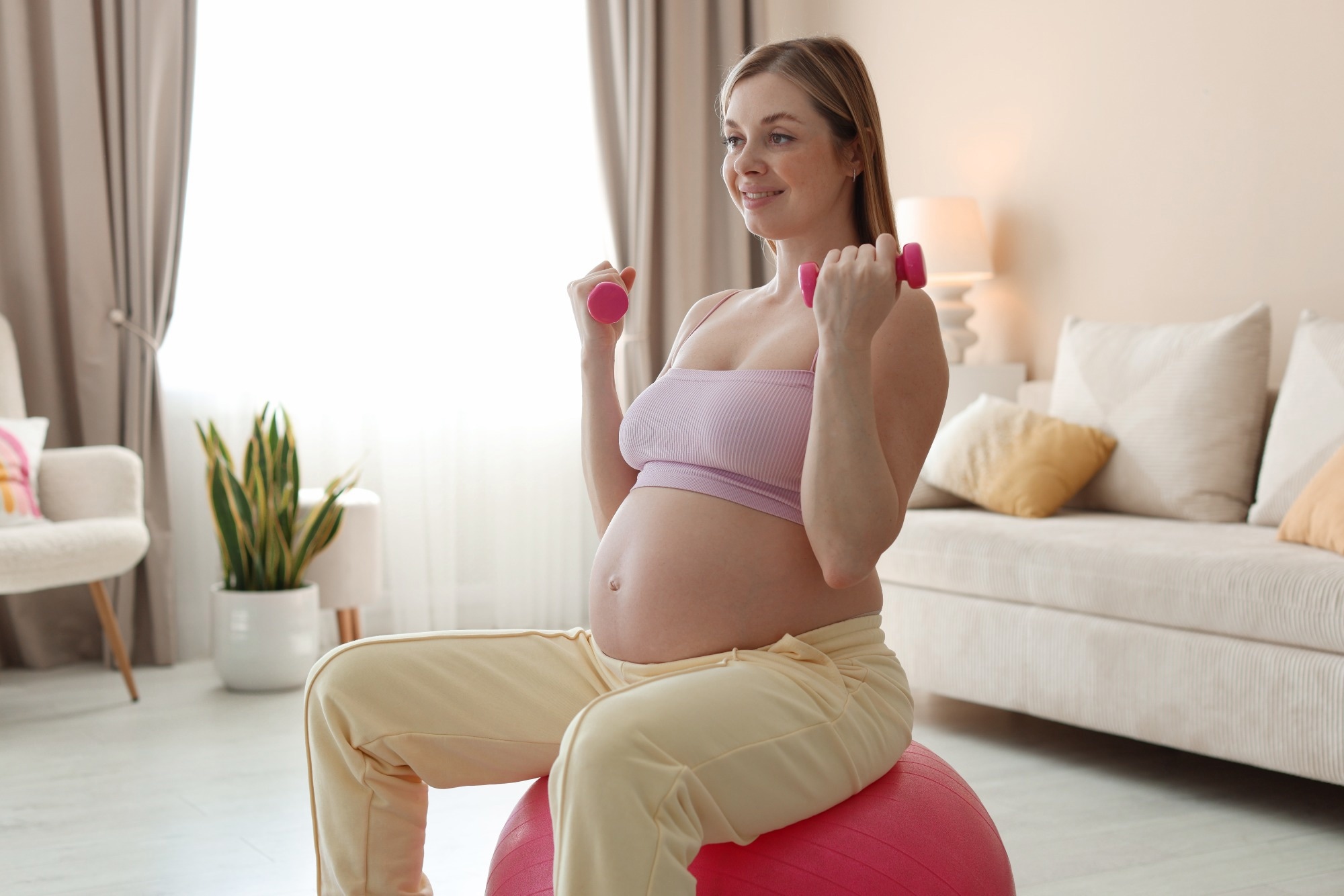 Study: Exercise during pregnancy and infant body mass index during the first year of life: a secondary per-protocol analysis of a randomized clinical trial. Image credit: New Africa/Shutterstock.com
Supervised exercise sessions during pregnancy may improve offspring’s BMI trajectories and growth patterns in late infancy, according to a new study published in Frontiers in Global Women’s Health.
How maternal health shapes infant growth
Pregnancy is a period of intense physiological changes that can influence long-term metabolic health in both mothers and offspring and increase the risk of developing obesity and other cardiometabolic diseases later in life. Maternal metabolic disturbances before and during pregnancy, such as pre-pregnancy obesity, excessive weight gain during pregnancy, and gestational diabetes, have been linked to the increasing global prevalence of childhood overweight and obesity.
Given the increasing global prevalence of childhood obesity and its psychological and emotional consequences, this study aimed to explore the effects of a supervised exercise program on offspring body weight, body mass index (BMI), and early growth trajectories through age 1 year.
Randomized trial follows mother–infant pairs
The study population comprised 126 mother–infant pairs. Pregnant women were recruited during routine obstetric visits at week 8–10 of pregnancy. They were randomized to the intervention and control groups.
The intervention group participants performed a supervised exercise program throughout pregnancy. The program consisted of three weekly sessions, each lasting 60 minutes, including aerobic exercise, muscle strengthening, balancing exercise, stretching, and pelvic floor muscle training.
The control group participants, on the other hand, received standard obstetric care and educational materials on physical activity, nutrition, sleep hygiene, smoking cessation, and urinary incontinence, but did not participate in supervised exercise sessions.
Infants’ weight, length, BMI, and feeding type were assessed at 1, 2, 4, 6, and 12 months after birth.
BMI differences appear during late infancy
The estimated parameters revealed that changes in infants’ BMI remained comparable between the groups until 6 months of age. However, at the 12-month time point, infants born to mothers in the intervention group had significantly lower BMI than those born to control group mothers. Similarly, infants born to control group mothers had higher odds of being classified as overweight at 4 months of age, which persisted up to 12 months of age.
Regarding maternal outcomes, the study found that women in the intervention group gained significantly less weight during pregnancy and had higher rates of exclusive breastfeeding in early infancy compared with women in the control group.
early divergence in growth trajectories suggested
The study highlights the potential importance of performing supervised exercises during pregnancy in shaping infants’ growth patterns during the first year of life, as well as managing maternal body weight during pregnancy. The observed between-group difference in infants’ mean BMI at 12 months of age further suggests that maternal healthy lifestyle behaviors during pregnancy, particularly physical activity, may be associated with a lower risk of developing obesity-related growth patterns in offspring.
Infants undergo rapid and dynamic changes in growth and body composition during the first year of life. Changes in BMI during this period may not accurately predict the risk of developing obesity later in life. This is why the researchers advise that these findings should not be interpreted as evidence of sustained effects or long-term obesity prevention.
According to the researchers, these findings should be considered as evidence of early divergence in growth trajectories that could be influenced by prenatal (before birth) and early postnatal (after birth) factors. Future larger-scale, longer-term studies are needed to understand whether the observed benefits persist, attenuate, or amplify over time.
Notably, the study finds a higher rate of exclusive breastfeeding among women in the intervention group during the first six months post-pregnancy. This finding is particularly important, as exclusive breastfeeding is known to be associated with more favorable infant growth patterns and a reduced risk of childhood overweight and obesity.
The researchers note that breastfeeding may represent one potential pathway linking prenatal exercise and infant growth outcomes. However, formal mediation analyses were not performed, meaning that the study cannot determine whether higher breastfeeding rates directly explain the observed differences in infant BMI.
However, several environmental factors, including complementary feeding, dietary composition, feeding practices, and broader family lifestyle behaviors, can also potentially contribute to the infant growth trajectories in early life. Since these factors were not considered in the study analysis, their potential influence on the observed associations cannot be ruled out.
The observed beneficial maternal outcome of lower gestational weight gain in the intervention group further supports the infant outcomes, as excessive gestational weight gain is known to increase the risk of childhood obesity.
Overall, these exploratory and hypothesis-generating findings support the clinical relevance of incorporating physical activity-related preventive interventions during pregnancy to improve infant growth trajectories in early life.
However, the researchers emphasize that the findings should be interpreted cautiously because this was a secondary, exploratory analysis, infant BMI outcomes were not the primary endpoints of the original trial, and participant attrition was substantial during follow-up.
The study primarily enrolled healthy pregnant women without major obstetric or metabolic complications, which may limit the generalizability of the results to broader clinical populations.
Furthermore, the infants were followed up only during the first year of life. Since infant growth trajectories are dynamic, the long-term clinical significance of the observed modest benefits remains uncertain.
Download your PDF copy now!
 HPV vaccines protect against cancer. Could they benefit pregnancy?