Introduction
What are Haskap berries?
Nutrient composition
Brain health effects
Vascular and metabolic benefits
Culinary and supplement forms
Serving recommendations
References
Further reading
How a cold-hardy, anthocyanin-dense berry links brain performance, blood flow, and physical endurance through converging human and mechanistic evidence.
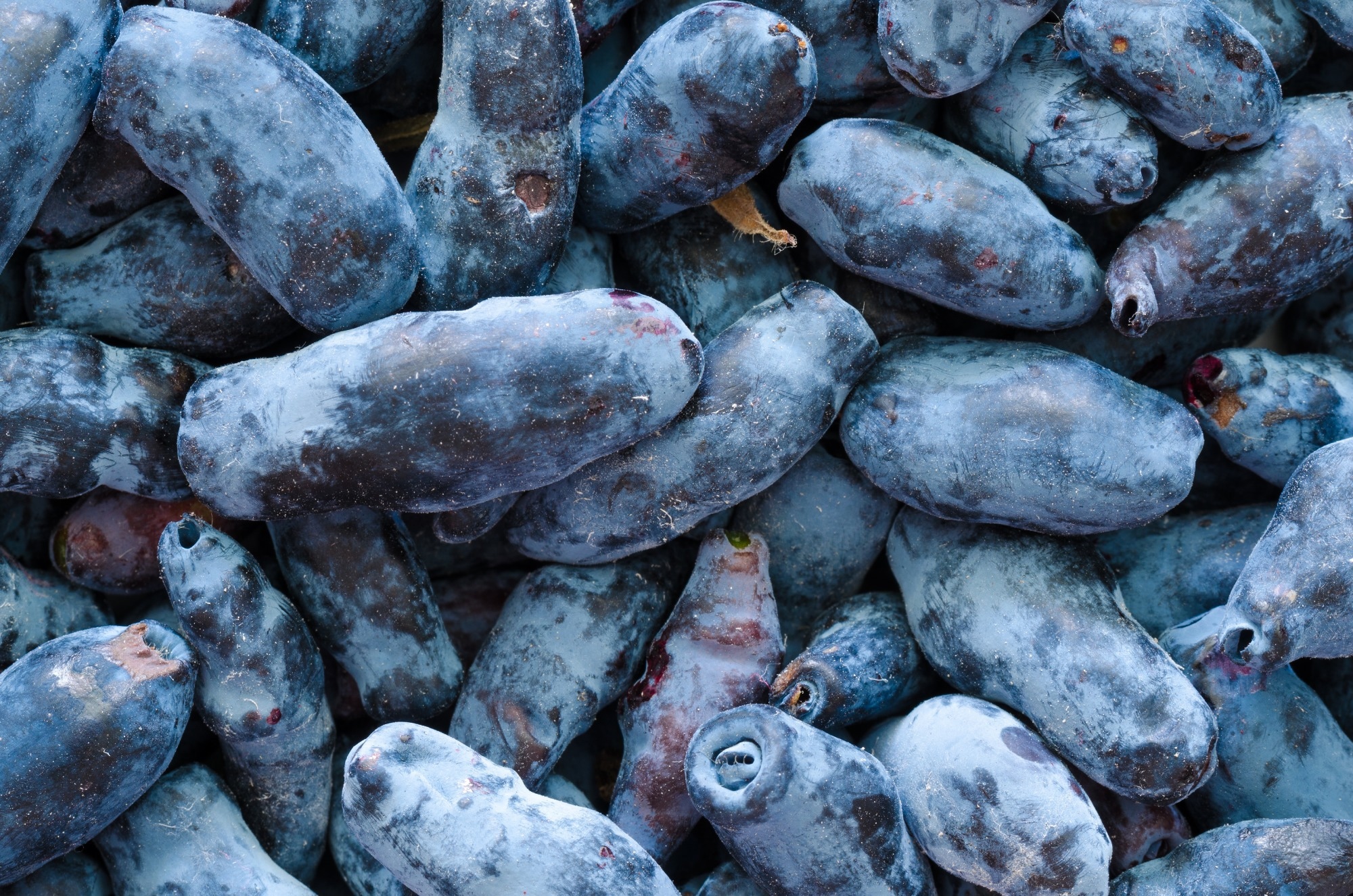 Image Credit: yuratonso3 / Shutterstock.com
Introduction
This article discusses the unique properties and health benefits of haskap berries, with emerging clinical data suggesting their potential to modulate cerebral blood flow, enhance memory in older adults, and improve endurance performance in athletes.
What are Haskap berries?
Colloquially referred to as ‘haskap,’ ‘blue honeysuckle,’ or ‘honeyberry,’ Lonicera caerulea L. is a deciduous shrub native to the cool temperate zones of Russia, Japan, and Canada. Unlike other fruits in the Lonicera genus, which are often ornamental and toxic, L. caerulea produces edible, dark blue fruits.1
The haskap berry is considered a true extremophile, as this plant can withstand winter temperatures as low as −47°C, with open flowers capable of surviving frosts of −7°C without damage to reproductive tissues. This environmental pressure is associated with elevated synthesis of phenolic compounds, particularly anthocyanins, which contribute to oxidative and ultraviolet stress tolerance.1
Comparative analyses have found that haskap berries contain approximately 400–1,300 mg of total anthocyanins per 100 g fresh weight (FW), depending on cultivar and growing conditions, exceeding the typical range reported for highbush blueberries and strawberries (≈40–150 mg/100 g FW).1,3
Nutrient composition
Haskap berries are dominated by cyanidin-3-O-glucoside (C3G), which constitutes 79–92% of total anthocyanins.3 C3G and its circulating metabolites demonstrate antioxidant, anti-inflammatory, and vasomodulatory activity, with preclinical evidence indicating central nervous system bioactivity rather than direct confirmation of intact blood–brain barrier transport in humans.3
Unlike many anthocyanin-rich fruits, haskap berries also contain substantial vitamin C (30.5–186.6 mg/100 g FW), potassium concentrations approaching ~2,000 mg/kg, and dietary fiber typically ranging from 3.0–4.3 g/100 g FW, exceeding that of blueberries (~2.4 g/100 g).1,3
A distinguishing feature of L. caerulea is the presence of iridoids, including loganic acid and sweroside, monoterpenoid iridoids that are uncommon in edible fruits and largely absent from most berries. These compounds exhibit anti-inflammatory and hepatoprotective activity and contribute to a distinctive phytochemical profile when combined with C3G and chlorogenic acid.1,2
Brain health effects
BDNF modulation
The neuroprotective effects associated with haskap berries are attributed to anthocyanin-mediated signaling pathways. Preclinical models suggest that C3G-rich extracts may influence ERK/cAMP/CREB signaling and downstream BDNF expression in the hippocampus; however, direct confirmation in human haskap interventions is currently lacking.1,3
Haskap anthocyanins inhibit NF-κB signaling, reduce microglial activation, and attenuate oxidative stress pathways in cellular and animal models, mechanisms relevant to neuroinflammation rather than established clinical neurodegenerative treatment.1
Memory and cognitive performance
In a 2019 double-blind, placebo-controlled crossover study, acute supplementation with haskap berry extract improved episodic memory performance in older adults following a 400 mg anthocyanin dose.4
Lower doses (200 mg) improved word recall but did not consistently enhance executive or working memory, while mood effects were minimal, indicating a selective and dose-dependent cognitive response.4
Improved endothelial function
C3G and related anthocyanins enhance endothelial nitric oxide synthase (eNOS) activity in vitro and in vivo, supporting improved vascular function.1,3
In older adults, a 400 mg anthocyanin dose produced a significant acute reduction in diastolic blood pressure and heart rate 1.5 hours post-consumption, consistent with transient vasodilation.4
Physical performance and recovery
A randomized, placebo-controlled trial demonstrated that haskap supplementation improved time to exhaustion (~20 s) and reduced 5 km time-trial performance by ~21 s, representing a >2% improvement in endurance performance.5
Lipid and glucose regulation
Haskap extracts inhibit α-amylase and α-glucosidase and modulate lipid metabolism pathways in preclinical models. These metabolic effects have not yet been confirmed in long-term human trials.1
Freezing preserves anthocyanins relatively well, whereas high-temperature drying causes substantial degradation. Lyophilization retains the highest proportion of phenolics, making freeze-dried powders the most stable supplement form.6,7
Juicing results in anthocyanin loss due to retention in skins and pomace; whole berries or whole-fruit powders are therefore preferred.1,6,8
Serving recommendations
Clinical evidence most consistently supports an anthocyanin intake of ~400 mg. Depending on cultivar and processing, this corresponds to approximately 50–150 g of fresh or frozen berries, or 1–2 teaspoons of freeze-dried powder.4–6
References
- Bora, L., Lombrea, A., Batrina, S. L., et al. (2024). A Systematic Review of Cardio-Metabolic Properties of Lonicera caerulea L. Antioxidants 13(6); 694. DOI: 10.3390/antiox13060694. https://www.mdpi.com/2076-3921/13/6/694
- Gawroński, J., Żebrowska, J., Pabich, M., et al. (2020). Phytochemical Characterization of Blue Honeysuckle in Relation to the Genotypic Diversity of Lonicera sp. Applied Sciences 10(18); 6545. DOI: 10.3390/app10186545. https://www.mdpi.com/2076-3417/10/18/6545.
- Rupasinghe, H. P. V., Arumuggam, N., Amararathna, M., & De Silva, A. B. K. H. (2018). The potential health benefits of haskap ( Lonicera caerulea L.): Role of cyanidin-3- O -glucoside. Journal of Functional Foods 44; 24-39. DOI: 10.1016/j.jff.2018.02.023. https://plaidshirtfarms.com/storage/2018/06/2018-Haskap-Review-.pdf?srsltid=AfmBOoqlHNDVqkMuZec0K7pDdLjYumerY6d_6R9rcmEHUzwM1XvJ_5F8
- Bell, L., & Williams, C. M. (2018). A pilot dose–response study of the acute effects of haskap berry extract (Lonicera caerulea L.) on cognition, mood, and blood pressure in older adults. European Journal of Nutrition 58(8); 3325-3334. DOI: 10.1007/s00394-018-1877-9. https://link.springer.com/article/10.1007/s00394-018-1877-9
- Howatson, G., Snaith, G. C., Kimble, R., et al. (2022). Improved Endurance Running Performance Following Haskap Berry (Lonicera caerulea L.) Ingestion. Nutrients 14(4); 780. DOI: 10.3390/nu14040780. https://www.mdpi.com/2072-6643/14/4/780
- Khattab, R., Ghanem, A., & Brooks, M. S.-L. (2016). Stability of Haskap Berry (Lonicera Caerulea L.) Anthocyanins at Different Storage and Processing Conditions. Journal of Food Research 5(6); 67. DOI: 10.5539/jfr.v5n6p67. https://ccsenet.org/journal/index.php/jfr/article/view/63093
- Qiao, J., Guo, L., Huo, J., et al. (2024). Controlled atmosphere effects on postharvest quality and antioxidant capacity of blue honeysuckle (Lonicera caerulea L.). Food Innovation and Advances 3(2); 155-166. DOI: 10.48130/fia-0024-0015. https://www.maxapress.com/article/doi/10.48130/fia-0024-0015.
- Senica, M., Stampar, F., & Mikulic-Petkovsek, M. (2019). Different extraction processes affect the metabolites in blue honeysuckle (Lonicera caerulea L. subsp. edulis) food products. Turkish Journal of Agriculture and Forestry 43(6); 576-585. DOI: 10.3906/tar-1907-48. https://journals.tubitak.gov.tr/agriculture/vol43/iss6/8/
Further Reading
Last Updated: Mar 18, 2026
 Blueberries may boost children's memory and mood