Introduction
Why color matters
Nutrient composition
Vascular health benefits
Glycemic response and metabolic effects
Cooking methods for maximum benefit
References
Further reading
Colored potatoes rich in acylated anthocyanins deliver measurable vascular and metabolic benefits that extend beyond basic nutrition. Human and preclinical evidence show improvements in arterial stiffness, blood pressure, inflammation, and glycemic regulation compared with those observed with white potatoes.
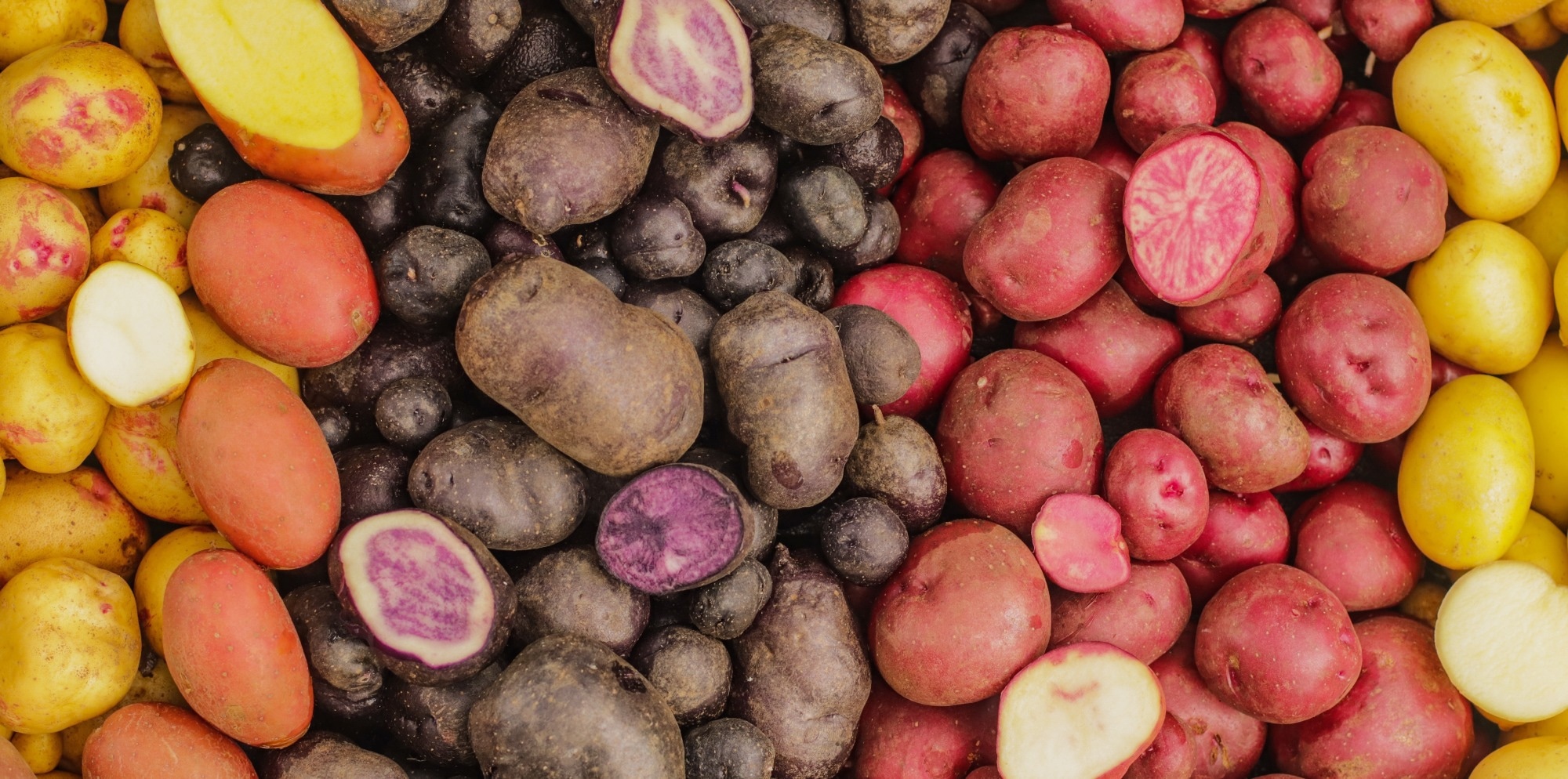 Image Credit: Olga Bondas / Shutterstock.com
Introduction
Research reveals that vibrant Andean potatoes, which are often characterized by purple, blue, and red colors, are rich in acylated anthocyanins, pigments that offer enhanced chemical stability but relatively low systemic bioavailability compared with non-acylated forms. These pigmented varieties offer measurable vascular benefits, including significant reductions in pulse wave velocity and diastolic blood pressure, that are not associated with white potato intake.1
Why color matters
Whereas white potatoes primarily rely on phenolic acids for antioxidant defense, colored varieties such as purple, blue, and red potatoes synthesize complex flavonoid profiles absent from white cultivars.1 The primary differentiators in colored tubers are anthocyanins present in purple/red varieties and carotenoids present in yellow/orange varieties, with anthocyanin concentrations typically ranging from 20–50 mg per 100 g fresh weight depending on genotype.2
Specifically, potato anthocyanins are acylated with organic acids such as p-coumaric or ferulic acid, a structural modification that provides steric hindrance, protecting these biomolecules from degradation. Acylation also allows a significant fraction of the pigments to survive the acidic environment of the stomach to reach the colon intact, where they can exert local antioxidant and microbiota-modulating effects rather than direct systemic antioxidant action.1
In contrast, despite containing baseline nutrients, white potato varieties lack anthocyanin content. Consequently, purple and red tubers consistently exhibit a total antioxidant capacity (TAC) that is approximately two- to three-fold higher than that of standard white cultivars.2
Recent advances in nutriomics and other next-generation ‘omics’ methodologies have revealed that the specific profile of these antioxidants dictates their physiological impact. Red varieties, such as ‘Highland Burgundy Red,’ are characterized by pelargonidin derivatives, while purple and blue varieties like ‘Vitelotte’ are rich in petunidin and malvidin.3
These compounds function synergistically with chlorogenic acid, the most abundant phenolic acid in potatoes, to create a robust antioxidant matrix that confers significant protective effects at the cellular and tissue levels, compared with when these compounds are considered individually.3
Nutrient composition
Potatoes are now widely accepted as a primary dietary source of resistant starch, a fermentable fiber that evades digestion in the small intestine.4 This resistant starch fraction is crucial for metabolic health, as its fermentation in the colon leads to the production of short-chain fatty acids (SCFAs) like butyrate, which provide energy for colonocytes while regulating gut inflammation.4
Colored potatoes are also significant sources of potassium, with a medium-sized ‘Purple Majesty’ potato providing approximately 600–700 mg of potassium.3 A single 100 g serving of most colored potato varieties can also provide 14–45% of the United States Food and Drug Administration (FDA) recommended Daily Value (DV) of vitamin C.3
Studies analyzing the nutrient profiles of ‘Hongyoung’ and ‘Jayoung’ red and purple potatoes, respectively, suggest that their total polyphenol content can be three to four times that of white potatoes.2 Phenolic acids, particularly chlorogenic acid, have been associated with delayed glucose absorption through inhibition of intestinal glucose transporters and digestive enzymes.2
Vascular health benefits
Hypertension is a well-established primary risk factor for cardiovascular disease. In a landmark crossover clinical trial involving hypertensive subjects, the daily consumption of purple potatoes for four weeks reduced diastolic and systolic blood pressure (BP) by 4.3% and 3.5%, respectively, without any significant changes in body weight, suggesting that bioactive components like anthocyanins and chlorogenic acids provide a direct vascular benefit that is independent of caloric restriction.5
Arterial stiffness, a predictor of cardiovascular mortality, is typically assessed through pulse wave velocity (PWV). In a 2018 study investigating the vascular impact of ‘Purple Majesty’ potatoes, 14 days of consumption led to a significant reduction in PWV. In contrast, white potato consumers did not exhibit any change in arterial stiffness measurements. Thus, these vascular benefits are likely attributed to the anthocyanin-rich fraction of purple potatoes, rather than the starch or potassium content.6
In controlled interventions, the consumption of pigmented potatoes has been associated with reduced levels of inflammatory cytokines and markers of oxidative DNA damage, specifically 8-hydroxydeoxyguanosine (8-OHdG). Men consuming yellow and purple potatoes exhibited lower plasma interleukin-6 (IL-6) levels as compared to those consuming white potatoes, indicating a systemic protective effect against oxidative stress.7
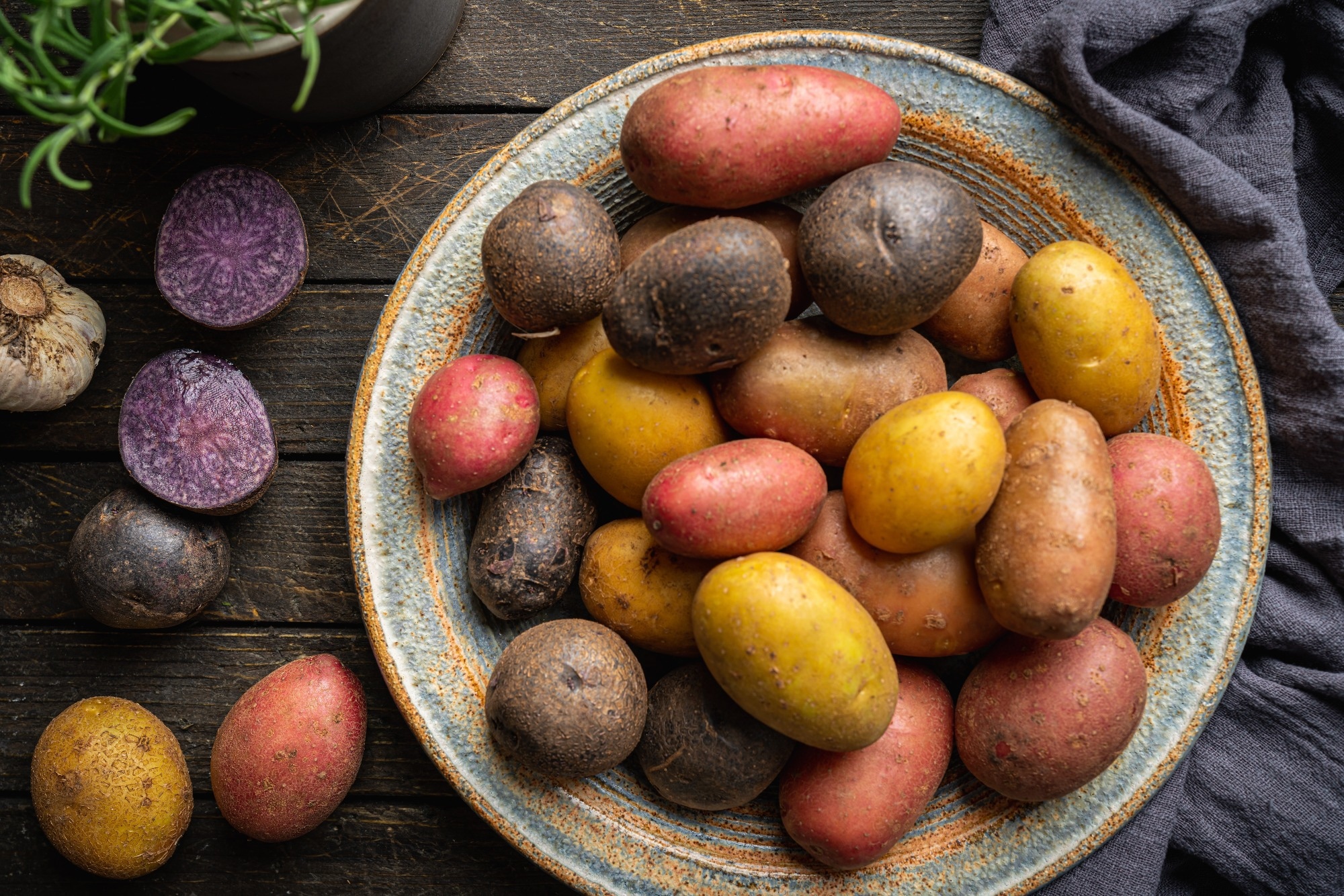 Image Credit: Goskova Tatiana / Shutterstock.com
Clinical trial results indicate that anthocyanin-rich extracts from purple potatoes significantly reduce the incremental area under the curve (iAUC) for postprandial glucose and insulin levels as compared to yellow potato controls. This reduction has been mechanistically linked to the polyphenol content, which inhibits α-glucosidase and α-amylase enzymes, effectively slowing the conversion of starch into blood glucose.1
In animal models of colitis, diets supplemented with purple potato significantly increased the relative abundance of Akkermansia muciniphila, a bacterium involved in maintaining the gut mucin layer that is inversely associated with obesity and type 2 diabetes (T2D). The combination of potato fiber and anthocyanins also suppressed pro-inflammatory cytokines IL-6 and IL-1β, demonstrating that colored potatoes can modulate the gut-immune axis to reduce systemic inflammation.8
Cooking methods for maximum benefit
Anthocyanins are water-soluble and heat-sensitive, yet their acylated forms in potatoes are remarkably resilient. Research indicates that boiling potatoes with the skin on retains high levels of anthocyanins, whereas boiling peeled potatoes results in significant leaching.3
Steaming and microwaving are considered superior to baking, with studies showing that baking can reduce anthocyanin levels by up to 33%. Comparatively, rapid methods like microwaving result in significantly lower losses of approximately 15–20% due to reduced exposure time.3
High-heat roasting can degrade some pigments; however, roasting colored potatoes with their skin intact can preserve the mineral content and minimize leaching. Nevertheless, the risk of acrylamide formation increases at high temperatures exceeding 170°C, particularly in tubers stored at cold temperatures where sugars have accumulated.3
When cooked, the potato starch is cooled for 24 hours, and the amylose chains crystallize, significantly increasing the resistant starch content compared to freshly boiled potatoes. For the consumer, eating colored potatoes in a cold potato salad not only lowers the glycemic impact but also maximizes the delivery of prebiotic substrate to the microbiome.4
References
- Jokioja, J., Yang, B., & Linderborg, K. M. (2021). Acylated anthocyanins: A review on their bioavailability and effects on postprandial carbohydrate metabolism and inflammation. Comprehensive Reviews in Food Science and Food Safety 20(6); 5570-5615. DOI: 10.1111/1541-4337.12836. https://ift.onlinelibrary.wiley.com/doi/10.1111/1541-4337.12836
- Cebulak, T., Krochmal-Marczak, B., Stryjecka, M., et al. (2022). Phenolic Acid Content and Antioxidant Properties of Edible Potato (Solanum tuberosum L.) with Various Tuber Flesh Colours. Foods 12(1); 100. DOI: 10.3390/foods12010100. https://www.mdpi.com/2304-8158/12/1/100.
- D’Amelia, V., Sarais, G., Fais, G., et al. (2022). Biochemical Characterization and Effects of Cooking Methods on Main Phytochemicals of Red and Purple Potato Tubers, a Natural Functional Food. Foods 11(3); 384. DOI: 10.3390/foods11030384. https://www.mdpi.com/2304-8158/11/3/384
- Raigond, P., Dutt, S., & Singh, B. (2019). Resistant Starch in Food. Reference Series in Phytochemistry. DOI: 10.1007/978-3-319-78030-6_30. https://link.springer.com/rwe/10.1007/978-3-319-78030-6_30
- Vinson, J. A., Demkosky, C. A., Navarre, D. A., & Smyda, M. A. (2012). High-Antioxidant Potatoes: Acute in Vivo Antioxidant Source and Hypotensive Agent in Humans after Supplementation to Hypertensive Subjects. Journal of Agricultural and Food Chemistry 60(27); 6749-6754. DOI: 10.1021/jf2045262. https://pubs.acs.org/doi/10.1021/jf2045262
- Tsang, C., Smail, N. F., Almoosawi, S., et al. (2018). Antioxidant Rich Potato Improves Arterial Stiffness in Healthy Adults. Plant Foods for Human Nutrition, 73(3); 203-208. DOI: 10.1007/s11130-018-0673-2. https://link.springer.com/article/10.1007/s11130-018-0673-2
- Kaspar, K. L., et al. (2011). Pigmented Potato Consumption Alters Oxidative Stress and Inflammatory Damage in Men,. The Journal of Nutrition 141(1); 108-111. DOI: 10.3945/jn.110.128074. https://www.sciencedirect.com/science/article/pii/S0022316622024592
- Li, S., Wang, T., Wu, B., et al. (2021). Anthocyanin-containing purple potatoes ameliorate DSS-induced colitis in mice. The Journal of Nutritional Biochemistry, 93, 108616. DOI: 10.1016/j.jnutbio.2021.108616. https://www.sciencedirect.com/science/article/abs/pii/S095528632100036X?via%3Dihub
Further Reading
Last Updated: Jan 5, 2026
 Why keto appears to lower blood pressure for some people but not others