Introduction
What are annatto seeds?
Nutrient and bioactive profile
Antioxidant properties
Anti-inflammatory effects
Potential metabolic benefits
Antimicrobial and traditional uses
Safety and practical considerations
Limitations and research gaps
References
Further reading
This article examines the phytochemical composition, biological activities, and safety profile of annatto seeds (Bixa orellana), integrating evidence from preclinical studies and limited human data. It critically distinguishes traditional uses and emerging nanotechnological applications from clinically validated outcomes, highlighting current research gaps.
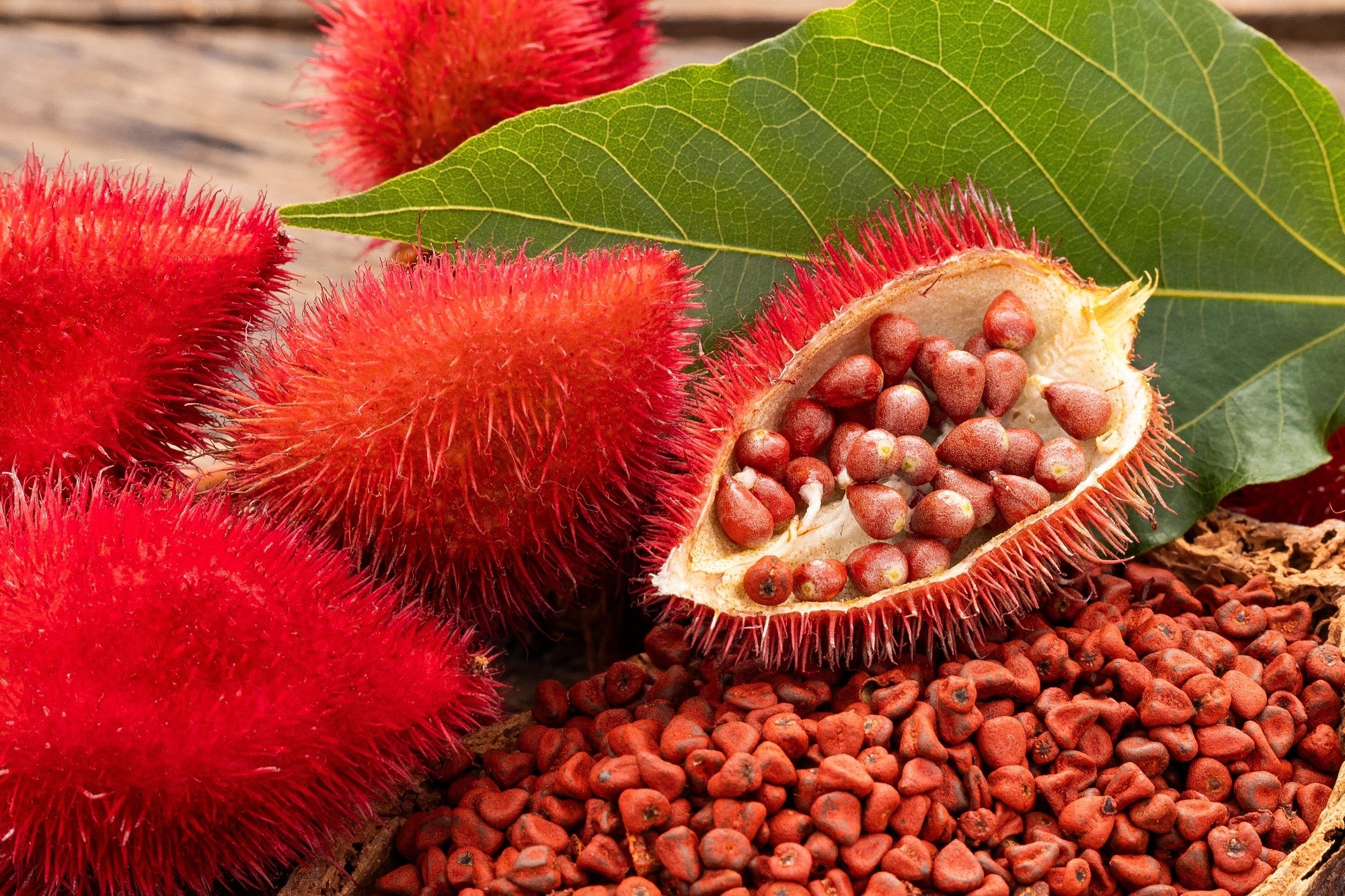 Image Credit: Luis Echeverri Urrea / Shutterstock.com
Introduction
Widely known as annatto, Bixa orellana L. (Bixaceae) is a tropical shrub that has been historically utilized for its apocarotenoid pigment bixin in its seeds. Beyond its commercial role as a natural colorant, annatto contains a wide range of bioactive compounds, including tocotrienols, diterpenes, and flavonoids, with well-documented biological activity, primarily demonstrated in in vitro and animal models.2
This article discusses the nutrient profile, pharmacological activities, and safety of B. orellana, as well as recent developments in its potential utility for novel delivery systems and the valorization of industrial byproducts.
What are annatto seeds?
Annatto is the colloquial name for seeds of the Bixa orellana L. shrub that is native to the Neotropics. Historically, indigenous populations, particularly in Brazil and other parts of South America, have used these seeds for body painting, insect repellency, and the treatment of ailments ranging from gastric ulcers to infectious diseases.
Commercially, annatto seeds are extensively recognized for their distinctive color and mild, earthy flavor, as they account for nearly 70% of the global market for natural colorants.1 Recent reports estimate that the commercial industry processes about 14,500–17,000 metric tons of annatto seeds annually for the apocarotenoid pigment bixin.1
Bixin is concentrated in the seed pericarp or aril, which constitutes 5–10% of the seed's total weight. This results in 90% or more of annatto's considerable annual production being considered byproduct, a large portion of which is wasted.1,2
Nutrient and bioactive profile
Annatto is rich in carotenoid pigments, such as bixin and norbixin. Bixin (methyl hydrogen 9'-cis-6,6'-diapocarotene-6,6'-dioate) is the primary constituent, as it accounts for nearly 80% of the total carotenoids while being primarily responsible for its lipophilic biological activity.2
The lipid-soluble fraction of annatto seeds is also rich in antioxidant compounds and vitamin E isomers, specifically a tocotrienol anomaly. Unlike most plant oils dominated by tocopherols, annatto oil contains approximately 90% delta-tocotrienol (δ-T3) and 10% gamma-tocotrienol (γ-T3).1
The absence of alpha-tocopherol in annatto oil is considered pharmacologically advantageous, as alpha-tocopherol can interfere with the absorption of tocotrienols. Furthermore, molecular distillation studies have identified significant quantities of diterpenes such as geranylgeraniol, complex mixtures of aliphatic and aromatic volatile hydrocarbons, as well as lipid amides like oleamide, a signaling molecule associated with sleep regulation.1
How It's Made: Annatto - Natural Orange Food Colouring
Antioxidant properties
Annatto seeds are associated with antioxidant effects. In vitro assays using silver nanoparticles synthesized from annatto extract demonstrated up to 78.9% scavenging activity against 2,2-diphenyl-1-picrylhydrazyl (DPPH) radicals at 200 μg/mL; these findings reflect the activity of annatto-derived phytochemicals within engineered nanomaterials rather than direct dietary or pharmacological use of annatto seeds.3
In the food production industry, active packaging films incorporating annatto byproducts have been shown to delay lipid oxidation, thereby extending shelf life through antioxidant mechanisms.1
Anti-inflammatory effects
Bixin has been shown to inhibit the TLR4/NF-κB signaling pathway, reducing NF-κB nuclear translocation and downstream production of pro-inflammatory cytokines, such as TNF-α and IL-6, in cell-based and animal experimental systems.4
Bixin also modulates the NLRP3 inflammasome by suppressing thioredoxin-interacting protein (TXNIP) expression, thereby reducing IL-1β secretion.4,5
In streptozotocin-induced diabetic rats, bixin supplementation attenuated inflammatory and oxidative stress markers, whereas norbixin showed limited efficacy and dose-dependent pro-oxidant effects.5
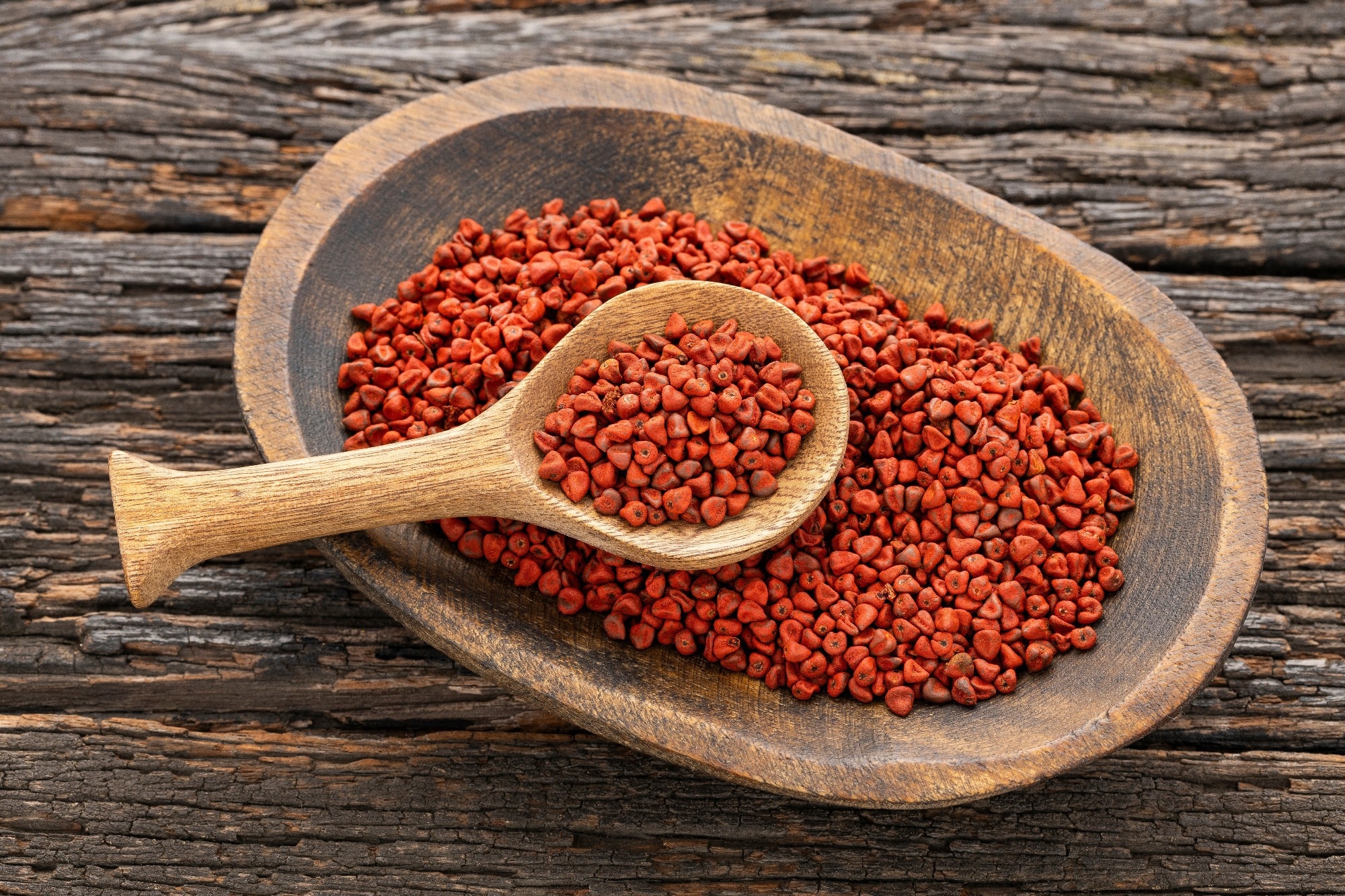 Image Credit: Luis Echeverri Urrea / Shutterstock.com
Emerging research suggests that annatto-derived tocotrienols may support metabolic health, although direct evidence from human studies involving isolated annatto preparations remains limited.1,2 A 2025 randomized, double-blind, placebo-controlled clinical trial demonstrated that tocotrienol-enriched oats, in which annatto was used as the primary commercial source of tocotrienol isolates, improved metabolic parameters in patients with metabolic syndrome.6
After a 12-week intervention, the treatment group exhibited reductions in fasting blood glucose (4.5%), systolic blood pressure (4.2%), and triglycerides (7.1%), alongside a 34.1% increase in HDL cholesterol.6
In animal models of androgen-deficiency–induced osteoporosis, annatto tocotrienols preserved trabecular bone microarchitecture and calcium content, with effects comparable to calcium supplementation.7
Antimicrobial and traditional uses
Extracts from B. orellana seeds and leaves have shown antibacterial activity against Staphylococcus aureus and Escherichia coli under laboratory conditions. In addition, annatto oil-loaded nanostructured lipid carriers reduced Leishmania major amastigote survival by nearly 90% in macrophage models, with enhanced delivery efficiency compared to free drug formulations.8
Ethnobotanical records describe traditional medicinal uses for digestive, dermatological, and wound-healing applications; modern validation of these practices is largely limited to preclinical and nanotechnology-based experimental studies.4
Safety and practical considerations
Annatto extracts are generally recognized as safe for use as food additives. The European Food Safety Authority has established Acceptable Daily Intakes (ADIs) of 6 mg/kg body weight for bixin and 0.3 mg/kg for norbixin.9
While annatto-derived compounds are well tolerated when consumed orally at dietary or additive-relevant levels, non-oral exposure routes and nanoformulated systems require careful dose optimization and toxicological evaluation. High-dose intramuscular nanodispersions (10 mg/kg) induced mild muscle necrosis in rodents, whereas lower doses (1–5 mg/kg) were not associated with adverse histopathology.4
Limitations and research gaps
Despite promising preclinical findings, most therapeutic applications of annatto beyond metabolic health remain supported primarily by in vitro or animal data.1,2 Well-designed, adequately powered human clinical trials are required to establish efficacy, optimal dosing, and long-term safety.
Additionally, variability in phytochemical composition across cultivars, geographic origins, and extraction methods underscores the need for standardized preparations to ensure reproducible outcomes in future nutraceutical and pharmaceutical applications.
References
- de Arruda-Peixoto, V. A. S., Estacho, P. V., Wrona, M., et al. (2025). Promoting Circular Economy by Leveraging Annatto Byproducts from Bixa orellana L. into Sustainable Antioxidant Food Packaging. Foods 14(4); 704. DOI: 10.3390/foods14040704. https://www.mdpi.com/2304-8158/14/4/704
- Raju, S. K., Chandrasekar, S., Vengadhajalapathy, P., et al. (2023). Review on phytochemical composition and pharmacological activities of Bixa orellana. Journal of Pharmaceutical and Biological Sciences 10(2); 57-67. DOI: 10.18231/j.jpbs.2022.012. https://jpbs.in/archive/volume/10/issue/2/article/2075
- Maitra, B., Khatun, M. H., Ahmed, F., et al. (2023). Biosynthesis of Bixa orellana seed extract mediated silver nanoparticles with moderate antioxidant, antibacterial and antiproliferative activity. Arabian Journal of Chemistry 16(5), 104675. DOI: 10.1016/j.arabjc.2023.104675. https://arabjchem.org/biosynthesis-of-bixa-orellana-seed-extract-mediated-silver-nanoparticles-with-moderate-antioxidant-antibacterial-and-antiproliferative-activity/
- da Silva, V. R. P., Martins, N. O., dos Santos, C. R., et al. (2024). Annatto (Bixa orellana)-Based Nanostructures for Biomedical Applications - A Systematic Review. Pharmaceutics 16(10); 1275. DOI: 10.3390/pharmaceutics16101275. https://www.mdpi.com/1999-4923/16/10/1275
- Roehrs, M., Figueiredo, C. G., Zanchi, M. M., et al. (2014). Bixin and Norbixin Have Opposite Effects on Glycemia, Lipidemia, and Oxidative Stress in Streptozotocin-Induced Diabetic Rats. International Journal of Endocrinology 1-10. DOI: 10.1155/2014/839095. https://onlinelibrary.wiley.com/doi/10.1155/2014/839095
- Norazman, C. W., Mohd Sopian, M., & Lee, L. K. (2025). Effects of tocotrienol-enriched oat supplementation on metabolic profile, nutritional status and health-related quality of life among patients with metabolic syndrome. Food & Function 16(5) 1847-1863. DOI: 10.1039/d4fo03307h. https://pubs.rsc.org/en/content/articlepdf/2025/fo/d4fo03307h
- Mohamad, N. V., Ima-Nirwana, S., & Chin, K.. (2018). Effect of tocotrienol from Bixa orellana (annatto) on bone microstructure, calcium content, and biomechanical strength in a model of male osteoporosis induced by buserelin. Drug Design, Development and Therapy, Volume 12; 555-564. DOI: 10.2147/dddt.s158410. https://www.dovepress.com/effect-of-tocotrienol-from-bixa-orellana-annatto-on-bone-microstructur-peer-reviewed-fulltext-article-DDDT
- Ferreira, M. A., de Almeida Junior, R. F., Onofre, T. S., et al. (2021). Annatto Oil Loaded Nanostructured Lipid Carriers: A Potential New Treatment for Cutaneous Leishmaniasis. Pharmaceutics 13(11); 1912. DOI: 10.3390/pharmaceutics13111912. https://www.mdpi.com/1999-4923/13/11/1912
- EFSA Panel on Food Additives and Nutrient Sources added to Food (ANS). (2016). The safety of annatto extracts (E 160b) as a food additive [JB]. EFSA Journal 14(8). DOI: 10.2903/j.efsa.2016.4544. https://efsa.onlinelibrary.wiley.com/doi/10.2903/j.efsa.2016.4544
Further Reading
Last Updated: Feb 5, 2026
 Research suggests bamboo-based foods could support metabolic health