A new same-day detection strategy shows how simple, low-cost lab steps can uncover Salmonella in meats, vegetables, and dairy far faster than traditional methods. This could offer a powerful tool for preventing contaminated foods from ever reaching consumers.
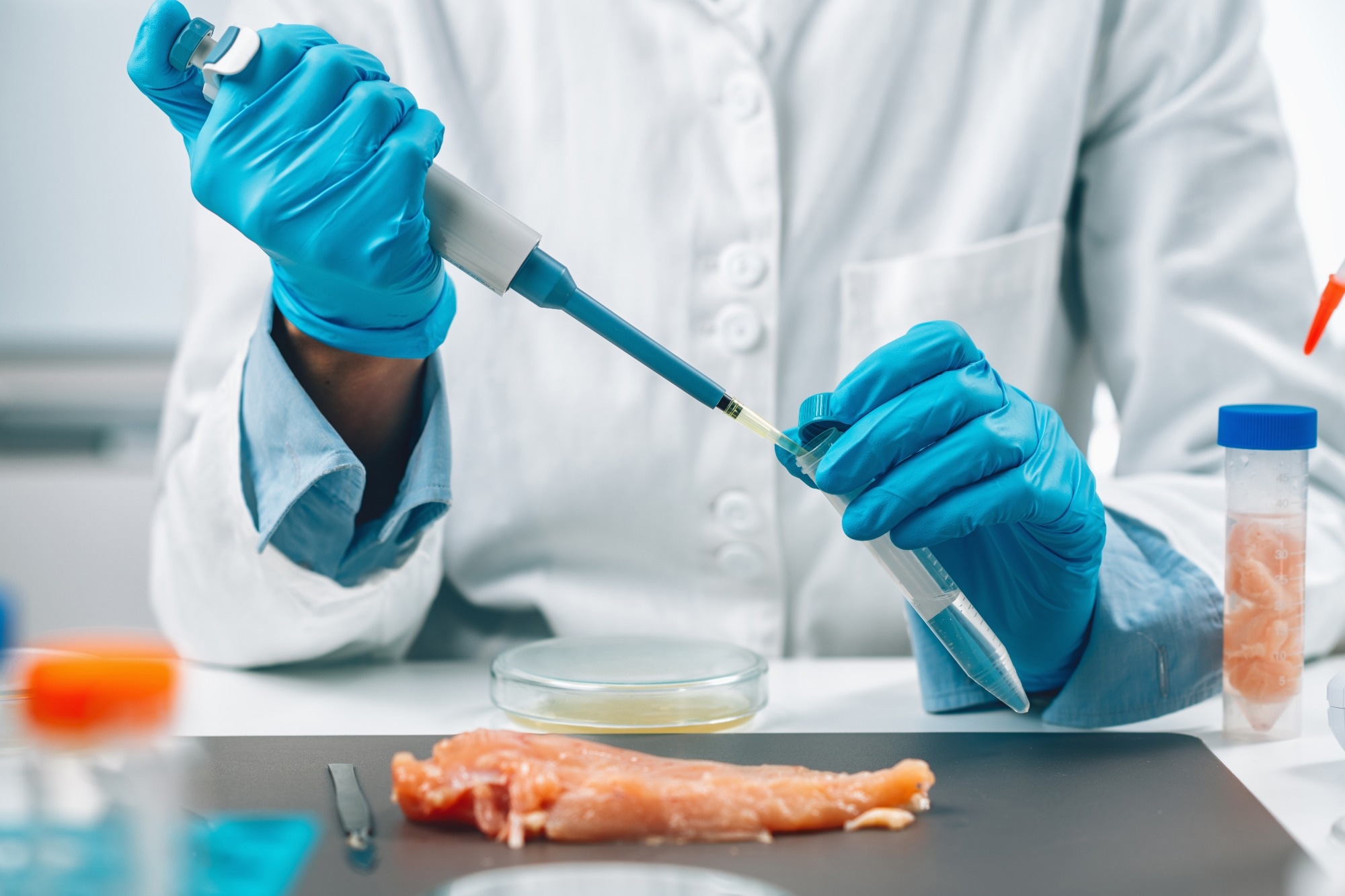 Study: Toward same-day detection of Salmonella: a rapid and cost-effective analytical method. Image Credit: Microgen / Shutterstock.com
A recent study published in Frontiers in Microbiology describes a rapid, cost-effective, Real-Time PCR-based fast-throughput method for the rapid and early detection of Salmonella contamination in various food products using several protocol combinations.
What is Salmonella?
Over half of all food-related illnesses worldwide are caused by foodborne pathogens, particularly Salmonella. Each year, Salmonella infection causes hundreds of thousands of deaths while infecting 18 people per 100,000 in Europe alone.
Salmonella enterica and Salmonella bongori are the two primary Salmonella species, which can be further characterized into six subspecies and over 2,600 serotypes, most of which cause infections in both animals and humans. Eating contaminated meat or contact with infected animals are the primary ways in which humans contract Salmonella.
Salmonella infects plant-, animal-, and fish-based food products; however, eggs and egg products are the most common sources of human infection. Pig meat, bakery items, dairy products, and vegetables have also been implicated in salmonellosis.
Detecting Salmonella
Salmonella isolation is typically performed using analytical reference methods, which, although time-intensive, provide sensitive and reliable pathogen detection. The international standard method used to detect Salmonella involves the use of different agar media after a pre-enrichment treatment, which allows the pathogen to grow for subsequent analysis. However, this is a time-consuming process that does not provide final results for at least five days.
In the event of a potential Salmonella outbreak, it is crucial to quickly identify the source of the infection and prevent the further distribution of contaminated food. To accelerate the timeliness of Salmonella detection, polymerase chain reaction (PCR) diagnostics and other molecular-based methods emerged; however, many of these assays are technically demanding and similarly time-consuming.
Evaluating rapid PCR options across food types
The researchers of the current study developed a highly versatile qualitative real-time PCR method for the rapid detection of Salmonella across various food matrices within seven hours. Rather than relying on a single diagnostic workflow, the study evaluated multiple combinations of DNA extraction methods, enrichment broths, and incubation conditions. To confirm the sensitivity of this method, the researchers contaminated leafy greens, minced meat, water buffalo mozzarella cheese, and mussels purchased from different supermarkets throughout Campania, Italy.
All samples were subjected to DNA extraction through non-solvent non-commercial methods to ensure that only inexpensive and simple methods were included in the analysis.
Detection varies with conditions
The combination of Chelex-100 for DNA extraction with preheated buffered peptone water (BPW) enrichment broth and an overnight incubation at 41.5 °C allowed for the successful detection of Salmonella within four hours in minced meat, mozzarella cheese, and mussels. However, leafy greens did not show detection at four hours at low contamination levels.
In minced meat, Salmonella detection was observed eight hours after incubation started at the lowest contamination level, with samples exposed to the highest concentration of Salmonella testing positive by six hours. In mozzarella cheese, the corresponding detection times were six and four hours, respectively. Adding supplements to the enrichment broth did not lead to a significant difference in detection time or Salmonella concentration.
Previous studies have demonstrated that Chelex-100 produces higher-quality DNA, which may contribute to the superior reliability and performance of this method. The combination of boiling and Chelex-100 methods for routine bacteriological testing is also more cost-effective when compared to complex and expensive extraction kits.
Importantly, larger sample volumes of the food matrix did not change the detection time, thus indicating that extraction efficiency is not dependent on sample volume. Therefore, this novel Salmonella detection strategy is associated with lower reagent volume requirements, shorter processing times, and reduced testing times without compromising the accuracy or sensitivity of the results.
Rapid workflow offers a promising same-day detection tool
The current study describes a rapid strategy that combines several pre-detection approaches with molecular testing to offer a low-cost alternative to conventional, expensive, and often time-consuming Salmonella analytical methods, although this method is not yet fully automated. The widespread application of this approach has the potential to support regulatory agencies and food businesses in monitoring food product bacteriological quality effectively.
This method may represent an innovative tool for improving the assessment of epidemic outbreaks, ensuring not only food safety but also rapid diagnosis during emergencies.
Nevertheless, additional research is needed to confirm the reliability of these results at very low contamination levels and with other foods.
 AI could help food systems detect pathogens, fraud, and contamination faster