Natural experiment data from Wales suggest that shingles vaccination may help lower the risk of cognitive decline and reduce dementia-related deaths, highlighting a potential role for immunisation across the dementia disease course.
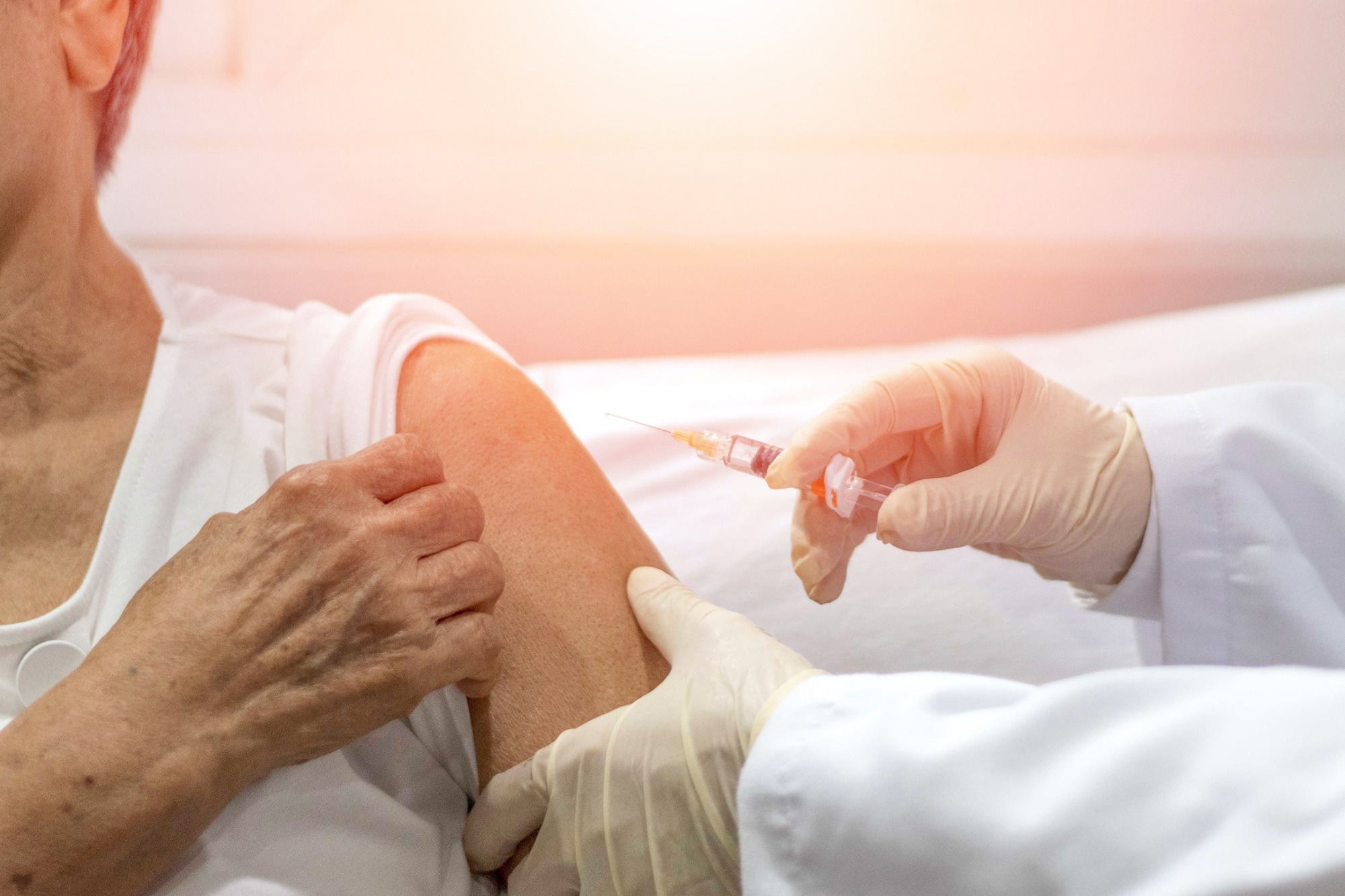
Study: The effect of shingles vaccination at different stages of the dementia disease course. Image Credit: BlurryMe / Shutterstock
A recent study in the journal Cell investigated the effect of herpes zoster (HZ) vaccination on dementia and mild cognitive impairment (MCI), using quasi-experimental population data.
Relationships between neurotropic viruses and dementia
Neurotropic viruses could cause and accelerate the dementia disease process through neuroinflammation. Reactivation of the varicella zoster virus, a neurotropic herpesvirus that causes chickenpox and shingles, may act as a chronic immune stressor, triggering inflammatory pathways in both the peripheral and central nervous systems. A previous study has linked varicella zoster virus to amyloid buildup, tau protein aggregation, and cerebrovascular changes that mimic those found in Alzheimer’s disease, including vessel disease, ischemia, infarction, and hemorrhage.
Neurotropic herpesviruses can remain latent in the nervous system after primary infection and reactivate with age, causing encephalitis. Reactivation also disrupts neuroimmune balance in older adults. Therefore, preventing both clinical and subclinical reactivation of neurotropic herpesviruses with HZ vaccination may help reduce neuroinflammatory stress and slow or prevent dementia. However, the underlying mechanisms remain to be fully clarified, while supporting neuroimmune health and cognitive reserve in older adults overall.
Several studies have shown that vaccinations have broader health benefits beyond their intended target. These beneficial off-target effects were often more prominent in females than in males and were more significant with live-attenuated vaccines than with other types.
A recent study in Wales used a quasi-randomized rollout of the live-attenuated HZ vaccine to assess its effect on dementia incidence. This natural experiment enabled comparison between groups that were nearly identical except for a narrow age difference and vaccine eligibility. Interestingly, the potential of HZ vaccination in preventing about one in five new dementia diagnoses over seven years was documented. A similar study conducted in Australia supported a protective association consistent with a causal link between HZ vaccination and reduced dementia risk. Considering this positive impact, it is essential to determine when, during dementia progression, HZ vaccination is most effective, a question that remained unanswered by previous analyses in Wales and Australia.
Evaluating the Impact of HZ Vaccination on Cognitive Decline and Dementia-Related Mortality
A total of 304,940 individuals born between September 1, 1925, and September 1, 1942, living in Wales as of September 1, 2013, were considered. For MCI analysis, 282,557 individuals without prior cognitive impairment were included, whereas for dementia mortality analysis, 14,350 individuals with a prior dementia diagnosis before September 1, 2013, were included.
A regression discontinuity design was used to estimate causal effects by comparing people born just before and after the HZ vaccine eligibility cutoff of September 2, 1933. Both groups were nearly identical, except for their vaccine eligibility and resulting vaccination probabilities, with extensive checks showing no concurrent changes in other preventive health interventions or in major disease burdens at the cutoff. The current natural experiment provided two groups that were similar in every way except for their chances of receiving the vaccine, allowing for a clear assessment of the vaccine's impact.
During a 9-year follow-up, 7.3% of the cohort developed MCI. Eligibility for HZ vaccination was associated with a 1.5 percentage-point reduction in the incidence of new MCI diagnoses. Among those who actually received the vaccine, the reduction was 3.1 percentage points. These results were consistent across various follow-up periods and statistical adjustments.
Among individuals diagnosed with dementia before the HZ vaccination program, 49.1% died from dementia over nine years. Eligibility for HZ vaccination reduced dementia-related deaths by 8.5 percentage points, and actually receiving the vaccine reduced deaths by 29.5 percentage points. These findings were consistent across different statistical methods and adjustments, confirming the robustness of the results.
HZ vaccination had a greater impact on women than on men, reducing new MCI cases and deaths from dementia only in women. Among women, eligibility and vaccination decreased new MCI diagnoses by 2.5 and 5.1 percentage points, and deaths due to dementia by 13.9 and 52.3 percentage points, respectively. For men, no significant effects were found.
Researchers analyzed whether HZ vaccination reduced dementia-related deaths in people with more advanced dementia by dividing patients into subgroups based on dementia severity. Severity was measured using indicators such as mortality risk, hospital stays, hospital admissions, and the frequency of dementia diagnoses. While findings were not statistically significant, there was a trend suggesting greater protective effects of HZ vaccination for those with more severe dementia.
In exploratory analyses, the current study found that HZ vaccination resulted in the greatest relative reduction in mixed dementia cases compared with Alzheimer’s or vascular dementia. For patients with dementia at baseline, HZ vaccination eligibility reduced all-cause mortality by 6.5 percentage points over nine years. However, it had no significant effect on deaths unrelated to dementia. The mortality benefit was greater for women, and no significant effect was observed in men.
Conclusions
This study provides strong quasi-experimental evidence suggesting that HZ vaccination may meaningfully reduce the risk of cognitive decline and dementia-related mortality, with benefits observed across multiple stages of the clinical disease course as inferred from MCI incidence and dementia-related death outcomes. Although dementia onset and progression were not measured directly, vaccination was linked to lower rates of new MCI diagnoses and reduced mortality among individuals with established dementia.
In the future, researchers should explore the effects of HZ vaccination in broader age groups, evaluate outcomes for newer non-live-attenuated shingles vaccines, and examine long-term outcomes beyond the nine-year follow-up.
 Reading for pleasure linked to better mental health and greater empathy