Long hours and shift work play a role, but new Australian research shows age, gender, education, and smoking habits are far more powerful predictors of high-risk drinking among workers.
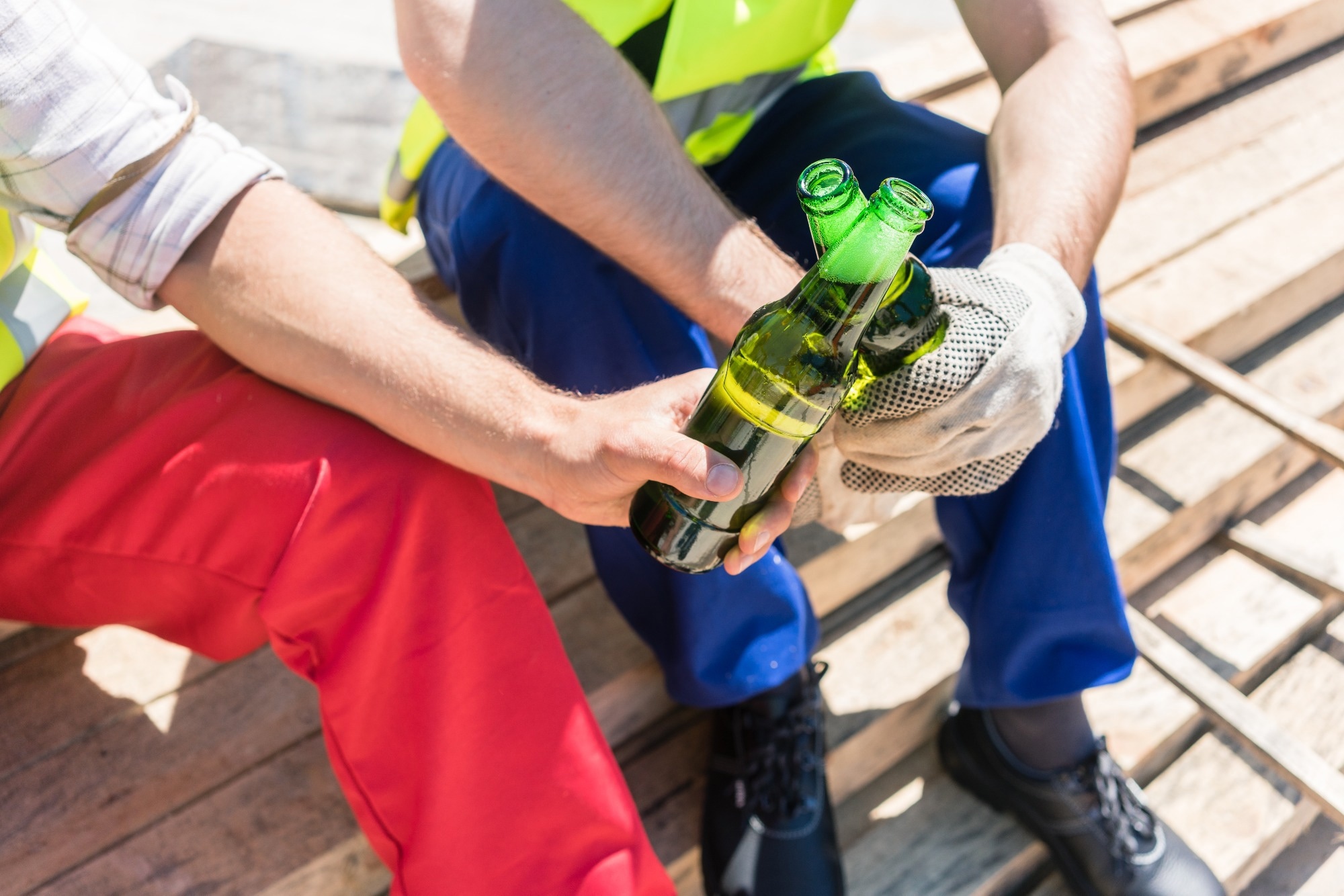 Study: Work Hard… Drink Hard? Occupational, Sociodemographic and Health Determinants of High-Risk Alcohol Consumption Among Australian Workers. Image credit: Kzenon/Shutterstock.com
In a recent study published in Drug and Alcohol Review, a group of researchers examined the impact of occupational factors compared with sociodemographic and health determinants in shaping high-risk alcohol consumption among working adults.
Why workplace drinking demands broader public health attention
One in three working-age adults consumes enough alcohol to increase the risk of disease or injury. These problems not only affect them at a personal level, but also professionally. Alcohol-related injuries, missed work, and chronic disease cost economies billions each year.
Risky drinking is often seen as a personal choice rather than being understood in the context of coping with daily pressures. Long working hours or irregular schedules, as well as income-related pressures, may contribute to environments that normalize excessive drinking. To design effective interventions that can help people, rather than just meeting clinical guidelines, the factors that contribute most strongly to risk need to be highlighted.
Further research is needed to clarify how occupational factors interact with personal risk factors over time.
Two decades of national data reveal drinking patterns
The present study analyzed data from 23 waves (2001–2023) on employment, health, and lifestyle from a nationally recognized longitudinal study in Australia. The analysis included 26,255 employed individuals aged 18 years and older, contributing more than 216,000 observations over time. Only participants who reported alcohol consumption were included to avoid bias from combining abstainers with low-risk drinkers.
According to the national drinking guidelines, high-risk alcohol consumption was categorized into three major outcomes. Firstly, high-risk drinking across the week (more than 10 standard drinks per week), then single-occasion high-risk drinking (more than four standard drinks on one occasion), and finally any high-risk drinking (meeting either threshold). Occupational factors included work schedule, weekly hours, occupation type, job demands and complexity, job security, job satisfaction, and preferences for more or fewer work hours.
Several sociodemographic factors, such as age, sex, education, income, relationship status, background, smoking habits, and long-term health conditions, were analyzed. To examine how these factors change over time within the same individuals, researchers used generalized linear mixed-effects models to account for repeated observations across time.
Personal characteristics dominate patterns of risky drinking
High-risk alcohol consumption was common, with more than one-third of observations meeting at least one high-risk drinking criterion. These patterns changed depending on age, sex, and health behaviors, which were far more strongly associated with risky drinking than occupational factors.
Younger workers (18–29 years) were more likely to engage in occasional single high-risk drinking, reflecting broader social drinking norms that emphasize intensity over frequency. In contrast, older workers were more likely to consume alcohol at higher levels across the week, suggesting more regular drinking patterns.
Major differences were observed between men and women. Women had lower odds of all forms of high-risk drinking compared with men. This suggested that working men experience a greater burden of high-risk alcohol consumption. In comparison, smoking was identified as the most modifiable risk factor. Workers who smoked were nearly three times more likely to engage in high-risk drinking. This highlights how health risk behaviors often co-occur.
Occupational factors showed interesting associations with high-risk drinking habits. Employees working more than 40 hours per week had higher odds of high-risk drinking across the week, an association that remained after adjusting for sociodemographic and health factors. On average, shift workers did not drink heavily across the week, as they were more likely to drink on single occasions.
As discussed by the authors, this pattern may reflect binge-style drinking during fewer opportunities to drink, or persistent misconceptions that alcohol helps with sleep. However, these mechanisms were not directly measured in the study.
Preferences regarding work hours also had an impact on drinking habits. Workers who wanted more hours to work showed higher odds of risky single-occasion drinking, while those wishing to work fewer hours consistently showed lower risk across all drinking categories. This pattern suggests that dissatisfaction with work intensity may influence coping behaviors, whether due to having too much or too little work.
Occupation type influenced drinking risk. As compared with professionals, laborers, machinery operators, and trades workers showed consistently higher odds of high-risk drinking. These roles often involve physical strain, irregular working schedules, and established workplace drinking norms, as suggested by previous research, which normalize alcohol use. In contrast, psychosocial factors such as job satisfaction, demands, and job security showed little association with risky drinking once other variables were considered.
Reducing alcohol harm requires more than stress management
High-risk alcohol drinking habits among workers appear to be influenced more by personal factors such as age, sex, education, lifestyle, and smoking habits, rather than by job stress alone. Workplace conditions like long working hours, physically exhausting jobs, and irregular routines still matter, but sociodemographic and health factors explained more of the variation in alcohol risk.
Importantly, the findings reflect statistical associations rather than causal relationships. These findings highlight the need for workplace health strategies that move beyond generic stress management and address clustered behaviors such as smoking and drinking together.
The authors suggest that tailored interventions targeting high-risk groups and multiple health behaviors simultaneously may be more effective than one-size-fits-all approaches.
Download your PDF copy now!
Journal reference:
-
G. Di Censo, K. Thompson, & J. Bowden. (2026). Work Hard… Drink Hard? Occupational, Sociodemographic and Health Determinants of High-Risk Alcohol Consumption Among Australian Workers. Drug and Alcohol Review. 45(1). DOI: 10.1111/dar.70092. https://onlinelibrary.wiley.com/doi/10.1111/dar.70092
 Semaglutide and tirzepatide linked to fewer alcohol-related hospital visits