A novel gut microbiome therapy delivers broad symptom improvements in children with autism, offering early hope for a safer, less invasive treatment approach pending rigorous clinical validation.
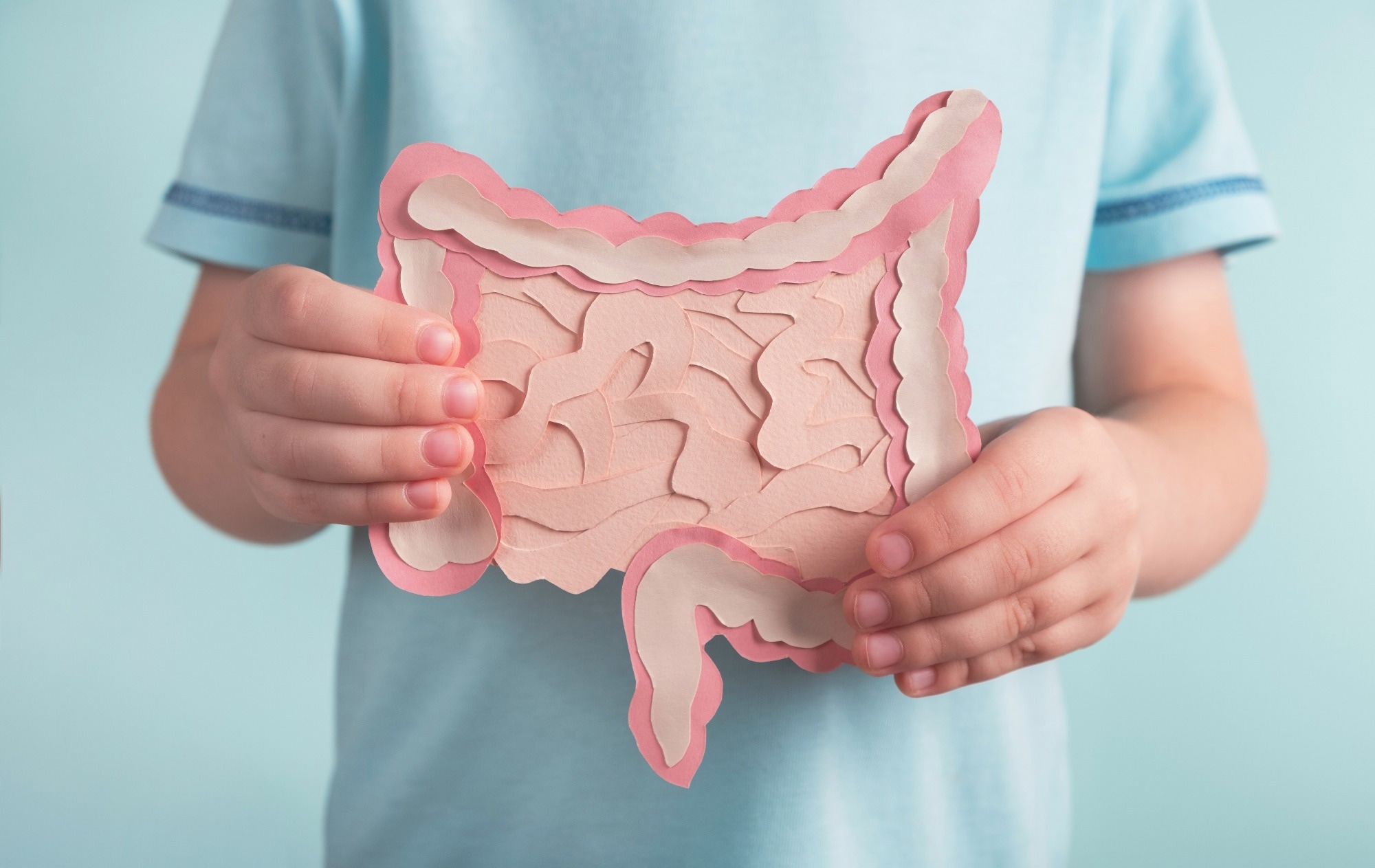 Study: Safety and efficacy of a novel fecal microbiota transplantation method using hydrogen nanobubble water without antibiotics or bowel cleansing in children with autism spectrum disorder: an open-label, single-arm study demonstrating improvements in core and comorbidity symptoms. Image credit: Helena Nechaeva/Shutterstock.com
A recent study in Frontiers in Pediatrics developed a novel fecal microbiota transplant (FMT) method using hydrogen nanobubble water and evaluated its efficacy and safety in treating children with autism spectrum disorder (ASD).
ASD: Prevalence, treatment limitations, and the gut-brain axis
ASD is a neurodevelopmental condition in which the brain develops and processes information differently from an early age. It is characterized by persistent difficulties in social communication and interaction, along with restricted interests, repetitive behaviors, and altered sensory processing. These features exist on a spectrum, varying widely in type and severity across individuals.
ASD prevalence has risen considerably over the past decade; the Centers for Disease Control and Prevention (CDC) reported that 1 in 36 eight-year-olds in the U.S. were diagnosed in 2020, compared to 1 in 68 just ten years earlier.
Despite growing awareness, effective treatments remain limited. Behavioral therapies, such as applied behavior analysis (ABA) and Social Skills Training (SST), can meaningfully improve functioning, but they require detailed, individualized assessment and depend heavily on the clinician's expertise, making consistent quality difficult to achieve at scale. No treatment currently delivers consistent, stable improvements across all patients, highlighting the urgent need for new approaches.
The pathogenesis of ASD remains incompletely explained, though evidence implicates a combination of genetic predispositions and environmental factors in disrupting early neurodevelopment. Emerging research has highlighted the gut microbiota as a potential contributor, with compositional alterations proposed to influence brain development and behavior via the gut-brain axis.
Large-scale microbiome analyses have identified significant differences in gut bacterial composition in children with ASD relative to typically developing peers, supporting the gut microbiota as a viable therapeutic target. FMT has been investigated as a strategy to reconstitute dysbiotic microbiota, with some trials reporting short-term reductions in ASD symptom severity. However, existing protocols are often methodologically constrained, with many prior regimens including antibiotic pretreatment and polyethylene glycol (PEG)-based bowel cleansing.
Evaluating the efficacy and safety of a novel FMT protocol to treat children with ASD
This prospective single-arm study assessed the safety and efficacy of SHIN-1, a novel fecal microbiota solution prepared with hydrogen nanobubble water, for the treatment of ASD in children. The 30 participants recruited in this study had a male-to-female ratio of roughly 3:1.
SHIN-1 was prepared under GMP guidelines, diluted 1,000-fold to 100–300 cells/μL, and stored for at least 3 months under refrigeration. For administration, the solution was mixed with saline in six dose variants (3–13 g) and delivered rectally via a catheter or enema with minimal subject resistance.
Efficacy was assessed using the Social Responsiveness Scale (SRS-2), which measures core ASD symptoms across social communication and interaction (SCI) and restricted/repetitive behavior (RRB) domains. Additional tools included the Short Sensory Profile (SSP) for sensory processing, the Gastrointestinal Symptom Rating Scale (GSRS) and Bristol Stool Form Scale (BSFS) for gastrointestinal (GI) symptoms, and the PHQ-4 for depression and anxiety.
The new FMT protocol improved ASD outcomes
The novel FMT protocol eliminated the need for antibiotics or intestinal cleansing, relying instead on ultra-low microbial concentrations to reconstruct and stabilize the gut microbiota in children with ASD. Microbiome analysis 24 weeks post-treatment revealed a shift toward bacterial taxa commonly observed in neurotypical children, with increases in Bacteroides, Prevotella, Akkermansia, and Clostridium Cluster XVIII, although the study did not define a consistent microbial signature across all participants.
ASD severity, measured by the SRS-2 over 30 weeks, declined by approximately 29 % across all 30 subjects. The shift in severity classification was equally striking, with approximately two-thirds of participants moving from severe or moderate to milder categories, and 6 participants progressing entirely into the normal range. Notably, subjects without co-occurring GI disorders outperformed those with GI involvement, achieving a 45 % SRS-2 reduction into the normal range, versus 24 % in those with GI involvement, an unexpected divergence that warrants further investigation.
SCI scores dropped 28 %, with improvements across all four subscales: social awareness, social cognition, social communication, and social motivation. RRB severity declined by 33 %. To address potential parental-report bias, SRS-2 findings were supported by correlations with Gazefinder gaze-tracking measures of social attention rather than by independent confirmation of treatment effects.
Sensory processing disorder, present in approximately 90 % of individuals with ASD, also responded to treatment. Among 26 subjects assessed using the SSP, overall severity fell by 30 %, with comparable reductions across all three sensory subtypes: hyposensitivity, hypersensitivity, and hyporesponsiveness/sensation seeking.
Anxiety and depressive symptoms, present in 87 % of participants, declined by 50 %, substantially exceeding the overall ASD severity improvement. No adverse events were observed in this cohort, although the small sample size limits definitive safety conclusions.
Conclusions
The current trial suggests that a gut microbiota-targeted intervention can produce broad, measurable improvements across the core and peripheral symptom domains of ASD, without requiring antibiotics, invasive preparation, or adverse events. The SHIN-1 protocol’s ability to simultaneously reduce behavioral severity, sensory dysregulation, GI dysfunction, and psychiatric comorbidities, in this uncontrolled cohort, may offer practical advantages over prior FMT approaches.
However, the findings should be interpreted cautiously due to the lack of a randomized control group, the small sample size, the single-donor design, and the geographically limited cohort. The study was also supported in part by internal funding and involved an author affiliated with the developing company, which should be considered when interpreting the findings.
Although the cohort is small, the consistency and magnitude of outcomes across multiple validated measures support further investigation in larger, double-blind, placebo-controlled trials.
Download your PDF copy by clicking here.
Journal reference:
-
Shirotani, M. et al. (2026) Safety and efficacy of a novel fecal microbiota transplantation method using hydrogen nanobubble water without antibiotics or bowel cleansing in children with autism spectrum disorder: An open-label, single-arm study demonstrating improvements in core and comorbidity symptoms. Frontiers in Pediatrics. 14, 1767346. DOI: https://doi.org/10.3389/fped.2026.1767346. https://www.frontiersin.org/journals/pediatrics/articles/10.3389/fped.2026.1767346/full
 Study finds no causal link between prenatal paracetamol and neurodevelopmental disorders