Eating behaviors and early feeding patterns shape gut bacteria in children with autism. Targeted diets and probiotics may help remodel microbial communities linked to intestinal inflammation.
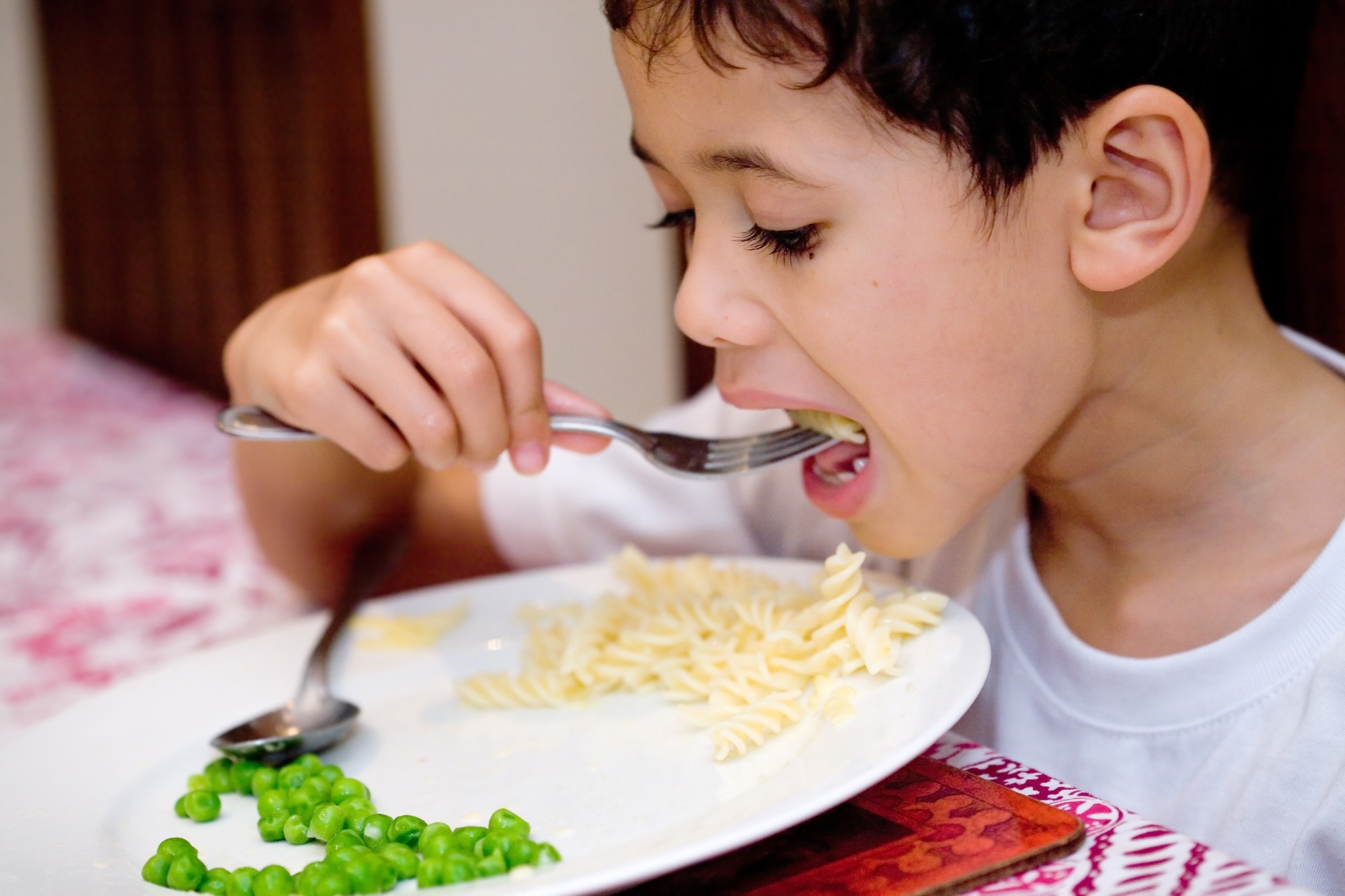 Study: Influence of Eating Behavior and Dietary Patterns on Gut Microbiota Formation in Children with Autism Spectrum Disorder. Image credit: Juriah Mosin/Shutterstock.com
A recent study published in the journal Nutrients reveals that autism spectrum disorder is associated with altered gut microbiota composition in children, depending on their eating habits and food selectivity. The study also highlights the potential significance of personalized dietary interventions in altering gut microbiota composition and intestinal barrier markers.
Food selectivity shapes gut health in autism
Autism spectrum disorder (ASD) has become an extremely common neurodevelopmental disorder among children worldwide. According to recent international surveillance data, it is estimated that every 31st child aged 4–8 years has ASD.
Besides neuropsychiatric symptoms, children with ASD exhibit a range of physical conditions, including immune dysfunction, gastrointestinal complications, and eating disorders. These conditions can influence ASD pathogenesis and progression primarily through the gut microbiota-brain axis.
Existing evidence indicates that children with ASD often exhibit altered gut microbiota composition, which triggers systemic inflammation by activating immune cells. These cells can impair microglial activity and the integrity of the intestinal and blood–brain barriers, which are major hallmarks of ASD.
Gastrointestinal complications can also trigger sleep disturbances, irritability, and aggression, leading to worsening of the core symptoms of ASD. These symptoms can be misinterpreted by health professionals as core manifestations of the disorder rather than as indicators of gastrointestinal discomfort, leading to delayed diagnosis of the actual gastrointestinal pathologies.
To avoid delayed diagnosis of physical health complications and resultant exacerbation of core ASD symptoms, substantial efforts have been put forward in recent times to investigate changes in gut microbiota composition, the prevalence of comorbid pathologies, and their connection with the core symptoms of ASD.
The current study aimed to characterize the composition of the gut microbiota in relation to eating habits and nutritional intake. The impact of personalized dietary interventions and short-term probiotic supplementation on gut microbiota composition and intestinal barrier markers was also investigated.
Examining microbiota changes after dietary interventions
The study included 96 children with ASD and 39 children without any neurodevelopmental or psychiatric disorder (control group).
Fecal samples of all participants were collected and analyzed for gut microbiota composition at baseline. Biomarkers of intestinal inflammation and barrier function were also assessed. Information on eating habits and dietary patterns was collected through questionnaires.
The children with ASD were prescribed a rotational diet or an elimination diet based on clinical examination, laboratory assessment, and parental interview. An elimination diet is a dietary plan that temporarily removes commonly associated food items, followed by a systematic reintroduction of them one by one. A rotational diet refers to eating different types of foods over a set period rather than eating the same foods consistently.
The children followed these dietary interventions for 6 months, and also consumed a probiotic formulation for 1.5 months. At the end of the intervention period, 60 children with ASD who completed follow-up assessments were assessed for all gut-related parameters.
Selective eating linked to inflammatory gut bacteria
The study found a significant alteration in the gut microbiota composition in children with ASD compared to their peers without the disorder. However, the study did not identify major differences in overall microbial diversity between groups, despite significant differences in specific bacterial taxa.
In children with ASD who were breastfed, an increased abundance of certain bacteria was observed, which can potentially contribute to the pathogenesis of gastrointestinal and neuropsychiatric disorders. These children also exhibited a reduced abundance of butyrate-producing bacteria, which are essential for maintaining intestinal barrier integrity, reducing inflammation, and improving metabolic health.
The characterization of gut microbiota in formula-fed children with ASD exhibited an increased abundance of potentially unfavorable bacteria. Evidence has linked some of these bacteria with depressive disorders.
In addition to feeding type, eating habits significantly influenced gut microbiota composition. Children with ASD who exhibited selective eating behaviors showed higher levels of bacterial taxa linked to inflammatory activity, which may contribute to gastrointestinal disorders and neuropsychiatric symptoms.
Children with ASD who did not display selective eating habits also showed elevated levels of inflammation-associated bacteria compared with the control group. However, comparisons between ASD children with and without selective eating patterns revealed increases in both inflammation-associated and anti-inflammatory bacterial populations. The rise in anti-inflammatory bacteria may represent a compensatory response to heightened inflammatory signaling.
Food selectivity, a common feature of eating disorders in children with ASD, is associated with inadequate intake of essential nutrients. Limiting food groups that support a healthy gut microbiota, including fruits, vegetables, and dietary fiber, may promote the growth of potentially harmful bacteria while reducing beneficial microbial populations.
Regarding dietary interventions, the study found that children with ASD who followed an elimination diet showed increased levels of beneficial short-chain fatty acid-producing bacteria.
The gut microbiota profile of children with ASD who followed a rotational diet also showed mixed microbial shifts, including potentially beneficial changes in certain bacterial populations. However, increases in bacterial taxa linked to inflammatory activity were observed regardless of dietary adherence.
Overall, these findings suggest that different types of dietary interventions are associated with multidirectional shifts in gut microbiota composition, affecting both potentially beneficial and potentially pathogenic bacterial populations. Further research in larger cohorts and randomized controlled trials is needed to better understand.
Among the children with ASD who participated in the study, 81 were boys, and 15 were girls. Although sex differences in the gut microbiota become significant only during puberty, the researchers stated that the residual confounding resulting from the pronounced sex imbalance between groups cannot be fully ruled out.
The researchers also cautioned that the study had a non-randomized design and combined dietary interventions with probiotic supplementation, making it difficult to determine the individual contribution of each intervention to the observed changes in microbiota.
Download your PDF copy by clicking here.
Journal reference:
- Smolko NA. (2026). Influence of Eating Behavior and Dietary Patterns on Gut Microbiota Formation in Children with Autism Spectrum Disorder. Nutrients. DOI: https://www.mdpi.com/2072-6643/18/10/1506. https://www.mdpi.com/2072-6643/18/10/1506
 Gut bacterial metabolite linked to inflammation in liver disease