By simultaneously shutting down three survival pathways, researchers triggered durable pancreatic tumor regression in mice and human tumor-derived models, offering a cautious yet promising route to overcoming drug resistance.
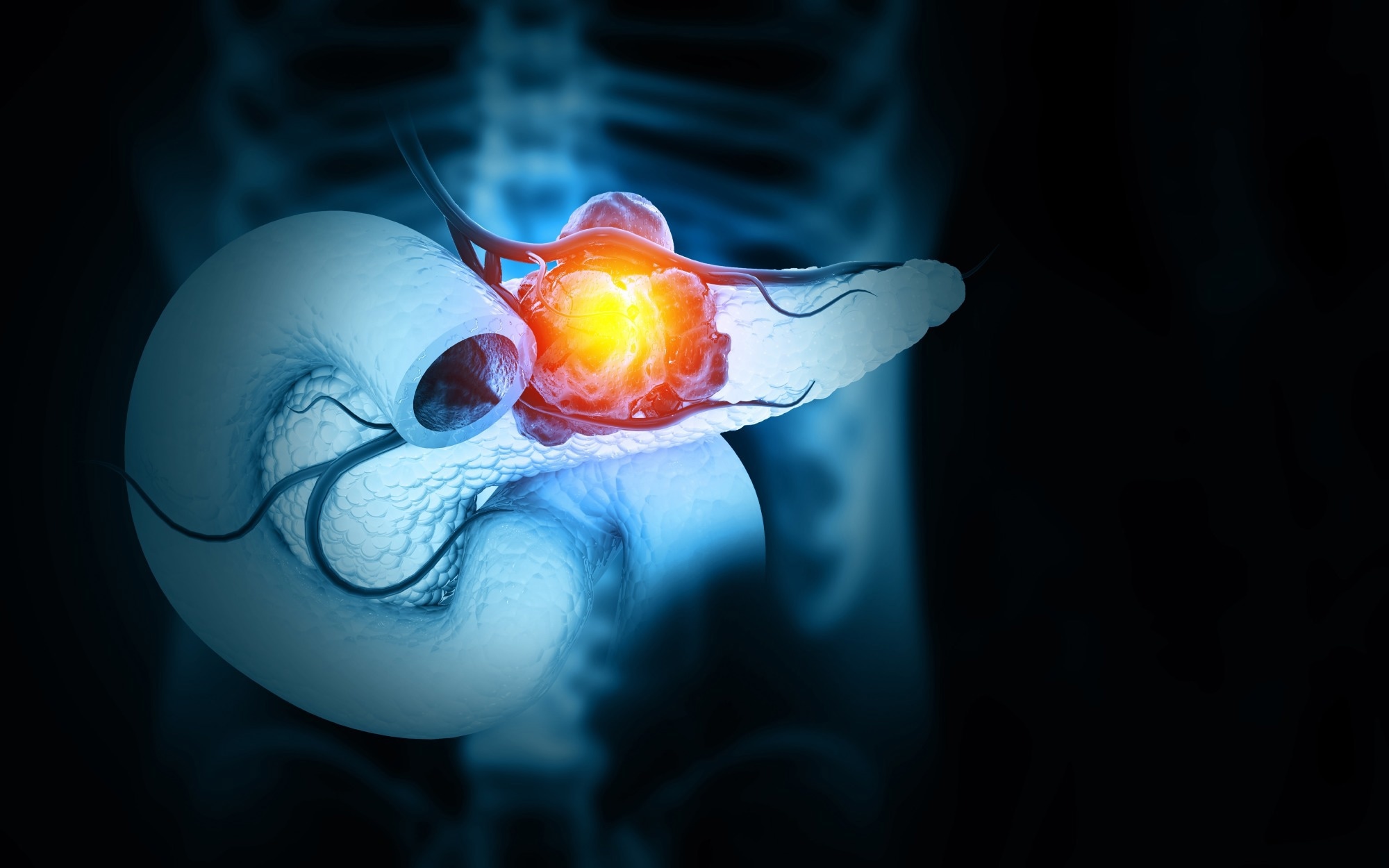
Study: A targeted combination therapy achieves effective pancreatic cancer regression and prevents tumor resistance. Image Credit: crystal light / Shutterstock
In a recent study published in PNAS, a group of researchers investigated whether simultaneous inhibition of Kirsten rat sarcoma viral oncogene homolog (KRAS), Epidermal Growth Factor Receptor (EGFR), and Signal Transducer and Activator of Transcription 3 (STAT3) could induce durable pancreatic tumor regression and prevent treatment resistance.
Pancreatic Cancer Resistance Pathways
Pancreatic ductal adenocarcinoma remains one of the deadliest cancers, with survival rates still alarmingly low despite advances in cancer treatment. Cancer cells become resistant to targeted therapies, which restricts their clinical efficacy, and tumors continue to grow even after treatment.
Many pancreatic tumors are initiated by KRAS mutations, making KRAS-targeted therapies a major breakthrough. It is becoming clear that during treatment-resistant tumor growth, neoplastic cells can activate alternative signaling pathways to survive targeted therapies. In this manner, understanding the mechanisms of escape should be central to achieving long-lasting responses in patients.
Preclinical Pancreatic Cancer Models
Multiple preclinical models were used to study the combined effects of targeting KRAS, EGFR, and STAT3. Genetically engineered mouse models with mutant KRAS and Tumor Protein P53 (TP53) genes were used to replicate human pancreatic cancer, along with orthotopic pancreatic tumors in which tumors were implanted directly in the pancreas of immunocompetent mice, and patient-derived xenografts generated from human pancreatic ductal adenocarcinoma samples and implanted in immunocompromised mice.
To determine the roles of RAF1 (Raf-1 proto-oncogene), EGFR, and STAT3 in tumor survival, tumor cells from pancreatic tumors were isolated from the pancreas of mice and cultured under controlled laboratory conditions, and RAF1, EGFR, and STAT3 were selectively removed or suppressed using genetic engineering techniques.
Different signaling molecules including Janus kinase 1 (JAK1), Janus kinase 2 (JAK2), Interleukin-6 receptor alpha (IL6RA), and FYN proto-oncogene, Src family tyrosine kinase (FYN) were also evaluated to determine their roles in resistance mechanisms.
For pharmacological studies, mice received daraxonrasib, a RAS(ON) inhibitor that targets multiple active RAS proteins and KRAS-driven signaling, afatinib, an irreversible inhibitor of EGFR and human epidermal growth factor receptor 2 (HER2), and SD36, a proteolysis-targeting chimera (PROTAC) designed to degrade STAT3.
Tumor growth was monitored by ultrasound imaging, and tissue analyses, immunohistochemistry, blood tests, and survival assessments were used to assess efficacy, toxicity, and long-term outcomes across different experimental paradigms.
STAT3 Drives Treatment Resistance
The study revealed that inhibition of RAF1 and EGFR alone was insufficient to eliminate advanced pancreatic tumors. Although some smaller tumors responded, larger tumors survived by activating STAT3 signaling.
Researchers found that resistant cancers exhibited elevated phosphorylation of STAT3 at tyrosine 705, indicating increased active STAT3. When STAT3 was silenced, the resistant cancer cells died, whereas introducing a permanently activated form of STAT3 into originally sensitive cells led them to develop resistance.
These data demonstrate that STAT3 is an important driver of therapy resistance.
Further experiments demonstrated that STAT3 activation was not primarily controlled by traditional JAK1, JAK2, or IL6RA signaling pathways. Instead, increased FYN activity promoted STAT3 activation.
Suppressing FYN reduced STAT3 signaling and eliminated resistant tumor cells, revealing a previously underappreciated resistance mechanism.
In orthotopic tumors derived from genetically engineered mouse pancreatic cancer cells, simultaneous deletion of RAF1, EGFR, and STAT3 triggered apoptosis and complete tumor disappearance within 3 to 4 weeks, with no evidence of recurrence during follow-up of up to 300 days.
Histopathological analysis of the specimens demonstrated complete elimination of all tumor tissue and associated stroma, indicating tumor regression.
Triple Therapy Prevents Tumor Relapse
Subsequently, the researchers developed a drug-based approach based on the results. Daraxonrasib alone inhibited the extracellular signal-regulated kinase (ERK) signaling pathway and slowed tumor growth, but later tumors developed resistance and resumed growth. The combination of daraxonrasib and afatinib produced better responses, but did not completely destroy the tumor.
Combination therapy with daraxonrasib, afatinib, and SD36 induced strong apoptosis and complete regression in orthotopic mouse tumors, with mice remaining free of detectable tumor for over 200 days post-treatment, without any evidence of tumor recurrence or resistance. In genetically engineered mouse tumors, the triple therapy produced regression in all treated tumors, with half showing complete regression within 30 to 60 days.
Importantly, the three-drug combination was well tolerated in mice, with no weight loss, major organ damage, blood abnormalities, or metabolic changes observed in the assays.
The therapeutic impact was not limited to murine tumor cells. In genetically engineered mouse tumors, there was a significant reduction in size and complete disappearance in some tumors.
All human tumor-derived patient-derived xenografts implanted in immunocompromised mice with various mutations, including KRAS, TP53, SMAD family member 4 (SMAD4), and cyclin-dependent kinase inhibitor 2A (CDKN2A), exhibited significant reductions in tumor size after initiation of triple therapy.
Similar tumor responses were also observed with MRTX-1133, a selective inhibitor of KRAS G12D, compared with daraxonrasib, indicating that this approach could be applied to other KRAS-directed therapies. Across the tested models, dual-drug combinations were less effective than the triplet regimen.
However, the authors emphasized several translational limitations. The afatinib dose used in mice was much higher than those previously tested in pancreatic cancer clinical trials, raising tolerability concerns, while SD36 does not yet have optimal pharmacological properties for clinical trials.
Multi-Target Pancreatic Cancer Strategy
The researchers showed that pancreatic tumors rely on interconnected KRAS, EGFR, and STAT3 signaling networks for survival. Blocking only one or two pathways allowed cancer cells to adapt and develop resistance. In contrast, simultaneous inhibition of all three pathways led to durable tumor regression and prevented relapse across multiple experimental models, including human tumor-derived xenografts. The combination of daraxonrasib, afatinib, and SD36 achieved long-term tumor control with an acceptable safety profile in preclinical mouse models.
These results provide strong evidence that a multi-targeting therapeutic approach may provide a promising new strategy to help improve outcomes for patients with pancreatic ductal adenocarcinoma, provided that clinically suitable and tolerable versions of the regimen can be developed.
The findings remain preclinical and require further drug development and clinical validation. Further studies are needed to identify combinations of treatments capable of overcoming resistance while remaining safe and effective for patients.
The authors note that an earlier version of this work was retracted and that the current article represents a revised version of that work.
Download your PDF copy by clicking here.
Journal reference:
- Liakia, V., Barrambana, S., Kostopoulou, M., Lechuga, C. G., Zamorano-Dominguez, E., Acosta-Gallego, D., Morales-Cacho, L., Álvarez, R., Sun, P., Rosas-Perez, B., Barrero, R., Jiménez-Parrado, S., López-García, A., San Roman, M., López-Gil, J. C., Drosten, M., Sainz, B., Jr., Musteanu, M., Caleiras, E., Dusetti, N., Poli, V., Sánchez-Bueno, F., Guerra, C., & Barbacid, M. (2026). A targeted combination therapy achieves effective pancreatic cancer regression and prevents tumor resistance. Proceedings of the National Academy of Sciences of the United States of America. 123(23). DOI: 10.1073/pnas.2610708123, https://www.pnas.org/doi/10.1073/pnas.2610708123
 City of Hope develops adaptive plug-and-play CAR T technology to attack tumors