A large prospective study of older Swedish adults identified specific gut bacteria and microbial functions linked to future type 2 diabetes risk, with dietary fiber emerging as a potential modifier of one of the microbiome's most closely watched species.
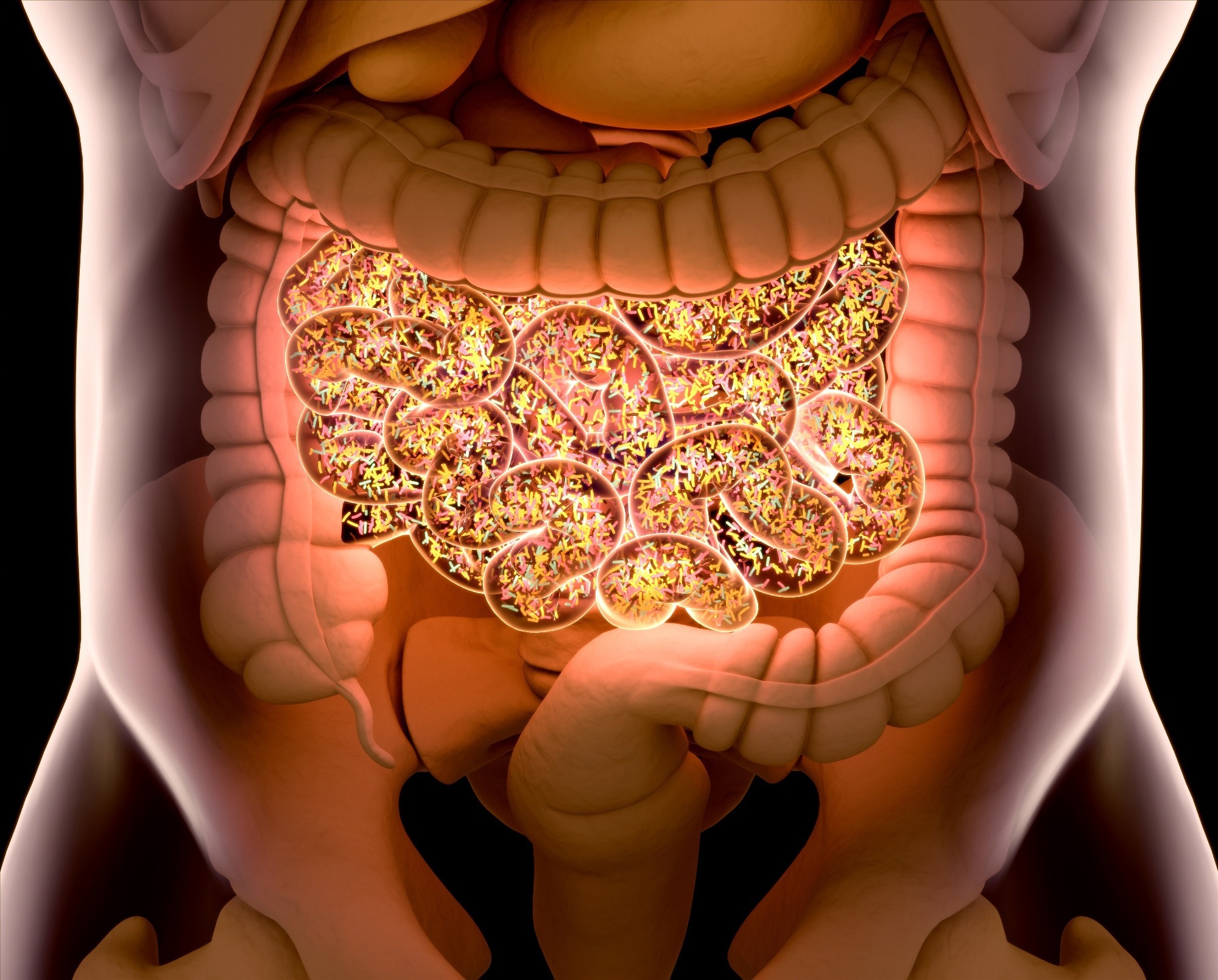 Study: Gut microbiome composition and functional potential associate with incident type 2 diabetes in 4,685 adults from a Swedish prospective cohort. Image credit: Anatomy Image/Shutterstock.com
A recent study published in Cell Reports Medicine analyzed shotgun metagenomic data to identify taxonomic and functional characteristics of the gut microbiome associated with the future risk of developing type 2 diabetes (T2D) among Swedish adults.
Gut microbes emerge as key players in diabetes
Type 2 diabetes (T2D) is a chronic metabolic disorder defined by persistently elevated blood glucose due to impaired insulin secretion, insulin resistance, or both. T2D is a growing global health concern, with prevalence projected to rise sharply by 2050.
Emerging evidence highlights the gut microbiome as a key player in T2D pathophysiology. Cross-sectional studies commonly report reduced gut microbial diversity and a lower abundance of butyrate-producing bacteria in T2D; however, their cross-sectional design precludes causal inference, and confounding from microbiome-altering antidiabetic medications such as metformin remains a concern.
Dietary fiber is central to shaping the gut microbiome, supporting fiber-fermenting bacteria that produce health-promoting short-chain fatty acids (SCFAs) such as butyrate. Conversely, low fiber intake reduces SCFA production and impairs intestinal barrier integrity, facilitating systemic inflammation and increasing T2D risk.
Despite increasing interest, prospective studies investigating the gut microbiome and incident T2D remain scarce. Most existing work relies on small sample sizes and 16S rRNA sequencing, limiting reproducibility and consistency. Only one large-scale study using shotgun metagenomics has linked specific microbial species to T2D, while few have comprehensively assessed gut metabolites or microbiome function in a prospective context. These gaps highlight the need for large, integrative studies combining taxonomic and functional analyses to clarify the microbiome’s role in T2D development.
Shotgun metagenomics maps gut microbes before diabetes diagnosis
The current study examined the taxonomic and functional characteristics of the gut microbiome associated with T2D incidence in a medication-naive population. Data were sourced from the Swedish Infrastructure for Medical Population-Based Life-Course and Environmental Research (SIMPLER), a comprehensive platform integrating information from two large, population-based cohorts: the Swedish Mammography Cohort (SMC) and the Cohort of Swedish Men (COSM). SIMPLER data are linked to the national Swedish health and population registries.
Randomly selected participants joined clinical subcohorts, providing extended health information and, for some, biological samples, including fecal specimens. Metagenomic data were available for 6,150 participants who provided fecal samples. Individuals with colorectal cancer, inflammatory bowel disease, recent antibiotic use, or prevalent diabetes were excluded, resulting in a final analytic sample of 4,685 participants.
Strain-level profiling of Akkermansia muciniphila was conducted using StrainPhlAn, with samples and markers retained according to established parameters. After filtering, 2,425 samples were included for phylogenetic analysis. Covariate information was obtained from questionnaires, clinical measurements, and registry data.
Nine gut microbes linked to future diabetes risk
Over a median follow-up of 5.3 years, shotgun metagenomic data from 4,685 participants from the Swedish SIMPLER cohort were analyzed. The cohort had a mean age of 73.9 years, with 49% women. During this period, 383 participants, representing 8.2% of the study population, developed type 2 diabetes, with cases distributed across three subcohorts defined by age and location.
Gut microbiome diversity was not significantly associated with T2D risk. Although some patterns in microbial composition initially appeared linked to increased risk, these associations did not persist over time. At the species level, 23 gut bacteria were identified as strong candidate microbial markers associated with future T2D risk, with 18 showing significant associations. Ten were linked to higher risk, mainly from the Bacteroidetes group, while eight, primarily from the Firmicutes group, were associated with lower risk.
Six species, Desulfovibrio piger, Alistipes communis, Alistipes finegoldii, Akkermansia muciniphila, Ruminococcus gnavus, and GGB3614_SGB4886 (Lachnospiraceae), were most strongly linked to increased T2D risk. Three species, Erysipelotrichaceae bacterium, Coprococcus catus, and Clostridia unclassified SGB6317, consistently showed a protective association. These findings highlight key bacteria that may be associated with T2D risk.
For most key species, T2D risk increased or decreased linearly with abundance. However, only very low levels of Coprococcus catus were associated with increased risk, suggesting that severe depletion of this bacterium may be particularly detrimental.
The association between Akkermansia muciniphila and T2D risk was stronger among participants with low dietary fiber intake, but weaker with higher fiber intake, suggesting a possible diet-dependent effect; however, formal statistical tests did not confirm a significant interaction between fiber intake and T2D risk. Notably, the link between A. muciniphila and inflammation also varied by fiber intake; higher levels of the bacterium increased inflammation risk in low-fiber diets but decreased it in high-fiber diets. These findings suggest that the health effects of A. muciniphila depend on dietary context and are related to overall abundance rather than specific strains.
Three gut microbial metabolic pathways showed robust associations with T2D risk. Asparagine degradation was associated with a higher risk, whereas mannose degradation and the non-oxidative pentose phosphate pathway were associated with a lower risk. These results indicate that specific microbial metabolic activities may be linked to the development of diabetes.
Sensitivity analysis revealed that several key associations remained significant after adjusting for fasting plasma glucose and competing risks, although not all microbial features retained significance, supporting the robustness of the findings.
Diet–microbiome interactions may support personalized prevention
The current study highlights that several gut microbial species are associated with the development of T2D, with some of these associations influenced by diet. Temporal analyses further indicated that functional pathways in the gut microbiome, such as those related to SCFA metabolism, can precede the onset of T2D by years.
If validated in future studies, these findings could improve risk stratification and support the development of personalized interventions targeting diet–microbiome interactions. However, because this was an observational study conducted in an older Swedish population, the findings cannot establish cause and effect and should be validated in more diverse populations before being generalized.
Download your PDF copy now!
 $5.7 million NIH grant supports research on why lean people develop insulin resistance