Long-haul travel may do more than disturb sleep; it could also alter the gut microbiome in ways that influence recovery and performance, although researchers say stronger evidence in elite athletes is still needed.
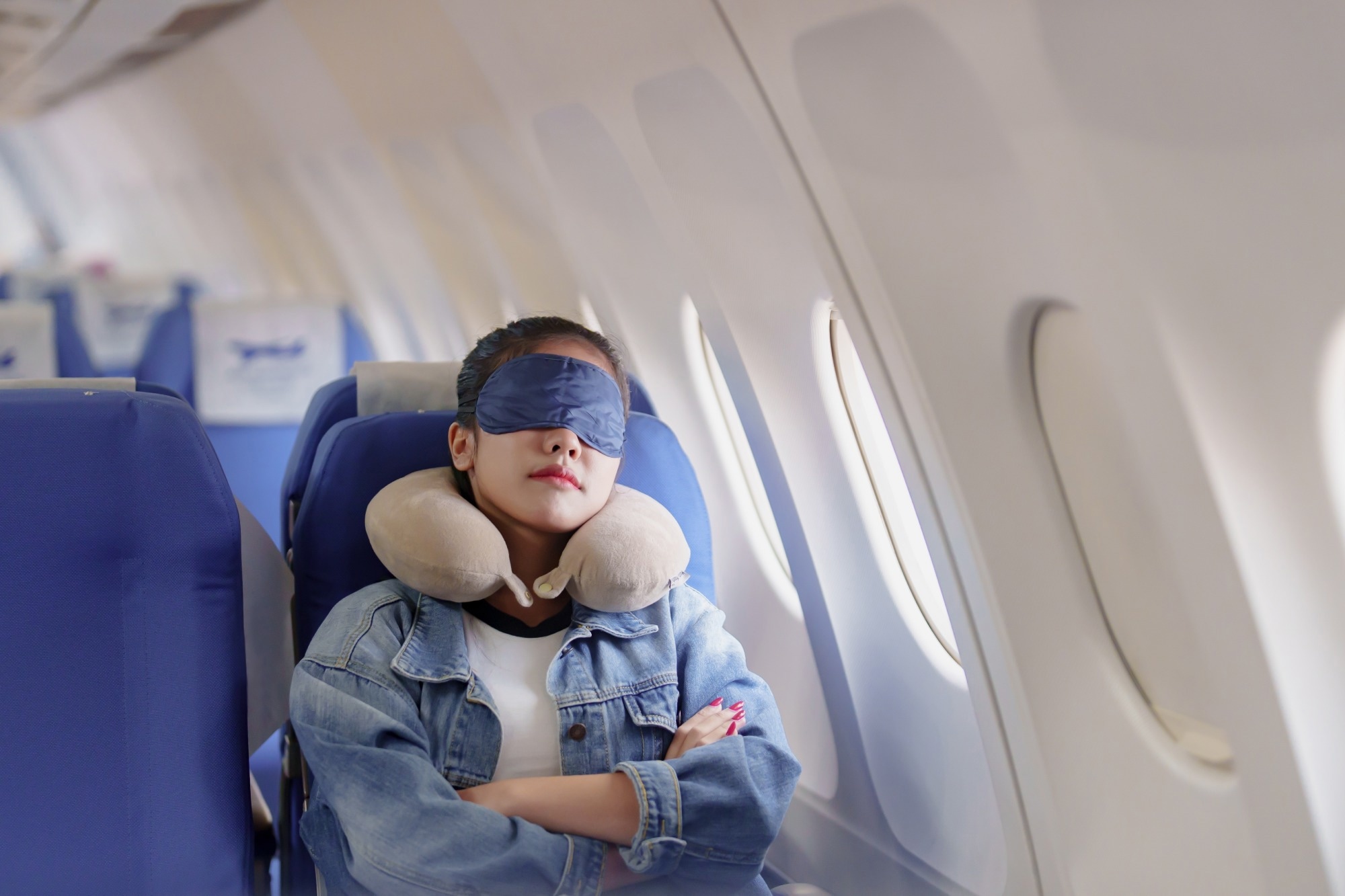 Study: Travel-Induced Circadian and Microbiota Disturbances: Implications for Athlete Health and Performance: A Narrative Review. Image credit: mojo cp/Shutterstock.com
A recent narrative review in Nutrients examines the interaction between the gut microbiota (GM) and the central circadian system, both of which exhibit synchronized daily oscillations that are important for homeostasis.
Travel-induced circadian disruption and impacts
The suprachiasmatic nucleus (SCN) of the hypothalamus acts as the body's master circadian clock, synchronizing peripheral clocks across tissues and organs. Rapid travel across time zones can disrupt this system by creating a mismatch between the SCN and local time, producing the familiar symptoms of jet lag, including disturbed sleep, fatigue, loss of appetite, and gastrointestinal problems. Studies in elite track cyclists and soccer players have shown that long-haul travel, particularly eastward, can substantially reduce sleep duration and quality.
Although light is the primary cue that resets the circadian clock, other factors also influence its timing. Exercise can either advance or delay circadian rhythms depending on when it is performed and an individual's chronotype, with one study finding that early- and mid-afternoon exercise produced a particularly strong phase-advancing effect. Meal timing can also shift the body's peripheral clocks, influencing liver clock gene expression even when the central SCN clock remains unchanged. Likewise, consuming caffeine around three to four hours before bedtime has been shown to delay the evening rise in melatonin by approximately 40 minutes.
Disrupting the circadian system can also have broader hormonal, metabolic, and cognitive consequences. Flight attendants repeatedly exposed to long-haul travel showed higher daytime cortisol levels and poorer cognitive performance, including slower reaction times on attention-based tasks, than a ground-crew control group, although these differences were not observed after domestic flights.
Controlled human studies and research involving shift workers also suggest that circadian misalignment can impair glycaemic control by raising glucose and insulin levels while contributing to short-term metabolic and cardiovascular strain. For athletes, these disruptions may reduce recovery capacity, slow reaction times, and impair cognitive performance, although direct evidence from traveling elite athletes remains limited.
Factors affecting the gut microbiota and role of circadian regulation
Circadian rhythms and the GM are closely interconnected. The gut microbial community is highly influenced by the host's feeding–fasting cycles. In animal studies, circadian misalignment has been shown to induce microbiota dysbiosis, with similar alterations also observed in humans. This is associated with greater susceptibility to metabolic disorders and obesity. Overall, the documented findings suggest a signaling pathway linking the microbiota, bile acid metabolism, and circadian clock regulation. Researchers also noted that disruption of the intestinal clock impaired immune cell recruitment and worsened colitis in mouse models.
Much of the existing evidence is derived from experimental and animal studies. Its direct relevance to elite athletic populations is yet to be established. Broadly, human observational evidence associates disturbances in circadian rhythms with reduced microbial diversity and shifts towards potentially pro-inflammatory taxa.
One study of 99 adults with sleep disturbances and symptoms of depression and anxiety found reduced Bacteroides, increased Firmicutes, and lower levels of beneficial genera including Bifidobacterium and Lactobacillus. A separate human study found that greater overall gut microbial diversity was associated with higher sleep efficiency and longer total sleep duration.
Other factors that may influence the GM include activation of the HPA axis and the sympathetic nervous system (SNS), cortisol-related changes in intestinal motility and mucus production, hydration status, dietary tendencies towards highly processed and fast foods during travel, and hygiene and access to clean sanitary conditions during travel. It must be noted that much of the evidence on these factors is derived from non-athletic populations. However, it includes certain groups that frequently engage in cross-time-zone travel, like airline pilots.
Contribution of GM to health and performance
Evidence from human and animal studies suggests that probiotics and other forms of microbiota changes may positively influence exercise capacity and muscle-related outcomes, although much of the mechanistic evidence comes from animal models. A study of 40 male long-distance runners found that supplementation with a three-strain probiotic increased VO2max by 4.7% and time to exhaustion by 7.2% compared with placebo. The probiotic group also showed lower peak creatine kinase concentrations and reduced delayed-onset muscle soreness.
A possible association has also been noted between exercise and a higher abundance of SCFA-producing bacteria. In a cross-sectional study of 50 young men, including cyclists, football players and non-athletes, individuals with very high aerobic capacity had higher abundances of the genus Prevotella, particularly Prevotella copri, a recognized producer of SCFAs. Because the study was observational, it could not determine whether these microbial differences contributed to aerobic capacity or simply reflected factors such as training or diet.
Concerning molecular mechanisms, the available evidence is largely derived from animal studies, and direct data from athletes remain limited. SCFAs produced by the gut microbiota, particularly acetate, can be absorbed by skeletal muscle and used as an energy substrate. They may also contribute to insulin signaling and glycogen metabolism, while experimental studies suggest additional roles in glucose uptake, fatty-acid oxidation and mitochondrial function.
One study in obese mice found that dietary butyrate supplementation was associated with increased lipid oxidation and a higher proportion of mitochondria-rich type I muscle fibers. These findings have not yet been confirmed in human athletes.
Gaps in research and strategies to mitigate circadian and microbiota disruption
A key limitation of the existing research is that human studies frequently involve small sample sizes and homogeneous populations, often consisting mainly of male endurance athletes. Short intervention periods also make it difficult to assess long-term effects, while differences in diet, training load and baseline microbiota composition are not always adequately controlled.
Finally, the translational relevance of animal studies to humans is limited because of fundamental physiological and metabolic differences. Germ-free and microbiota-depleted mouse models may also overestimate the microbiota's role in muscle mass, metabolism and performance.
The review suggests that managing travel-induced circadian disruption and gut microbiota disturbances is likely to require a combination of strategies rather than a single intervention. These include sleep hygiene, appropriately timed light exposure, melatonin, meal timing, hydration and dietary approaches that support the gut microbiota, including prebiotic fiber and probiotics. However, evidence that these interventions prevent travel-induced dysbiosis or improve athletic performance remains limited.
The authors describe these approaches as evidence-informed considerations rather than formal recommendations. Any intervention should be tailored to the athlete, their travel schedule and recovery needs. The timing of light exposure and melatonin is particularly important, since applying either at the wrong biological time could shift the circadian clock in the opposite direction.
Download your PDF copy by clicking here.
Journal reference:
-
Biliński, K. et al. (2026). Travel-Induced Circadian and Microbiota Disturbances: Implications for Athlete Health and Performance: A Narrative Review. Nutrients. 18(10), 1523. DOI: https://doi.org/10.3390/nu18101523. https://www.mdpi.com/2072-6643/18/10/1523
 Oral microbiome imbalances may contribute to symptomatic hand arthritis