From contaminated drinking water to flood-related pathogen exposure, European evidence shows how extreme rainfall can create cascading infectious disease risks while exposing major gaps in surveillance and preparedness.
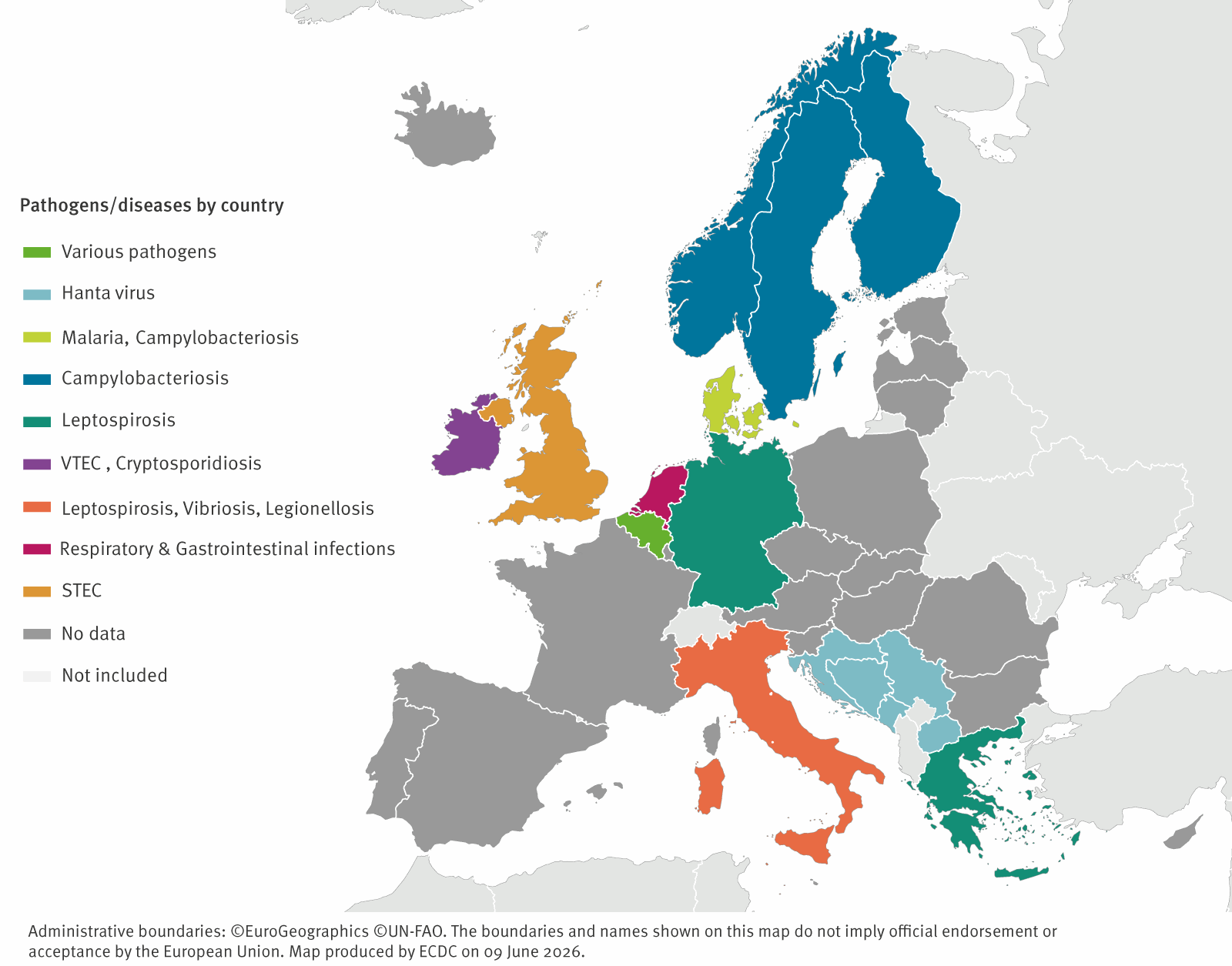
Map to show geographical distribution of reported diseases or pathogens associated to heavy rainfall or flooding events, European Union/ European Economic Area countries, the United Kingdom and European Union enlargement countries, 1 January 2018–15 June 2025
A recent Eurosurveillance journal study conducted a rapid review of evidence on the associations between heavy rainfall and flooding events and the occurrence of infectious diseases in Europe, using articles published between 2018 and 2025 and reporting preparedness and response measures.
Infectious Disease Risks and Flooding in Europe
Europe is facing a mounting public health challenge as climate change drives more frequent and severe extreme weather events, particularly heavy rainfall and flooding. Previous European evidence has linked flooding with food- and waterborne diseases, including norovirus and Escherichia coli, while the current review identified campylobacteriosis, leptospirosis, and Shiga toxin-producing Escherichia coli (STEC) among reported outcomes. More broadly, stagnant water may create breeding sites for mosquitoes that transmit illnesses such as dengue and West Nile fever. Contaminated water supplies, expanded mosquito breeding grounds, and damaged infrastructure all contribute to the increased risk.
Despite growing awareness of these threats, relatively few European studies published since 2018 have examined these associations. The available evidence is limited in scope and unevenly distributed across Europe, leaving uncertainty about the magnitude and complexity of the risks. As a result, critical questions remain about the full spectrum of infectious disease risks posed by today’s climate conditions and how best to prepare for them.
To address these uncertainties, it is essential to investigate the evolving links between extreme weather and public health. This includes examining a wider range of pathogens and syndromes across regions that remain understudied, particularly southern, central, and eastern Europe. Gaining a clearer understanding of these relationships is vital for developing more effective public health strategies and ensuring Europe’s resilience in the face of climate change.
Examining the Association between Heavy Rainfall, Flooding, and Infectious Diseases Across Europe
Researchers assessed heavy rainfall and flooding, two of the most common extreme weather events in Europe, which are both linked to infectious diseases. To maximize study inclusion, no strict definitions for these events were enforced; rather, a broad set of criteria aligned with established literature was accepted.
Studies published between 1 January 2018 and 15 June 2025 were included if they examined the association or impact of heavy rainfall or flooding on infectious diseases among humans in Europe. Research addressing any infectious disease, whether caused by specific pathogens or of unknown etiology, identified by symptoms such as gastrointestinal infections, was eligible.
Outbreak investigations and long-term surveillance studies were also considered. Data extraction followed a piloted sheet, and study quality was assessed using a modified critical appraisal checklist for analytical cross-sectional studies. The review encompassed all countries in the European Union (EU), the European Economic Area (EEA), the United Kingdom, and EU enlargement countries, and identified relevant articles through PubMed, Embase, and the Cochrane Library.
Heavy Rainfall and Flooding Linked to Infectious Disease Outbreaks
Of 897 identified records, 14 articles were included, covering outbreaks, long-term trends, and modeling of infectious diseases linked to heavy rainfall and flooding. These articles covered campylobacteriosis, leptospirosis, Shiga toxin-producing Escherichia coli (STEC)/verocytotoxigenic Escherichia coli (VTEC), vibriosis, hantavirus, legionellosis, cryptosporidiosis, malaria, and other gastrointestinal illnesses, highlighting the diverse infectious disease outcomes reported across Europe.
Several outbreaks were associated with contamination of food or water after heavy rainfall, with examples including STEC in the United Kingdom, where lettuce was the likely source and investigators hypothesized that rainfall may have washed pathogens from nearby sheep holdings into crop fields, and campylobacteriosis in Norway, where heavy rainfall was suspected of contributing to cracks and contamination in a mountain drinking-water reservoir. These illustrate how extreme weather can compromise food and water safety, increasing disease transmission.
Leptospirosis cases were reported following heavy rainfall and flooding, including among people exposed during cleanup or agricultural work, demonstrating the heightened risk of infection from contact with contaminated water. Flooding was also temporally associated with cases of vibriosis and with an outbreak of legionellosis, particularly in vulnerable groups. In Italy, five vibriosis cases occurred within 1 to 3 months after severe flooding sent mud and river water into the sea; legionellosis was associated with heavy rain during an unusually warm and humid summer, with a public fountain identified as the most likely source, suggesting that combinations of environmental conditions may influence pathogen growth and exposure risks.
Urban flooding in the Netherlands was associated with more self-reported gastrointestinal and respiratory symptoms among people exposed to floodwater, even when causative pathogens were not identified. Long-term studies showed that heavy rainfall and flooding were associated with higher infectious disease incidence and altered seasonal patterns in some settings. In Denmark, several large outbreaks were traced to sewage contamination after heavy rainfall, highlighting the impact on community water quality.
Across five Balkan countries, hantavirus-related hemorrhagic fever incidence increased following a 2014 cyclone that caused heavy rainfall and severe flooding, while in Ireland, VTEC and Cryptosporidium infections rose in flood-prone areas outside usual seasonal peaks. In Belgium, only the respiratory syncytial virus (RSV) showed a clear post-rainfall increase. Historically, Plasmodium vivax malaria incidence on the Danish island of Falster tripled in spring 1873 after a major storm surge in November 1872, a pattern suggesting that flooding may have amplified transmission.
A modeling study projected that heavy summer rainfall could sharply increase Campylobacter infections in Nordic countries, while heavy rainfall was associated with lower incidence in winter; longer-term climate projections suggested rising incidence but carried substantial uncertainty. Three studies described cascading events, such as flooding and sewage overflows, that led to outbreaks and underscored vulnerabilities in infrastructure and public health systems.
Building Resilient Public Health Strategies in an Era of Extreme Weather
As heavy rainfall and flooding events become more common, it is essential to develop resilient public health strategies that can protect communities from health risks. Clear public health messages, especially for vulnerable groups such as older adults, people with health conditions or disabilities, and those at higher risk of exposure to floodwater, are essential. But communication is not enough; practical improvements, such as better sanitation and effective drainage systems, alongside coordinated One Health and syndromic surveillance approaches, are also needed to prevent disease and keep communities safe.
Despite reported associations between extreme weather events and infectious disease outbreaks, significant research gaps persist. The authors cautioned that some relevant studies may have been missed, that definitions varied across studies, that publication bias could overestimate impacts, and that the evidence was skewed toward north-western Europe. Strengthening the evidence base will be essential for developing adaptive and effective public health strategies. Ongoing research and targeted preparedness measures will better equip communities to respond to future challenges posed by heavy rainfall and flooding.
 Optimizing respiratory virus research workflows with VACUBOY