By combining population-scale genetic data, family analyses, and brain gene-expression evidence, researchers tested how consistently personality-linked genetic signals persist across people, places, and measurement methods.
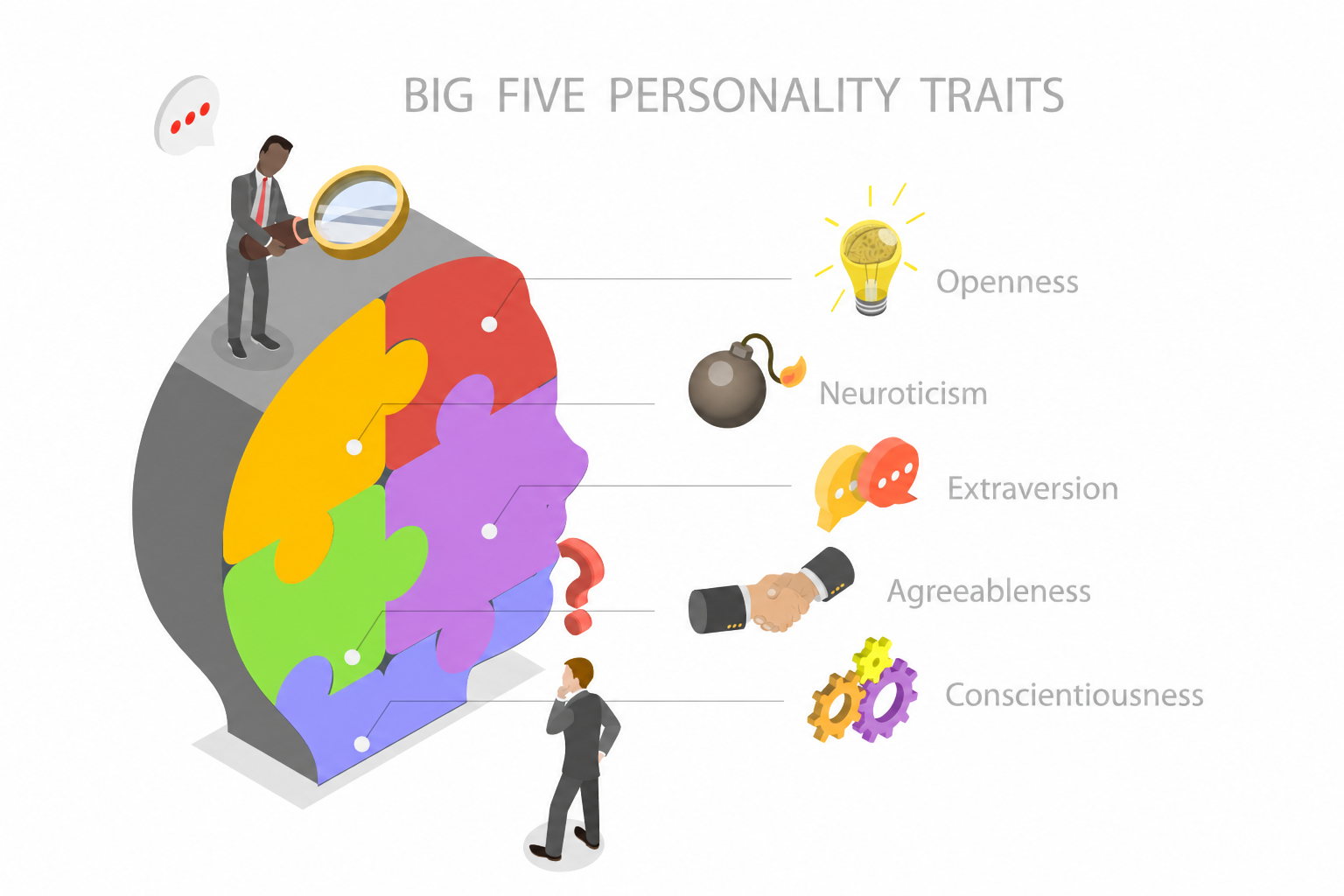
Study: Robust inference and correlates from genetic associations with personality. Image Credit: TarikVision / Shutterstock
In a recent meta-analysis published in the journal Nature, researchers explored genetic associations with the Big Five personality traits, offering new insight into the biological factors that contribute to human behavior. Analyzing 611,037 to 1.14 million individuals depending on the personality trait, they found that polygenic indices (PGIs) could predict aspects of personality and were also linked to health, behavior, psychiatric disorders, and life outcomes. Broadly consistent genetic associations were observed across cohorts, several Western geographical settings, age groups, reporter perspectives, and measurement approaches, suggesting that genetic variation may partly explain differences in personality.
Individuals differ in how they think, feel, behave, and interact with others, partly due to differences in personality. Nevertheless, studies assessing the robustness and applicability of genetic associations with personality are scarce. Researchers are exploring social and biological pathways that contribute to these genetic associations to improve understanding of personality development and its influence on health, behavior, and other life outcomes.
About the study
In the present study, researchers obtained data from the Revived Genomics of Personality Consortium (ReGPC). The analysis included 46 cohorts with participants of African- and European-like genetic backgrounds. Genome-wide association studies (GWAS) examined genetic associations with the Big Five personality traits.
From the primary European-like GWAS data, the team constructed polygenic indices (PGIs) to assess whether genetic profiles could predict openness to experience, agreeableness, extraversion, neuroticism, and conscientiousness across cohorts. In addition, they examined genetic patterns within families, including up to 50,725 individuals, such as parent-offspring pairs and dizygotic twins. They also assessed whether population structure, shared family environment, assortative mating, or parental genetic effects might have influenced the observed links between genes and personality.
Mendelian randomization (MR) was used to assess whether personality might influence biobehavioral outcomes and to determine the direction of these relationships. Further, the team investigated whether personality genetics were associated with physical health, research participation, residential mobility, and psychopathology. To evaluate whether the findings could be generalized across populations, they compared genetic signals across age, geography, veteran status, measurement instruments, and reporter perspectives. The researchers also integrated the genetic findings with gene expression data from postmortem mouse and human brain tissues to examine implicated brain cell types and molecular systems.
The researchers used several statistical approaches to test whether genetic associations remained consistent across measurement tools and ancestry groups. They also estimated the extent to which personality variation was associated with common genetic variants and examined genetic correlations between traits and other outcomes.
Results
The analysis identified 1,260 genetic variants linked to personality, including 824 in genomic regions not previously associated with the respective personality trait. Common genetic variants captured by the GWAS explained approximately five to nine percent of the variation in personality scores. When the analysis was limited to measures with typical reliability levels, the estimates increased to 9.3%-13.3%. These estimates capture only part of the genetic contribution to personality, and the researchers emphasized that environmental factors also substantially influence it.
The genetic associations were broadly consistent across cohorts but varied somewhat with age, geography, measurement method, and whether personality was reported by the participants themselves or by someone close to them. Within-family analyses indicated that shared environments, population stratification, dynastic effects, and assortative mating contributed relatively little to the observed associations overall, although small trait-specific confounding effects remained.
PGIs predicted personality traits most strongly in participants with European-like genomes, with weaker signals for extraversion, neuroticism, and openness among those with African-like genomes. Participants with genetic profiles associated with less neuroticism and greater agreeableness, extraversion, and openness were more likely to be rated by interviewers as having an attractive personality. PGIs associated with greater conscientiousness and agreeableness were also linked to higher ratings of being better groomed.
In addition, PGIs were associated with behavior and residential patterns, although the effects were small in magnitude. The findings linked higher neuroticism and lower agreeableness polygenic propensity with behaviors such as running away from home and school suspension. Higher openness PGIs predicted movement toward cosmopolitan professional areas later in life. Higher conscientiousness PGIs predicted movement toward affluent suburban communities.
The genetic associations also extended to health-related outcomes. MR analyses provided evidence that extraversion increases the risk of COVID-19 infection. Conscientiousness-associated genetic profiles were linked to greater sports participation, lower BMI, reduced substance use, fewer hospital stays, and healthier aging, whereas openness-associated genetic profiles were linked to greater nighttime activity.
Mental health showed particularly extensive genetic overlap with personality. Neuroticism-linked genetic profiles were associated with a higher risk of internalizing disorders, while extraversion showed the opposite pattern but a higher risk of neurodevelopmental disorders. Conscientiousness was associated with lower neurodevelopmental risk but higher risk of compulsive disorders. Openness also showed broad positive genetic associations with psychopathology. Most traits showed genetic enrichment in neuronal tissues and the prefrontal cortex, with agreeableness being the least heritable. The analyses also found little support for simple links between individual personality traits and dopamine- or serotonin-related neuron types. Collectively, the findings suggest some shared biological pathways across personality traits.
Conclusion
The study found consistent genetic links with personality across multiple cohorts, demographic groups, measurement methods, and family structures, although their effects on individual behaviors and life outcomes were relatively modest, and the researchers stressed that PGIs cannot predict an individual's future behavior.
In future studies, researchers could explore these genetic patterns across broader ancestral and cultural groups, while also considering age and sex. They could also combine genetic data with information on brain gene activity to clarify how personality develops through complex interactions between genes and the brain.
 A child's gut microbiome may offer early clues to type 1 diabetes risk