Three centuries of famine records, tree-ring data and historical food prices offer clues to how distant Pacific climate fluctuations may have shaped Europe's vulnerability to food shortages, with lessons for today's interconnected food systems.
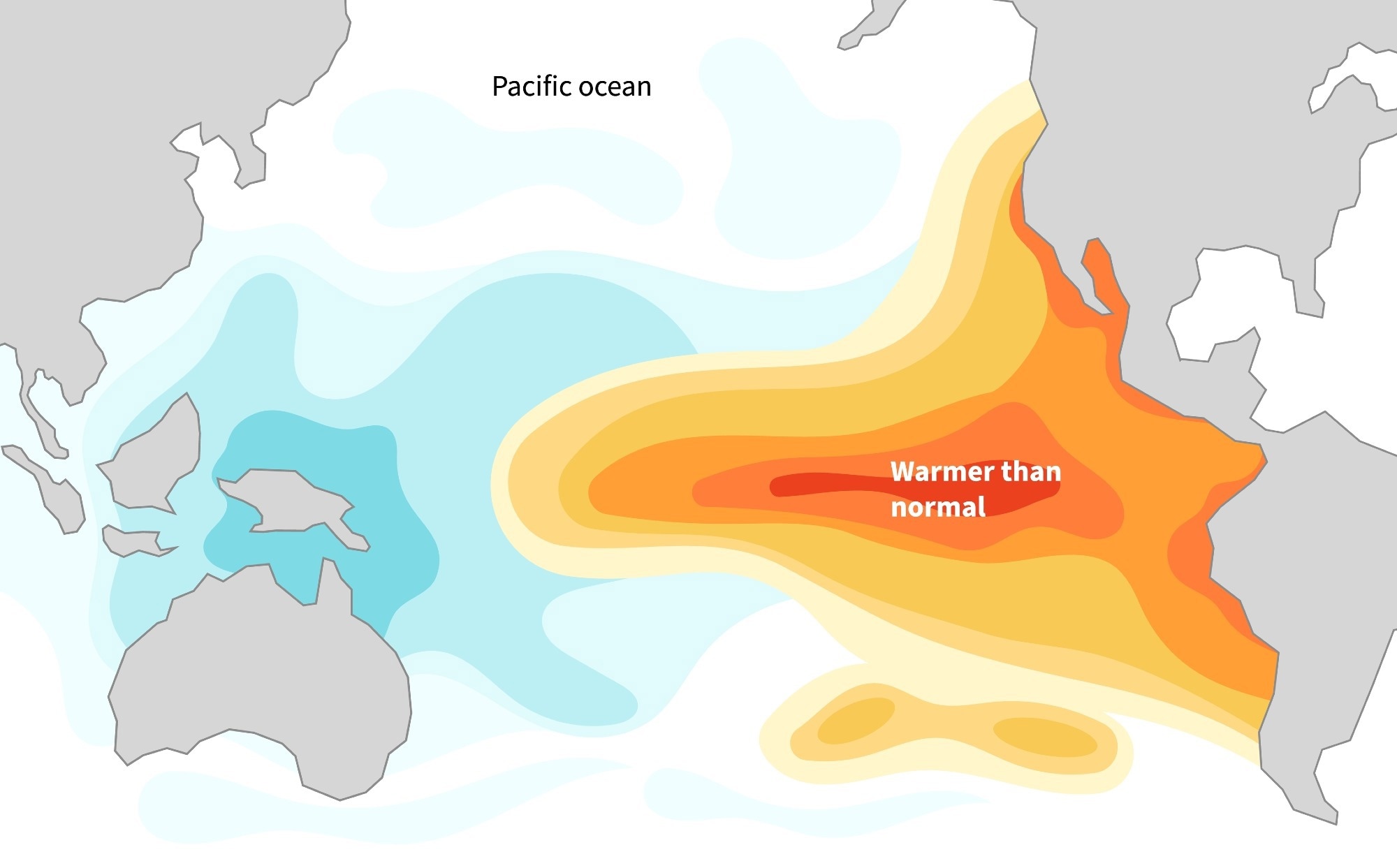
Study: El Niño amplified food insecurity in early modern Europe from 1500 to 1800. Image Credit: Pepermpron / Shutterstock
El Niño was associated with longer famines across Europe between 1500 and 1800, while a 1 °C warming anomaly in the equatorial Pacific nearly doubled the estimated annual probability of famine onset in central Europe.
In a recent study published in the journal Nature Food, researchers examined 160 historical European famine episodes to trace how Pacific climate swings associated with El Niño influenced European grain harvests and food markets.
The research was conducted by an international team of climate scientists and historians from Columbia University, NASA's Goddard Institute for Space Studies, Trinity College Dublin, Stockholm University, and universities in Estonia, Germany, Austria and Sweden.
Climate and famine
Early modern Europe, roughly 1500 to 1800, was a period marked by frequent wars and a cooler climate known as the Little Ice Age. Even as farming methods and food trade networks improved, famines kept returning, particularly during the late sixteenth and seventeenth centuries. War and policy explain some of these crises, but poor weather over consecutive years severely affected societies that depended on grain.
Cold, late springs and excessively wet, cold summers threatened harvests in northern and central Europe, while drought posed a greater risk around the Mediterranean. The weather conditions behind past famines are documented, yet the larger climate patterns responsible for these extremes are poorly understood. The El Niño/Southern Oscillation (ENSO), a natural fluctuation in tropical Pacific Ocean temperatures and atmospheric circulation that alters weather worldwide, has received little attention in this context. Its effects on tropical regions are well studied, but its role in historical European food security remains largely unexamined.
About the study
To examine the role of climate in recurrent famines in Europe, the team used a published chronology of food crises across nine European regions, including central Europe, France, Italy, and Spain. To reconstruct El Niño conditions before systematic Pacific temperature records were available, they relied on a tree-ring reconstruction of winter sea surface temperatures in the equatorial Pacific, expressed as deviations from the 1801 to 1900 average. Positive deviations were treated as El Niño conditions, without applying a conventional temperature threshold.
A statistical model compared famine onset across regions and decades, accounting for local and long-term differences to estimate the influence of Pacific temperatures. The analysis was repeated with controls for war, the North Atlantic Oscillation (NAO), and jet stream latitude, and checked against 1,000 randomly generated ENSO histories. A machine learning classifier then estimated which central European famine onsets El Niño may have helped trigger, by comparing predictions under reconstructed historical conditions with a scenario in which positive anomalies during famine-onset years were set to neutral.
To investigate the climatic mechanisms, the researchers correlated Pacific temperatures with reconstructed European soil moisture and rainfall. They then analyzed harvest records, including harvest-based taxes known as tithes, ratios of grain harvested to seed sown, and recorded yields, for rye, wheat, barley, oats, and other crops. The team compared harvests in regions strongly and weakly affected by ENSO to determine how crop production changed in the years after a warm Pacific event.
To study famine length, they applied a Cox proportional hazards model to estimate how El Niño influenced the rate at which ongoing famines ended and evaluated ENSO's predictive importance using four statistical and machine learning models. Additional models also accounted for climate and conflict factors. Finally, the researchers examined grain prices in 44 cities and cod and herring prices in eight cities, along with historical fish catches. Further tests used randomized climate data, alternative datasets, and checks for volcanic influence.
Key findings
The results indicated that El Niño events were tied to both the start and the length of European famines. In central Europe, a 1 °C ENSO warming anomaly nearly doubled the estimated probability of a famine beginning in a given year, from 7% under neutral conditions to 13.9%. Randomized ENSO histories rarely reproduced this result. The study detected no statistically significant association between famine onset and ENSO in other regions or across Europe as a whole.
The machine learning model suggested that El Niño contributed to 9 of 22 central European famine onsets (over 40%), though the estimate ranged from 23% to 41% depending on the predictors included. The rarity of famine onset events in the historical record also restricted the model's ability to predict previously unseen events.
Excessive rainfall appears to explain the link. Warm Pacific years coincided with wetter conditions in central Europe and the Balkans, and rye and wheat harvests in strongly affected areas fell by an estimated 6.2% following a 1 °C ENSO anomaly. The relatively small number and geographical clustering of available harvest records introduced uncertainty into this estimate. Barley and oats, which tolerate wet conditions better, showed weaker responses.
Across the nine regions, El Niño was associated with prolonged famines. A 1 °C positive ENSO anomaly reduced the estimated rate at which ongoing famines ended by an average of 24% compared with neutral conditions.
Model estimates indicated that a severe El Niño anomaly (+2 °C) raised the probability that a famine lasted beyond three years by about 28 percentage points compared with a La Niña anomaly of −1 °C. Such severe El Niño conditions occurred only twice during the study period.
Analysis of grain prices in 44 cities indicated a cumulative increase of up to 6.8% one year after a 1 °C ENSO anomaly, even when harvests were not clearly affected, with prices gradually returning to baseline over about eight years.
Central Europe's historical role as a grain exporter, particularly through territories such as Poland, may explain how regional harvest losses increased prices across connected European markets.
Fish prices began rising approximately two years after the same degree of Pacific warming and peaked at 4.4% above baseline after three years. Cod prices showed a stronger response, while changes in herring prices were less conclusive. Historical fish catch records showed no strong evidence of a corresponding change, so the rise may reflect people gradually turning to fish when grain ran short.
Conclusions
The study provided quantitative evidence that El Niño shaped food security in early modern Europe. It increased the probability of famine onset in central Europe, where modeling suggested it contributed to roughly one-quarter to two-fifths of recorded onsets, and it was associated with longer famines across the nine regions studied, likely through harvest losses and rising prices in connected grain markets.
Uncertainties in climate reconstructions, sparse harvest records, and difficulties determining the severity and geographical extent of past famines constrained the analysis. The absence of reliable records of interregional grain trade volumes also meant that researchers inferred how shortages spread between markets from grain price movements rather than directly observed trade flows.
The authors concluded that famines emerged from interactions between climate, harvests, markets and socioeconomic conditions, challenging purely climatic or purely societal explanations.
These findings remain relevant to modern food security, as El Niño continues to influence crop yields and grain prices, with disproportionate consequences for populations already facing food insecurity.
Source:
Journal reference:
- Esmaili, E., Puma, M. J., Ludlow, F., Jobbová, E., Kumar, J., Holm, P., Ljungqvist, F. C., Matthews, J. A., Dahl, J. R., & Seim, A. (2026). El Niño amplified food insecurity in early modern Europe from 1500 to 1800. Nature Food. DOI:10.1038/s43016-026-01460-8, https://www.nature.com/articles/s43016-026-01460-8
 Candy or cash? What your brain’s response reveals about food rewards