From cutting salt and changing meal times to rethinking coffee and alcohol habits, researchers examine which lifestyle strategies deserve attention and why managing blood pressure can be more complicated than following dietary advice.
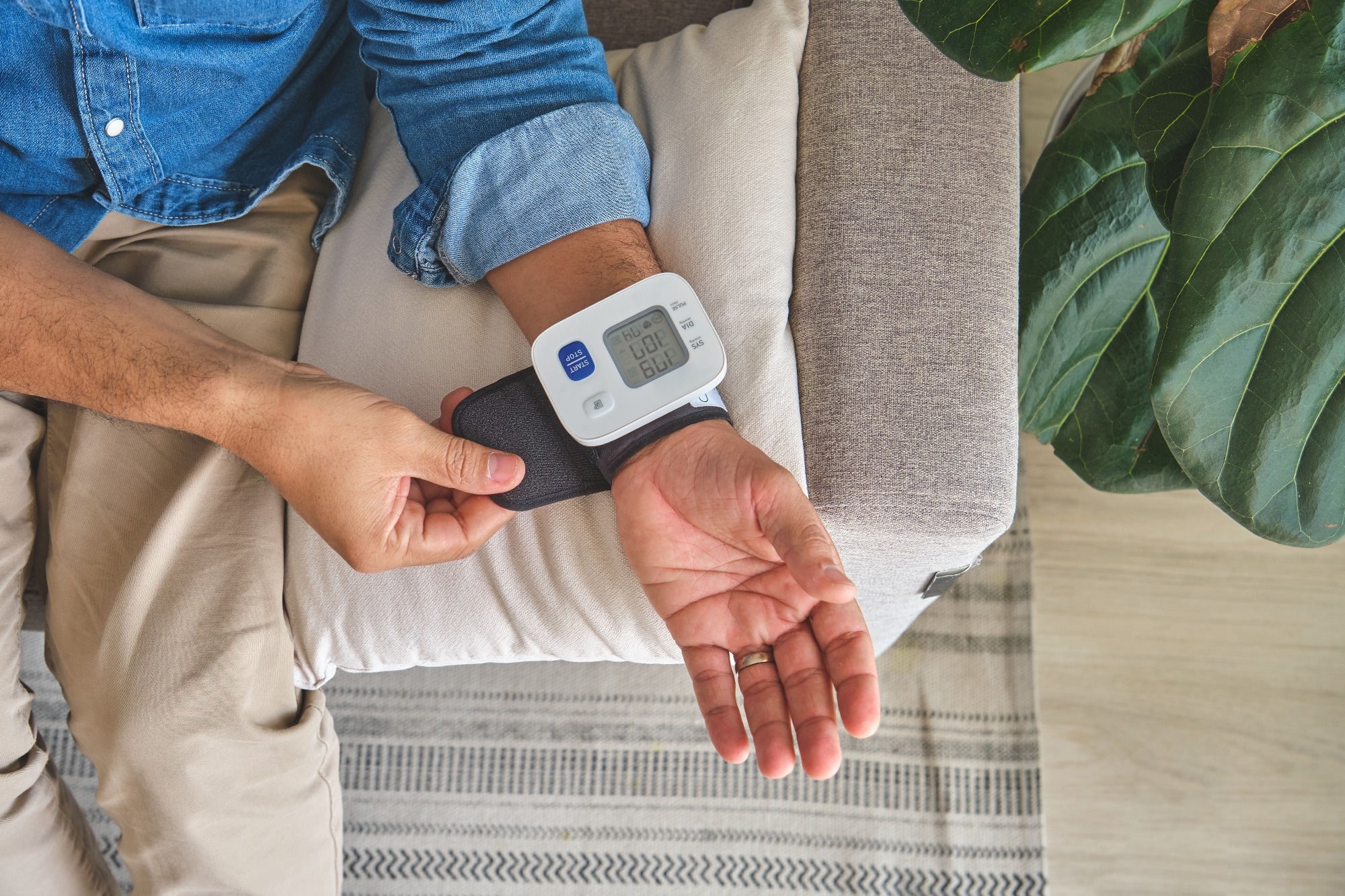
Review: Lifestyle Changes for the Treatment of Hypertension. Image Credit: rjankovsky / Shutterstock
A recent review published in the journal Current Hypertension Reports highlights lifestyle modifications for managing hypertension. Studies suggest that strategies such as calorie restriction and the Dietary Approaches to Stop Hypertension (DASH) diet, especially when combined with regular physical activity, can help lower blood pressure (BP), while evidence for time-restricted eating (TRE) remains less conclusive. In addition, reducing caffeine and alcohol intake and avoiding cocaine, methamphetamine, and herbal supplements known to raise BP can support hypertension management.
Daily habits and lifestyle influence metabolic processes and overall well-being. Weight management through dietary changes and regular exercise can improve BP, while stress reduction and limiting alcohol intake may offer additional benefits. Sodium restriction, moderating caffeine intake, and avoiding BP-raising substances such as recreational drugs and certain herbal supplements may also benefit individuals with hypertension.
The review, conducted by scientists from the Perelman School of Medicine at the University of Pennsylvania, Penn State College of Medicine, and the Washington DC Veterans Affairs Medical Center in the United States, examines lifestyle approaches to improve BP regulation and the practical challenges of maintaining these changes.
Evidence-based approaches for hypertension management
The DASH diet is an established approach to lowering BP. Limiting sodium intake also lowers BP and can be combined with higher dietary potassium intake. The 2025 American Heart Association (AHA)/American College of Cardiology (ACC) guidelines recommend consuming less than 2,300 mg of sodium daily, ideally less than 1,500 mg, and 3,500-5,000 mg of potassium daily, preferably from food.
The Framingham Heart Study (FHS) supports addressing obesity to manage hypertension. Excess body weight can raise BP by increasing sodium retention, activating hormonal and nervous system pathways, promoting inflammation, and impairing blood vessel function. Even modest weight loss can reduce systolic BP (SBP), but maintaining weight loss is often difficult.
Dietary approaches, including reduced calorie intake and TRE, may help with weight management, but evidence that meal timing independently reduces BP remains uncertain. A trial found similar weight loss with TRE and conventional eating schedules when calorie intake was matched.
The DASH dietary pattern has shown beneficial effects on BP by encouraging greater consumption of fruits, vegetables, whole grains, and low-fat dairy, alongside limiting saturated and total fat. Its BP benefits can occur independently of weight loss and sodium restriction.
Regular physical activity, including aerobic exercise, isometric exercise, and resistance training, can also help lower BP. Aerobic exercise produced the largest estimated BP reductions at approximately 150 minutes per week. Evidence for isometric exercise is less consistent when BP is measured across 24 hours rather than in a clinic.
The Exercise and Nutrition interventions for CardiOvasculaR hEalth (ENCORE) trial found larger BP reductions when the DASH diet was combined with caloric restriction and exercise than with DASH alone. The DASH-Sodium trial also showed BP-lowering benefits from restricting sodium intake, particularly when combined with the DASH diet.
The Salt Substitute and Stroke Study (SSaSS) in rural China found that potassium-enriched salt reduced cardiovascular events and deaths among high-risk adults compared with regular salt. These findings may be less applicable where processed foods supply most dietary sodium.
People with impaired kidney function or taking drugs that reduce potassium elimination face an increased risk of hyperkalemia with potassium-based salt substitutes. Serum potassium monitoring may be necessary in these individuals, and potassium-enriched salt substitutes should generally be avoided by those at high risk of hyperkalemia. Kidney disease alone does not automatically require restricting potassium-rich foods.
Adjunctive strategies, challenges, and future directions
People with hypertension should pay attention to their caffeine consumption. The 2025 AHA/ACC guidelines advise keeping daily intake below 300 mg. For those with severely uncontrolled BP, coffee consumption should not exceed one cup a day. Caffeine can temporarily raise BP, but studies of habitual coffee drinking have not consistently shown sustained increases in BP.
Cocaine and methamphetamine present a different concern because they stimulate the sympathetic nervous system and cause blood vessels to constrict. Both drugs can rapidly raise BP and increase the risk of serious cardiovascular complications. Evidence linking repeated use with chronic hypertension is less consistent.
Herbal supplements such as yohimbine, ephedra, and Citrus aurantium (bitter orange) can stimulate the sympathetic nervous system and raise BP, while black licorice may raise BP through glycyrrhizin-mediated effects.
Reducing alcohol intake lowers BP most clearly in people with higher initial alcohol consumption or BP. The 2025 guidelines identify abstinence as the optimal goal; people who continue drinking are advised to have no more than one drink daily for women or two for men.
Breathing-control techniques, yoga, and transcendental meditation may offer short-term improvements in BP by reducing stress. However, the certainty of the evidence is low, and larger, longer-term randomized controlled trials (RCTs) that include diverse populations are needed to improve real-world relevance.
Access to affordable nutritious foods, local food environments, and ongoing behavioral support can shape the success of BP management strategies. Gaps in these areas may make long-term lifestyle changes difficult to sustain.
Both GoFresh and GoFreshRx evaluated a 12-week intervention in which Black adults received home-delivered, low-sodium groceries aligned with DASH dietary recommendations and dietitian support. GoFresh enrolled participants with elevated BP or untreated hypertension, while GoFreshRx enrolled those receiving antihypertensive medication. BP reductions were greater than those achieved through financial support for self-directed grocery shopping.
Three months after grocery delivery ended, the BP advantage was no longer apparent in GoFresh, while some improvements persisted in GoFreshRx, suggesting that continued support may be important for long-term dietary adherence.
Conclusion
Based on the findings, lifestyle changes such as calorie restriction, sodium reduction, following the DASH diet, and regular exercise can help lower BP, with some interventions also promoting weight loss. But they require personalized interventions and sustained adherence across settings.
Potassium-rich foods may lower BP most among people with high sodium intake. Mind-body relaxation techniques should complement, not replace, pharmacological treatments and lifestyle modifications.
Lifestyle changes should also not delay antihypertensive medication when clinically indicated. Health policies should favor affordable, practical strategies that people can maintain over time. For instance, policies encouraging manufacturers to reduce sodium content in packaged and commercially prepared foods could support population-wide BP reduction.
Source:
Journal reference:
 Could a daily supplement keep blood vessels healthier as we age?