Genomic analyses reveal that the rise of industrial poultry farming has transformed the ecology and evolution of Campylobacter jejuni, increasing host switching and expanding poultry-adapted strains that could influence foodborne disease risk.
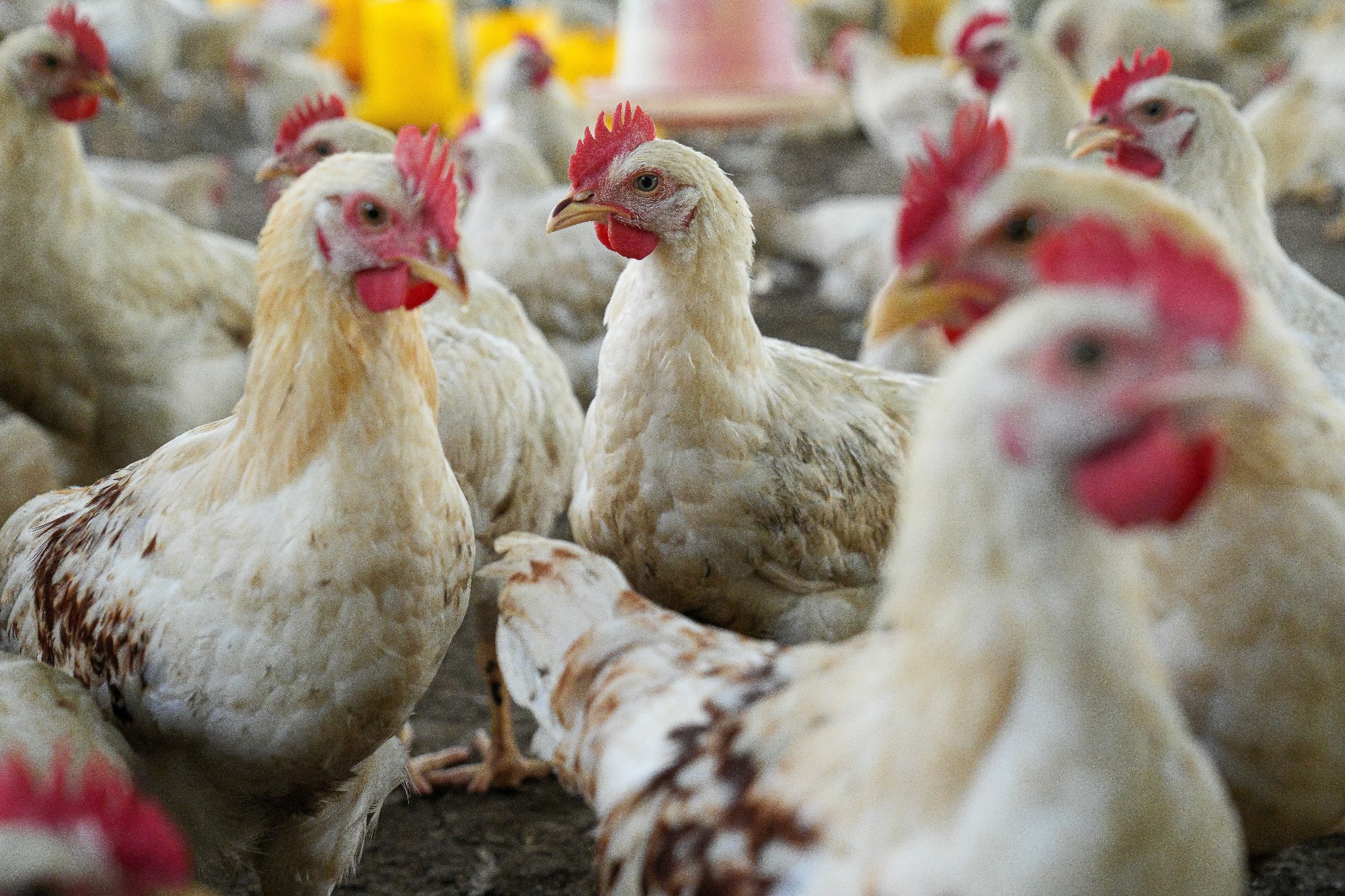 Study: Accelerating Campylobacter zoonosis in the Anthropocene. Image credit: Anom Harya/Shutterstock.com
A recent study published in the journal PNAS provides genomic and modeling evidence that intensive poultry farming has reshaped the spread and evolution of the pathogen Campylobacter jejuni, a leading cause of bacterial gastroenteritis.
Industrial poultry farming transformed global chicken populations
The rapid growth of industrial poultry farming over the last century has produced large densely connected flocks of poultry birds. Since the 1960s, the number of chickens has gone up sevenfold to about 31 billion at present.
Poultry birds are important pathogen reservoirs, including reservoirs of C. jejuni. In the past, different strains of Campylobacter remained associated with particular bird hosts. The industrial farm environment, however, facilitates the emergence of microbial strains adapted to poultry, as well as the transfer of traits linked to bacterial persistence and antimicrobial resistance.
Intensive farming and colonization
Such flocks are genetically homogeneous, their number is kept high by stocking, and they receive the same diet throughout their lives, which are short compared to their wild ancestral populations. These conditions can create substantial challenges for animal health and welfare. Of particular relevance, they serve as hosts for numerous microbes, mostly commensal, but several zoonotic.
One of these is C. jejuni which is found in very large numbers in the ceca of healthy chickens, and is therefore shed in chicken feces. It can lead to human infection via fecal contamination of food, especially poultry, with 60% to 80% of human cases being attributable to isolates originating in poultry.
Intensive farming and microbial transmission
As poultry numbers increase, so do the opportunities for Campylobacter to enter the human food chain. In addition, the expansion of domesticated chickens as an ecological niche may also have affected the evolution and transmission of enteric bacteria between wild and domesticated poultry.
Multiple C. jejuni strains may inhabit a single chicken or flock. Large flock sizes could strengthen selection for poultry-adapted genotypes, which might be expected to outcompete other strains. However, the continually expanding chicken niche also permits repeated colonization by new lineages, helping to maintain substantial strain diversity.
This may promote more opportunities for spillover from wild animals and birds into chickens. Several C. jejuni strains have been found to inhabit multiple species, the so-called host generalists. These are consistent with recent host transition, in contrast to the single-host specialists that have undergone long-term independent evolution in a genetically isolated population.
This phenomenon may impact human health, with around 550 million people suffering from foodborne diarrhea, and Campylobacter being the most common bacterial cause. The current study therefore sought to identify C. jejuni genes and genotypes specific to chickens and wild birds, tracing pathogen evolution as a result of changes in chicken ecology.
Genomic analysis traced pathogen evolution across hosts
The researchers analyzed the genomes of 2,747 C. jejuni isolates collected from chickens and wild birds, including 1,892 chicken isolates and 855 wild-bird isolates from 27 countries, sampled between 1979 and 2024. Using phylogenetic reconstruction, population genetic analyses, genome-wide association studies, and ecological modeling, they examined how the intensification of poultry farming has been associated with bacterial evolution, transitions between chicken and wild-bird hosts, and population dynamics over time.
Historical host-strain associations weakened
Genotype analysis revealed diverse strains. One cluster comprised host generalist lineages while two others were strongly linked to wild birds and to waterfowl, respectively. Other groups showed weaker or overlapping host associations, while chicken and wild-bird isolates were widely distributed across the phylogenetic tree. This suggests repeated host transitions alongside continued host specialization.
Coupled with diverse genotypes and overlap of genes over the whole genome, these findings suggest that the worldwide expansion and spread of domestic chickens has disrupted the historic barriers separating wild bird C. jejuni strains from those colonizing chickens. This could allow their transmission among different host populations.
Adaptation to poultry farming
GWAS analyses revealed candidate genetic signatures of adaptation, such as traits in chicken-associated strains that were linked to oxidative stress tolerance, suggesting adaptation to conditions within the poultry gut. Notably, C. jejuni is microaerophilic and thrives when it is protected against oxidative damage.
Similarly, chicken-associated sequence variation was found in cetA, a gene involved in regulating motility, perhaps indicating its importance in locating favorable regions within the host gut. Genes involved in metal homeostasis were also associated with chicken isolates, while the tetracycline-resistance gene tetO was significantly more common in them. The latter may inadvertently increase bacterial persistence in humans, although this was not tested directly in the study.
Overall, the GWAS findings suggest that the difference in host environments could result in clearly distinguishable selection pressures. This would drive adaptive gene changes in the Campylobacter lineages. However, experimental studies are needed to confirm the roles of the identified genes.
Chicken populations create a new ecological niche
According to the authors, chicken domestication was associated with a roughly 15-fold increase in inferred transitions between chicken and wild-bird hosts relative to predomestication levels. However, after 1900, with the shift to intensive poultry farming, phylogenetic reconstruction suggested that host-transition rates rose by more than a hundred-fold compared with predomestication levels. This indicates much greater spread between these populations, although the historical estimates remain uncertain.
The expansion of industrial poultry production created a large new ecological niche for C. jejuni. Chicken-associated strains of this bacterium also showed a corresponding increase in effective population size, with several common lineages increasing by roughly 50- to 200-fold, although the magnitude varied among lineages. This is far greater than the seven-fold increase in chicken population over the same period. Effective population size reflects genetic diversity and reproduction within a population rather than the total number of bacterial cells.
According to the authors, “This disparity suggests that pathogen populations are not only scaling with host population abundance but experiencing ecological shifts that amplify genetic diversity.” They also suggest multiple factors underlying this shift, including efficient transmission and reduced bottlenecks.
Models suggest a tipping point
Computer simulations suggested that within similar population sizes for both wild birds and chickens, C. jejuni strains first remained confined to their specialist hosts despite contact with the other hosts. With increasing chicken population, a tipping point was reached at which the number of chickens infected by wild bird strains rapidly became larger than the number of wild birds, despite the strains being modeled as ten times less efficient at transmission in chickens than in their preferred wild-bird hosts.
This could mean that even poorly adapted strains colonize effectively if the chicken population is large enough, potentially favoring generalists over specialist strains.
The point at which this happened did not change much with increased chicken-wild bird contact and increased spillover. However, when the model imposed a larger reduction in bacterial shedding from coinfected birds, the population size for chicken infections to overtake wild bird infections became much larger.
These models thus indicate that such large dense chicken populations “could act as ecological ‘pathogen sponges,’ absorbing and amplifying diverse strains while sustaining high prevalence and coinfection rates.”
Poultry expansion increased risks of pathogen spread
The findings suggest that intensive poultry farming is substantially reshaping the ecology and evolution of Campylobacter jejuni. By weakening historical host barriers, increasing transmission between chickens and wild birds, and favoring the expansion of poultry-adapted strains, industrial poultry production may be accelerating the evolution and spread of this important zoonotic pathogen.
This could increase food-chain transmission risks and have important implications for human health, although the study did not directly measure human infections, food contamination, or disease severity.
Download your PDF copy now!
 AI model predicts cancer diagnoses up to a year in advance using routine clinical data