A clinical trial involving more than 500 Indian adults found that adding dapagliflozin to two commonly prescribed diabetes drugs helped significantly more patients reach their blood sugar targets within 16 weeks, with no serious adverse events reported.
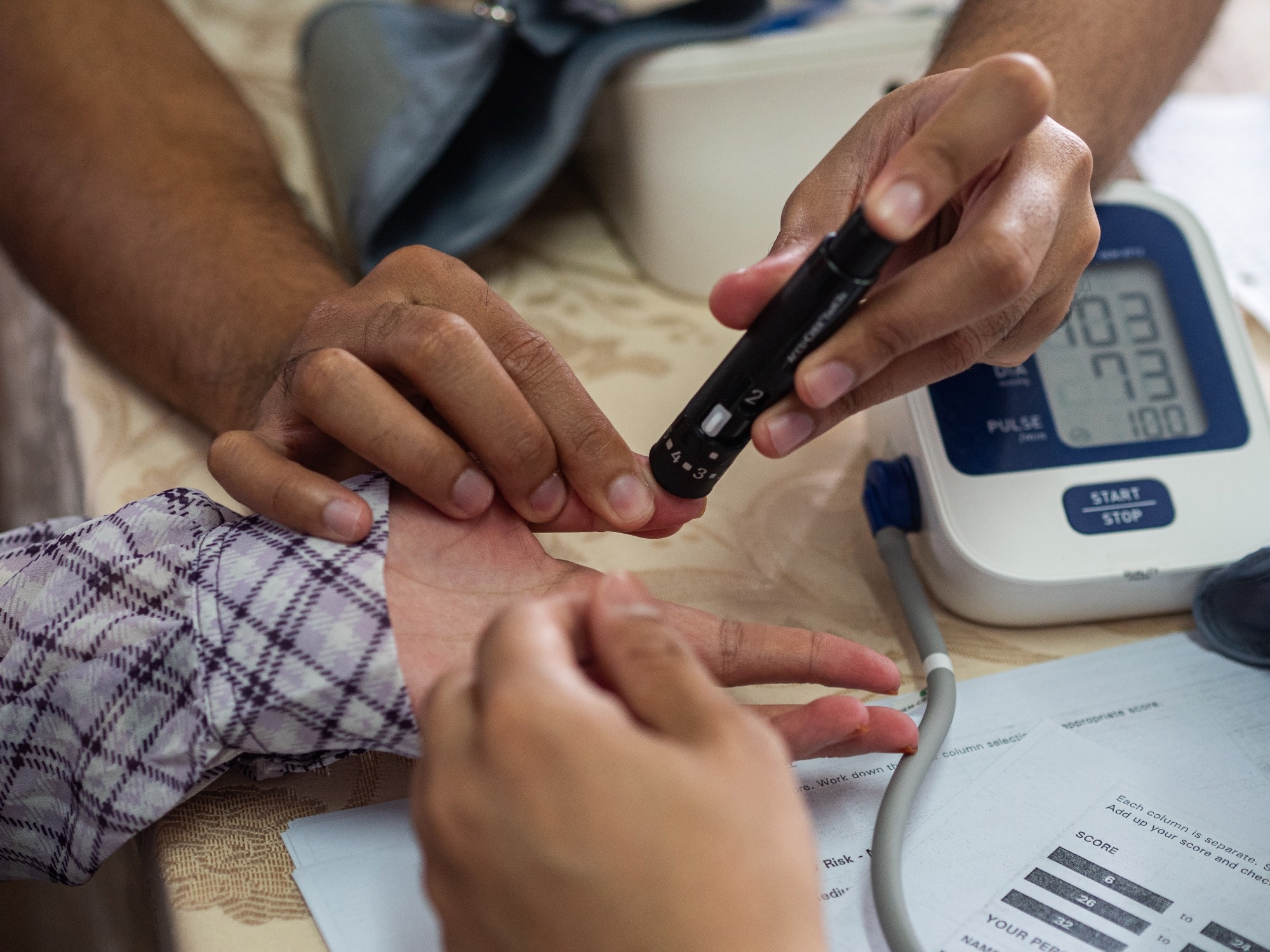 Study: Efficacy and Safety of Dapagliflozin, Glimepiride, and Metformin Fixed-Dose Combination Tablet in Type 2 Diabetes: A Phase III Trial. Image credit: james wk/Shutterstock.com
A phase III clinical trial reveals that adding dapagliflozin to glimepiride and metformin in a fixed-dose combination tablet provides better glycemic control over 16 weeks than co-administration of glimepiride and metformin tablets in Indian patients with inadequately controlled type 2 diabetes. The trial findings are published in Advances in Therapy.
Why combination therapies matter in type 2 diabetes
Type 2 diabetes is becoming increasingly common worldwide, posing a major public health challenge. India has the second highest burden of this disease after China, with around 101 million affected individuals and another 136 million classified as pre-diabetic cases.
Type 2 diabetes is associated with several comorbidities, including cardiovascular disease, chronic kidney disease, neuropathy, and eye complications. These complications collectively place a significant economic burden on global and Indian healthcare systems.
Metformin (MET) is widely used as an initial treatment for type 2 diabetes. However, many patients require a combination treatment due to the progressive and multifactorial nature of the disease. Both international and Indian guidelines recommend dual or triple therapy for patients not achieving adequate glycemic control with MET monotherapy.
Combining drugs with complementary mechanisms can improve glycemic control, while fixed-dose formulations may simplify treatment regimens and improve medication adherence. India was the first country to introduce fixed-dose combinations for type 2 diabetes in the early 1970s. In the USA, this strategy was first introduced in 1999.
With therapeutic advancement, several fixed-dose combinations have been developed for type 2 diabetes, most commonly combining metformin with sulfonylureas, dipeptidyl peptidase-4 (DPP-4) inhibitors, or sodium-glucose cotransporter 2 (SGLT2) inhibitors.
Despite India's substantial burden of type 2 diabetes, there is a relative lack of robust clinical evidence evaluating newer therapeutic options specifically in Indian patients. To address this gap, this phase III randomized clinical trial was conducted to evaluate and compare the efficacy and safety of a fixed-dose combination of dapagliflozin (DAPA), glimepiride (GLIM), and metformin (MET) immediate-release tablet and the co-administration of GLIM and MET tablets in Indian patients with inadequately controlled type 2 diabetes.
Phase III trial compares triple and dual diabetes therapies
A total of 536 adult diabetic patients were enrolled for the randomized, open-label trial conducted at 21 clinical sites across India. Participants were aged 18 to 65 years and had glycated hemoglobin (HbA1c) levels between 8% and 11%, despite receiving stable doses of GLIM and MET for at least eight weeks. Participants were randomized into four groups: two treatment groups and two comparator groups.
In the first treatment group, participants received a fixed-dose combination tablet containing 5 milligrams of DAPA, 1 milligram of GLIM, and 500 milligrams of MET twice daily. In the second treatment group, participants received a fixed-dose combination tablet containing 5 milligrams of DAPA, 1 milligram of GLIM, and 1000 milligrams of MET twice daily.
Participants in the first comparator group received 1 milligram of GLIM and 500 milligrams of MET as separate tablets twice daily. Participants in the second comparator group received 1 milligram of GLIM and 1000 milligrams of MET as separate tablets twice daily.
In all the groups, the primary treatment period lasted 16 weeks, followed by assessment of glycated hemoglobin (HbA1c), a well-known marker of glycemic control. Participants who achieved HbA1c levels of 7% or lower completed treatment and underwent safety follow-up at Week 18. Those who did not achieve this target entered a further 12-week treatment phase, during which their GLIM dose was increased, followed by a post-treatment safety assessment at Week 30.
Key findings
Efficacy profile
The assessment of glycated hemoglobin at week 16 revealed significantly greater reductions from baseline in both treatment groups, as compared to the two comparator groups. In the lower-dose groups, HbA1c decreased by 2.17 percentage points with triple therapy, compared with 1.64 percentage points with dual therapy. The corresponding reductions in the higher-dose groups were 2.25 and 1.72 percentage points, respectively. The proportions of participants achieving the target glycated hemoglobin levels of lower than 7% were significantly higher in both treatment groups compared to those in the comparator groups. These proportions were 70.68% versus 46.62% in the lower-dose groups and 78.36% versus 53.38% in the higher-dose groups.
At week 12, the proportion of participants who achieved the target glycated hemoglobin level was significantly higher in the second treatment group compared to that in the second comparator group. At week 16, the reduction of fasting and postprandial blood glucose levels from baseline was significantly higher in the second treatment group compared to that in the second comparator group. However, the differences between the first treatment and first comparator groups were not statistically significant at both 12 and 16 weeks
Furthermore, changes in body weight were small and did not differ significantly between the triple-combination and corresponding dual-therapy groups.
Among the 198 participants who required GLIM dose escalation after Week 16, HbA1c, fasting glucose, and post-prandial glucose levels remained significantly reduced from baseline at Week 28 across all four groups. However, differences between the triple-combination and corresponding dual-therapy groups were not statistically significant at Week 28. Because this analysis included only participants who had not achieved adequate glycemic control at Week 16, the findings do not establish whether the initial treatment advantage was sustained in the overall study population.
Safety profile
The incidence of treatment-emergent adverse events was similar across four groups. During the primary treatment period, 26 participants experienced treatment-emergent adverse events. The most commonly reported adverse events were pyrexia, vomiting, and headache. All adverse events were mild or moderate in intensity and were considered unlikely to be related to the study medications. All reported events resolved, and no serious adverse events or hypoglycemic episodes were reported during the study.
Triple-drug pill offers promise for better diabetes control
The clinical trial findings reveal that adding DAPA to GLIM and MET in a fixed-dose combination tablet is more effective than co-administration of GLIM and MET tablets in controlling blood glucose levels over 16 weeks in Indian patients with inadequately controlled type 2 diabetes. The fixed-dose combination also exhibits an acceptable short-term safety profile.
The fixed-dose combination of three antidiabetic drugs offers the convenience of a single tablet compared to the co-administration of multiple drugs, which often increases pill burden and reduces treatment adherence. Although simplifying treatment may improve medication adherence, the trial did not directly assess adherence or compare the fixed-dose tablet with the same three medicines administered separately.
Given the significant negative impact of persistently elevated glycated hemoglobin levels (more than 7%) on the risk of microvascular and macrovascular complications, the current findings highlight the potential clinical value of improved glycemic control with triple-combination therapy. However, the trial did not establish whether this treatment prevents type 2 diabetes progression or reduces long-term diabetes-related complications.
The trial included only Indian patients, which may limit the generalizability of its findings to other patient populations with diverse genetic, environmental, or lifestyle backgrounds. Other limitations include the open-label study design, relatively short treatment duration, smaller number of participants in the extended treatment phase, and exclusion of patients with significant diabetes-related complications. Future longer-term studies with larger sample sizes are needed to more conclusively determine the sustained therapeutic benefits and safety profiles of triple fixed-dose combinations and their potential effects on diabetes-related complications.
Sun Pharma Laboratories Limited funded the study and its publication. Several authors were current or former employees of the company, while participating investigators received research grants from the sponsor.
Journal reference:
- Kurmi, P., Singh, M.K., Gupta, V. et al.(2026). Efficacy and Safety of Dapagliflozin, Glimepiride, and Metformin Fixed-Dose Combination Tablet in Type 2 Diabetes: A Phase III Trial. Adv Ther. DOI: https://doi.org/10.1007/s12325-026-03791-1. https://link.springer.com/article/10.1007/s12325-026-03791-1
 Voice frequency patterns reveal clues linked to type 2 diabetes