Introduction
Pathophysiology of PCOS and reproductive dysfunction
Mechanistic rationale for GLP-1 in fertility improvement
Effects on metabolic and hormonal parameters
Evidence on fertility and pregnancy outcomes
Preclinical and translational evidence
Safety and pregnancy considerations
Limitations and research gaps
References
Weight, insulin, and ovarian hormones connect PCOS with infertility, raising questions about where GLP-1 therapies could fit in reproductive care.
 Image Credit: Toey Andante / Shutterstock.com
Introduction
Polycystic ovary syndrome (PCOS) is one of the most prevalent endocrine disorders worldwide, affecting an estimated 6-20% of women of reproductive age. PCOS is a leading cause of anovulatory infertility, in which ovulation is infrequent or absent, though reproductive outcomes vary considerably among affected women.1,2
As researchers increasingly study glucagon-like peptide-1 (GLP-1) receptor agonists (RAs) for alternative indications in metabolic medicine, reproductive endocrinology researchers are exploring whether this drug class could also improve ovulation and conception rates in women with PCOS. Evidence is strongest for metabolic benefits; however, their use specifically to improve fertility remains investigational.2,4
Pathophysiology of PCOS and reproductive dysfunction
PCOS is characterized by features that include hyperandrogenism, ovulatory dysfunction, and polycystic ovarian morphology. Adult diagnosis generally requires two of these three features after excluding other causes.
Insulin resistance has been reported in about 75% of patients with PCOS, including nearly 60% of normal-weight patients, with prevalence varying by body weight and assessment method. The resulting compensatory hyperinsulinemia increases androgen production through ovarian theca cells while suppressing hepatic sex hormone-binding globulin (SHBG) production and raising free testosterone levels.1,2
High androgen levels impair follicular development and granulosa cell signaling, while visceral adiposity-related inflammation increases inflammatory signaling and oxidative stress associated with PCOS.1,2 The endometrium may also be affected, with metabolic dysfunction potentially impairing receptivity and implantation.1,2
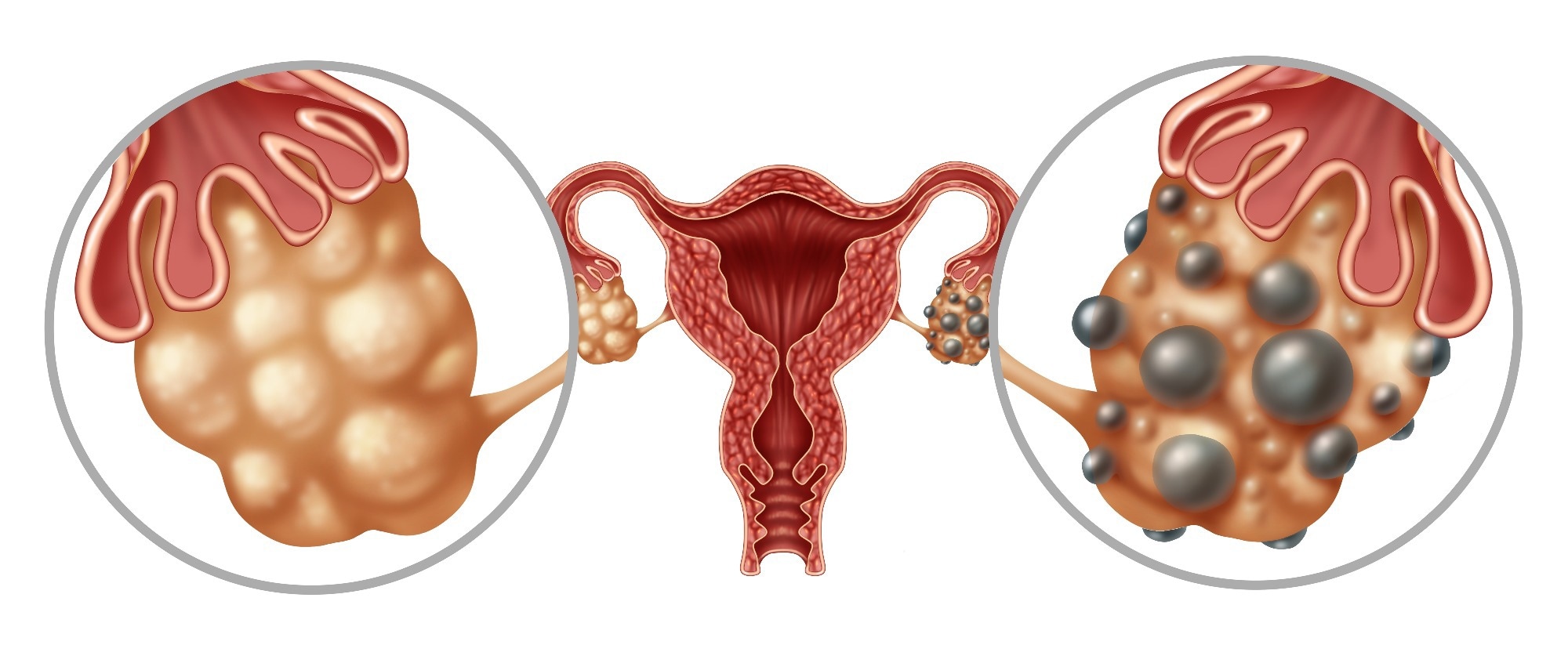 Image Credit: Lightspring / Shutterstock.com
Mechanistic rationale for GLP-1 in fertility improvement
GLP-1 receptors have been reported in the hypothalamus, pituitary, pancreas, and ovarian granulosa cells. Experimental studies implicate the cyclic adenosine monophosphate-protein kinase A cascade in GLP-1 signaling and its interactions with ovarian pathways regulating apoptosis, the production of steroid hormones, and responsiveness to gonadotropin.2
One proposed mediator of ovarian GLP-1 signaling is forkhead box O1 (FOXO1), a transcription factor that promotes granulosa cell apoptosis and follicular atresia. In PCOS mouse models and granulosa-cell experiments, GLP-1 receptor activation promoted FOXO1 phosphorylation and nuclear exclusion, meaning it moved out of the nucleus, reducing apoptosis and improving cell survival.2
Systemically, GLP-1 RAs may reduce hyperinsulinemia and excess androgen production by improving weight and insulin sensitivity. One proposed downstream sequence involves reduced insulin stimulation of cytochrome P450 17A1 in theca cells, followed by lower androgen exposure and improved aromatase activity and follicle-stimulating hormone (FSH)-mediated granulosa differentiation. The contribution of this sequence to fertility outcomes during treatment remains unconfirmed in humans.1,2,4
Animal studies suggest that GLP-1 RAs can alter luteinizing hormone (LH) secretion and gonadotropin-releasing hormone (GnRH) activity. These effects vary with experimental conditions, and increased GnRH or LH activity could theoretically worsen the neuroendocrine imbalance in PCOS. Direct reproductive benefits in humans remain unconfirmed.1,2
 Image Credit: Elena Shishkina / Shutterstock.com
Various clinical studies have evaluated the role of GLP-1 RA therapy in managing PCOS. A recent meta-analysis of 13 randomized controlled trials found significant reductions in body weight, body-mass index (BMI), waist circumference, abdominal girth, and waist-to-hip ratio with GLP-1 RA treatment compared with metformin or placebo.3 Some individual studies of GLP-1 RA/metformin combination therapy have reported improvements in androgen-related parameters, triglycerides, and insulin resistance, but these findings were not uniform across pooled analyses.1,3,4
GLP-1 RAs significantly reduced fasting insulin, blood glucose two hours after an oral glucose tolerance test, and the homeostatic model assessment of insulin resistance (HOMA-IR). Compared with placebo, GLP-1 RA therapy led to significant reductions in total testosterone and free androgen index, though these differences were not significant compared with the metformin group.
Overall pooled hormonal effects were less consistent than weight-related effects.3 Liraglutide treatment also reduced visceral adipose tissue, along with reduced fasting glucose, in an individual trial.1
Interpreting the hormonal and lipid findings requires caution, as the metabolic meta-analysis contains inconsistencies among reported effect estimates, confidence intervals, and P-values, and between its results and discussion. The free androgen index results are one example, limiting confidence in the reported subgroup effects.3
Evidence on fertility and pregnancy outcomes
Preliminary trials suggest possible improvements in natural pregnancy rates. One randomized trial reported that 12 weeks of 10 µg exenatide twice daily, followed by 12 weeks of metformin, produced a spontaneous pregnancy rate of 43.6% as compared to 18.7% in the metformin-only group.1,2 Improved menstrual cyclicity and reduced testosterone levels accompanied metabolic improvements, but the trial did not establish a fertility effect independent of weight loss.2,4
To date, few studies have directly evaluated in vitro fertilization (IVF) pregnancy rates after GLP-1 RA pretreatment. In a small pilot randomized study of obese women with PCOS who previously failed first-line reproductive treatments, 12 weeks of low-dose liraglutide (1.2 mg daily) combined with metformin, followed by a four-week medication-free period before ovarian stimulation, yielded a clinical pregnancy rate per embryo transfer of 85.7% as compared to 28.6% in the metformin-only group. These percentages reflect outcomes among women who reached embryo transfer, not all enrolled participants.2
Though weight loss was comparable between groups, the small sample and pregnancy-based endpoint limit interpretation. The result raises the possibility of benefits beyond weight loss but does not establish a direct ovarian effect or a reliable improvement in live-birth rates.2,4
Another meta-analysis summarized in the reviews found significant improvements in natural pregnancy rates with GLP-1RAs and in menstrual frequency. But aggregate IVF pregnancy rates did not reach statistical significance, with few small trials addressing assisted reproductive technology (ART) outcomes.1,2 Most available evidence has been obtained from study populations consisting of overweight or obese women, which limits the generalizability of these findings to lean PCOS patient populations.2
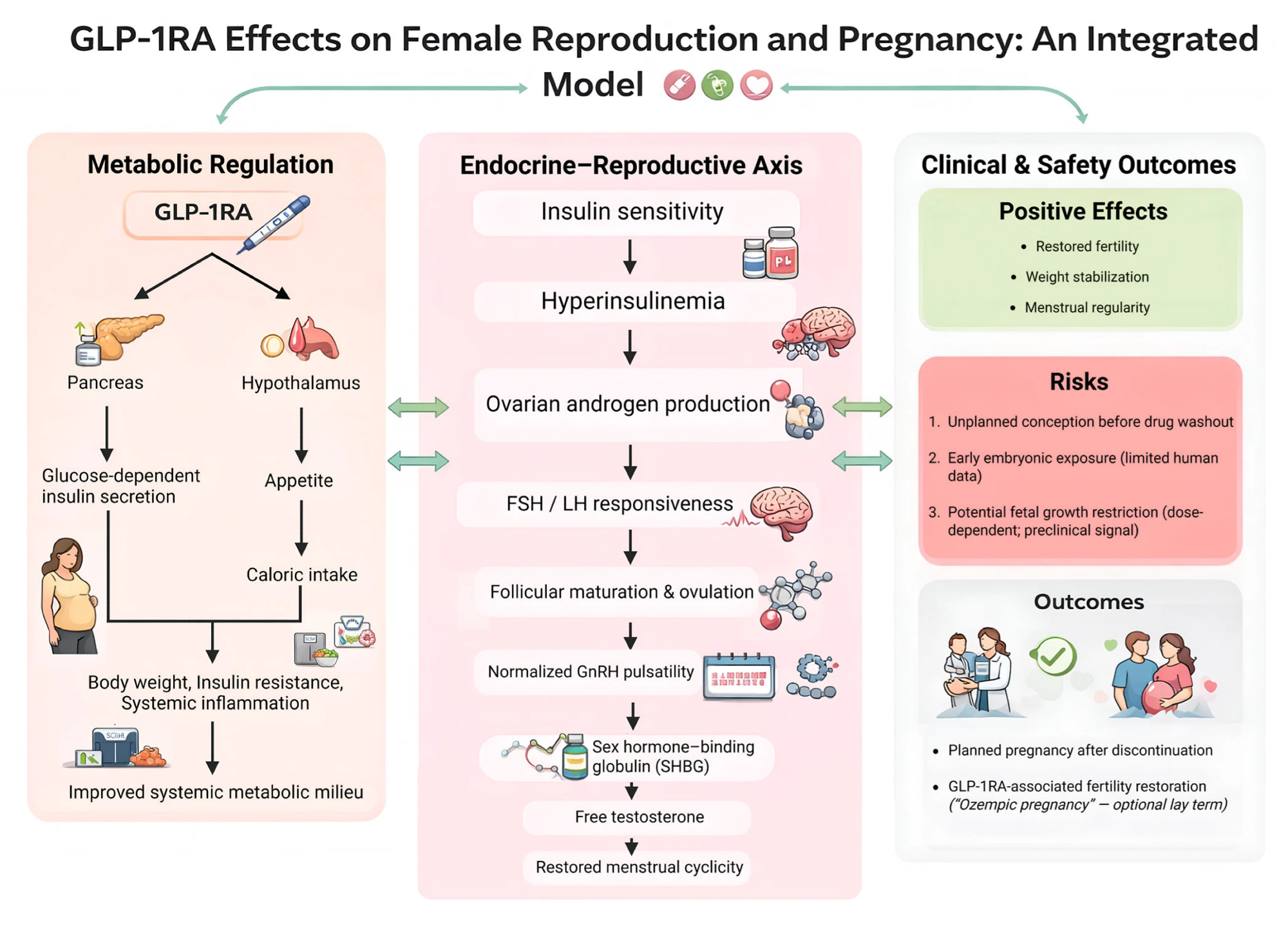
Integrated model of GLP-1RA effects on female reproduction and pregnancy risk. Conceptual framework linking GLP-1RA-mediated metabolic regulation (appetite, caloric intake, insulin secretion) to downstream endocrine-reproductive effects (insulin sensitivity, ovarian androgen production, gonadotropin responsiveness, follicular maturation/ovulation, SHBG, and free testosterone) and clinical outcomes. The model also depicts key risk mechanisms for unintended pregnancy, including rapid fertility restoration, incomplete washout prior to conception, limited human pregnancy safety data, and a preclinical signal for fetal growth effects. Abbreviations: FSH, follicle-stimulating hormone; LH, luteinizing hormone; GnRH, gonadotropin-releasing hormone; SHBG, sex hormone-binding globulin; GLP-1RA, glucagon-like peptide-1 receptor agonist. This figure is an original conceptual framework developed by the authors to synthesize mechanistic and reproductive themes from the reviewed literature.4
Preclinical and translational evidence
Preclinical work suggests potential ovarian benefits in experimental PCOS. In a dehydroepiandrosterone (DHEA)-induced rat PCOS model, dulaglutide reduced steroidogenic acute regulatory protein expression, decreased preantral cystic follicles, and increased corpora lutea, the structures formed after ovulation, suggesting improved ovarian morphology and altered steroidogenic regulation. Semaglutide also improved ovarian and metabolic measures in experimental PCOS models.1
Other animal findings indicate possible adverse effects. GLP-1 RAs have produced granulosa-cell apoptosis, follicular atresia, and uterine inflammation in healthy rodents exposed to high-dose liraglutide. Responses appear to vary with dose, duration, and metabolic status.2,4
Cell experiments also show that GLP-1 can suppress FSH-stimulated progesterone production, demonstrating that ovarian signaling effects are not uniformly favorable. These experimental findings cannot establish clinical benefit or harm at therapeutic doses in women.2
WHO endorsement sparks new discussion around GLP-1 drugs and PCOS
Safety and pregnancy considerations
Treatment tolerability also matters: pooled trials reported more nausea, vomiting, and dizziness with GLP-1 RAs.3 Few studies have evaluated the impact of prenatal exposure to GLP-1 RAs. These drugs are not currently recommended during pregnancy.4
Animal studies suggest dose-dependent fetal growth restriction, delayed ossification, and skeletal variations following maternal GLP-1 RA exposure, often alongside reduced maternal food intake and weight gain. In mice, semaglutide exposure in late gestation reduced fetal and placental growth and downregulated placental nutrient transport.4
Limited human observational data have not identified a clear increase in major congenital malformations, with a prospective cohort of 168 women with first-trimester exposure reporting a 2.3% major birth-defect rate.1 Danish and Taiwanese studies also did not identify a significantly greater risk of major malformations, though small exposed samples and confounding variables limit interpretation. These findings do not establish pregnancy safety.4
Preconception discontinuation should follow drug-specific guidance, as semaglutide requires at least two months before planned conception.1,4 GLP-1 RAs may restore ovulation in previously anovulatory women, which increases the risk of unintended conception before adequate elimination of the drugs from the body. Clinicians should address contraceptive planning and counsel patients on timely discontinuation of GLP-1 RAs, including a transition plan for weight and glycemic management.4
The related dual GIP/GLP-1 receptor agonist tirzepatide can reduce oral contraceptive exposure during initiation and dose escalation, requiring additional contraceptive planning. Persistent vomiting or diarrhea can also compromise oral contraceptive reliability.4
Limitations and research gaps
Many existing randomized trials were originally designed to study metabolic outcomes rather than fertility endpoints, limiting the strength of conclusions about reproductive benefits. Differences in drugs, doses, comparators, and background treatments further complicate comparisons; evidence for one agent cannot automatically extend to the entire class.1-4
Treatment durations across trials typically ranged from 12 to 32 weeks, which may be insufficient to capture meaningful fertility outcomes or long-term hormonal normalization. The optimal timing of GLP-1 RA administration relative to ovarian stimulation protocols, fertility-specific treatment duration, and minimum effective dose for reproductive benefit all remain undefined.2 Larger trials should measure live births and separate weight-mediated benefits from direct reproductive effects.2,4
References
- Hoteit, B. H., Kotaich, J., Ftouni, H., et al. (2025). The dual impact of GLP-1 receptor agonists on metabolic and reproductive health in polycystic ovary syndrome: insights from human and animal trials. Therapeutic Advances In Endocrinology And Metabolism 16; 20420188251383064. DOI: 10.1177/20420188251383064. https://journals.sagepub.com/doi/10.1177/20420188251383064
- Voros, C., Chatzinikolaou, F., Papapanagiotou, I., et al. (2026). A Systematic Review on GLP-1 Receptor Agonists in Reproductive Health: Integrating IVF Data, Ovarian Physiology and Molecular Mechanisms. International Journal Of Molecular Sciences 27(2); 759. DOI: 10.3390/ijms27020759. https://www.mdpi.com/1422-0067/27/2/759.
- Lin, S., Deng, Y., Huang, J., et al. (2025). Efficacy and safety of GLP-1 receptor agonists on weight management and metabolic parameters in PCOS women: a meta-analysis of randomized controlled trials. Scientific Reports 15(1). DOI: 10.1038/s41598-025-99622-4. https://www.nature.com/articles/s41598-025-99622-4
- Abedi, M. M., Patni, M. M., Shajahan, A. N. B., et al. (2026). GLP-1 Receptor Agonists, Fertility Restoration, and Reproductive Safety in Women of Reproductive Age: A Narrative Review. Journal of Clinical Medicine 15(9); 3204. DOI: 10.3390/jcm15093204. https://www.mdpi.com/2077-0383/15/9/3204.
Further Reading
Last Updated: Oct 19, 2026
 Why experts say PCOS needs a new name