Introduction
Key nutrients and bioactive compounds in schisandra berries
How schisandra berry compounds influence cellular function
Potential health benefits of schisandra berry
How is schisandra berry consumed?
Safety considerations and side effects
Limitations and research gaps
Conclusions
References
Further reading
Schisandra berry is a traditional medicinal fruit rich in lignans and other bioactive compounds that show antioxidant, anti-inflammatory, and hepatoprotective potential. Current evidence is promising, but most benefits remain supported mainly by preclinical studies rather than large human trials.
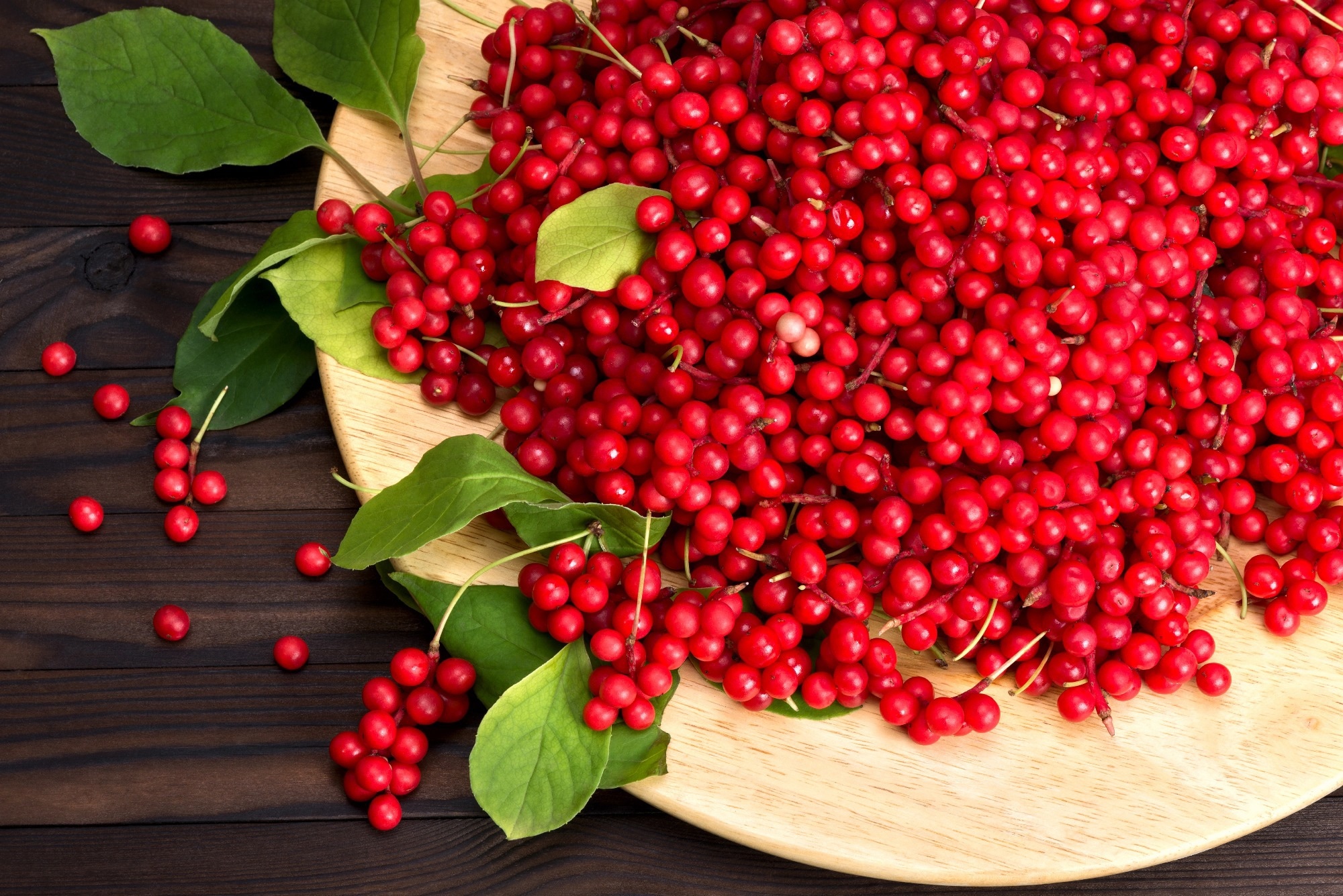 Image Credit: Leonid S. Schtandel / Shutterstock.com
Introduction
Schisandra chinensis, which is commonly known as schisandra berry or “five-flavor berry,” is a red-fruited medicinal plant native to northeastern Asia. For thousands of years, the schisandra berry has been used in Traditional Chinese Medicine as an adaptogen to preserve vital energy, support kidney, lung, and liver functions, as well as manage fatigue, insomnia, and respiratory or gastrointestinal complaints. Schisandra has also been described in the World Health Organization's medicinal plant monograph literature. More recently, schisandra berry has been studied for its antioxidant, anti-inflammatory, and hepatoprotective properties.1 However, many of these findings come from cell and animal studies using different extracts and isolated lignans, which can limit direct comparisons with human supplement use.1,3
Key nutrients and bioactive compounds in schisandra berries
Schisandra berries are particularly rich in lignans, a distinct class of polyphenolic compounds that account for a meaningful proportion of their dry weight. The most prevalent lignans are deoxyschisandrin (schisandrin A), schisandrin (or schisandrol A), gomisin A, gomisin N, and related dibenzocyclooctadiene derivatives. Among more than 80 lignans identified to date, including 86 that have been isolated from S. chinensis,1 schisandrin is often reported as the most abundant metabolite in berry extracts.1,2
Schisandra berries also contain phenolic acids, flavonoids, organic acids, triterpenoids, polysaccharides, and essential oils, along with small amounts of vitamins and minerals. Emerging evidence indicates that schisandra lignans play key roles in regulating oxidative stress, inflammation, immune responses, and cellular signaling pathways.2,3
How schisandra berry compounds influence cellular function
Gomisin and schisandrin derivatives in S. chinensis scavenge free radicals like reactive oxygen species (ROS), with other lignans enhancing the activity of endogenous antioxidant enzymes like superoxide dismutase (SOD) and glutathione peroxidase (GPX). These antioxidant effects promote cell membrane integrity and function by preventing oxidative damage to lipid membranes and by influencing redox-sensitive signaling pathways.1,3 Schisandra lignans also activate the nuclear factor erythroid 2-related factor 2 (Nrf2) pathway and inhibit pro-inflammatory signaling molecules like nuclear factor-kappa B (NF-κB) and mitogen-activated protein kinase (MAPK). 1,2
S. chinensis has been extensively studied for its hepatoprotective effects, including enhanced liver detoxification and protection against both chemical and oxidative injury. Specifically, berry components can modulate cytochrome P450 enzymes, especially CYP2E1 and CYP3A, support glutathione formation, and promote hepatocyte regeneration.1,3
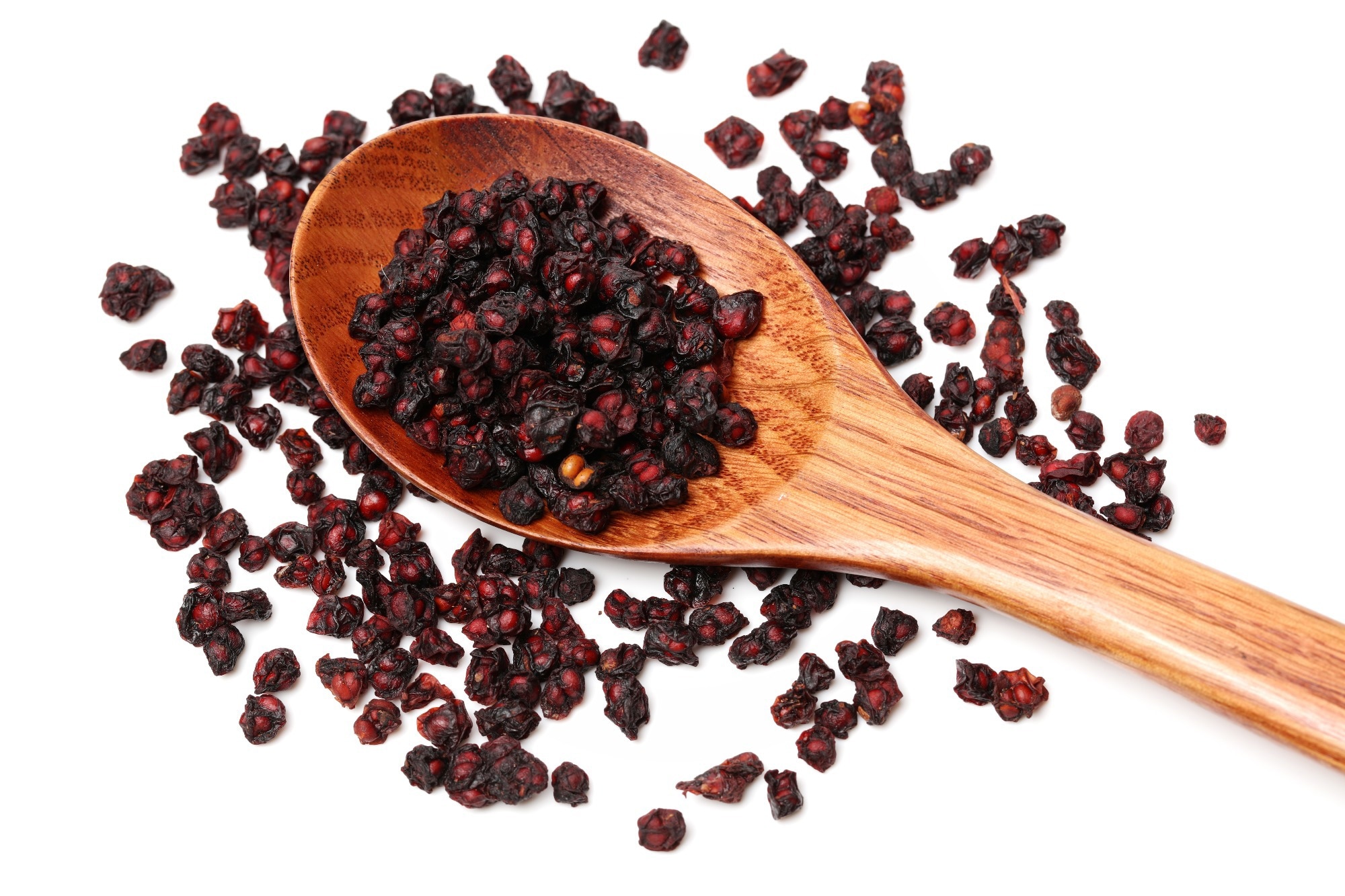 Image Credit: JIANG HONGYAN / Shutterstock.com
Potential health benefits of schisandra berry
Traditionally classified as an adaptogen, S. chinensis is used to reduce stress and improve mental clarity and energy. Experimental evidence suggests that lignans can penetrate the blood-brain barrier (BBB) and support mitochondrial function in neuronal cells, thereby reducing oxidative stress and neuroinflammation.1
In mice, S. chinensis berry consumption appears to ameliorate memory, learning, and anxiety-like behaviors, along with amplified antioxidant and cholinergic activities. Schisandra berries also elevate brain-derived neurotrophic factor (BDNF) levels, a primary regulator of neuronal growth and synaptic plasticity. Although cognition-specific human evidence remains limited, a small number of randomized trials cited in recent reviews suggest possible benefits for fatigue, physical performance, and selected liver-related outcomes with certain formulations.1
Bioactive molecules like schisantherin A modulate apoptosis-related proteins and increase the expression of neuroprotective molecules like heme oxygenase 1 (HO-1). These findings have generated interest in the therapeutic potential of these bioactives for neurodegenerative conditions, including Alzheimer’s disease, Parkinson’s disease, and stroke; however, human studies evaluating these effects have yet to be conducted.1-3
Bioactive compounds in schisandra berries promote glutathione formation and regulate CYP450 enzymes, both of which similarly reduce inflammation. Gomisin A, for example, has been associated with reduced alanine aminotransferase and aspartate aminotransferase levels, activation of pregnane X receptors, and improved lipid metabolism, with emerging efficacy observed in preclinical models of non-alcoholic fatty liver disease (NAFLD).1,2
In animal models, S. chinensis reduced the oxidative breakdown of lipids during myocardial ischemia by activating the phosphoinositide 3-kinase/protein kinase B (PI3K/Akt) pathway, suggesting potential cardioprotective effects. Berry bioactives also modulated lipid metabolism by downregulating sterol regulatory element-binding proteins (SREBPs) and NADPH oxidase 2 (NOX2).
S. chinensis berries have been shown to reduce triglyceride and low-density lipoprotein (LDL) levels with simultaneous increases in high-density lipoprotein (HDL) cholesterol. Importantly, these effects have not been validated in humans, thus emphasizing the need for future studies.2,3
Schisandra polysaccharides exhibit immunomodulatory activity in experimental models by reducing levels of transforming growth factor beta (TGF-β), tumor necrosis factor alpha (TNF-α), interleukin 1 beta (IL-1β), and IL-6. Specifically, schisandrin C promotes interferon beta (IFN-β) production, as well as the expression of IFN-stimulated genes (ISGs) and C-X-C motif chemokine ligand 10 (CXCL10).1,2
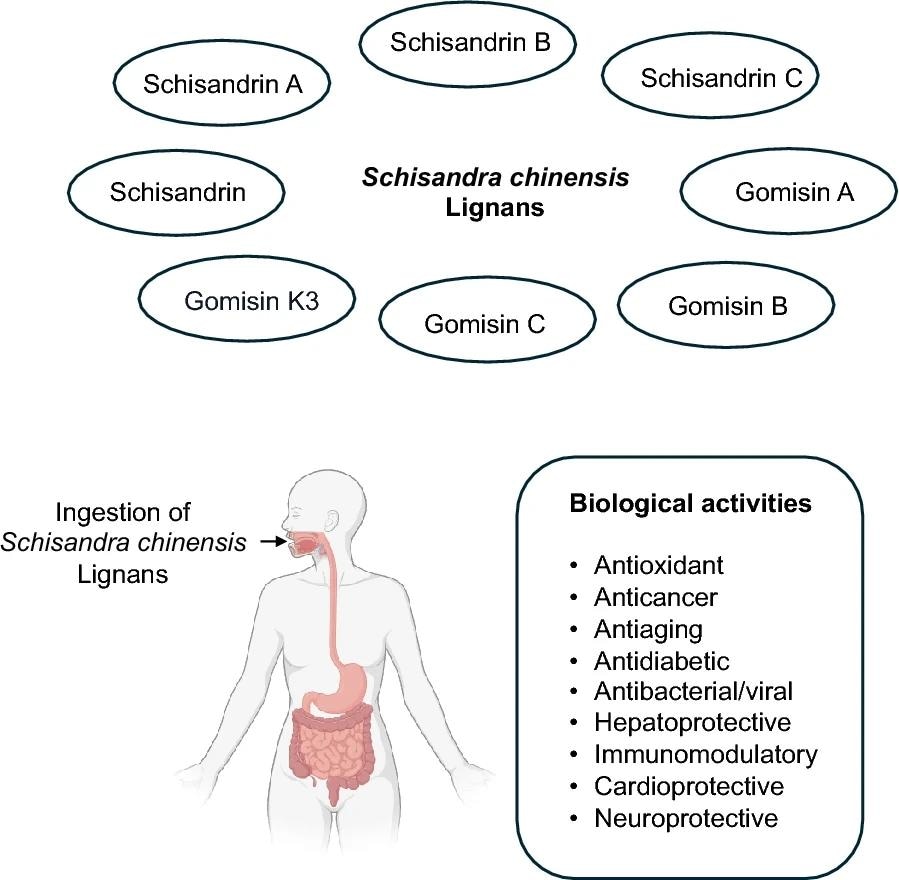
Major Schisandra chinensis lignans and their biological activities. The top panel illustrates key lignans found in Schisandra chinensis, including Schisandrin, Schisandrin A, Schisandrin B, Schisandrin C, Gomisin A, Gomisin B, Gomisin C, and Gomisin K3. The bottom panel depicts the ingestion of Schisandra chinensis lignans and the major biological activities associated with these lignans, including antioxidant, anticancer, antiaging, antidiabetic, antibacterial/antiviral, hepatoprotective, immunomodulatory, cardioprotective,e and neuroprotective properties
How is schisandra berry consumed?
No universally accepted standardized dose of S. chinensis extract has been established in the current literature, as studies use different preparations, lignan concentrations, and treatment goals1,3. For this reason, product standardization and reporting of key lignans such as schisandrin or gomisin compounds are important when interpreting dose and activity.1,3
Traditionally known as Wu Wei Zi, schisandra berries are consumed dried, decocted as teas, or incorporated into multi-herb formulations. Modern products include capsules, tablets, tinctures, and powdered extracts that can be incorporated into beverages and functional foods, offering more standardized dosing compared to whole-fruit preparations.2,3
Emerging preclinical evidence suggests that certain schisandra lignans may enhance responses to conventional therapies. Gomisin A acts synergistically with paclitaxel in ovarian cancer models, whereas schisandrin B improves the activity of apatinib and 5-fluorouracil (5-FU) in gastric cancer studies, and schisandrol A may decrease P-glycoprotein (P-gp) activity to improve drug retention.
 Image Credit: mujijoa79 / Shutterstock.com
Safety considerations and side effects
S. chinensis is generally well tolerated at moderate doses, with short-term use associated with few reported adverse effects. However, long-term safety profiles of concentrated extracts and lignan-rich supplements remain uncharacterized.1
S. chinensis can modulate CYP450 enzymes, in particular CYP3A4, which can interfere with the metabolism of drugs like tacrolimus and cyclosporine. Evidence from related species, such as S. sphenanthera, also suggests interactions with immunosuppressants and chemotherapeutic agents through CYP3A and P-gp pathways. People taking prescription medicines, particularly agents with narrow therapeutic windows, should consult a qualified clinician before using schisandra supplements. Because pharmacology can differ between S. chinensis and related species such as S. sphenanthera, safety and interaction findings should not always be assumed to be interchangeable.1,3
Limitations and research gaps
Despite growing interest in S. chinensis, mechanistic data have primarily been derived from in vitro and in vivo studies, with relatively limited human trials. Existing clinical studies are often small and heterogeneous, limiting conclusions about standardized dosing, long-term safety, and real-world efficacy.1
Most S. chinensis lignans are lipophilic and rapidly metabolized in the body, limiting systemic exposure after oral administration. Differences in plant origin, extraction methods, and processing further complicate standardization. Furthermore, despite advanced analytical techniques, certain phytochemical features have yet to be completely characterized.1,2
Conclusions
S. chinensis is a chemically diverse medicinal plant rich in lignans, triterpenoids, and polysaccharides that exhibit antioxidant, anti-inflammatory, and hepatoprotective activity. Current evidence supports substantial preclinical promise, but clinical translation remains limited by inconsistent formulations, uncertain dosing, and the need for larger human trials.1,3 Although schisandra has the potential to support liver function, stress resilience, and overall metabolic balance, future clinical trials are needed to confirm its long-term safety and improve translational relevance.2,3
References
- Ehambarampillai, D., & Yim Wan, M. L. (2025). A comprehensive review of Schisandra chinensis lignans: Pharmacokinetics, pharmacological mechanisms, and future prospects in disease prevention and treatment. Chinese Medicine 20(47). DOI: 10.1186/s13020-025-01096-z. https://link.springer.com/article/10.1186/s13020-025-01096-z
- Jia, M., Zhou, L., Lou, Y., et al. (2023). An analysis of the nutritional effects of Schisandra chinensis components based on mass spectrometry technology. Frontiers in Nutrition 10; 1227027. DOI: 10.3389/fnut.2023.1227027. https://www.frontiersin.org/journals/nutrition/articles/10.3389/fnut.2023.1227027/full
- Skalski, B., Kuźniak, E., Kowalska, I., et al. (2025). A Review of the Biological Activity and Structure–Property Relationships of the Main Compounds from Schisandra chinensis. Nutrients 17(3). DOI: 10.3390/nu17030436. https://www.mdpi.com/2072-6643/17/3/436
- Malekijahan, F., Razavi, S. H., Nouri, M., et al. (2025). Unlocking nature's potential: The power of adaptogens in enhancing modern health and wellness. Journal of Agriculture and Food Research 24. DOI: 10.1016/j.jafr.2025.102501. https://www.sciencedirect.com/science/article/pii/S2666154325008725
Further Reading
Last Updated: Mar 17, 2026
 What mothers eat in pregnancy may shape a child’s weight years later