A massive study of more than 11 million U.S. veterans reveals that treating sleep apnea early with CPAP may help curb the heightened risk of Parkinson’s disease, highlighting a simple intervention with potentially powerful neuroprotective effects.
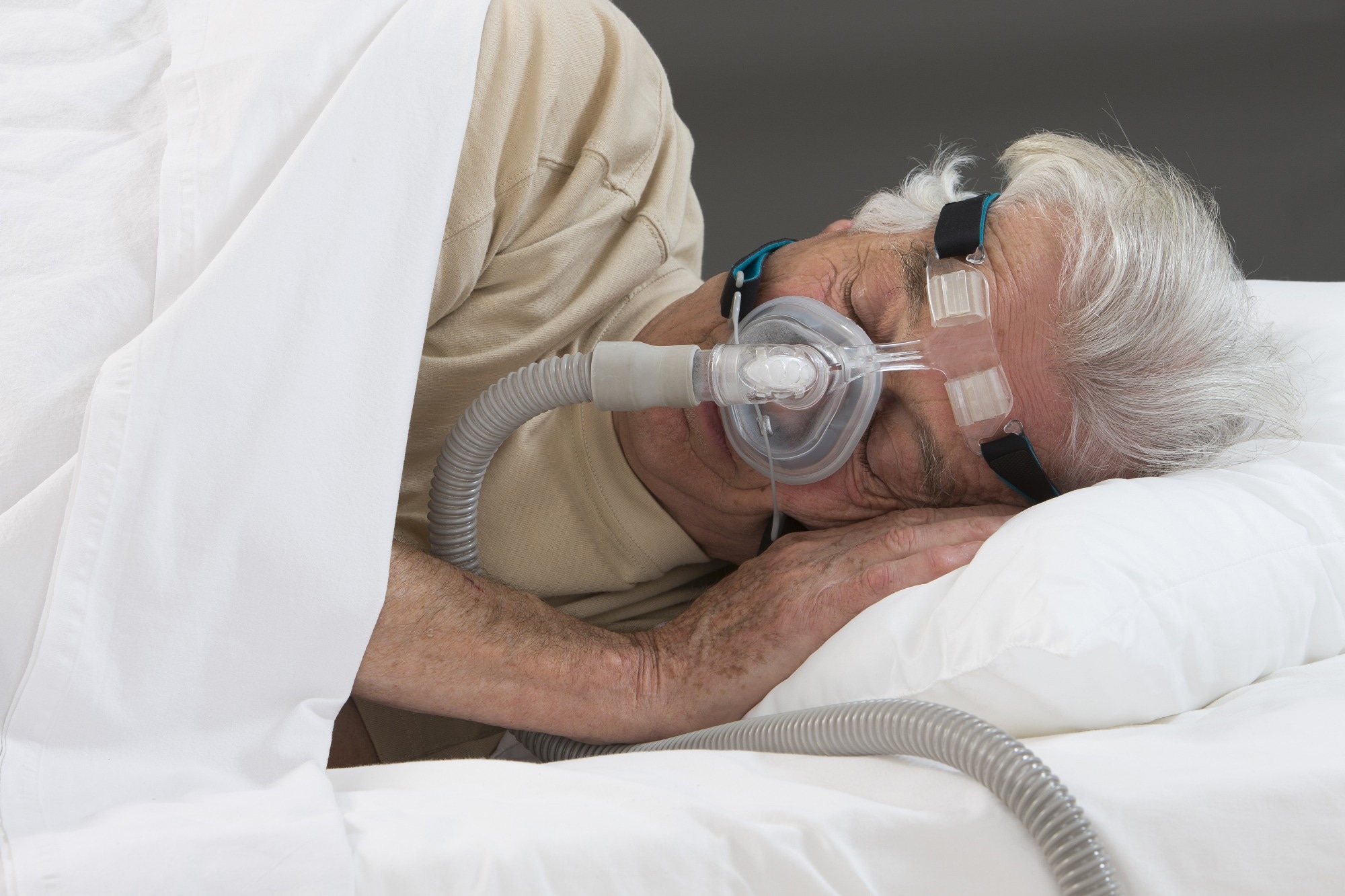 Study: Obstructive Sleep Apnea, Positive Airway Pressure, and Implications of Early Treatment in Parkinson Disease. JAMA Neurology. Image Credit: JPC-PROD / Shutterstock.com
In a recent study published in JAMA Neurology, researchers report that obstructive sleep apnea (OSA) increases the risk of Parkinson’s disease; however, this risk can be reduced by treating the condition with positive airway pressure.
How does OSA cause cognitive dysfunction?
The prevalence of Parkinson’s disease is rapidly increasing worldwide, partly due to the aging global population and changing lifestyle habits. Among various modifiable factors that potentially increase the risk of Parkinson’s disease are OSA, a condition that is increasingly being studied for its impact on cognitive dysfunction.
OSA is characterized by a temporary cessation of breathing rhythm or a reduction of breathing amplitude during sleep due to a compromised upper respiratory airway. This obstruction is sufficient to induce chronic brain hypoxia, which leads to mitochondrial dysfunction, a process associated with Parkinson’s disease pathogenesis.
Epidemiological studies investigating the association between OSA and Parkinson’s disease have produced inconsistent results. However, clinical evidence has identified elevated blood levels of Parkinson’s disease biomarkers in individuals with OSA.
Key findings
The current study evaluates the association between OSA and Parkinson’s disease among U.S. veterans while exploring the role of OSA treatment in attenuating Parkinson’s disease risk. Electronic health records of over 11 million U.S. veterans were analyzed, with a mean follow-up period of five years.
About 14 % of study participants were diagnosed with OSA. Among those with OSA, about 9 % had documented use of continuous positive airway pressure therapy, which is standard treatment for symptomatic OSA. Veterans with OSA had 1.6 additional cases of Parkinson’s disease for every 1,000 people at six years from the diagnosis of their sleep disorder, as compared to veterans without the condition.
The observed association between OSA diagnosis and higher incidence of Parkinson’s disease was unchanged, even after adjusting for potential confounding factors like body mass index (BMI), vascular comorbidities, psychiatric conditions, and relevant medications. Notably, a higher risk of Parkinson’s disease due to OSA was observed in female veterans as compared to male veterans.
Veterans who received continuous positive airway pressure therapy within two years of initial OSA diagnosis were at a significantly lower risk of developing Parkinson’s disease as compared to those who did not receive the treatment. This risk reduction suggests that initiating continuous positive airway pressure therapy in 439 patients immediately after diagnosis can potentially protect one patient from developing Parkinson’s disease within five years.
A significant impact of continuous positive airway pressure therapy on Parkinson’s disease risk was observed in male veterans. However, this effect was not observed in female veterans.
Study significance
Both mild and severe OSA significantly increased the risk of developing Parkinson’s disease in this cohort of U.S veterans. The study findings emphasize the importance of continuous positive airway pressure therapy in reducing Parkinson’s disease risk, as well as other forms of cognitive decline. Surgical corrective procedures also appear to reduce the risk of incident Parkinson’s disease in OSA patients who are resistant to continuous positive airway pressure therapy.
The researchers of the current study considered a wide range of healthcare factors that can potentially bias the observed association, including frequency of outpatient visits, adherence to continuous positive airway pressure therapy, and other health factors such as motor and non-motor symptoms. The adjustment of these factors in the main analysis confirmed the robustness of observed associations.
The study considered a longer follow-up period to mitigate reverse causation. This is particularly important, as prolonged supine positioning or upper airway dysfunction may reflect subclinical rigidity while also contributing to worse sleep-disordered breathing. Intrinsic sleep fragmentation and abnormal ventilatory responses from early brainstem pathologic involvement may also predispose patients to a harmful cycle of respiratory disturbances and arousals.
The study exclusively examined veterans, which may restrict the generalizability of its findings to other populations. However, this limitation, at least partly, has improved the sensitivity due to the significantly higher prevalence of OSA among veterans as compared to the general population.
The researchers were unable to assess the influence of physical, cognitive, and social factors on adherence to continuous positive airway pressure therapy, which may serve as mediators of the expected benefits. It is also possible that patients who receive and adhere to the therapy are already the most likely to benefit.
Further research is needed to examine the impact of these factors, as well as to determine the causality and mechanistic details of the observed associations.
 Poor sleep health in late pregnancy linked to higher childhood obesity risk