A large U.S. study following older men for six years reveals that back pain quietly undermines sleep health over time, challenging assumptions that poor sleep is the primary culprit.
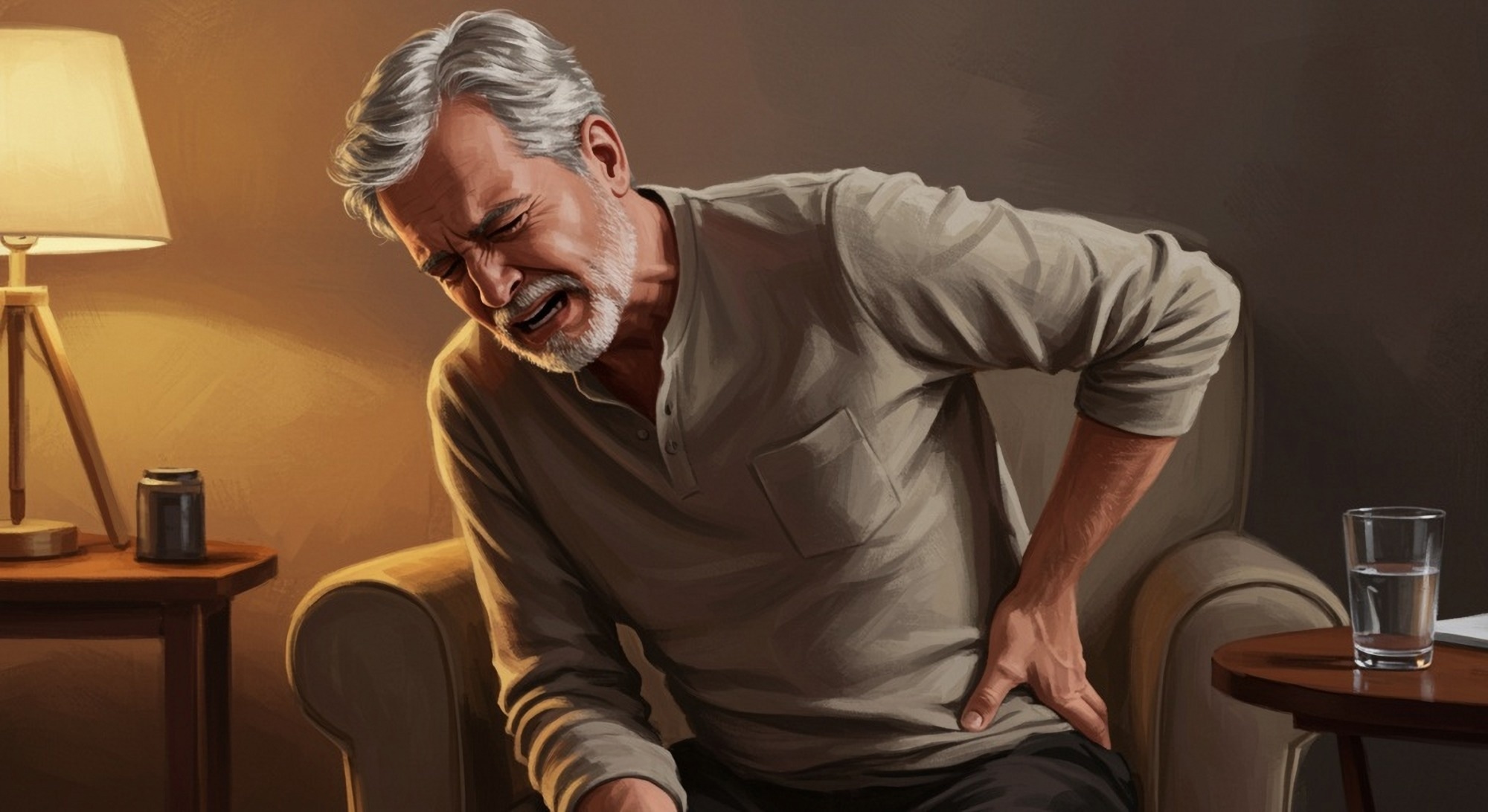 Study: Back pain precedes sleep problems in older men. Image Credit: Shutterstock AI Generator / Shutterstock.com
Pain is associated with sleep problems; however, few longitudinal studies have comprehensively explored the relationship between back pain and multidimensional sleep health, particularly among older adults. To clarify this association, a recent study published in Innovations in Aging investigates the prevalence of back pain and sleep issues in men 65 years of age and older.
How does back pain impact sleep?
Back pain is the most common cause of disability in adults, with over 40 % of adults experiencing back pain in the past three months. The prevalence of back pain increases with age, with other lifestyle factors, such as physical activity, nutrition, and sleep, also contributing to its development.
Little is known about the specific manifestations of back pain in [older adults] and their associations with sleep.
Despite being a known risk factor for back pain, it remains unclear whether sleep problems precede back pain or exacerbate its onset and worsen symptoms. Thus, clarifying the temporal dynamics of sleep issues and back pain can enhance the efficacy of existing sleep interventions in preventing broader functional decline, particularly among older adults.
Six-year analysis of sleep and back pain
Data from the Osteoporotic Fractures in Men Study were used for the current analysis. The study cohort comprised 1,055 older American men who underwent two clinical sleep visits, of whom 963 were included in the final analytical sample after exclusions for missing data, as well as visits to assess osteoporosis and fracture risks.
Study participants used actigraphs for five or more consecutive days after their sleep visit to detect movement. Both self-reported sleep patterns and actigraphy data were compiled to generate a composite sleep problems score.
Sleep patterns considered in the total score included irregularity, dissatisfaction with sleep, lack of daytime alertness, suboptimal sleep duration, inappropriate sleep timing, and inefficient sleep. Back pain was also reported via mailed questionnaires administered every four months, with study participants indicating the presence of severe pain, frequent pain, pain that limited activity, or any back pain.
An autoregressive cross-lagged panel model (CLPM) was created to identify prospective associations between back pain and sleep, as well as their direction. The model was adjusted for factors like body weight, smoking, drinking, physical activity, chronic disease, depression, cognitive performance, and medications that could affect either sleep or back pain.
Back pain predicts worsening sleep years later
The mean age of the study cohort was 74.5 years, with 88 % of participants being White. Back pain affected 47 % of study participants over the past year, with severe and frequent back pain reported in 31 % and 22 %, respectively. About 30 % of study participants indicated that their pain limited their activity.
Over 30 % of the study cohort experienced sleep irregularities, while 26 % reported impaired daytime alertness. Approximately 38 % were not getting enough sleep, 25 % were affected by irregular sleep timing, and 14 % had inefficient sleep patterns.
After adjusting for other variables, individuals experiencing back pain had a higher mean sleep problems score, with the prevalence of sleep problems 12 % greater in older men with any back pain. Frequent back pain at the first sleep visit correlated with a 17 % increased risk of sleep problems after six years.
Similarly, severe back pain and pain limiting activity correlated with a 19 % and 25 % increase in sleep problems six years later, respectively. This association persisted independent of other risk factors and baseline sleep problems.
The major categories of sleep problems predicted by back pain within the last six years included poor sleep timing and satisfaction. Sleep duration did not correlate with back pain, despite being the most commonly studied dimension of sleep.
Download your PDF copy now!
Findings challenge assumptions about sleep causing pain
The study findings demonstrate a long-term temporal association between back pain and the incidence and severity of sleep problems over time, but not the reverse. As this was an observational study, causality cannot be inferred. Some factors that may contribute to poor sleep in older men with back pain may include difficulty achieving a comfortable sleep position, pain in other parts of the body, or pain-induced stress and/or depression.
Future interventions targeting back pain in older men may improve their overall sleep health. Nevertheless, additional studies are needed to determine how these temporal trends may vary based on geographic location and among more diverse populations, including women, younger adults, and racially or ethnically diverse groups, as the current findings are based on a predominantly White, community-dwelling sample of older U.S. men.
Mind-body group programs seeking to alleviate back pain severity and functioning have reported promising results, in addition to cognitive behavioral therapy for chronic pain and sleep problems. Holistic interventions that encourage physical activity and promote healthy lifestyles, including reduced drinking and smoking cessation, may further improve sleep quality and duration through both direct and indirect mechanisms.
Our findings suggest that interventions targeting back pain may help decrease sleep problems in older men and warrant further investigation into potential mechanisms.
Journal reference:
- Lee, S., Muhammed, T., Roseen, E. J., et al. (2025). Back pain precedes sleep problems in older men. Innovation in Aging. DOI: 10.1093/geroni/igaf113. https://doi.org/10.1093/geroni/igaf113.
 Self-guided online compassion therapy may improve quality of life in chronic illness