A simple 10-meter walking test before surgery may help clinicians and patients identify the optimal timing for hip replacement and set realistic expectations for recovery.
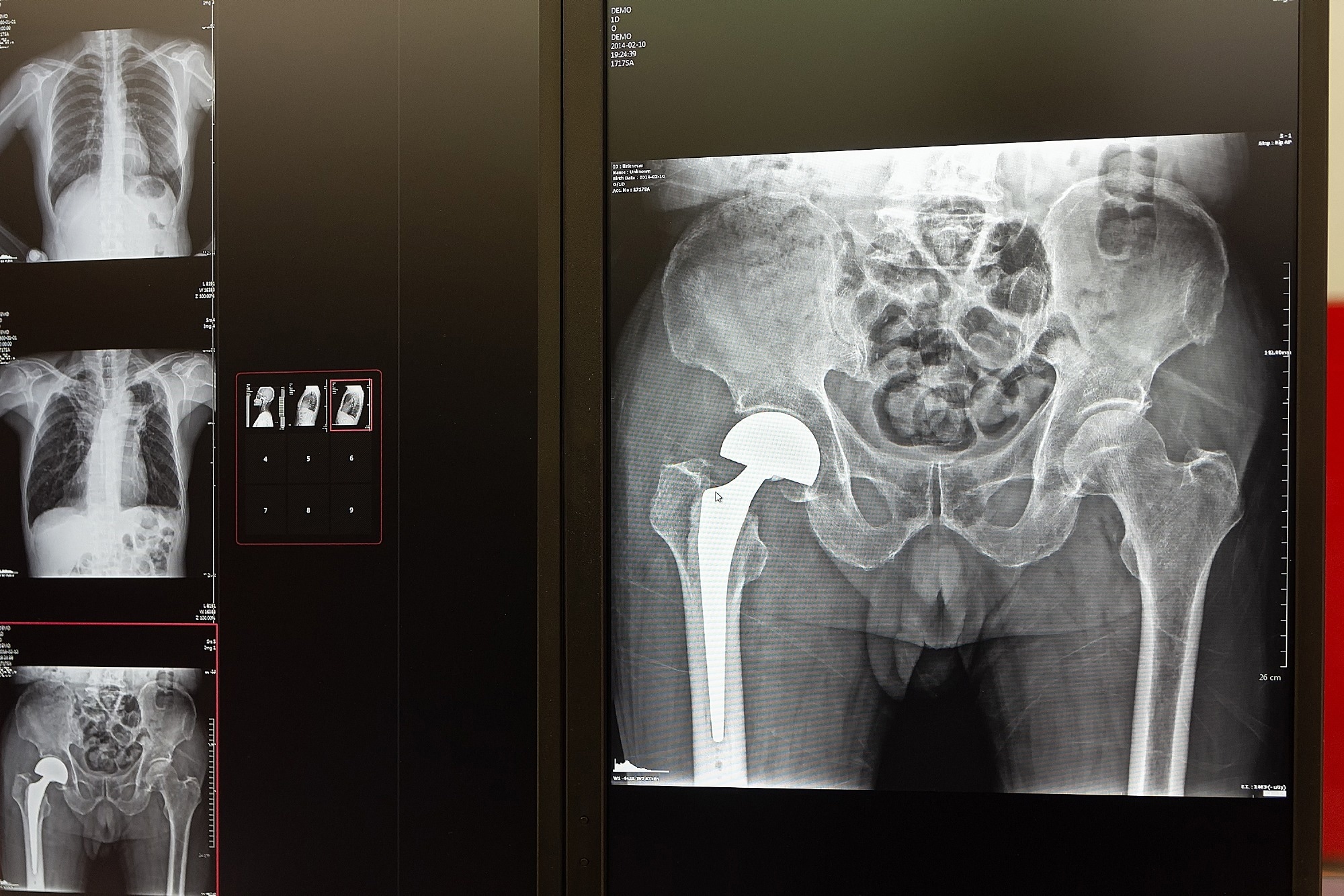 Study: Preoperative Gait Speed as a Predictor of Patient-Reported Outcomes After Total Hip Arthroplasty - Insights from Patient Acceptable Symptom State and K-Means Clustering Analyses. Image Credit: DmyTo / Shutterstock.com
A recent study published in The Journal of Bone and Joint Surgery identifies preoperative gait speed as a significant predictor of postoperative outcomes in patients who underwent total hip arthroplasty for hip osteoarthritis.
Variability in patient recovery
Total hip arthroplasty, commonly known as a hip replacement, is a surgical procedure performed to improve mobility in people with severe hip injuries, many of which are due to osteoarthritis. This surgery is associated with excellent long-term outcomes; however, postoperative recovery and clinical responses vary among individuals.
The currently proposed indication criteria for total hip arthroplasty are based on limited evidence, thus emphasizing the need to identify preoperative predictors of postoperative outcomes and recovery.
Patient-reported information regarding health status, symptoms, or quality of life is often used to determine treatment effectiveness. In the current study, researchers from Kyushu University in Japan examined whether health information collected from patients with hip osteoarthritis before surgery can predict clinical outcomes following total hip arthroplasty.
About the study
The current study included a total of 274 patients with hip osteoarthritis who underwent total hip arthroplasty. Preoperative information on symptom duration, pain intensity, hip range of motion, lower-limb muscle strength, and 10-meter free gait speed was collected using appropriate methods.
Patient-reported postoperative clinical outcomes were assessed using the Oxford Hip Score (OHS) and Forgotten Joint Score-12 (FJS-12). OHS is a patient-reported questionnaire to assess hip pain and function, whereas FJS-12 is a patient-reported outcome tool used to assess awareness of artificial prosthesis during daily activities following total hip arthroplasty.
Key findings
Preoperative gait speed was identified as a significant predictor of postoperative clinical outcomes. Moreover, both hip flexion range of motion and hip flexion strength were significantly associated with preoperative gait speed.
Gait speed cutoff values of 0.7 and 1.0 meters/second were established for achieving clinically meaningful outcomes for hip pain and artificial prosthesis awareness, respectively. The study findings suggest that a gait speed cutoff value of 1.0 meters/second is the only significant predictor of excellent outcomes following total hip arthroplasty.
Study significance
Preoperative gait speed, defined as walking velocity, was identified as a clinically relevant parameter for predicting outcomes in patients with hip osteoarthritis after total hip arthroplasty.
Notably, the researchers established a gait speed threshold of 1.0 meters/second as the only independent predictor of excellent postoperative outcomes. This threshold aligns with established sarcopenia criteria and is supported by previous studies reporting that the typical walking speed of individuals between 60 and 69 years of age is 1.2-1.4 meters/second.
Based on these observations, a preoperative gait speed of less than 1.0 meters/second may be considered a clinically significant benchmark to determine the appropriate timing for total hip arthroplasty.
Gait speed, which reflects the integrated performance of cardiovascular, neurological, and musculoskeletal systems, is considered a significant predictor of adverse outcomes, including postoperative complications, falls, institutionalization, disability, and mortality. A reduction in gait speed by 0.1 meter/second has been associated with reduced survival among community-dwelling older adults.
The measurement of gait speed requires minimal equipment, facilitating widespread applicability across diverse resource settings. The reproducibility and clinical relevance of gait speed make it a practical preoperative indicator of recovery and rehabilitation goals, helping patients understand their functional status.
Age, hip flexion range of motion, hip flexion muscle strength, and pain intensity contribute to preoperative gait speed. Existing evidence suggests that reduced hip range of motion and decreased muscle strength can influence gait speed in patients with hip osteoarthritis. Thus, preoperative rehabilitation focusing on hip range of motion, hip flexion muscle strength, and overall physical activity is recommended for patients of all ages to achieve favorable outcomes following surgery.
Overall, the study findings underscore the importance of maintaining lower-limb function and walking speed, regardless of age, to achieve favorable postoperative clinical outcomes. These insights may serve as valuable decision-making tools for preoperative assessment and determination of the optimal timing of surgery.
During gait speed measurement, researchers allowed patients who routinely use a walking stick to use it, which may overestimate their walking capacity. Patients with arthritis in the spine or other lower joints were also included in the study, which may have influenced gait speed.
 Groundbreaking movement span framework redefines how we measure aging