New research reveals that what we eat, down to the type of dietary protein, can tip the balance between Vibrio cholerae and the gut microbiota, reshaping bacterial competition and disease potential during cholera infection.
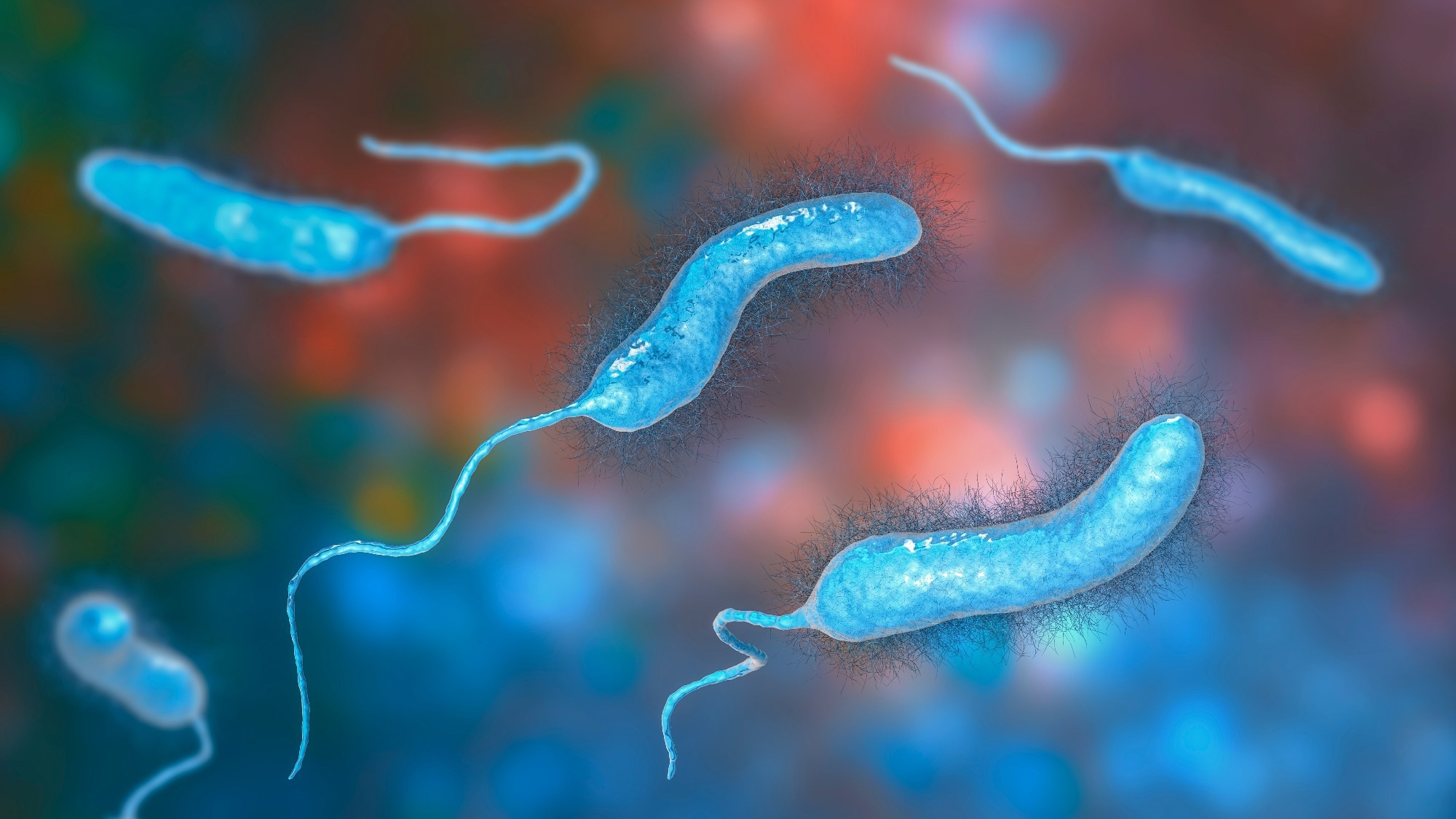 Study: Diet modulates Vibrio cholerae colonization and competitive outcomes with the gut microbiota. Image Credit: Kateryna Kon / Shutterstock.com
A recent study published in Cell Host & Microbe examines the role of dietary components and the gut microbiota in Vibrio cholerae infection, commonly referred to as cholera.
Cholera risk is shaped by diet-microbiota interactions
Cholera is a severe diarrheal disease that affects over 2.9 million people worldwide, 95,000 of whom die from this infection each year. The virulence of V. cholerae is determined by the coordinated expression of several virulence factors amid the destructive attempts by microorganisms in the gastrointestinal tract, aiming to prevent pathogen colonization.
The efficacy of these host defenses against V. cholerae infection is determined by the composition of the gut microbiome, which is influenced by daily dietary habits and affects its diversity and quantity. For example, consuming fiber leads to the production of short-chain fatty acids (SCFAs), which prevent diarrhea by facilitating sodium and water absorption.
The central role of diet in the prevalence and severity of cholera is exemplified by its strong association with malnutrition, a common co-morbidity in cholera-endemic regions. Nevertheless, it remains unclear how nutrition influences V. cholerae gene expression, fitness, and competition with the gut microbiome during infection.
The macronutrient-specific effects on V. cholerae colonization
The current study explored how macronutrients in the host diet are involved in gut colonization and competition by V. cholerae. To this end, specific pathogen-free (SPF) mice were infected with V. cholerae while consuming a carbohydrate-, protein, or fat-rich diet, with all minerals and vitamins similar between the groups.
Mice consuming a high-protein (casein-based) diet exhibited significantly lower V. cholerae colonization as compared to those consuming other refined diets or control chow. V. cholerae accounted for 99.9 % of the bacteria present in the gastrointestinal tract of these mice, indicating that reduced colonization was unlikely to be explained by residual gut commensals following antibiotic treatment.
Casein, which was the primary protein component in this refined diet, has previously been shown to inhibit cholera toxin (CT) binding in vitro. To clarify this potential association, the researchers repeated their experiment using a high-protein refined diet with soybean protein or wheat gluten. As compared to mice fed casein or wheat gluten diets, high soybean protein intake was associated with greater V. cholerae colonization.
A total of 202, 1,288, and 678 genes were differentially expressed in fecal DNA samples obtained from mice consuming soybean, wheat gluten, and casein high-protein diets as compared to controls, respectively. Consuming casein and wheat gluten diets resulted in a greater degree of similarity in up- or downregulated gene expression compared to the soybean protein diet.
More specifically, consuming casein or wheat gluten refined diets reduced the expression of genes involved in oxidative phosphorylation, tricyclic acid (TCA) cycle, and carbon metabolism, indicating that casein or wheat gluten may impact V. cholerae metabolism during infection. Significant upregulation of sulfur-related pathways were also associated with casein and wheat gluten as compared to soybean protein.
All protein sources in the high-protein diets led to trends toward reduced expression of CT genes ctxAB, toxin co-regulated pilus (TCP) genes, and accessory colonization factors, although most of these changes did not reach statistical significance, with the exception of tcpF. The casein-rich diet downregulated genes involved in class II and IV flagellar genes, which encode for the body-hook, flagellin, and specific motor components. Casein and wheat gluten were found to significantly regulate genes encoding for type VI secretion system (T6SS) elements involved in intra-bacterial competition as compared to soy protein and control diet.
Host diet can broadly affect V. cholerae’s gene expression in metabolism, motility, and virulence expression.
Thereafter, the researchers performed a genetic screen using transposon insertion site sequencing (TN-seq) to identify mutant strains of V. cholerae that were more effective at colonizing the mouse gastrointestinal tract as compared to wild-type strains. To this end, 3,061 were identified, pooled, and introduced into mice consuming either a high-casein or control diet.
Upon deletion, a total of 40 genes were identified as supporting V. cholerae colonization in mice consuming a casein-rich diet, 16 of which were involved in the flagellar assembly pathway. Ribonucleic acid-sequencing (RNA-seq) data suggest that V. cholerae downregulates downstream flagellar structural genes after high casein intake.
V. cholerae with a mutation in the flagellar master regulatory gene flrA strongly outcompeted the wild-type strain in mice consuming a high-casein diet, which increased colonization levels four days after infection. The presence of flrA mutations also restored T6SS pathway gene expression that was previously repressed in wild-type strains following casein-rich diet intake. Notably, the effects of flrA mutations on colonization levels were not observed when the soybean protein-rich diet was consumed.
Further experiments demonstrated that these diet-dependent changes in T6SS activity altered competitive interactions between V. cholerae and gut commensals, including a human Escherichia coli isolate, thereby reshaping microbiota structure during infection.
These findings suggest dietary interventions for restricting V. cholerae and highlight the importance of diet in pathogen-commensal interactions.
 Gut microbiome differences may explain varied sleep responses to hydrogen supplementation