A large national study suggests that the layout of your office may shape workplace relationships, with traditional open-plan designs linked to a higher risk of bullying while more flexible activity-based spaces appear to avoid the same problem.
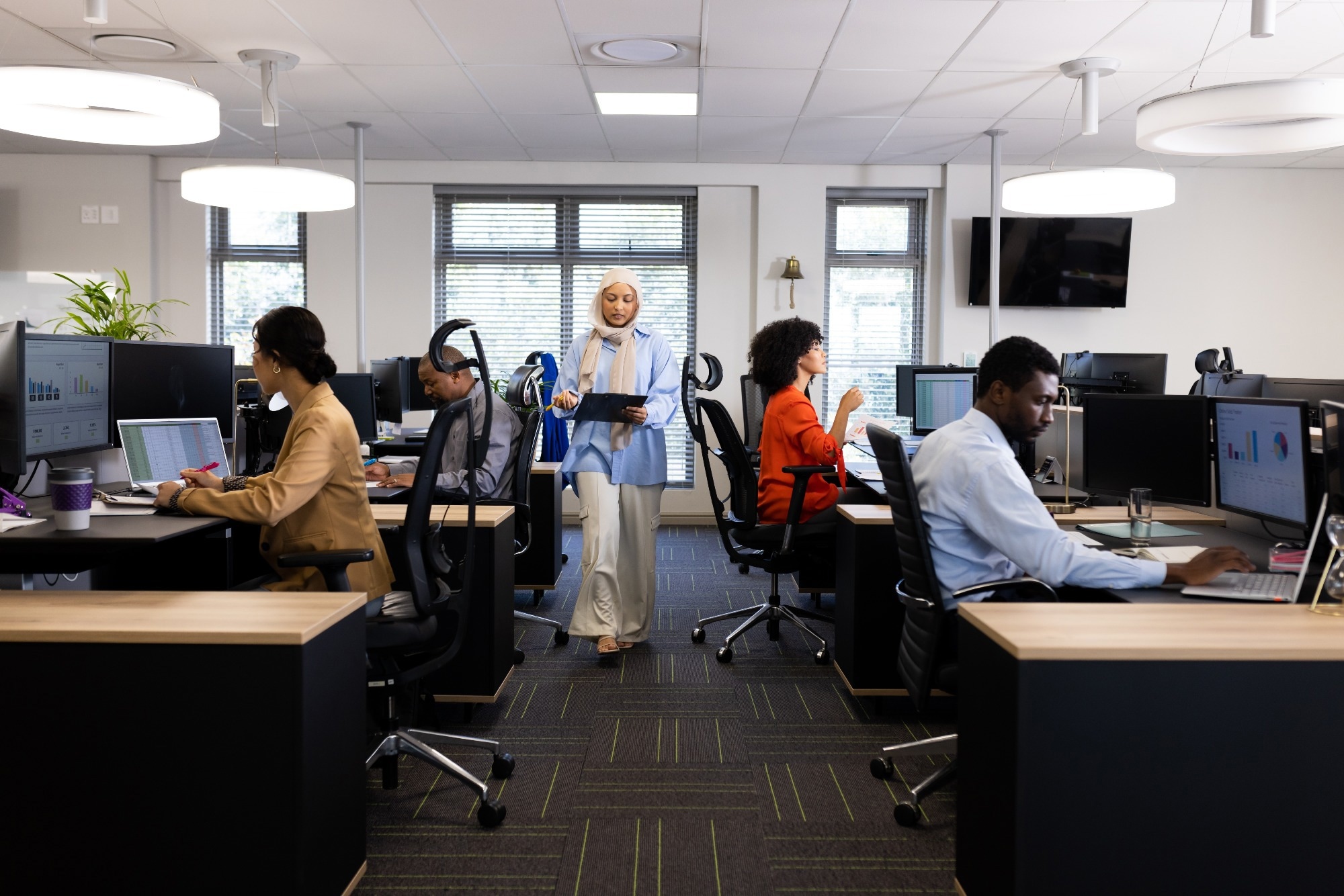 Study: Workplace Bullying in the Open: the Risks Associated with Working in an Open Office. Image credit: wavebreakmedia/Shutterstock.com
Open offices have become common because of their perceived advantages, but they may also reduce employee well-being by increasing stress. A recent report in the journal Occupational Health Science found that employees working in traditional open offices have a higher odds of experiencing workplace bullying than those in shared or private offices, based on statistical models derived from a national survey of Swedish workers.
The hidden social costs of open-plan workspaces
Open offices are intended to optimize space and promote collaboration, but critics say they may reduce privacy and harm employee health and well-being for the sake of profit. The lack of privacy may contribute to workplace bullying. It increases distractions and interruptions while limiting privacy for tasks and conversations.
In addition, noise and crowding are common in open offices. The noise may impair thinking and good judgment, potentially affecting work quality and concentration. Crowding may trigger emotional reactions and interpersonal tension. In particular, interruptions, distractions, and intrusions may affect the employee's attitude and cause friction. Performance may also decline.
In contrast, others say they promote better interaction and collaboration between colleagues. However, previous research suggests that open offices may be associated with up to 70 % fewer face-to-face interactions, although this finding comes from earlier studies rather than the current research. Some researchers suggest that employees may avoid interactions to reduce interruptions and maintain focus.
Workplace aggressors may sometimes engage in strategic behavior to influence or control others, according to theoretical perspectives on workplace aggression, especially when they hold positions of power or high visibility, or when they have frequent interactions with them.
Previous research has shown that most employees dislike open office environments, reporting lower job satisfaction, higher stress levels, poorer focus, worse health, and more sick leave. Many such workers welcomed the opportunity to work remotely during the pandemic. However, the pandemic also prompted many organizations to reassess their office space needs, and in some cases, this contributed to a shift towards more open offices. Many of these were designed around activity-based principles. These had flexible seating and task-centered workspaces, rather than fixed desks for employees.
The authors note that one aspect that has received little attention in open-office research is the potential for bullying, as it produces many of the same outcomes associated with this office type. The authors define workplace bullying as “systematic and prolonged exposure to negative behaviours from co-workers and/or supervisors, in which the ability to stop or ward off the treatment gradually diminishes”.
Importantly, this is the extreme end of the spectrum of negative workplace social interactions. As such, workplace bullying is an independent outcome and not just a risk factor for an adverse outcome.
National survey examines office design and bullying risk
The study used a probability sample of the Swedish workforce, involving 3,307 participants surveyed in 2024. Analyses focused on respondents who performed office work at least part of the day. The researchers controlled for the following confounders: demographic factors, personality traits, the extent to which employees used office space, and whether they worked remotely.
Traditional open offices linked to higher bullying risk
Workplace bullying was more likely to occur in open offices than in shared or private offices. Logistic regression analyses showed higher odds of bullying among employees working in open offices compared with those in private or smaller shared offices. When stratified by open-office type, the authors found the increased risk was driven by traditional open offices. Activity-based open offices did not show this increased risk.
Overall, about 12.8 % of respondents met the study’s criteria for workplace bullying exposure, though prevalence varied across work settings. According to the authors, this risk may be related to the physical and social context of the traditional open office. They propose several possible mechanisms that might contribute to this pattern.
For example, open offices may make it easier for employees to observe colleagues’ perceived shortcomings in work or social behavior, and they may increase sensitivity to behaviors that others find irritating. In addition, employees may have fewer opportunities to withdraw from negative interactions, which could weaken coping strategies and increase feelings of helplessness. Reduced face-to-face interaction may also delay conflict resolution, leading to tensions that escalate over time.
Employees working in such offices also reported lower job satisfaction and were more likely to switch jobs than those in private or smaller shared offices. However, lower job satisfaction was observed primarily in traditional open offices, while turnover intentions were higher in both traditional and activity-based open offices. Importantly, the increased bullying risk remained after controlling for personality traits, suggesting that the effect is linked to characteristics of the office environment rather than individual differences among employees.
The authors speculate on possible reasons. These include stress arising from the office environment, unrealistic expectations among colleagues, and limited social privacy, particularly when tensions arise between workers.
Possible preventive measures include building trust that conflicts will be fairly and promptly managed by introducing formal complaint procedures and ensuring managers are prepared to intervene. Organizations may also provide areas for temporary withdrawal or seclusion to help defuse conflict situations. In addition, grouping employees with similar tasks and privacy requirements near each other could reduce distractions and interruptions. More broadly, the authors emphasize that creating supportive office environments should be recognized as an employer and organizational responsibility.
Strengths and limitations
The national level sample, coupled with the performance of multiple analyses for robustness, are strengths of the study.
However, the study relied on self-reported data, introducing social desirability bias and common-method bias. This might have led to an underestimation of workplace bullying risk. In addition, the cross-sectional design means the findings show associations rather than proving that open offices directly cause bullying.
Office design should prioritize psychosocial workplace health
Apart from space design, psychosocial health should also be prioritized in planning open-office design. An important feature of healthy workplaces is early resolution of issues and organizational processes that help prevent conflicts from escalating into bullying.
Download your PDF copy by clicking here.
_1b78fec41a5143afb6e7b9ad317023d2-80x70.jpg) Blocking specific proteins protects beta cells om excessive cellular stress
Blocking specific proteins protects beta cells om excessive cellular stress