Even people who meet fruit and vegetable recommendations rarely consume enough flavanols to match the levels associated with reduced cardiovascular risk, raising new questions about whether flavanol-specific dietary guidance is needed.
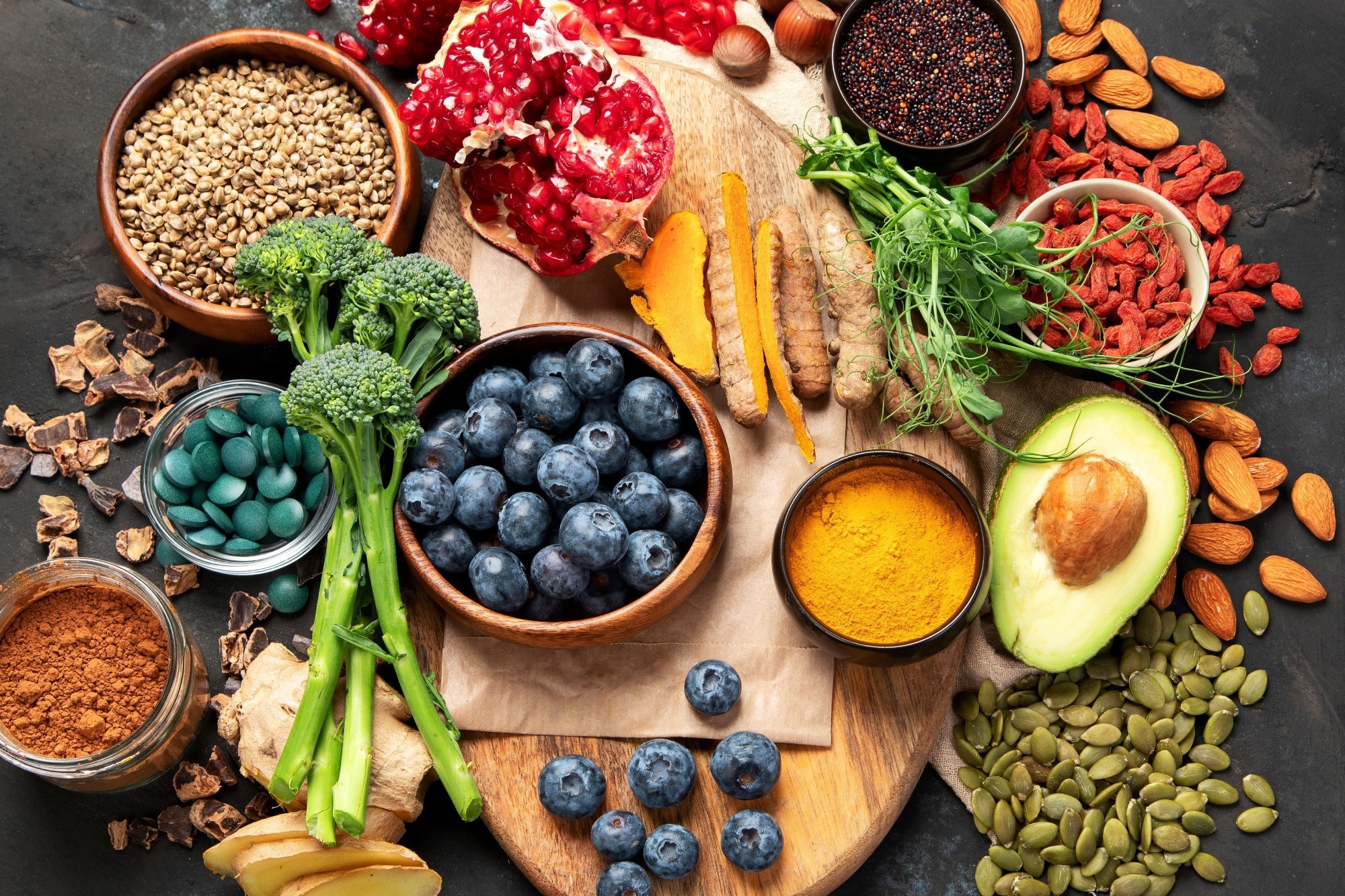 Study: Adhering to dietary guidelines does not yield flavanol intake levels associated with beneficial cardiovascular effects. Image credit: Tatjana Baibakova/Shutterstock.com
A recent study in Food and Function investigated whether current dietary recommendations for fruits, vegetables, and overall diet quality meet flavanol intake levels associated with cardiovascular health benefits.
Current dietary advice lacks flavanol-specific targets
Flavanols are a subclass of flavonoids, a group of plant-derived polyphenolic compounds defined by a 3-hydroxyflavan structure. These molecules are prevalent in a wide range of foods, including fruits, vegetables, tea, cocoa, and legumes. Flavanols possess distinct biological activities, including antioxidant functions and the ability to regulate vascular and inflammatory processes relevant to cardiometabolic health.
Large-scale trials like COSMOS have shown that a daily intake of 500 mg of flavanols was associated with reductions in cardiovascular mortality and cardiovascular events in older adults, spurring interest in setting dietary recommendations for flavanols. Despite these findings, the US, UK, and World Health Organization (WHO) dietary guidelines focus on general intake of fruits, vegetables, and legumes without specific flavanol targets. Although experts recommend 400–600 mg of flavanols daily for cardiometabolic health, it remains unclear whether current guidelines achieve these amounts.
Validated nutritional biomarkers, such as 5-(3′,4′-dihydroxyphenyl)-γ-valerolactone metabolites (gVLMB) and structurally related (−)-epicatechin metabolites (SREMB), now enable objective quantification of flavanol intake. However, limited data exist on whether following established dietary patterns and using biomarker-based measures results in flavanol intake sufficient to confer the observed health benefits. Addressing these gaps is critical to inform evidence-based recommendations.
Two large cohorts tested flavanol intake levels
The current study examined whether following recommended fruit and vegetable intake and healthy dietary patterns leads to flavanol intakes of at least 500 mg/day, the amount linked to cardiovascular benefits in the COSMOS trial and recommended by experts.
Data were collected from two studies: the COSMOS trial (US), which evaluated cocoa flavanols and multivitamins for CVD and cancer prevention in 21,442 adults aged 60 and above, and the EPIC-Norfolk cohort (UK), which recruited 30,447 adults aged 40–79. Dietary intake was assessed by questionnaire in COSMOS and a 7-day diary in EPIC-Norfolk.
In COSMOS, 6,509 participants provided spot urine samples for flavanol biomarker analysis. In EPIC-Norfolk, 24,154 participants provided similar samples. The current study quantified gVLMB and SREMB from the urine samples. In addition to the flavanol biomarker, plasma vitamin C was also assessed.
Flavanol intake from fruits and vegetables was simulated using Phenol-Explorer and 2017 NHANES data. Simulations tested various daily portion numbers and food selection strategies using 10,000 Monte Carlo simulations per scenario. Flavanol content was obtained from reported ranges of relevant compounds.
Healthy diets rarely deliver sufficient flavanol intake
COSMOS participants were generally older, more likely to be male, and had higher BMI, while EPIC Norfolk had less ethnic diversity. Food intake comparisons were limited by measurement differences, except for tea, which was consumed much more frequently in EPIC Norfolk and is a key source of flavanols.
Flavanol biomarker levels were broadly similar across the two cohorts, although EPIC Norfolk participants had higher levels of the (−)-epicatechin biomarker. Overall, only 19% of COSMOS participants and 18% of those in EPIC Norfolk achieved the biomarker-estimated flavanol intake equivalent to 500 mg/day. Men were more likely to reach this threshold in both studies, while age and BMI showed differing associations between the cohorts.
Adherence to healthy dietary patterns did not substantially increase the likelihood of reaching the flavanol target. In COSMOS, even participants with the highest fruit and vegetable intake or diet quality scores rarely met the threshold, with only about 21% doing so. Those with the highest diet quality had modestly higher odds of reaching the target than those with the lowest scores, but overall associations between diet quality, fruit intake, tea consumption, and flavanol biomarkers were weak.
Similar findings emerged in EPIC Norfolk. Only 16% of participants with the highest fruit and vegetable intake met the flavanol goal, and those most closely following UK dietary recommendations were no more likely to achieve it. Higher tea consumption was associated with greater flavanol intake, but even among the heaviest tea drinkers, fewer than one in five participants reached the target level.
Computer simulations supported these observations, showing that commonly consumed fruits and vegetables were unlikely to provide 500 mg/day of flavanols, even when consumed in recommended amounts. While selecting foods with particularly high flavanol content improved the chances of reaching the target, the probability remained below 50%.
The researchers suggest that wide variation in flavanol content among foods, and even among varieties of the same fruit or vegetable, may help explain why following general dietary recommendations does not reliably yield flavanol intakes associated with cardiovascular benefits.
Importantly, the biomarker thresholds used in the analysis were deliberately selected to err on the side of overestimating flavanol intake, suggesting that the true proportion of people reaching the 500 mg/day target may be even lower.
Existing dietary guidelines miss cardioprotective flavanol levels
The current dietary guidelines alone are insufficient to ensure flavanol intake at levels shown to lower CVD risk, as demonstrated in the COSMOS trial. The authors note that existing dietary guidelines were designed to meet nutrient requirements rather than to optimize the intake of specific bioactive compounds, such as flavanols.
Establishing specific dietary reference values for flavanols may be needed to help the public achieve these health benefits. Although the US has not prioritized Dietary Reference Intake (DRI)-like values for flavanols and other bioactives, other organizations may be able to move this process forward more quickly. Recent initiatives to set recommended intakes for bioactives, along with guidelines for flavanol intake from groups such as the Academy of Nutrition and Dietetics, are promising steps in this direction.
Download your PDF copy now!
 A CDC survey finds 4 in 5 US teenagers fall short of high heart health scores