Cranberry juice may help extend the lifespan of a key UTI antibiotic by reprogramming how bacteria absorb fosfomycin and evolve resistance.
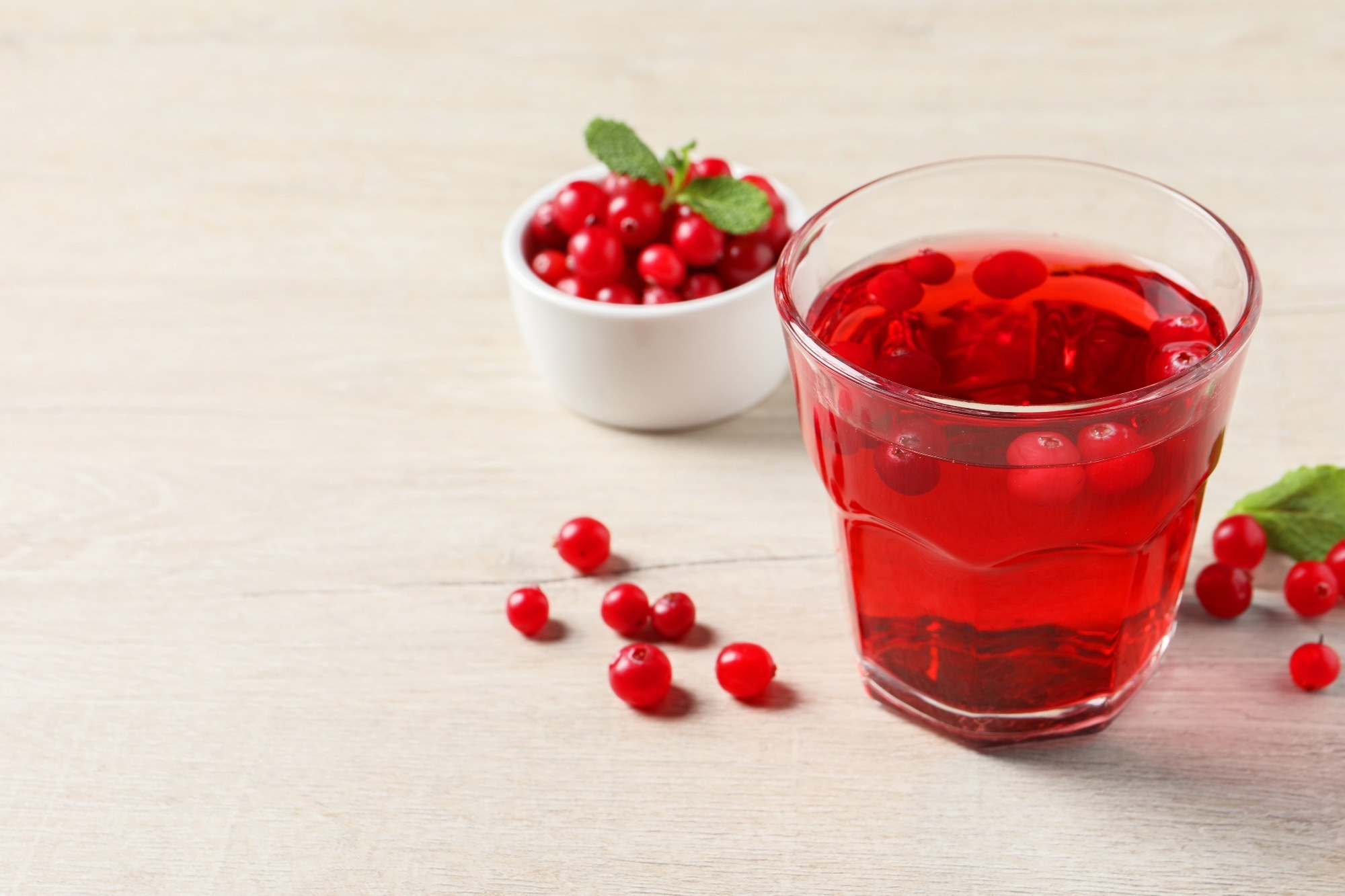 Study: Cranberry juice potentiates sensitivity of uropathogenic Escherichia coli (UPEC) strains to fosfomycin and decreases occurrence of spontaneous resistance. Image credit: New Africa/Shutterstock.com
In a recent study published in Applied and Environmental Microbiology, researchers showed that cranberry juice (CJ) increases the antibacterial activity of fosfomycin (FOS) and reduces the occurrence of resistance in uropathogenic Escherichia coli (UPEC).
Rising UTI resistance drives search for alternative treatments
UPEC is the primary causative agent of urinary tract infections (UTIs), which can lead to various complications, including renal damage, sepsis, pyelonephritis, and chronic health issues. Increased antimicrobial resistance (AMR) is a growing concern for UTI treatment. Therefore, exploring novel therapeutic options and improving the activity of existing antibiotics are critical.
FOS, a phosphoenolpyruvate analog, is a recommended first-line antibiotic for uncomplicated UTIs. Other agents include trimethoprim-sulfamethoxazole and nitrofurantoin. These have been used for over 4 decades, with limited emergence of resistance in clinical isolates of E. coli. Nevertheless, mutations, especially in transport systems, can potentially lead to spontaneous FOS resistance in UPEC. Antibiotic adjuvants have gained substantial attention over the years.
These products typically lack antimicrobial activity and can either suppress AMR or enhance the antimicrobial activity of specific agents. CJ has long been a subject of research for its effects against UTIs, and is known for its anti-infective and anti-adhesive properties. However, its potential to modulate antibiotic activity remains incompletely understood.
Cranberry juice enhances fosfomycin across UPEC strains
In the present study, researchers investigated whether CJ increases FOS activity against UPEC. First, they developed a method to verify whether CJ can increase the activity of UTI antibiotics, including FOS, cephalexin, ceftriaxone, ciprofloxacin, norfloxacin, amoxicillin-clavulanic acid, nitrofurantoin, and cotrimoxazole. The sensitivity of different UPEC strains (to antibiotics) was compared in the presence and absence of CJ.
The most significant and consistent effect of CJ was observed with FOS, which was the focus of subsequent analyses. Next, the effect on FOS was tested in a disk diffusion assay using 32 UPEC strains. CJ had a significant effect on FOS against 25 strains. Notably, two of the remaining strains were fully FOS-resistant. Next, a wider FOS concentration range (8 µg to 200 µg) was tested across four selected strains.
The effects increased with higher FOS concentrations. Resistant colonies were observed inside growth inhibition zones around antibiotic discs for all strains except the two resistant ones. There were virtually no colonies within the inhibition zones on agar plates with CJ. In contrast, colonies within inhibition zones were readily detected without CJ. A few resistant colonies seen in the inhibition zone on CJ-containing plates were smaller and farther from the disc.
Next, the team examined changes in FOS resistance development. Cultures of the four strains were serially diluted, inoculated onto plates containing inhibitory levels of FOS, and the bacterial counts on these plates were compared with those on plates lacking FOS. There was a stark reduction in the rate of spontaneous resistance to FOS on CJ-containing plates, regardless of FOS concentration.
In particular, the emergence rate decreased by five orders of magnitude with CJ, with no resistance detectable at higher FOS levels on CJ-containing plates. Next, colonies from the four UPEC strains resistant to FOS were re-isolated, including those that emerged on CJ-containing plates. Their resistance profiles were verified, and resistant clones were subject to whole-genome sequencing.
Mutations were identified in various genes, including glycerol-3-phosphate transporter (glpT), pyruvate kinase 1 (pykF), and hexose 6-phosphate uptake transporter (uhpT). Of note, clones on agar plates without CJ mostly carried mutations in pykF or glpT. Across strain backgrounds, glpT mutations were observed in colonies isolated from plates without CJ. In contrast, no glpT mutations were identified in colonies from plates with CJ.
Instead, four of six resistant clones isolated from CJ-containing plates had mutations in genes involved in the UhpT system. Further experiments indicated that the UhpT system was the main transporter for FOS uptake in the presence of CJ. In addition, the presence of CJ effectively suppressed the expression of the GlpT system, the primary mechanism of cellular entry for FOS, while maintaining sufficient UhpT-mediated uptake for antibiotic entry.
Cranberry juice reprograms bacterial uptake to boost fosfomycin
The study demonstrated that CJ increases FOS activity against UPEC. CJ altered the bacterial carbohydrate transport system to potentiate FOS activity and suppress the emergence of resistance.
Importantly, these findings were obtained under in vitro conditions and cannot be directly extrapolated to clinical settings or cranberry juice consumption in patients. Further research is needed to identify the specific components of CJ responsible for the observed effects, to reproduce these findings in physiologically relevant models, and to investigate whether other antibiotics exhibit similar interactions.
Download your PDF copy by clicking here.
 Study identifies simvastatin as promising adjuvant for periodontitis treatment