A comprehensive analysis of 63,442 US civilian, noninstitutionalized adults shows a rise in reported supplement use over the past 25 years, particularly since 2009-2010, especially among older adults, with use shifting toward more specialized products marketed for immunity, inflammation, gut, skin, and joint health rather than multivitamins.
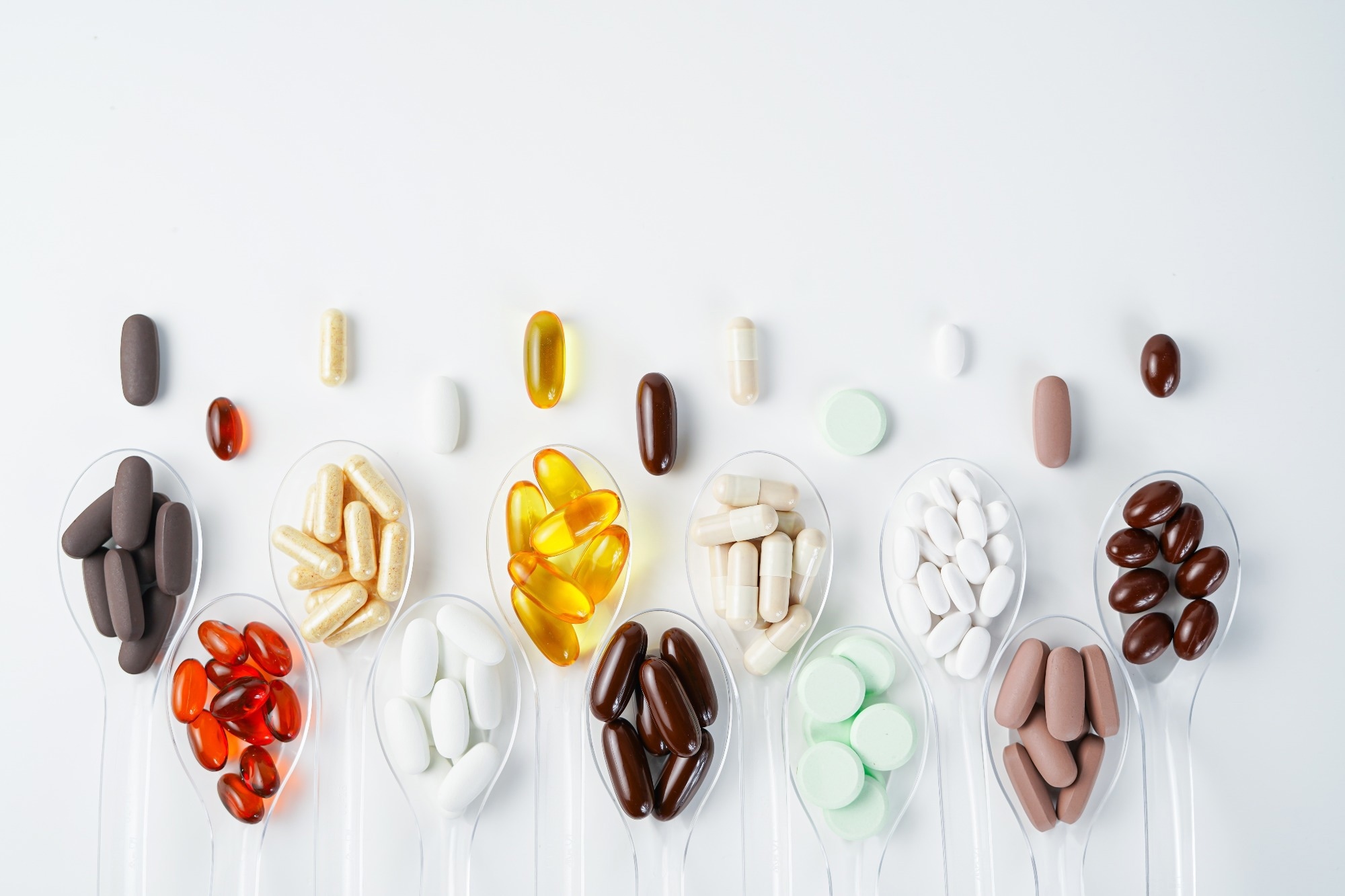
Study: Emerging Patterns in Dietary Supplement Use Among US Adults, 1999-2023. Image Credit: Aria Armoko / Shutterstock
A recent JAMA Network Open study examined trends in dietary supplement use among US adults over the past 25 years.
A Changing Landscape: Trends and Gaps in Adult Supplement Consumption
Dietary supplements are products containing vitamins, minerals, herbs, amino acids, or other ingredients designed to supplement the diet. Use among adults is widespread and continues to grow globally, with the market valued at nearly $200 billion in 2024 and projected to double by 2033.
In the US, supplements are mainly used to support or maintain health rather than address deficiencies. Only about 25% of products are used with healthcare professional guidance, highlighting the individualized, consumer-driven nature of use. With over 100,000 products on the market and no routine Food and Drug Administration premarket approval for safety and efficacy, ongoing surveillance of usage patterns is critical for informing clinical and public health strategies.
Data from the National Health and Nutrition Examination Survey (NHANES) show that supplement use prevalence exceeded 50% in earlier cycles (1999-2012) and has remained substantial. Most studies, however, examine only discrete periods, leaving continuous long-term trends insufficiently explored.
Comprehensive, long-term population-level analyses that assess evolving product categories and subgroup-specific patterns are notably lacking. Additionally, the impact of the coronavirus disease 2019 (COVID-19) pandemic on supplement use at the population level in the US remains poorly characterized, leaving a significant gap in understanding recent behavioral shifts.
Tracing the Rise and Complexities of Dietary Supplement Use
The current cross-sectional study used data from NHANES, a nationally representative US health survey. All study procedures were approved by an ethics board, and participant consent was obtained. NHANES collects comprehensive self-reported sociodemographic, lifestyle, health, physical, and laboratory data. Race and ethnicity were self-reported to assess differences in supplement use. The analysis included adults aged 20 years and older from 11 survey cycles (1999-2023) with supplement data.
A total of 63,542 adults completed dietary interviews during these cycles; 100 were excluded for missing supplement data, leaving 63,442 for analysis. The mean age of the participants was 47.3 years, and 52% were women. Participants reported dietary supplement use in the previous 30 days. Products were matched to the NHANES Dietary Supplement Database.
The current study included several variables: any supplement use, use of 4 or more products, and supplement categories, such as vitamins, minerals, multivitamin-multimineral (MVMM; 10+ vitamins and/or minerals), and nonvitamin, nonmineral (NVNM) supplements. A secondary MVMM variable included products with 3 or more vitamins (with or without minerals). Supplements were analyzed both overall and with MVMM products excluded, as MVMMs often contain lower doses and may serve different purposes.
Supplement Use Was Higher by Age, Education, and Income
Across all survey cycles, supplement use was consistently higher among older adults, women, individuals with higher education and income, those with insurance, and non-Hispanic White adults. Overall prevalence rose from 51% in 1999-2000 to 60% in 2021-2023, indicating a substantial upward trend over two decades.
The use of four or more supplements also increased, especially among adults aged 65 or older, those with less than a high school education, and Mexican Americans. After relatively stable rates until around 2009-2010, these groups experienced marked increases.
MVMM supplement use declined overall from 1999-2000 to 2021-2023, with the steepest drops among younger and middle-aged adults, while older adults saw a slight increase. Over the same period, vitamin use rose from 47% to 54%, while mineral use showed no significant long-term trend. When MVMM products were excluded, both vitamin and mineral use increased, with notable growth in recent years after a prior period of stability or modest decline through 2009-2012.
Among older adults, both vitamin and mineral use rose significantly. In contrast, only vitamin use (excluding MVMM) increased among younger and middle-aged groups. Mexican American adults also had a significant rise in vitamin use, but not in mineral use.
For specific nutrients (excluding MVMM), vitamin D and zinc saw the largest increases in use. Other vitamins and minerals, including vitamin K, biotin, B12, potassium, copper, iron, and magnesium, also increased, especially after 2009-2014, following earlier periods of stability or decline. Meanwhile, the use of nickel, tin, silicon, vanadium, chromium, and boron declined substantially.
Botanical supplement use remained generally unchanged, though after a modest decline through 2009-2010, it began to rise in recent years. Excluding MVMMs, botanical supplement use increased slightly. Several supplements, such as turmeric, curcumin, lycopene, and omega-3, became more popular or were newly measurable over time. Other emerging supplements, including ashwagandha, acai, hyaluronic acid, elderberry, collagen, prebiotics, and probiotics, also increased or became measurable in later NHANES cycles, although individual trajectories varied.
Conversely, certain supplements, including ginseng, ginkgo, gotu kola, and carnitine, experienced substantial declines in use. Other products with notable decreases were ephedra, hesperidin, para-aminobenzoic acid, lecithin, and garlic.
When comparing pre-pandemic and early-pandemic cycles with later-pandemic and post-pandemic cycles, overall supplement use, as well as MVMM and botanical use, remained stable. However, the use of vitamins and minerals increased. Several products, including rose hip, ashwagandha, lecithin, vitamin K, zinc, prebiotics, collagen, elderberry, and potassium, showed notable increases, while vanadium, silicon, tin, nickel, astaxanthin, carnitine, and evening primrose declined sharply. The authors noted that these differences may reflect longer-term secular trends rather than effects of the pandemic alone.
The Path Forward for Supplement Use
As supplement use in the US continues to evolve, ongoing research and monitoring will be essential to inform public health recommendations and support safety surveillance and clinical guidance. The shifting landscape of supplement preferences highlights not only the growing diversity of products available but also the evolving patterns of use around products marketed for preventive health and wellness.
As new ingredients and formulations are introduced, collaboration among researchers, regulatory agencies, and healthcare providers will be vital to evaluate efficacy and safety. The study did not assess supplement dose, frequency, efficacy, safety, or health outcomes, and its findings relied on self-reported 30-day use.
Continued public education and transparent communication will ultimately support informed decision-making and promote optimal health outcomes across all segments of the population.
Download your PDF copy by clicking here.
 Review finds blueberry and grape polyphenols may improve vascular health