By opening temporary microscopic channels in the skin, microneedle patches could help next-generation cosmetics deliver stronger results, from smoother skin to brighter tone and healthier hair, without relying on conventional creams alone.
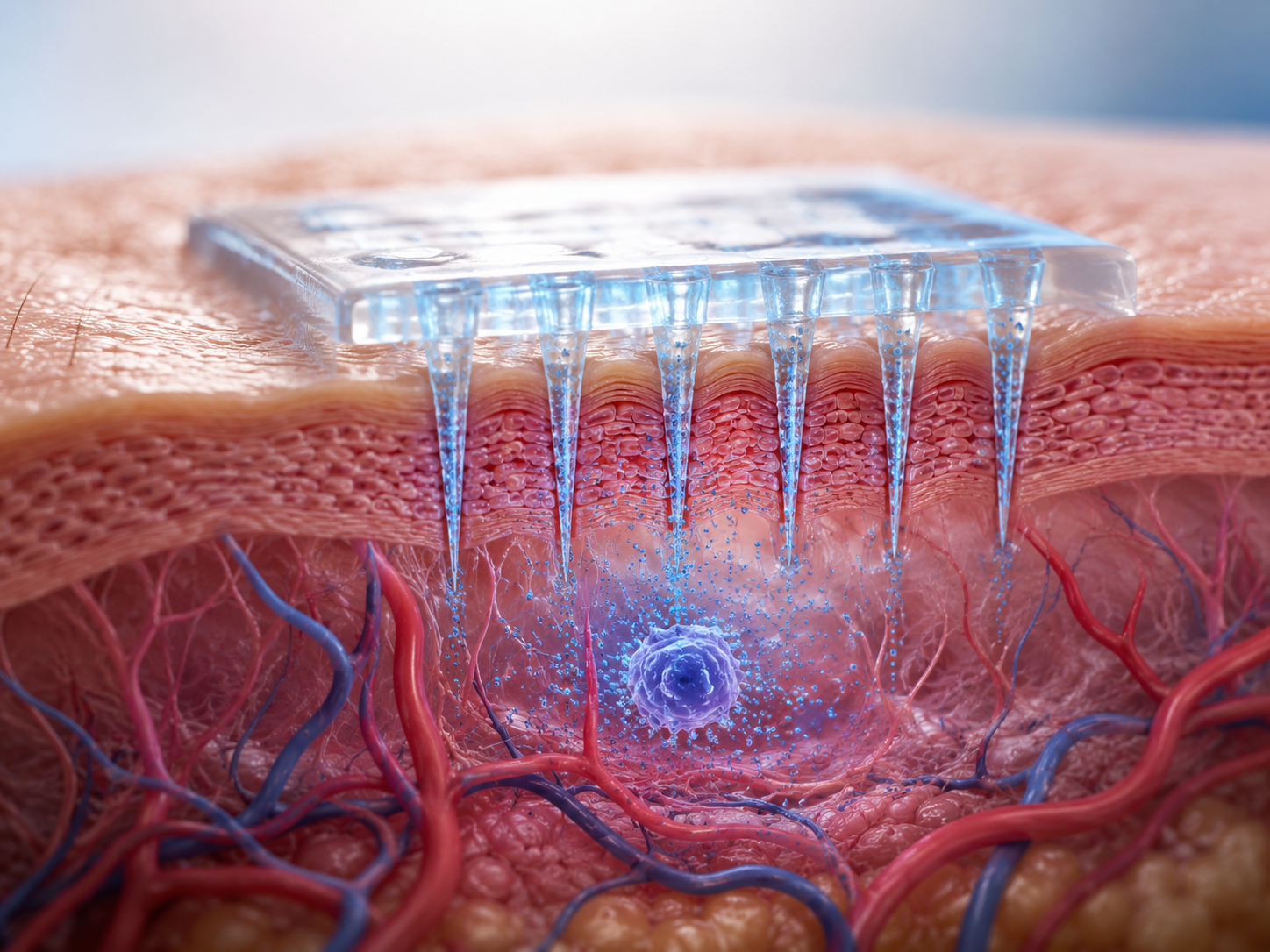
Review: Microneedle-based cosmetic delivery systems: Advances, applications, and future perspectives in skin care and aesthetic dermatology
Many cosmetic ingredients, particularly high-molecular-weight polymers and sensitive bioactive compounds, are less effective because they cannot readily penetrate the stratum corneum, the skin's outer barrier. In a recent review published in the Journal of Dermatologic Science and Cosmetic Technology, researchers comprehensively examined how microneedle-based cosmetic delivery systems overcome this limitation by creating microscopic channels that allow active ingredients to reach deeper skin layers.
Rather than focusing on a single product or clinical trial, the review maps how microneedle platforms are being adapted for cosmetic use, from dissolving hyaluronic acid patches to smart, stimuli-responsive delivery systems. The authors argue that the technology could expand what skincare products can deliver, but emphasize that clinical validation, repeated-use safety, manufacturing consistency, and regulatory clarity remain key hurdles before widespread adoption.
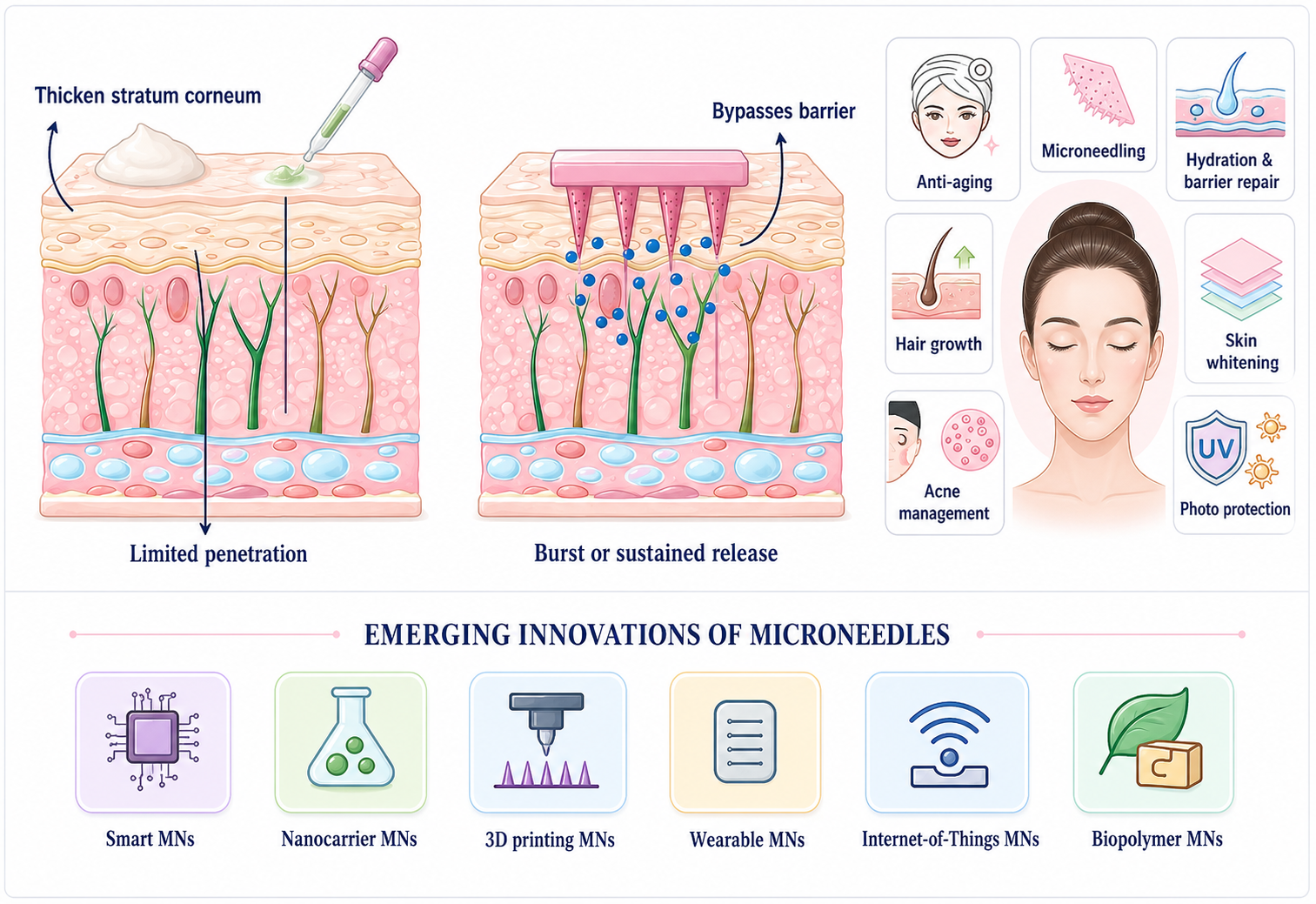
Microneedle technologies for cosmetic applications.
Addressing the Barrier: The Role of Microneedles
One of the biggest challenges in cosmetic formulation has been the skin's limited ability to absorb active ingredients, commonly described by the "500-Dalton rule." It states that molecules larger than 500 Daltons generally penetrate poorly through the intact stratum corneum. As a result, conventional creams, gels, and serums rely heavily on passive diffusion, allowing only a small fraction of cosmetic actives to penetrate the viable epidermis or dermis.
Microneedle technology was developed to overcome this barrier. Originally introduced for applications such as vaccine delivery, it is now being adapted for cosmetic use. Microneedle arrays contain microscopic projections measuring 150 to 1000 μm in length. These needles create temporary microchannels through the stratum corneum, allowing large bioactive molecules to reach deeper skin layers while minimizing pain, bleeding, and tissue trauma when appropriately designed.
Innovations in Design: Classifying Microneedle Types
The review classified cosmetic microneedles into five main designs based on how they deliver ingredients. Solid microneedles first create microscopic channels in the skin before a topical formulation is applied. Coated microneedles carry a thin layer of active ingredients that dissolve after insertion. Dissolving microneedles encapsulate ingredients within biodegradable, water-soluble polymers that dissolve in the skin. Hollow microneedles deliver liquid formulations through tiny internal channels, while hydrogel-forming microneedles absorb interstitial fluid, creating a pathway for controlled ingredient diffusion.
From a manufacturing perspective, the field has moved away from early silicon and stainless-steel microneedles because of their high cost and brittleness. Cosmetic and dermatologic designs increasingly favor natural and synthetic biopolymers, including hyaluronic acid, chitosan, gelatin, carboxymethylcellulose, polyvinylpyrrolidone, and polyvinyl alcohol. These materials offer good biocompatibility, adjustable strength, and controlled dissolution.
Among the available designs, dissolving microneedles have attracted the greatest interest for cosmetic applications due to their ability to eliminate sharps waste after use. Researchers also highlighted emerging manufacturing techniques, including roll-to-roll production and three-dimensional printing methods such as stereolithography and digital light processing, which could enable large-scale production and the customization of microneedle patches.
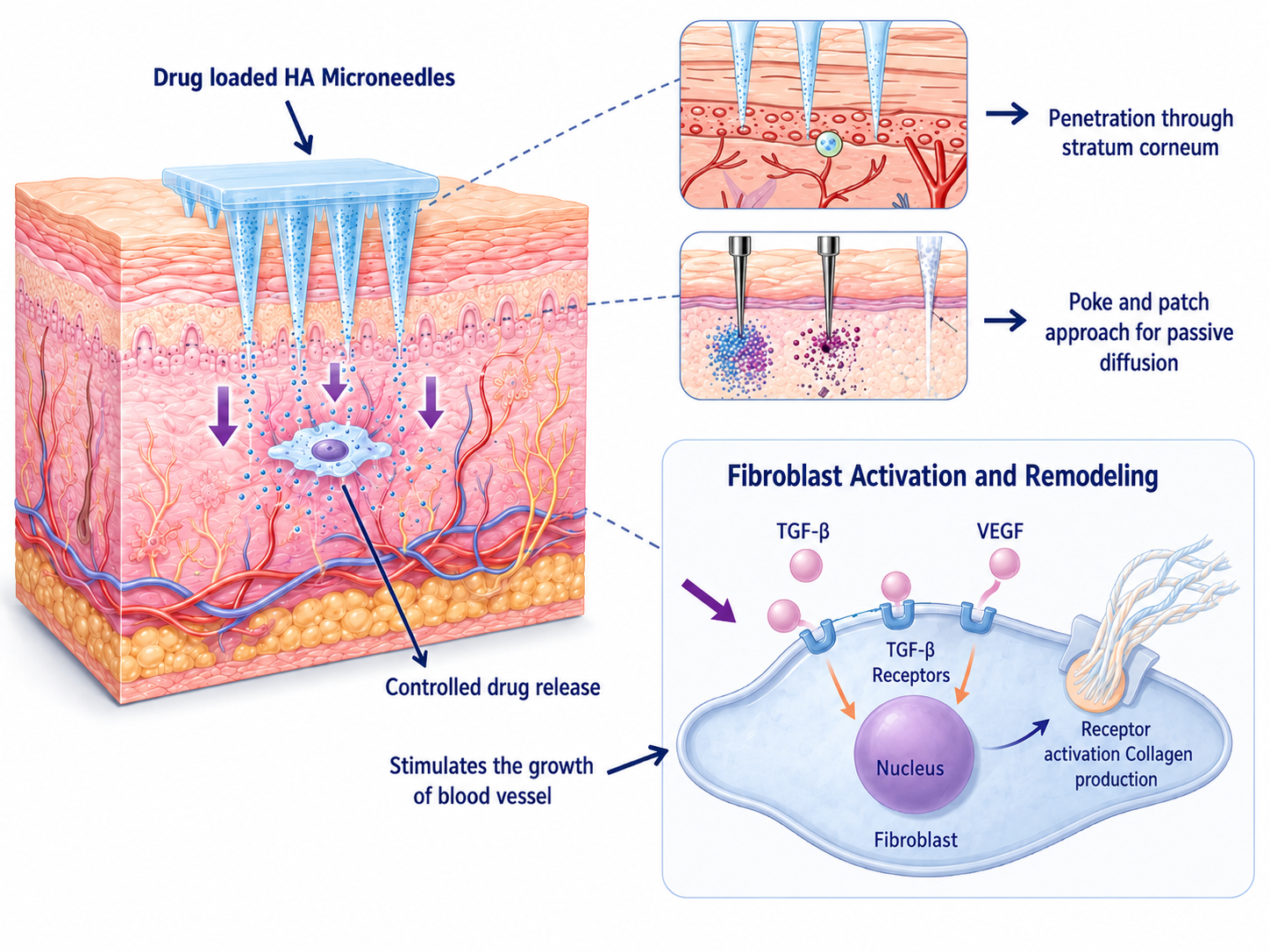
Mechanism of TGF-β, VEGF with the application of microneedles.
Intradermal Kinetics and Clinical Findings
Microneedles significantly improved the delivery of cosmetic ingredients into the skin across the studies reviewed. For instance, powder-injector dissolving microneedles increased niacinamide deposition in the dermis by 18-fold compared with a conventional topical serum. The tiny channels created during insertion allow cosmetic actives to pass quickly through the stratum corneum before closing within a few hours, minimizing water loss and reducing the risk of long-term irritation.
The effectiveness of microneedle delivery depended on several factors, including needle length, skin thickness, application pressure, and wear time. The review found that a penetration depth of 300-700 μm delivers active ingredients to the fibroblast-rich layers of the skin while limiting discomfort and unnecessary deeper penetration. Franz diffusion cell experiments also showed that in one porcine-skin model, wearing the patch for 10 hours reduced diffusion by about 14% compared with removal after six hours, suggesting that longer wear is not always better.
From Anti-Aging to Hair Restoration
Microneedles are being studied and used across a wide range of treatments to improve the delivery of ingredients that struggle to penetrate the skin. In anti-aging products, dissolving microneedles loaded with retinol, vitamin C, hyaluronic acid, or collagen peptides deliver these ingredients to the fibroblast-rich dermis, with small clinical and cosmetic studies reporting a reduction in wrinkle depth of 15% to 40%.
For hyperpigmentation, microneedles deliver tyrosinase inhibitors, such as arbutin, kojic acid, and niacinamide, directly to basal melanocytes. Clinical studies reported a 25% to 50% reduction in pigmentation severity after 8 to 12 weeks of treatment. In acne care, pH-responsive Schiff-base microneedles using sodium houttuyfonate and N,O-carboxymethylchitosan showed pH-dependent release and reduced P. acnes-induced inflammation in mice.
Across reviewed acne studies, microneedle-based approaches reduced inflammatory lesion counts by about 30% to 60%. Microneedles have also shown promising results in hair care. By delivering compounds such as minoxidil and caffeine directly to hair follicles, they may improve hair density and stimulate follicle growth, although the evidence remains preclinical and includes relatively small clinical studies.
Future Directions: Smart Systems in Skincare
Microneedle technology is advancing cosmetic products beyond conventional topical formulations toward intelligent, skin-responsive delivery systems. Future designs are expected to incorporate smart polymers that adjust ingredient release in response to changes in skin conditions, including pH, temperature, and oxidative stress.
Integrating flexible electronics, microfluidics, and smartphone-connected sensors could enable real-time monitoring of skin hydration and sebum production while supporting personalized ingredient delivery. Future development will also focus on improving large-scale manufacturing and establishing standardized regulatory guidelines for cosmetic microneedle products.
Together, these advancements could make microneedle patches a practical platform for personalized, high-performance skincare, but repeated-use safety, manufacturing consistency, consumer acceptance, and regulatory classification remain important barriers before widespread adoption.
The review concluded that microneedle arrays can increase the bioavailability of cosmetic ingredients while being designed to avoid reaching pain receptors or blood vessels. In addition to improving macromolecule delivery, these tiny channels stimulate the skin's natural repair processes, enabling cosmetics to achieve effects that are difficult with conventional products, though further clinical validation is still needed.
Journal reference:
- Vijayakumar, K., Jayaprakash, N., & Edwin, E. (2026). Microneedle-based cosmetic delivery systems: Advances, applications, and future perspectives in skin care and aesthetic dermatology. Journal of Dermatologic Science and Cosmetic Technology, 3(2), 100166. DOI: 10.1016/j.jdsct.2026.100166, https://www.sciencedirect.com/science/article/pii/S2950306X2600021X
 Forge Nano and Nanexa enter joint development agreement to advance manufacturing for ALD-coated PharmaShell® long-acting injectable medicines