A new meta-analysis suggests that worsening sleep-disordered breathing may track with declining erectile function, highlighting why men with ED and OSA symptoms may benefit from closer sleep assessment.
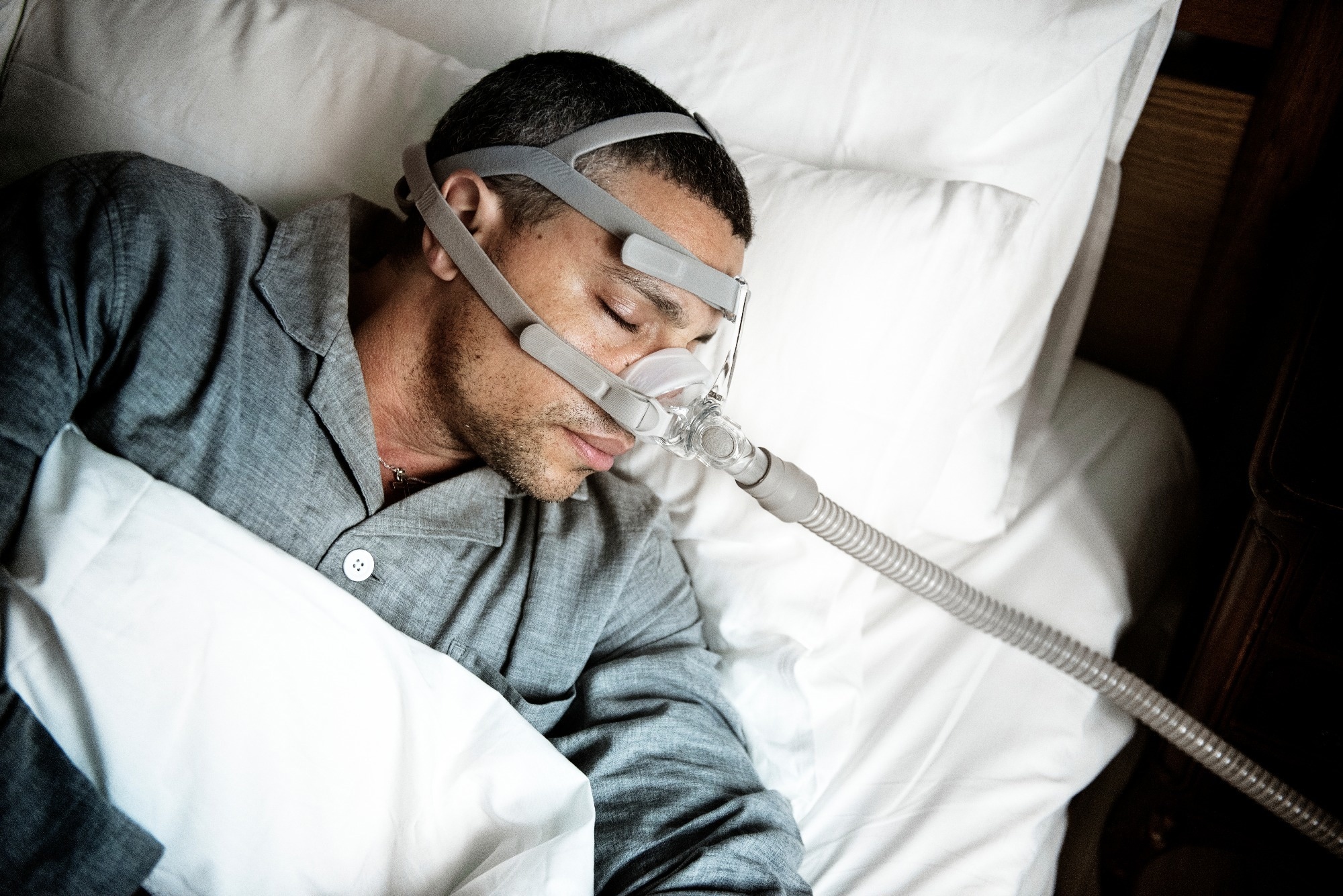
Study: The association between obstructive sleep apnoea and erectile dysfunction: a systematic review and meta-analysis. Image Credit: Rawpixel.com / Shutterstock
In a recent study published in the International Journal of Impotence Research, a group of researchers evaluated the association between the severity of Obstructive Sleep Apnea (OSA) and Erectile Dysfunction (ED) using validated measures of sleep apnea severity and erectile function.
Background
Up to one billion people worldwide may be affected by OSA, a common sleep disorder that can significantly reduce quality of life and increase the risk of cardiovascular disease and other chronic health conditions.
ED is another widespread condition that also affects millions of men and is frequently associated with metabolic and vascular disorders. Growing evidence indicates that these conditions share common biological pathways, including intermittent hypoxia, vascular dysfunction, inflammation, and reduced nitric oxide (NO) availability. However, the relationship between increasing OSA severity and worsening ED remains inadequately quantified. Further research is needed to better define this association.
About the Study
The researchers conducted a systematic review and meta-analysis following the Preferred Reporting Items for Systematic Reviews and Meta-Analyses (PRISMA) guidelines and registered the protocol with the International Prospective Register of Systematic Reviews (PROSPERO).
Researchers selected studies according to predefined Population, Exposure, Comparator, Outcome, and Study Design (PECOS) criteria. They included English-language research on adults 18 or older diagnosed with OSA that reported associations between sleep apnea severity and ED. Randomized controlled trials, cohort, cross-sectional, and case-control studies published in English were eligible, while reviews, editorials, conference abstracts, and non-English studies were excluded.
The systematic search of PubMed, Embase, and Scopus yielded 458 records published from January 2000 to February 10, 2025. After the titles, abstracts, and full texts were screened, eight observational studies were finally selected based on the eligibility criteria.
All studies included in the final analysis were observational, comprising prospective cohort and cross-sectional designs. Erectile function was evaluated using validated International Index of Erectile Function (IIEF) questionnaires such as the International Index of Erectile Function-5 (IIEF-5), IIEF-15, and Erectile Function domain of the International Index of Erectile Function (IIEF-EF).
OSA severity was measured using the Apnea-Hypopnea Index (AHI) and minimum oxygen saturation. Statistical analyses were conducted using R software with random-effects models because of substantial heterogeneity among studies. Risk of bias and evidence certainty were evaluated using the Risk of Bias in Non-randomized Studies of Exposures (ROBINS-E) and the Grading of Recommendations Assessment, Development and Evaluation (GRADE) frameworks.
Study Results
Eight observational studies were included in the final analysis. Seven studies involving 594 participants evaluated whether AHI correlated with erectile function. Six of these studies found that increasing AHI was associated with lower IIEF scores, indicating worsening erectile function as sleep apnea became more severe.
Results of the pooled analysis showed a statistically significant, moderate negative correlation, pooled Fisher's Z = -0.43; 95% Confidence Interval [CI]: -0.66 to -0.19. Although one study reported a small positive correlation, the finding was not statistically significant. A sensitivity analysis excluding one study reduced heterogeneity while maintaining a significant negative association (pooled Fisher's Z = -0.33; 95% CI: -0.49 to -0.17).
Three studies involving 513 participants evaluated minimum oxygen saturation during sleep. The pooled analysis showed a statistically significant positive correlation between higher minimum oxygen saturation and better erectile function (pooled Fisher's Z = 0.36; 95% CI: 0.04 to 0.69). Despite substantial statistical heterogeneity in both analyses, these findings consistently suggested that more severe sleep-disordered breathing and greater oxygen deprivation were associated with poorer erectile function. The results supported an association between the severity of OSA and poorer erectile function.
Secondary analyses demonstrated that ED was prevalent among men with OSA, with prevalence rates reported to be between 59.3% and 69.0% across four studies. Another study showed that the prevalence rate of ED among men with OSA was significantly higher than that in groups without OSA. Additionally, the analyses showed that age was consistently reported as a significant factor in OSA severity and prevalence of ED. Evidence on how OSA affects hormone levels and mental health was inconsistent. While some studies showed lower testosterone in men with OSA, others found no connection, and studies on depression and anxiety produced conflicting results.
Three studies evaluated Continuous Positive Airway Pressure (CPAP) therapy. One study showed that after three months of treatment, IIEF-5 scores improved significantly in patients with mild-to-moderate and severe OSA. Another study showed that ED completely resolved in 42.6% of patients after treatment. This was supported by a significant increase in erectile function scores in the same study. The third study determined that IIEF-15 scores increased within one year of therapy. However, the review noted that these treatment results should be interpreted cautiously as they were based on a limited number of mostly observational studies with relatively short follow-up periods and uncontrolled or non-randomized designs.
Conclusion
The findings demonstrated that greater OSA severity was consistently associated with poorer erectile function. Higher AHI values were associated with lower IIEF scores, whereas higher minimum oxygen saturation was associated with better erectile function. The review highlighted that many men with OSA have ED, and found that CPAP treatment was associated with improvements in erectile function in affected patients.
These findings emphasize the importance of considering OSA screening in men presenting with ED, particularly when symptoms or risk factors for sleep-disordered breathing are present, while acknowledging that additional well-designed prospective studies are needed to strengthen the available evidence. Because the evidence was observational, heterogeneous, and rated as low certainty, the review cannot establish causality or define a specific OSA-severity threshold at which erectile function declines.
Journal reference:
- Pang, K. H., Tong, K. S., Muneer, A., & Alnajjar, H. M. (2026). The association between obstructive sleep apnoea and erectile dysfunction: A systematic review and meta-analysis. International Journal of Impotence Research. DOI: 10.1038/s41443-026-01315-7, https://www.nature.com/articles/s41443-026-01315-7
 Study links better sleep with higher academic achievement