An Australian study suggests maternal diet may subtly shape the immune profile of breast milk, although only one inflammatory marker showed a significant link to dietary inflammatory status.
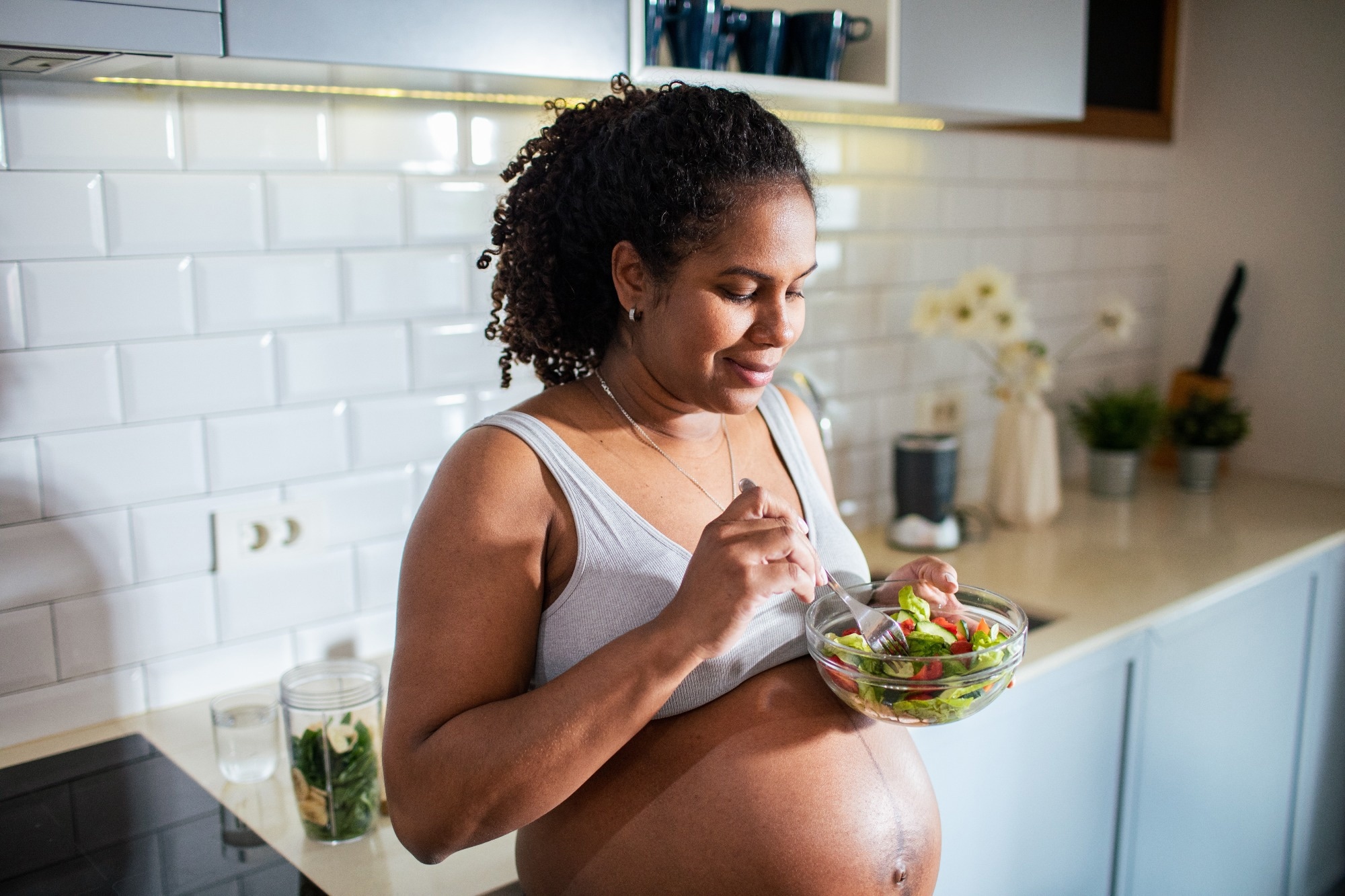 Study: Assessment of maternal diet inflammatory status and inflammatory markers in human breast milk. Image credit: Baba.Images/Shutterstock.com
The foods that breastfeeding mothers eat may subtly influence the immune composition of their breast milk, according to a new Australian study investigating inflammatory markers in human milk. The study is published in PLOS ONE.
Can maternal diet influence breast milk inflammation?
Human breast milk is a complex bioactive fluid containing several vital components necessary for infant growth and development, including protein, fat, growth factors, immune components, human milk oligosaccharides, and microorganisms. In addition to promoting neurological and cognitive development, breast milk supports the development of innate immunity in infants through cytokines and chemokines, signaling molecules with pro- or anti-inflammatory properties.
It is well known that maternal diet influences breast milk composition. However, it remains unclear whether maternal dietary patterns influence the concentrations of inflammatory markers, such as chemokines and cytokines, in breast milk.
Given the significant contribution of these inflammatory markers to infants’ immune development, University of the Sunshine Coast researchers assessed the inflammatory status of the diets of lactating mothers and measured the concentrations of 13 inflammatory markers in their breast milk samples.
Most inflammatory markers showed no dietary association
The study included a total of 101 exclusively breastfeeding mothers who were at 3–4 months following the delivery of healthy full-term infants. The inflammatory status of the maternal diet was assessed using the Dietary Inflammatory Index (DII), which is an evidence-based tool to quantify the inflammatory potential of a person’s diet based on 45 food parameters. Thirteen inflammatory markers were quantified in breast milk samples by flow cytometric bead array.
The dietary analysis revealed that all participants consumed an overall anti-inflammatory diet, with dietary fiber, beta-carotene, and vitamin E exerting the strongest anti-inflammatory effects. Overall, participants’ food intake was generally consistent with the national dietary guidelines for lactating women, although some nutrients, such as energy intake, fell below recommended levels.
Quantification of inflammatory markers showed substantial variability in detection rates among participants. Only a small subset of tested inflammatory markers was consistently detected in breast milk samples.
In particular, three chemokines, including interferon gamma-induced Protein-10 (IP-10), monocyte chemoattractant Protein-1 (MCP-1), and interleukin 8 (IL-8), were present at the highest concentrations and detected in more than 96% of breast milk samples.
The correlation analysis between inflammatory markers and the Dietary Inflammatory Index scores revealed a weak but significant inverse correlation for MCP-1. None of the other markers showed a significant association with the Dietary Inflammatory Index score.
Maternal diet may subtly influence breast milk immunity
Among this cohort of healthy lactating women with predominantly anti-inflammatory dietary patterns, breast milk also showed a generally low-inflammatory marker profile.
Rather than showing broad changes across all inflammatory markers, the study identified a more specific pattern. Breast milk was dominated by chemokines, with IP-10, MCP-1, and IL-8 detected most consistently and at the highest concentrations. Of all 13 markers tested, however, only MCP-1 showed a significant inverse association with maternal Dietary Inflammatory Index score.
This chemokine-dominant profile may reflect the role of breast milk in supporting neonatal immune development, particularly through chemotactic signaling and immune cell recruitment at mucosal surfaces. Rather than indicating harmful inflammation, the pattern may represent a functional and physiologically appropriate immune signal tailored to the infant gut.
The association between MCP-1 and maternal Dietary Inflammatory Index score suggests that maternal diet may have a subtle influence on specific immune-related components of breast milk. This may have potential downstream protective relevance for infants, although further research is needed to confirm this relationship.
The consistent detection of IP-10, MCP-1, and IL-8 also supports emerging interest in breast milk as a potential non-invasive biomarker of maternal immune and inflammatory status during lactation.
Study design limits broader conclusions about maternal diet
The findings should be interpreted cautiously. The study included healthy lactating mothers whose Dietary Inflammatory Index scores reflected predominantly anti-inflammatory dietary patterns. Without a comparison group of mothers with pro-inflammatory dietary patterns, the findings cannot be fully contextualized across a broader health spectrum.
The Dietary Inflammatory Index also has limitations in this setting. It was originally designed for a global population of adult men and women with diverse health conditions, rather than for a highly specific cohort of healthy lactating mothers.
Dietary intake was assessed using a single 24-hour dietary recall, which may be affected by recall bias and may not fully capture participants’ habitual eating patterns.
The study was also limited to Australian lactating women, which may restrict the generalizability of the findings to other populations. Its cross-sectional and exploratory design also means that causal conclusions cannot be drawn.
Larger studies involving more demographically, socioeconomically, and culturally diverse cohorts are therefore needed to better understand how maternal dietary patterns may shape the inflammatory environment of breast milk.
Download your PDF copy by clicking here.
 Study: Multiple dietary patterns linked to slower biological aging