A four-week bedtime ritual combining fragranced skincare with self-massage improved perceived sleep and anxiety, although the preliminary study could not determine which element drove the effects.
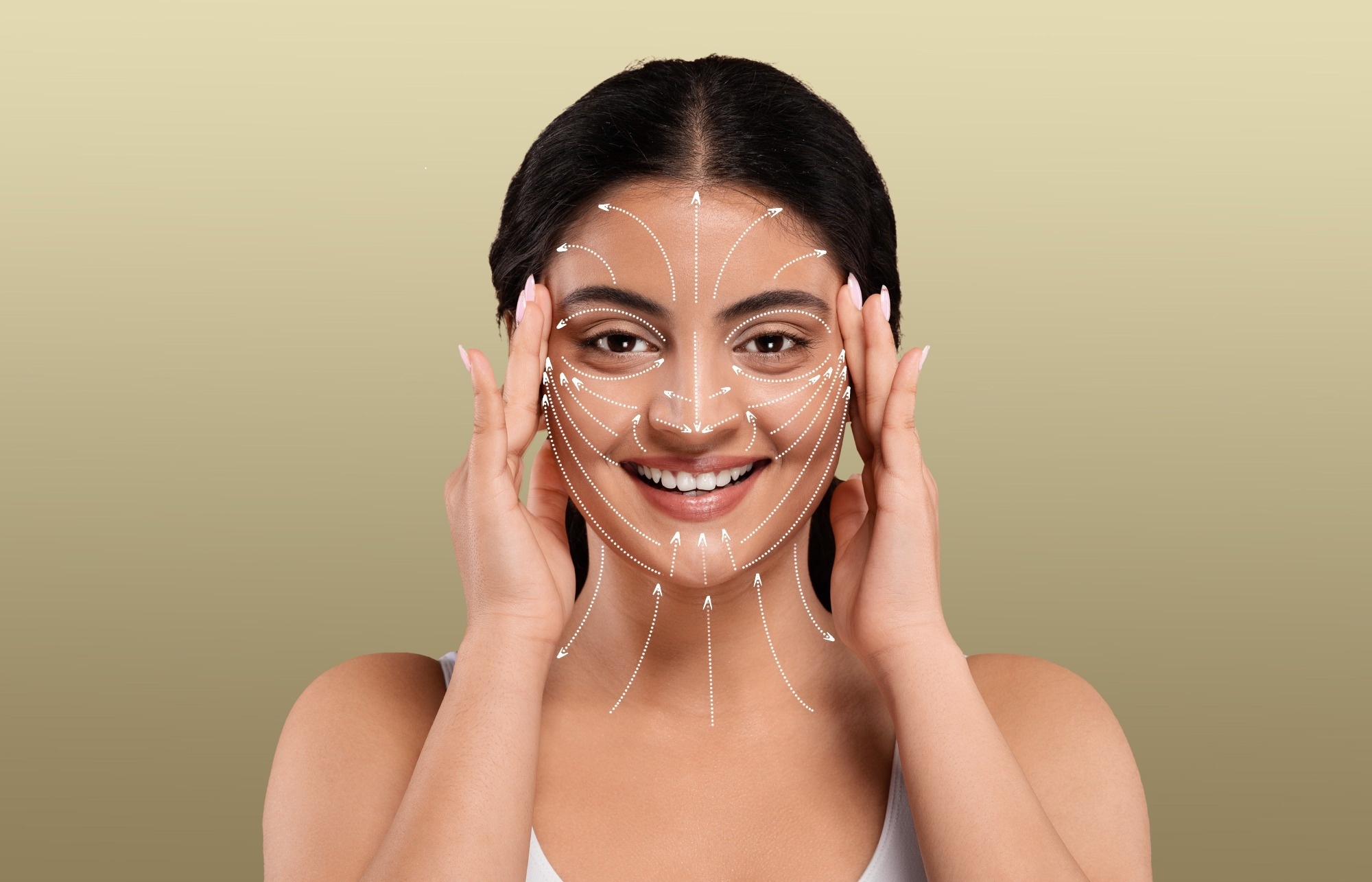
Image Credit: Prostock-studio / Shutterstock
In a recent preliminary study accepted for publication in the journal Scientific Reports, researchers from Chanel Parfums Beauté and collaborating French institutions assessed the effects of a combination of an evening cosmetic routine and self-massage on sleep quality in healthy women with self-reported sleep problems.
Sleep disturbance is an important public health concern, affecting an estimated 10% to 25% of adults, and has been aggravated by compulsive internet use and other new technologies. Sleep dysfunction negatively impacts social and health outcomes. Poor sleep can impair motivation and performance and increase the risk of fatigue and accidents. In recent years, non-pharmacological approaches have gained increasing interest in promoting better sleep.
Education on optimal sleep hygiene through behavioral and lifestyle interventions is a common approach to achieving long-term improvements in sleep. Further, aromatherapy, massage, and mindfulness-based stress relief are promising approaches to reduce arousal and stress. While massage therapy has beneficial sleep-related effects across clinical conditions, the effect of self-massage on sleep remains understudied in non-clinical populations.
About the Study
In the present preliminary, non-randomized study, researchers investigated the efficacy of an evening cosmetic routine with self-massage on sleep quality in healthy women. Employed women aged 25-45 years with sleep problems, e.g., night awakenings, nonrestorative sleep, high sleep latency, etc., and Fitzpatrick skin phototype I-VI were recruited. Participants had healthy skin and occasionally used body cosmetics. Subjects were non-randomly assigned to a test or a control group based on their willingness to use a wearable device and their availability for additional study visits.
All participants completed a lifestyle questionnaire and were asked to maintain their usual exercise, eating, and cosmetic routines. The test group was required to wear a ring throughout the study and instructed to follow a new evening cosmetic routine with self-massage after a seven-day baseline period. Specifically, they applied a body cream and a face serum fragranced with vanilla-dominant, light floral notes for 10 minutes, following a self-massage protocol before bedtime. Meanwhile, controls maintained their usual routines.
All participants completed at-home questionnaires on daytime sleepiness, health-related quality of life (HRQoL), sleep quality, and anxiety. Daytime sleepiness was assessed using the Epworth Sleepiness Scale. The state subscale of the State-Trait Anxiety Inventory was used to measure anxiety levels. HRQoL was measured using two domains of the 36-item Short-Form Health Survey (SF-36): vitality and mental health.
Subjective sleep quality was assessed using the Pittsburgh Sleep Quality Index (PSQI). Objective sleep quality was measured using exploratory Oura Ring data collected from the test group only. Wearable-derived outcomes included sleep efficiency, sleep latency, time in bed (TIB), number of awakenings, total sleep time (TST), deep sleep time, light sleep time, heart rate, and rapid eye movement (REM) sleep. Repeated-measures analysis of variance was used to analyze outcomes across time points.
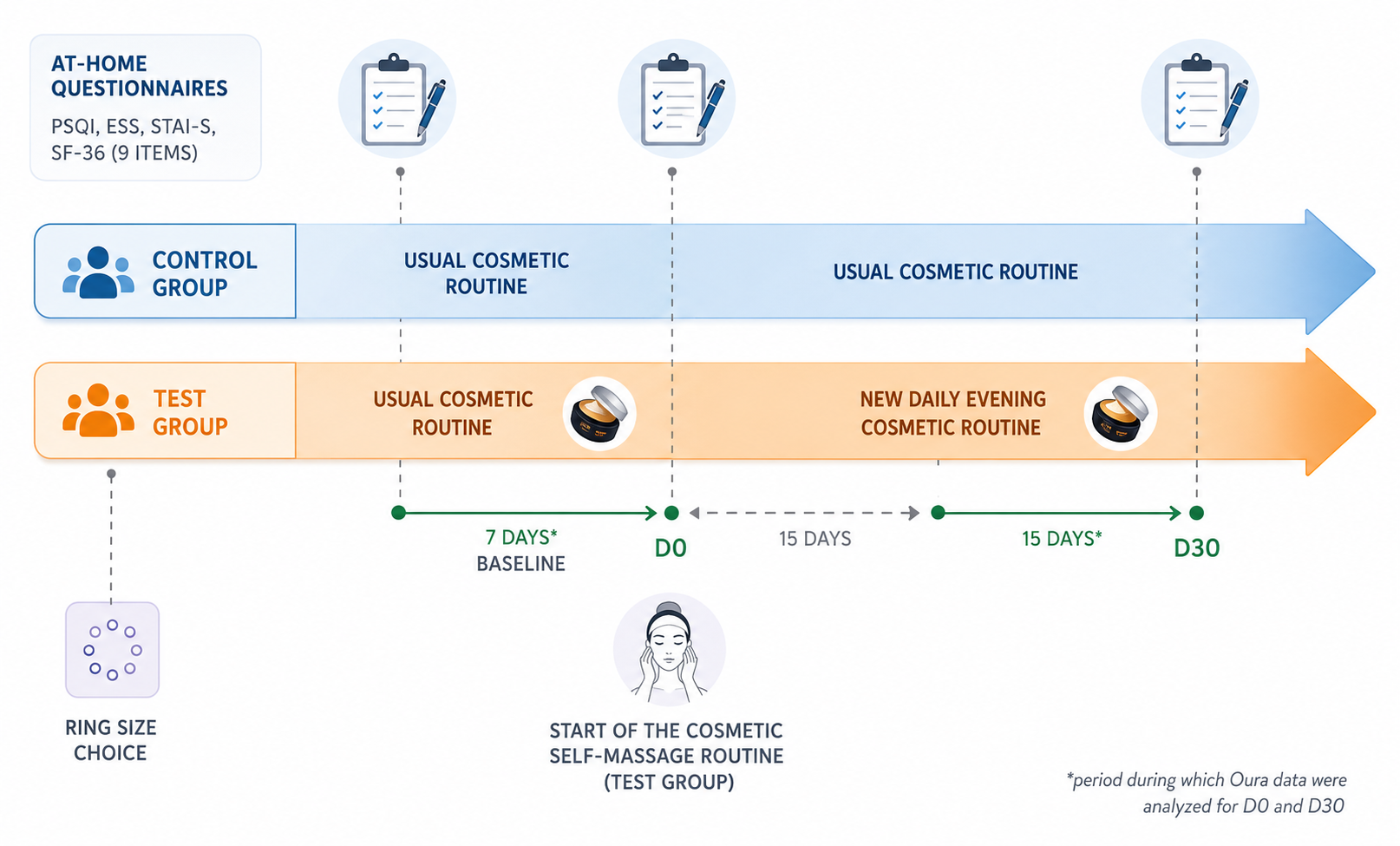
Schema of the experimental procedure in the control and test groups. D0 to D30 = duration of the cosmetic daily routine; D, day of the experiment, PSQI, Pittsburgh Sleep Quality Index; SF-36, Health-Related Quality of Life.
Findings
The study recruited 60 women, with a mean age of 36.5 years. Of these, 31 and 29 participants were assigned to the test and control groups, respectively. Both groups had comparable proportions of participants in menopause and those using hormonal contraceptives. At baseline, 62.7% of participants had poor sleep quality, while 33.9% had excessive daytime sleepiness and 33.9% had state-anxiety scores above the study’s clinical-symptom threshold.
After four weeks, the test group showed a significantly greater reduction in the global PSQI score than controls. In particular, the PSQI sleep-latency component improved in the test group relative to controls, while the control group’s self-reported habitual sleep-efficiency score worsened. There was no effect of the self-massage cosmetic routine on daytime sleepiness. Self-reported mental health and vitality, the two SF-36 domains assessed, improved significantly in the test group relative to controls.
State-anxiety scores decreased significantly in the test group compared with the control group. In a separate exploratory analysis limited to the test group, wearable-ring data showed several within-group changes from baseline. Total sleep time and estimated deep sleep increased significantly by 22.5 and 11.1 minutes, respectively, on rest days, while time in bed showed a non-significant increase of approximately 26 minutes. However, not all wearable changes suggested better sleep. The number of awakenings also increased by 0.7 on rest days. On work days, there was an 8.6-minute reduction in estimated REM sleep. The mean heart rate decreased significantly at night, regardless of whether it was a work or rest day.
Conclusions
In summary, participants who applied cosmetic products with self-massage every evening for four weeks reported improvements in perceived sleep quality, mental health, vitality, and state anxiety compared with controls. Exploratory wearable data from the test group indicated increases in total and estimated deep sleep duration on rest days, but these changes could not be compared with those in the control group. These findings suggest that the evening cosmetic routine, combined with self-massage, may represent a feasible complementary component of sleep-hygiene education.
Notably, the absence of blinding and randomization may have introduced selection bias and expectancy effects. Participants were also aware of the cosmetic brand, and the study included no placebo, massage-only, cosmetic-only, or fragrance-only group, making it impossible to identify which element of the combined routine contributed to the findings. Moreover, wearable rings were used only by the test group for logistical reasons; therefore, wearable-derived metrics should be considered exploratory and interpreted with caution.
The study was not preregistered, and changes in subjective sleep measures were not significantly correlated with changes in wearable measures. The small sample, four-week duration, inclusion of women only, and recruitment of healthy participants with subjective sleep complaints further limit the generalizability of the results.
Chanel Parfums Beauté funded the study, and five authors were Chanel employees. Overall, the findings contribute to the growing role of behavioral routines in sleep health; further randomized, blinded, and appropriately controlled studies are required to corroborate these results and elucidate the underlying mechanisms.
Journal reference:
- Porcheron A, Delettre M, Latreille J, et al. (2026). Effect of an evening cosmetic routine with self-massage on sleep quality: a preliminary study. Scientific Reports. DOI: 10.1038/s41598-026-60522-w, https://www.nature.com/articles/s41598-026-60522-w
 New review identifies pistachios as a promising whole food for sleep research