In a large study of older US adults, metabolic syndrome marked substantially poorer survival after breast or prostate cancer, highlighting the potential value of integrating metabolic health management into routine cancer care.
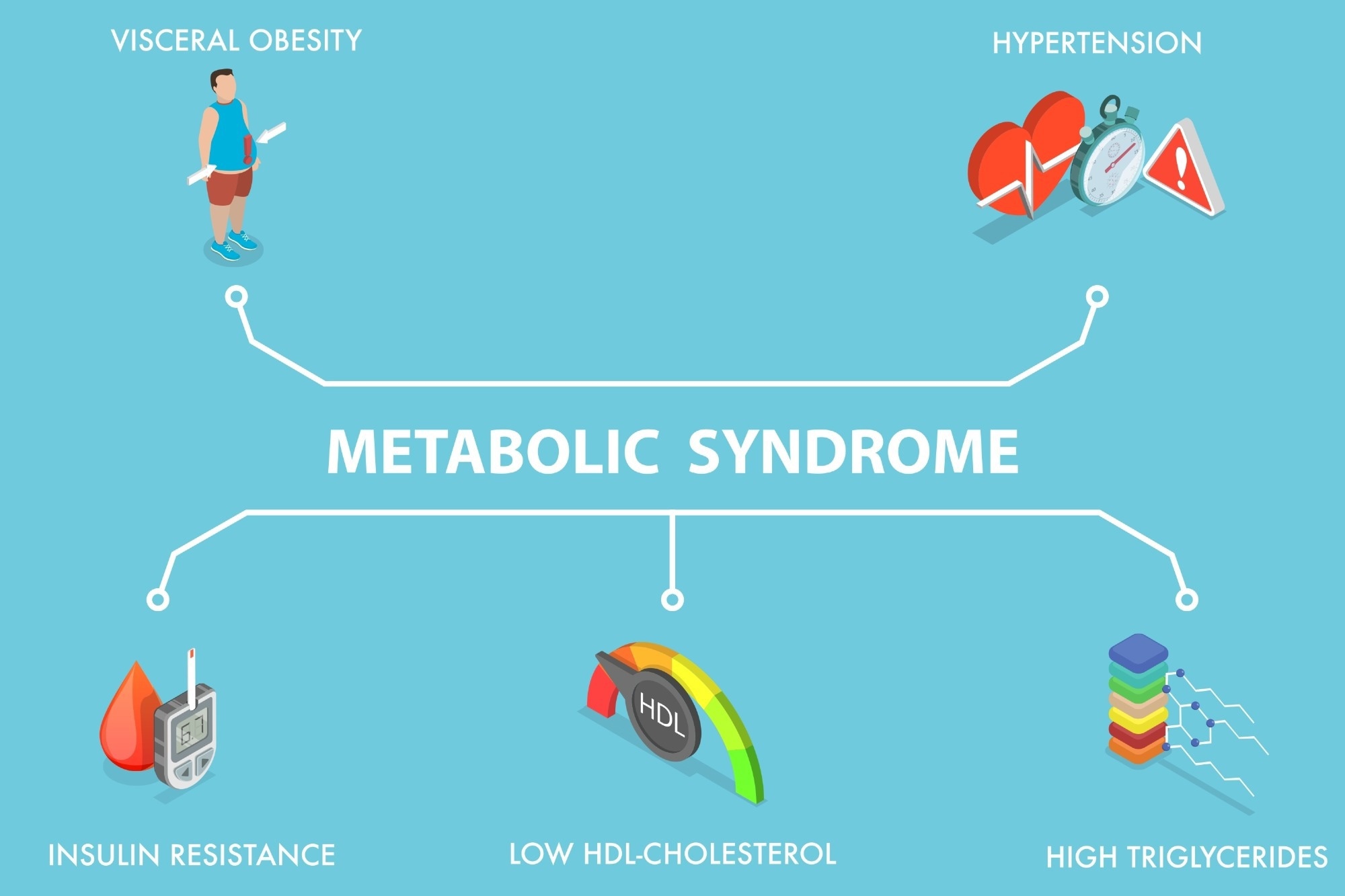
Study: Metabolic syndrome is associated with increased mortality in patients with breast or prostate cancer. Image Credit: TarikVision / Shutterstock
In a recent 'article in press' published in the journal Scientific Reports, researchers evaluated the association between metabolic syndrome and overall, cancer-specific, cardiovascular-specific, and liver-failure-specific mortality among older patients with breast and prostate cancer.
Background
Nearly one in two adults older than 60 years is affected by metabolic syndrome, making it an increasingly important public health concern along with cancer. Metabolic syndrome is clinically defined as the coexistence of at least three metabolic abnormalities, including hypertension, hyperlipidemia, elevated triglyceride levels, central adiposity, and low high-density lipoprotein cholesterol levels occurring together.
Together, these abnormalities are associated with chronic inflammation, altered hormonal signaling, and insulin resistance, which may be linked to the development and progression of cancer. Breast and prostate cancers are particularly relevant because many tumors are influenced by hormonal pathways that intersect with metabolic processes. However, previous studies have shown contradictory findings regarding the effects of metabolic syndrome on survival. Further research is needed to clarify these associations and guide effective clinical and lifestyle interventions.
About the Study
The researchers conducted a retrospective observational study using the Surveillance, Epidemiology, and End Results (SEER)-Medicare linked database, which combines population-based cancer registry information with Medicare claims data. The study included participants aged 66 years and older who were newly diagnosed with a first primary prostate or breast cancer between 2008 and 2019.
The study excluded patients whose cancers were identified only through autopsy reports or death certificates, had a prior history of cancer, and those without uninterrupted Medicare Parts A, B, and D coverage or who were enrolled in a Health Maintenance Organization during the 24 months spanning 12 months before through 12 months after diagnosis. Survival analyses began 12 months after cancer diagnosis under a prespecified landmark design, after metabolic syndrome was assessed during the first postdiagnosis year.
Metabolic syndrome was identified from Medicare claims using International Classification of Diseases, Ninth Revision, Clinical Modification, International Classification of Diseases, Tenth Revision, Clinical Modification, and Current Procedural Terminology/Healthcare Common Procedure Coding System codes, as well as prescription claims for medications used to treat related metabolic conditions.
Patients were classified as having metabolic syndrome if they had a claim coded directly for the syndrome or claims for at least three of the following conditions: hypertension, hyperlipidemia, obesity, type 2 diabetes mellitus, or low high-density lipoprotein cholesterol levels. Most outpatient and prescription-based definitions required at least two claims or medication fills separated by at least 30 days.
The primary outcomes were overall mortality, cancer-specific mortality, cardiovascular-specific mortality, and liver-failure-specific mortality. Multivariable Cox proportional hazards regression models were used to estimate hazard ratios while adjusting for demographic characteristics, cancer stage, geographic region, socioeconomic status, and additional disease-specific factors, including androgen deprivation therapy in the prostate cancer models and tumor subtype in the breast cancer models.
Study Results
The study included 104,599 patients with breast cancer and 96,005 patients with prostate cancer who met the eligibility criteria. Metabolic syndrome was identified in 29,562 patients (28%) with breast cancer and 29,504 patients (31%) with prostate cancer.
Most participants in both groups had localized or regional disease at diagnosis. The breast cancer patients were diagnosed at a median age of 74, while prostate cancer patients were diagnosed at a median age of 73. Patients with metabolic syndrome were generally older than those without the condition and included higher percentages of Hispanic and non-Hispanic Black patients in both cohorts.
The study found that metabolic syndrome was associated with a substantially higher adjusted hazard of death from any cause in both cancer types. Among patients with breast cancer, those with metabolic syndrome had approximately twice the adjusted hazard of death from all causes compared to those without metabolic syndrome (hazard ratio (HR) 2.03; 95% confidence interval (CI), 1.98-2.08).
A similarly elevated association was observed among patients with prostate cancer (HR 2.21; 95% CI 2.15-2.27). Kaplan-Meier analysis showed that patients with metabolic syndrome had lower overall survival probabilities throughout follow-up.
Findings also revealed that metabolic syndrome was linked to a higher hazard of cancer-specific death. Patients with breast cancer and metabolic syndrome had a 30% higher adjusted hazard of dying from breast cancer (HR 1.30; 95% CI 1.21-1.39). Meanwhile, patients diagnosed with prostate cancer and metabolic syndrome had a 32% higher adjusted hazard of dying from prostate cancer (HR 1.32; 95% CI 1.22-1.42).
The data showed that metabolic syndrome was associated with both all-cause and cancer-specific mortality, although the observational findings do not establish causation. However, a sensitivity analysis restricted to metabolic syndrome documented during the 12 months before cancer diagnosis found no significant association with cancer-specific mortality in either cohort, although associations with all-cause, cardiovascular-specific, and liver-failure-specific mortality remained elevated.
Metabolic syndrome was also associated with a higher hazard of cardiovascular mortality in cancer patients. Patients with breast cancer and metabolic syndrome had more than twice the adjusted hazard of cardiovascular-specific death compared with those without metabolic syndrome (HR 2.27; 95% CI 2.11-2.45).
Similarly, patients with prostate cancer had a significantly higher adjusted hazard of cardiovascular-specific death (HR 2.46; 95% CI 2.27-2.66). In addition, metabolic syndrome was associated with substantially higher liver-failure-specific mortality in both cohorts.
Among patients with breast cancer, metabolic syndrome was associated with an HR of 2.55 (95% CI 1.48-4.42), while among patients with prostate cancer, it was associated with an HR of 3.26 (95% CI 1.83-5.82). The comparatively wide confidence intervals indicate that these liver-failure estimates were less precise.
Overall, the research showed that metabolic syndrome was associated with poorer survival and higher cause-specific mortality hazards among older cancer patients after adjustment for measured covariates.
Conclusion
In the primary analysis, metabolic syndrome was associated with higher overall, cancer-specific, cardiovascular-specific, and liver-failure-specific mortality among older patients with breast and prostate cancer. These findings identify metabolic syndrome as a marker of poorer long-term outcomes after cancer diagnosis but do not establish that it causes them.
The study supports evaluating whether integrating cardiometabolic management with routine cancer care, alongside lifestyle interventions and appropriate therapeutic strategies, can help reduce mortality in this population.
Interpretation is limited by the retrospective design, claims-based classification of metabolic syndrome, uncertain exposure timing, and possible residual confounding. The findings may also not extend to younger patients, Medicare Advantage enrollees, or people with commercial insurance.
Further research is needed to understand how metabolic syndrome affects cancer outcomes and to identify effective interventions that improve survival while addressing metabolic health.
Journal reference:
- Hwang, J. P., Zhang, N., Misoi, M. W., Gull, S., Razouki, Z. A., Gregg, J. R., Heredia, N. I., & Giordano, S. H. (2026). Metabolic syndrome is associated with increased mortality in patients with breast or prostate cancer. Scientific Reports. DOI: 10.1038/s41598-026-58830-2, https://www.nature.com/articles/s41598-026-58830-2
 Single tRNA controls prostate cancer identity and treatment resistance