Can a daily handful of walnuts influence the immune system as we age? Researchers tracked antibody changes over two years, exploring a possible connection between diet, immunity and cardiovascular health.
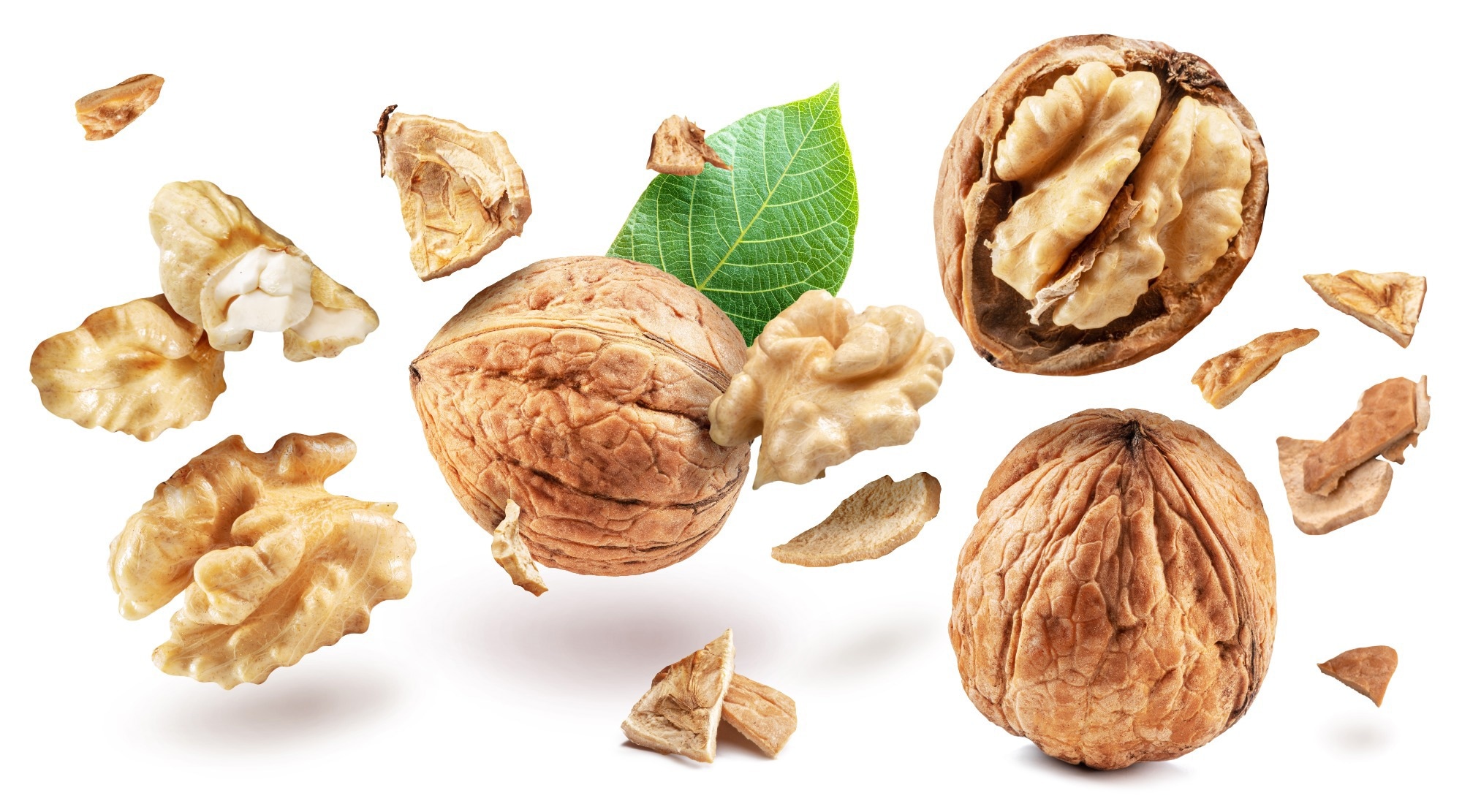
Study: Effects of Walnut Consumption on Anti-MDA-LDL Antibodies and Immunoglobulins in the WAHA Randomized Trial. Image Credit: Valentyn Volkov / Shutterstock
In a recent study published in the journal JACC Advances, researchers evaluated the effects of walnut consumption on malondialdehyde-modified low-density lipoprotein (MDA-LDL)-targeting immunoglobulins (Ig) and antibodies among participants of the Walnuts and Healthy Aging (WAHA) randomized controlled trial (RCT). After two years, long-term walnut consumption was associated with total serum IgG concentrations approximately 6% higher than those of controls across participants from Spain and the United States (US), suggesting a possible dietary influence on circulating immune biomarkers. The clinical implications remain uncertain.
Atherosclerosis is characterized by plaque formation in blood vessels and chronic inflammation. Innate and T cell-mediated immune responses may influence plaque formation and disease progression. During lipid peroxidation, MDA can modify LDL, generating oxidation-specific epitopes (OSEs) that may activate immune responses. While circulating total IgG and IgM concentrations reflect overall humoral immune status, MDA-LDL-specific antibody titers reflect immune activity against OSEs.
In a previous analysis of the Anglo-Scandinavian Cardiac Outcomes Trial (ASCOT), higher serum IgG concentrations were associated with a reduced risk of cardiovascular events among patients with hypertension. Some antibodies targeting oxidized LDL, particularly IgM antibodies, are also associated with favorable vascular imaging and clinical outcomes, while findings for MDA-LDL-specific IgG have been less consistent. Understanding how walnut consumption affects immune responses to MDA-modified LDL could help inform future research into dietary strategies for atherosclerosis prevention and improved cardiovascular health.
About the study
In this post hoc analysis of the WAHA trial, the researchers investigated whether daily walnut consumption influenced circulating MDA-LDL concentrations, total IgG and IgM concentrations, and MDA-LDL-specific antibodies.
The WAHA trial included 708 cognitively healthy older adults aged between 63 and 79 years residing in the US or Spain. Participants had no major comorbidities that precluded enrollment, and people who ate more than two servings of tree nuts weekly were excluded. The study excluded individuals who regularly used soy lecithin supplements, fish oil, or flaxseed oil. Participants enrolled between May 2012 and May 2014 were randomized equally to follow a walnut-based (intervention) or walnut-excluding (control) diet for two years. Those assigned to the intervention consumed 30–60 grams of walnuts daily, accounting for approximately 15% of their daily energy intake.
Using enzyme-linked immunosorbent assays (ELISA), the researchers measured MDA-LDL and total IgM and IgG concentrations, along with anti-MDA-LDL IgM and IgG antibody levels, in serum samples collected at baseline and after two years from 474 participants (240 from the intervention group and 234 controls). The original trial assessed cognitive function and retinal integrity rather than these immune biomarkers. Alpha-linolenic acid (ALA) proportions in red blood cell (RBC) membranes were measured among Spanish participants to estimate compliance. Participants also attended follow-up assessments every two months to monitor body weight, tolerance, compliance, and medication use.
Using analysis of covariance (ANCOVA) and linear regression models, the team evaluated the intervention effects on immune biomarkers. The results were then adjusted for sex, age, smoking status, center, total cholesterol (TC), body mass index (BMI), hypertension, and diabetes. Sensitivity analyses restricted the assessments to White participants.
Results and discussion
Across both study centers, total IgG concentrations were approximately 6% higher in the walnut group than in controls at two years, after adjustment for baseline concentrations and other factors. Among Americans, the walnut group had total IgG concentrations 11% higher than controls after two years, while the study detected no statistically significant intervention effect in Spain.
Over two years, total IgG and IgM concentrations and MDA-LDL-specific IgM antibodies declined significantly within both the intervention and control groups, but MDA-LDL-specific IgG antibodies did not. Circulating MDA-LDL concentrations did not change significantly within either group. Compared with controls, walnut consumption did not significantly affect total IgM, MDA-LDL, or either MDA-LDL-specific antibody class.
Baseline Ig concentrations differed considerably by study center; total IgG and total IgM concentrations were 25% lower among American than Spanish participants. Spanish participants had lower body weights, were less educated, were more likely to smoke, and had higher TC and LDL concentrations, while HDL cholesterol levels were similar between the centers. Among Spanish participants, ALA levels decreased by 6% in the control group but increased by 426% in the intervention group over the same period, supporting adherence to the assigned diets. Sensitivity analyses yielded similar results, consistent with the main findings. The analyses examined several outcomes without adjustment for multiple testing, so chance findings cannot be ruled out.
Previous studies have shown that regular walnut consumption may improve lipid profiles (reduce TC, LDL, and atherogenic lipoproteins) and endothelial function, along with favorable changes in oxidative stress markers. Earlier walnut trials have also reported reductions in inflammatory markers such as tumor necrosis factor-alpha (TNF-α), interleukin-1 beta (IL-1β), and IL-6. This may be because walnuts contain more polyphenols with antioxidant and anti-inflammatory properties than other nuts and are also an excellent source of omega-3 polyunsaturated fatty acids (PUFAs), including ALA.
Conclusion
Based on findings of the WAHA trial, regular walnut consumption was associated with modestly higher total IgG concentrations than a control diet, while total IgG, total IgM and anti-MDA-LDL IgM levels declined within both groups over the two-year study period. The findings highlight the potential of dietary interventions to modulate immune biomarkers associated with cardiovascular health, but the study did not measure cardiovascular events or establish whether the IgG difference was beneficial, neutral or adverse. Separately, the landmark PREvención con DIeta MEDiterránea (PREDIMED) trial examined cardiovascular outcomes associated with Mediterranean dietary patterns, including nut consumption. Dietary guidance from the European Association for the Study of Diabetes (EASD) and the European Society of Cardiology (ESC) also supports the Mediterranean and Dietary Approaches to Stop Hypertension (DASH) diets, which encourage regular nut intake.
Lower baseline IgG and IgM titers among Americans suggest that environmental, geographic, genetic, or social factors may modulate immune markers, but the study could not determine which factors accounted for the differences. Future studies should assess cardiovascular outcomes and tissue-level immune responses in larger, more diverse populations, including younger adults and individuals with existing medical conditions. The post hoc design, limited paired serum samples (474 participants), multiple biomarker comparisons, a restricted age range, and serum-only measurements warrant caution when interpreting these exploratory findings.
Source:
Journal reference:
- Sharma, T., Chiva-Blanch, G., Caga-Anan, M., et al. (2026). Effects of Walnut Consumption on Anti-MDA-LDL Antibodies and Immunoglobulins in the WAHA Randomized Trial. JACC Advances, 5(10), 103288. DOI: 10.1016/j.jacadv.2026.103288, https://www.jacc.org/doi/10.1016/j.jacadv.2026.103288
 A study of 802 teens raises questions about school breakfast and blood sugar