A new randomized trial reveals how combining tirzepatide with just three resistance training sessions a week can help patients retain more lean mass and build muscle strength while achieving substantial weight loss, highlighting the importance of exercise alongside obesity medications.
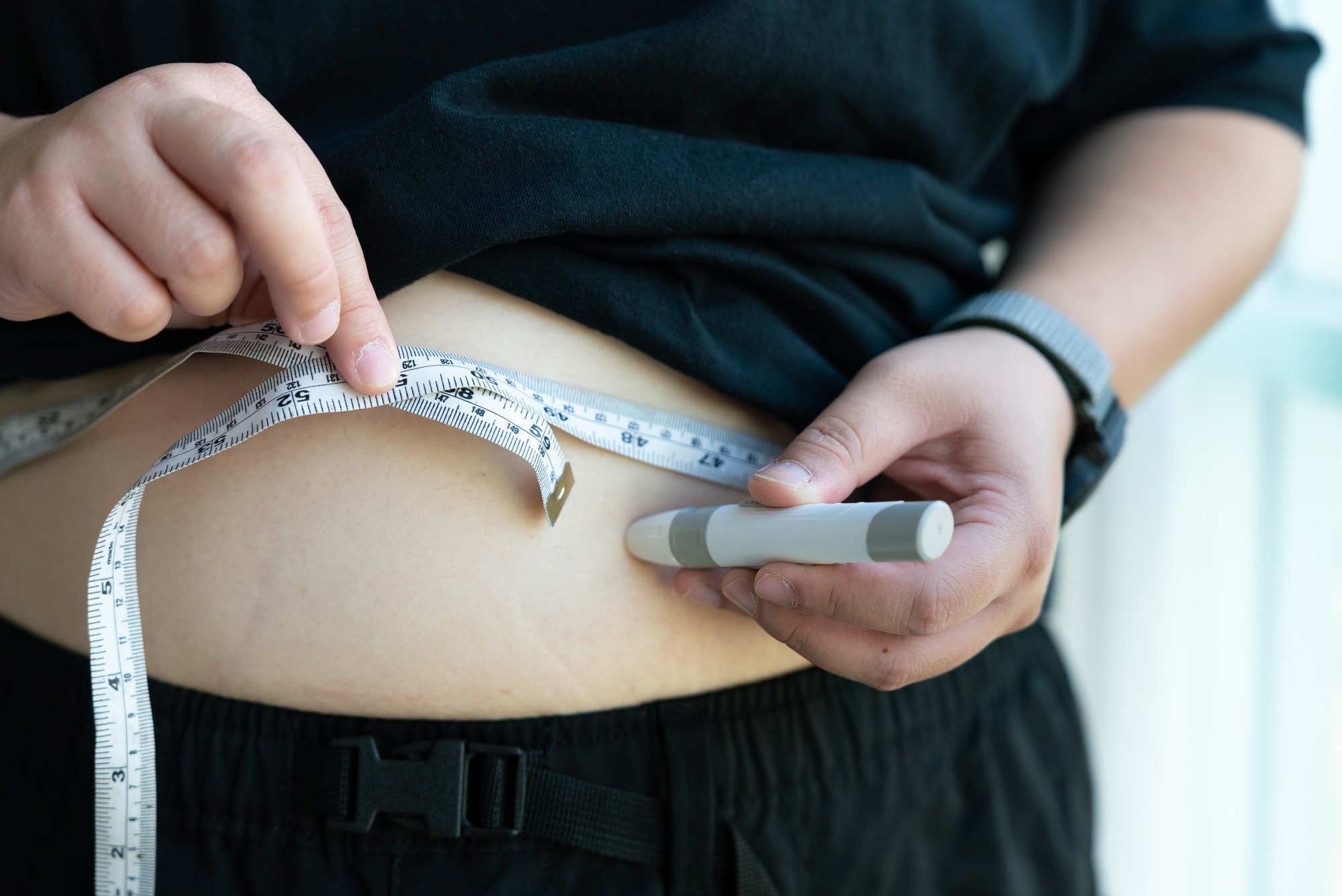 Study: Resistance exercise to attenuate lean mass loss during tirzepatide therapy for obesity: a randomized controlled trial. Image credit: BJ Day Stock/Shutterstock.com
A recent study published in the journal Nature Medicine reports that resistance exercise could be a valuable addition to tirzepatide treatment for obesity, helping patients retain more lean tissue and build muscle strength without compromising weight loss.
Incretin-induced weight loss raises concerns about muscle decline
Incretin mimetics such as tirzepatide have transformed obesity management, producing reductions of 15–24% in body weight. However, alongside substantial reductions in body fat, patients also lose lean soft tissue mass (LST), which includes skeletal muscle.
Previous studies using dual-energy X-ray absorptiometry (DXA) have documented reductions of 11–14% in total LST during incretin therapy. This raises concerns about sarcopenia, frailty, falls, and fractures, particularly among middle-aged and older adults.
While pharmacological muscle-preserving agents such as bimagrumab and apitegromab are under investigation, the researchers argue that resistance exercise offers a readily available, safe, and potentially effective alternative.
Earlier research showed that combining liraglutide with aerobic exercise improved body composition following diet-induced weight loss. However, whether resistance training could protect muscle mass and strength when introduced alongside newer, more potent incretin mimetics from the beginning of treatment remained unclear.
Trial combines tirzepatide with supervised resistance training
To investigate this question, researchers in Western Australia conducted a 40-week randomized controlled trial involving 120 sedentary adults aged 50–70 years, equally divided between men and postmenopausal women. All participants had obesity or overweight with at least one weight-related comorbidity. None had previously used incretin mimetics, had diabetes or cardiovascular disease, or were taking antihypertensives or statins.
The researchers randomly assigned participants to receive either tirzepatide alone (T group) or tirzepatide alongside resistance exercise (T+REx group). Both groups received weekly tirzepatide injections, starting at 2.5 mg and gradually increasing to a maximum of 15 mg, depending on individual tolerability.
Participants in the exercise group also attended three supervised one-hour resistance training sessions each week. Led by accredited exercise physiologists, the program progressively increased training demands to improve muscle mass, strength and function. Although the researchers did not introduce a specific dietary intervention, they encouraged participants to maintain adequate hydration, protein, and fiber intake.
The primary aim was to determine whether resistance exercise could reduce lean tissue loss without interfering with fat loss. Researchers used DXA scans at eight-week intervals to track changes in body composition, alongside assessments of muscle strength and cardiometabolic health.
More than nine in ten participants completed the trial, and adherence to the exercise program was similarly high. Tirzepatide exposure was comparable between the groups, with nearly two-thirds of participants reaching the maximum dose.
Resistance training does not compromise tirzepatide-induced weight loss
Adding resistance exercise did not diminish tirzepatide's weight-loss benefits. Participants in both groups lost approximately 22 kg over the 40-week intervention, with fat accounting for most of the weight lost. Those receiving tirzepatide alone lost 17.2 kg of fat, compared with 18 kg among those also undertaking resistance training. Both groups experienced comparable reductions in waist circumference and body mass index (BMI).
These findings indicate that resistance exercise can be incorporated into tirzepatide treatment without compromising its effectiveness in reducing body weight or fat.
Resistance training helps preserve lean mass during treatment
Although participants in both groups lost lean soft tissue, resistance training helped limit these losses. Differences between the groups were already apparent by week 24. By the end of the trial, participants receiving tirzepatide alone had lost approximately 4.7 kg of LST, compared with 3.6 kg among those undertaking resistance exercise. This represented an approximate 23% reduction in lean tissue loss, equivalent to preserving an additional 1.1 kg of LST.
Resistance training also helped limit appendicular LST loss, which refers to lean soft tissue in the arms and legs. Losses were approximately 3.6 kg with tirzepatide alone and 2.9 kg when treatment was combined with exercise.
Most of the decline in total lean tissue occurred during the first 24 weeks, after which losses largely plateaued. However, appendicular LST continued to decline. The benefits of resistance exercise remained evident after accounting for differences in participants' initial BMI.
Exercise boosts strength despite ongoing lean mass loss
Perhaps the most striking finding was the difference in muscle strength between the two groups. While participants receiving tirzepatide alone became weaker across all three strength assessments, those undertaking resistance training became stronger, despite losing some lean tissue.
The reported differences in strength changes between the groups ranged from approximately 9 kg in the bench press to 13 kg in the lat pulldown, with a similarly substantial benefit in knee extension strength. Resistance training also produced greater improvements in knee extension strength relative to body weight, a measure relevant to physical function.
Interestingly, similar proportions of participants in both groups reported experiencing weakness or lethargy. This suggests that patients may not readily perceive the decline in muscle strength that accompanies weight loss, highlighting the potential value of objective strength assessments.
Both treatment groups achieved similar cardiometabolic improvements
The benefits of tirzepatide extended beyond weight loss, with both groups experiencing improvements across several measures of cardiometabolic health. Systolic blood pressure fell by approximately 15–17 mmHg, accompanied by reductions in diastolic blood pressure and improvements in blood glucose, insulin, and glycated hemoglobin (HbA1c).
Total cholesterol and triglyceride levels also declined, although high-density lipoprotein (HDL) cholesterol remained unchanged.
Despite its clear benefits for muscle strength and lean tissue preservation, resistance training did not provide statistically significant additional improvements in the cardiometabolic risk factors assessed.
Resistance training does not increase adverse event frequency
Gastrointestinal symptoms were the most frequently reported adverse events, consistent with the known side effects of tirzepatide. Around half of participants experienced nausea, while approximately one-third reported constipation, diarrhea, or indigestion. Vomiting affected just under one-quarter of participants.
Other reported symptoms included light-headedness, low mood, lethargy, and low blood pressure, although most symptoms resolved within weeks.
Importantly, adding resistance exercise did not increase the frequency of adverse events. Six serious adverse events occurred during the trial, none of which were considered related to the study interventions.
Exercise shifts the focus from muscle mass to strength
The researchers suggest that differences in dietary intake were unlikely to explain the benefits of resistance training. An exploratory analysis of food diaries from 57 participants found no statistically significant differences in energy intake or protein intake as a proportion of total energy between the groups.
Although resistance exercise did not prevent lean tissue loss entirely, the amount preserved could be particularly relevant to older adults. The researchers estimate that the loss of lean tissue in the arms and legs among participants receiving tirzepatide alone corresponded to approximately 2.5 kg of skeletal muscle, compared with around 2 kg among those undertaking resistance exercise. For the tirzepatide-only group, this estimated muscle loss was comparable in magnitude to a decade or more of typical age-related muscle decline.
However, the researchers caution that not all lean tissue loss during weight reduction is necessarily detrimental. Adipose tissue contains non-fat components that contribute to lean tissue measurements, while some skeletal muscle loss may represent a physiological adaptation to carrying less body weight. The substantial weight loss achieved during the trial may also have limited participants' ability to build new muscle tissue through resistance training.
Nevertheless, the improvements in strength were considerably greater than the effects on lean tissue preservation, with between-group differences in strength changes of approximately 20%, favoring resistance exercise. These findings suggest that improving muscle strength and function, rather than focusing exclusively on preserving muscle mass, may be particularly important during pharmacological weight loss.
The researchers argue that resistance exercise offers a widely available alternative to emerging muscle-preserving drugs, whose effects on strength remain unclear and whose clinical use may be limited by cost and adverse effects. Continuing resistance exercise after tirzepatide treatment could also help maintain improvements in body composition, although this possibility remains to be established.
Long-term functional benefits of resistance training remain uncertain
The researchers acknowledge several limitations, including the use of DXA, which measures lean soft tissue rather than skeletal muscle directly. Although DXA was more practical for repeated assessments than magnetic resonance imaging (MRI), it cannot precisely distinguish skeletal muscle from other lean tissues.
The findings may not apply equally to younger adults, physically active individuals, or patients with diabetes or cardiovascular disease, as these populations were not represented in the trial. Further research is needed to establish whether the supervised exercise program can be implemented in routine clinical practice and whether the observed benefits translate into long-term improvements in physical function and quality of life.
Eli Lilly supplied tirzepatide for the investigator-initiated trial but provided no other funding and had no role in its conduct or analysis. Several authors disclosed financial relationships with pharmaceutical companies, including Eli Lilly.
Resistance training complements tirzepatide by improving muscle strength
The study demonstrates that combining tirzepatide with three supervised resistance training sessions a week can help patients retain more lean tissue and substantially improve muscle strength without compromising weight or fat loss.
Although exercise did not eliminate lean tissue loss, its ability to increase strength during substantial weight reduction highlights the potential importance of incorporating resistance training into obesity management.
“For improvements in function and quality of life, emphasis should be placed on increasing strength through resistance training rather than merely preventing muscle atrophy or inducing muscle hypertrophy in sedentary individuals.”
Journal reference:
- Green, D. J., Haynes, A., Underwood, D. R., et al. (2026). Resistance exercise to attenuate lean mass loss during tirzepatide therapy for obesity: a randomized controlled trial. Nature Medicine. DOI: https://doi.org/10.1038/s41591-026-04752-5. https://www.nature.com/articles/s41591-026-04752-5
 Does adding yeast to whey protein help muscle recovery after exercise?