Pharmaceutical companies must use advanced, data-driven strategies to stay competitive while ensuring consistent product quality, high efficiency, and peak productivity.
These involve continuous processing and “production on demand” techniques and usually follow process analytical technology (PAT) frameworks. These frameworks utilize the real-time analysis of a product’s critical quality attributes (CQAs) to gain extensive process expertise.
Therefore, companies can efficiently control and modify processing conditions to produce high-quality medicines while reducing time and resource consumption.
Bruker’s Fourier PAT integrates nuclear magnetic resonance (NMR) into PAT orchestrations. It perfectly complements development and advanced manufacturing settings requiring reliable process control.
Using PAT under these conditions is necessary and offers proven financial benefits. Studies show it reduces costs and cycle times, boosting operating margins by 6 % and delivering ROIs over 60 %.1,2 Those can be further improved by leveraging NMR’s advantages.3
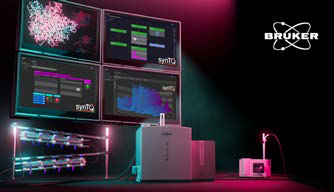
Image Credit: Bruker BioSpin Group
Leveraging modern technologies
Bruker’s Fourier 80 benchtop NMR analyzer, combined with Optimal Industrial Technologies’ industry-leading PAT knowledge management platform synTQ, delivers NMR’s structural insights, selectivity, and resolution in a compact system.
The Fourier PAT employs cryogen-free benchtop NMR technology and is suited for uses with space restrictions. It could be installed in the lab, the pilot plant, and advanced manufacturing settings.
NMR is a primary method that provides quantitative and qualitative data. It does not require validated reference material and its data can be utilized directly to adjust other spectroscopies instantly. It can substitute offline adjustment tools and be employed synergistically with infrared (IR), saving substantial time.
NMR is a multi-attribute method that determines various CQAs concurrently and is essential for bioprocess analytics. The innovative synTQ NMR adapter integrates NMR into PAT, working seamlessly with soft sensors and other techniques, including IR and Raman.
This creates multiple integrated data streams for deeper process insights. At its core, synTQ enables simultaneous data acquisition and visualization alongside automated closed-loop feedback. Operators can instantly benefit from advanced real-time control and oversight of chemical reactions in real-world conditions.
The optimum solution for advanced manufacturing
The Fourier PAT supports numerous operations modes, from at-line automation to flow and stop-flow measurements, as well as online/flow modality, which facilitates spontaneous process optimization and control.
The quantitative, high-quality data acquired from benchtop NMR and the selective and rich information associated with the approach make it suited for situations demanding advanced offhand feedback control.
It is presently being utilized to feed conversion values to the deep reinforcement learning AI agent operating the independent active pharmaceutical ingredient (API) synthesis within the PIPAc project.
The PIPAc project, funded by Bpifrance, aims to further advance API manufacturing by creating an independently piloted chemical micro-plant for molecule production driven by flow chemistry, AI, and additive manufacturing (e.g. 3D printing).
Continuous flow chemistry, self-contained distributed manufacturing, advanced pharmaceutical manufacturing strategies, and enabling technologies such as PAT add value while boosting productivity, compliance, and high-quality production.
Bruker’s Fourier PAT is a novel enabling solution that supports the transition toward advanced sustainable manufacturing.
References
- Cogdill, R.P. et al. (2007). The financial Returns on investments in process analytical technology and lean Manufacturing: Benchmarks and Case study. Journal of Pharmaceutical Innovation, 2(1–2), pp. 38–50. https://doi.org/10.1007/s12247-007-9007-x.
- Valþórsson, H. (2006). PAT Implementation in Pharmaceutical Manufacturing and its Economical Impact. Available at: https://edoc.unibas.ch/722/1/DissB_8178.pdf (Accessed 14 Dec. 2024).
About Bruker BioSpin Group
The Bruker BioSpin Group designs, manufactures, and distributes advanced scientific instruments based on magnetic resonance and preclinical imaging technologies. These include our industry-leading NMR and EPR spectrometers, as well as imaging systems utilizing MRI, PET, SPECT, CT, Optical and MPI modalities. The Group also offers integrated software solutions and automation tools to support digital transformation across research and quality control environments.
Bruker BioSpin’s customers in academic, government, industrial, and pharmaceutical sectors rely on these technologies to gain detailed insights into molecular structure, dynamics, and interactions. Our solutions play a key role in structural biology, drug discovery, disease research, metabolomics, and advanced materials analysis. Recent investments in lab automation, optical imaging, and contract research services further strengthen our ability to support evolving customer needs and enable scientific innovation.
Sponsored Content Policy: News-Medical.net publishes articles and related content that may be derived from sources where we have existing commercial relationships, provided such content adds value to the core editorial ethos of News-Medical.Net which is to educate and inform site visitors interested in medical research, science, medical devices and treatments.