Since the first FDA-approved recombinant protein-based therapy in 1982, biologics have demonstrated significant potential due to their specificity and capacity to target various mechanisms of action (MoA).1
Image Credit: Waters | Wyatt Technology
These MoAs encompass protein degradation, hormone replacement, immunological cell signaling, and cytokine neutralization, among others. As a result of their versatility, there are currently over 890 FDA-approved therapeutic proteins across all classes, including approximately 350 mAb therapies.2
Despite their success, these therapies encounter challenges related to susceptibility to aggregation, degradation, and denaturation, which are intrinsically linked to their therapeutic efficacy through the structure-function relationship.
Controlling these properties during the manufacturing process and monitoring them in quality control (QC) laboratories is essential.
The risks of aggregates
Aggregate formation and size variant analysis present critical risk factors.3,4 As mentioned previously, the structure of biotherapeutics is intricately related to their function.
Aggregation reduces the number of available therapeutic molecules, affecting dosage, but it can also trigger an innate immune response through non-specific binding. This may lead the body to identify these beneficial therapeutics as harmful, generating anti-drug antibodies (ADA).
Consequently, many regulatory bodies establish guidelines to quantify the risk of aggregation. For instance, USP General Chapters <129>, <621>, <697>, <787>, <788>, <855>, and <1049> address the risk and quantify aggregate formation in various ways.
Significant effort in the development process is dedicated to controlling aggregation, self-assembly, and oligomerization, typically achieved by optimizing formulations. During the formulation development stage, excipients such as polysorbates are added to enhance suspension stability, while sugars serve as cryoprotectants.5
Adjusting ionic strength and pH by incorporating amino acids, acids, or bases into the buffer system helps prevent or promote self-assembly for each unique therapy.5
Despite careful formulation during development, stability issues may still arise during manufacturing and storage, which are closely monitored during QC.
Analytical instruments for QC
Liquid Chromatography (LC) has not always been a standard instrument in protein QC laboratories. Its adoption has been significantly influenced by the demand for more precise and reliable testing methods, particularly linked to the first recombinant product, insulin.6
In the early stages of insulin production, testing methods primarily relied on immunoassays, which ultimately failed to keep pace with the drug's modernization as it transitioned from extraction to manufacturing in a bioreactor using recombinant technology.
The introduction of LC revolutionized insulin testing and broader biopharmaceutical testing by providing a more accurate and efficient approach for analyzing insulin identity, purity, potency, and degradation products.7-9
This shift was crucial for ensuring the safety and efficacy of insulin, leading to its widespread adoption in laboratories globally due to High-Performance Liquid Chromatography (HPLC).
Ensuring robust methods for QC necessitates the optimization and assessment of method parameters, including sample preparation, injection conditions, and data analysis.
Key considerations encompass system suitability criteria, a consistent supply of critical reagents, and comprehensive training for QC analysts. Effective communication between development and QC laboratories, along with strategies to manage vendor-driven changes, is essential for successful method transfer.
Current needs in QC
Regulatory agencies have established stringent guidelines for the monitoring and control of aggregates and particles. Protein aggregates, irrespective of their size, affect the safety and efficacy of biologic therapies.
Implementing forced chemical degradation through hydrolysis, oxidation, photolysis, or thermal stress is essential to ensure safety and efficacy throughout the shelf life of a therapy.
A summary of common conditions and durations for forced degradation tests is provided in Table 1.10
Source: Waters | Wyatt Technology
| Degradation Type |
Conditions |
Duration |
| Oxidation |
- Hydrogen peroxide (0.1% to 3%)
- Other oxidizing agents (e.g., metal ions)
|
Up to 7 days or until 20% degradation |
| Photolysis |
- UV and visible light
- Minimum 1.2 million lux hours
- 200 watt-hours/m2 of UV light
|
Several days |
| Thermal Stress |
- Dry heat and wet heat
- Temperatures: 40 °C to 80 °C
|
Multiple time points (e.g., 1, 3, 5 days) |
| Hydrolysis |
- Acidic: HCl or H2SO4 (0.1 M to 1 M)
- Basic: NaOH or KOH (0.1 M to 1 M)
|
Up to 7 days at elevated temperatures (40 °C to 60 °C) |
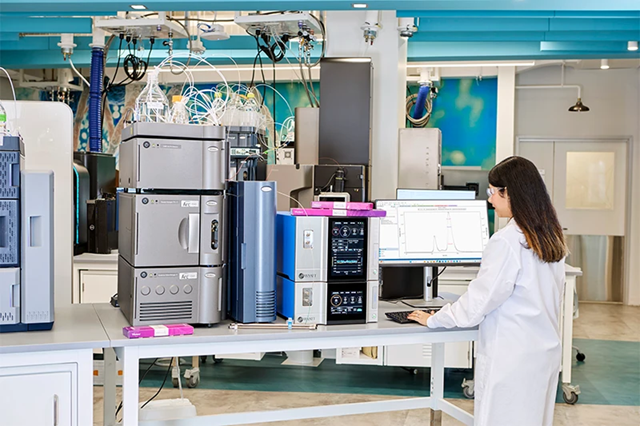
Image Credit: Waters | Wyatt Technology
In addition to standard HPLC analysis, Size Exclusion Chromatography and Multi-Angle Light Scattering (SEC-MALS, such as DAWN™ or miniDAWN™ MALS instruments) offer orthogonal confirmation by measuring absolute molecular weight, size (Rg), size distributions, fragments, and non-covalent associations.
A significant advantage of this technique is that it does not require additional acquisition time, as it operates downstream from the UV or PDA detector, utilizing the same HPLC method already in use.
Aggregates are not the only concern when considering higher-order species. Oligomers, which may function similarly to insulin or represent an unwanted step towards aggregation, are also significant.
The higher-order structure of the drug substance is critical due to the structure-function relationship or structure-activity relationship (SAR) of biologic therapies.
SAR is classified as a critical quality attribute (CQA), making it essential to include it in extended characterization or release assays within the QC laboratory to better understand the product's biophysical properties.
Incorporation of MALS into QC processes
Incorporating SEC-MALS into QC processes addresses aggregation and SAR concerns, providing comprehensive characterization information. MALS, in conjunction with SEC, is an established method for effective protein quality control and aggregate detection.
This technique accurately determines absolute molecular weight, size distributions, and radius of gyration (Rg), all of which are critical quality attributes for biotherapeutics.
By detecting and quantifying aggregates and providing insights into size and structure, MALS ensures the safety and efficacy of innovator products and biosimilars.
Many scientists currently utilize MALS in protein QC to qualify their standards, and companies that provide standards often market them as QC qualifiers.
Testing at release, including MALS, ensures that any changes in the protein’s structure are identified before the product reaches the patient. USP <1430> "Analytical Methodologies Based on Scattering Phenomena" offers further guidance on these techniques.
Release assays often prioritize simplicity and may not incorporate advanced characterization techniques, leading to the omission of the most accurate and detailed information during release. However, many laboratories ensure thorough characterization by integrating extended tests like SEC-MALS for size variant analysis.
While SEC-MALS may not be included in release assays, it can still be employed in QC laboratories for extended characterization.
The role of software in instrument adoption
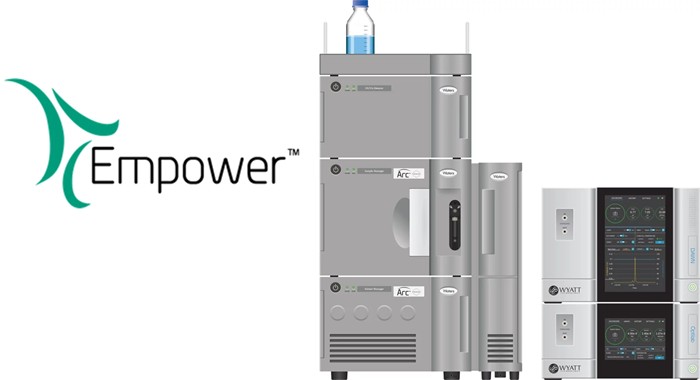
Image Credit: Waters | Wyatt Technology
The adoption of new techniques is mainly driven by the need for enhanced safety, greater accuracy, and user-friendliness. In addition, providing a comprehensive view of the sample from the outset helps avoid additional work after potential deviations at release. Ease of use and QC readiness are crucial for successful adoption.
Another key factor is the desire to mitigate risk and enhance efficiency in demanding laboratory environments. For broader QC adoption, integrating MALS into the Empower™ Chromatography Data System (CDS) reduces barriers by consolidating a laboratory’s digital footprint and streamlining validation efforts from two software systems to one.
Empower CDS is a cornerstone in QC laboratories, providing efficient and secure data acquisition, management, processing, and reporting. It is scalable from a single workstation to an enterprise-wide network, facilitating connectivity across sites and centralized data management, and is recognized as the industry leader in data integrity.
Empower CDS ensures compliance with regulatory standards and serves as a catalyst for the successful implementation of advanced instruments in QC laboratories.
According to Waters' data estimates, 80% of novel drugs submitted to the FDA, EMA, and China NMPA utilize Empower CDS.11
Conclusions
Biologic therapies have revolutionized medicine by targeting specific mechanisms of action, offering treatments for various diseases. Despite their potential, these therapies encounter challenges during release, partly due to their strong structure-function relationship, which can be disrupted by aggregation, degradation, and partial unfolding.
Advanced techniques such as SEC-MALS are crucial for ensuring safety and efficacy by accurately measuring critical quality attributes and providing extended characterization tests that further enhance confidence in the product.
As biologics evolve, the adoption of sophisticated QC methods and systems under Empower CDS lowers the barriers to implementation in QC, allowing scientists to concentrate on ensuring the production of high-quality therapies that benefit patients worldwide.
References and further reading
- Ebrahimi, S.B. and Samanta, D. (2023). Engineering protein-based therapeutics through structural and chemical design. Nature Communications, (online) 14(1), p.2411. https://doi.org/10.1038/s41467-023-38039-x.
- Drug Discovery Today (2024). Drug Discovery Today, 29(7), July. (online) Available at: https://www.sciencedirect.com/journal/drug-discovery-today/vol/29/issue/7
- Pham, N.B. and Meng, W.S. (2020). Protein aggregation and immunogenicity of biotherapeutics. International Journal of Pharmaceutics, 585, p.119523. https://doi.org/10.1016/j.ijpharm.2020.119523.
- Lundahl, M.L.E., et al. (2021). Aggregation of protein therapeutics enhances their immunogenicity: causes and mitigation strategies. RSC Chemical Biology, 2(4), pp.1004–1020. https://doi.org/10.1039/d1cb00067e.
- Elder, D.P., Kuentz, M. and Holm, R. (2016). Pharmaceutical excipients - quality, regulatory and biopharmaceutical considerations. European Journal of Pharmaceutical Sciences, 87, pp.88–99. https://doi.org/10.1016/j.ejps.2015.12.018.
- FDA (2022). 100 Years of Insulin. FDA. (online) Available at: https://www.fda.gov/about-fda/fda-history-exhibits/100-years-insulin.
- Snyder, L. R., et al. (1980). Practical HPLC Method Development, 2nd Edition | Wiley. (online) Available at: https://www.wiley.com/en-us/Practical+HPLC+Method+Development%2C+2nd+Edition-p-9780471007036.
- Hansen, M. and Pedersen, S. (2012). High-performance liquid chromatography in the analysis of insulin and its analogues. Journal of Chromatography B, 879(13–14), pp.1154–1161. doi:10.1016/j.jchromb.2011.12.034.
- Lund, O. and Jørgensen, L. (2014). Advances in HPLC methods for the analysis of insulin and its degradation products. Analytical and Bioanalytical Chemistry, 406(15), pp.3673–3680. doi:10.1007/s00216-014-7797-8.
- Blessy, M., et al. (2014). Development of forced degradation and stability indicating studies of drugs - A review. Journal of Pharmaceutical Analysis, (online) 4(3), pp.159–165. https://doi.org/10.1016/j.jpha.2013.09.003.
- Waters Corporation. (2025). Waters Corporation 2025 Investor Day - Waters. (online) Available at: https://ir.waters.com/News--Events/events-and-presentations/events/event-details/2025/Waters-Corporation-2025-Investor-Day-2025-ZdLBAegrte/default.aspx (Accessed 31 Jul. 2025).
About Waters | Wyatt Technology
Wyatt Technology Corporation develops instrumentation, software and techniques for the characterization of macromolecules and nanoparticles, in solution, based on light scattering and related technologies. The physical properties determined by Wyatt’s products include absolute molar mass of proteins, polymers and other macromolecules; size and charge (zeta potential); protein-protein and other biomolecular interactions; composition of conjugated proteins and co-polymers; and macromolecular conformation.
Products and services
Wyatt’s product line includes instruments and software for:
- On-line multi-angle light scattering (MALS), used in conjunction with size-exclusion chromatography to quantify absolute molar mass, size, conformation, conjugation and aggregation
- traditional (cuvette-based) and high-throughput (microwell plate-based) dynamic light scattering (DLS) to determine size (radius) and size distributions, protein melting temperature and stability-indicating parameters
- electrophoretic mobility (PALS) to determine molecular charge/zeta potential
- composition-gradient light scattering for label-free analysis of biomolecular interactions
- field-flow fractionation for separation of macromolecules and nanoparticles from 1-1000 nm, used in conjunction with on-line light scattering and other detection technologies to quantify molar mass and size
Wyatt also offers, on a limited basis, sample analysis services utilizing its unique technologies.
Sponsored Content Policy: News-Medical.net publishes articles and related content that may be derived from sources where we have existing commercial relationships, provided such content adds value to the core editorial ethos of News-Medical.Net which is to educate and inform site visitors interested in medical research, science, medical devices and treatments.