Sponsored Content by MerckReviewed by Louis CastelNov 11 2026
Depending on the scope of the project and industry, developing an efficient process for synthesizing a target compound involves numerous challenges and considerations. SYNTHIA® Retrosynthesis Software is a robust tool for organic chemists that uses expert-coded chemistry rules to predict viable routes starting with commercially available raw materials.
Applying SYNTHIA® Retrosynthesis Software to aid in the route design process enables the rapid selection of pathways that fulfill critical project requirements, such as the use of commercial starting materials within a set price range or the avoidance of specific hazardous reagents or reaction types. In addition to the expert-coded rules, SYNTHIA® uses the published literature to integrate previously reported synthetic steps alongside the computer-generated steps.
Since the algorithms are engineered to optimize potential routes according to cost, step count, and atom economy, they frequently result in more affordable and efficient routes than those a chemist might design independently or those previously reported in the literature.
To showcase the practical advantages of integrating SYNTHIA® retrosynthesis software into the route planning process, this article presents two case studies highlighting the enhanced syntheses of known compounds that were developed using SYNTHIA® to minimize step count and boost overall yield.
The DOZN™ tool was also used to evaluate the Green Chemistry aspects of proposed routes. Experimental details for both case studies are given at the end of this article.
Case 1: Lithium chromoionophore
Throughout human history, dyes have been used to color textiles. Early dyes composed of natural products derived from insects, bark, leaves, berries, and fungi.
In 1856, the synthetic dye industry was born when 18-year-old William Henry Perkin serendipitously discovered mauveine during a failed attempt at quinine synthesis.1
Since the commercialization of the first aniline dye, originally termed ‘aniline purple’ for its vibrant purple hue, the dye industry has expanded beyond textile coloration to include applications in photography and optical information recording media.
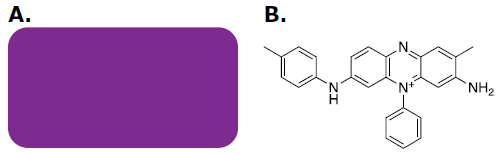
Figure 1. A. The color of the first synthetic dye, mauveine. B. Chemical structure of mauveine A, the major component of mauveine dye. Image Credit: Meth-Cohn, O. and Smith, M. (1994)2
An example of a purple-blue colored molecule with potential applications in optical data recording media is the indoaniline dye illustrated in Figure 2.
This molecule also contains a mono aza-crown ether moiety, making it a chromoionophore capable of selectively complexing ions to induce a change in absorption and emission characteristics. Such ion sensors have promising applications in trace-metal detection in biological systems, as well as in molecular data processing.3
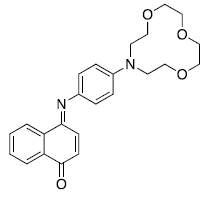
Figure 2. Aza-crown indoaniline dye (1). Image Credit: Merck KGaA
The synthesis of 1 was originally reported in 2000 by S.-H. Kim and colleagues (Scheme 1). The route begins with a series of functional group conversions from tetraethylene glycol 3, followed by a low-yielding intramolecular cyclization with aniline to produce the aza-crown ether 6.
This is functionalized with HNO2 to produce the nitroso intermediate 7, which is then reduced to amine 8 with Zn/HCl.
The last stage involves condensation with alpha-naphthol in a basic solution at ambient temperature with air oxidation. This six-step process generated 1 with an overall yield of 5%.
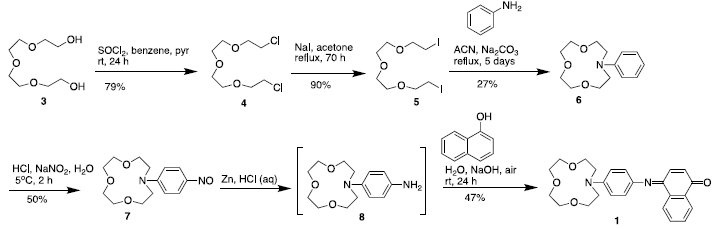
Scheme 1. Published synthesis of 1. Image Credit: Merck KGaA
During the preparation of this molecule, the objective was to identify a shorter route to enhance the overall yield and shorten the synthesis time.
SYNTHIA® identified a commercially available aza-crown ether that could be directly coupled with fluoronitrobenzene in the initial step, removing the need for the first two functional group transformations and the low-yielding cyclization.
This shortened the overall cycle time for the steps to core structure 7 from nearly nine days to just one day. The nitro intermediate 9 was subsequently isolated in 93% yield following purification by silica-gel chromatography.
In the second step, SYNTHIA® recommended nitro group reduction, which was carried out through catalytic hydrogenation with activated Pd on carbon. Following filtration of the reaction mixture through celite and solvent evaporation, crude 8 was attained as a pale-yellow liquid and used directly without additional purification.
While not proposed by SYNTHIA®, the final step was adapted from the original publication. The condensation of 8 with alpha-naphthol in the presence of hydrogen peroxide (H2O2) yielded 1 in 20% yield as a purple-blue solid following purification using neutral alumina chromatography.

Scheme 2. 3-step synthesis of 1 developed with SYNTHIA®. Image Credit: Merck KGaA
Using SYNTHIA® to identify an essential first step from commercially available starting materials enabled the development of a three-step synthesis to 1 with a 13% overall yield. This represented a 260% overall yield enhancement and a 50% step reduction over the original synthesis.
The labor prices were also cut down by 60%, resulting in an overall 49% savings relative to the original route, assuming a labor rate of USD 150/hr.
Case 2: 6-Formylpterin
The second project focused on synthesizing 6-formylpterin (6-FPT), a heterocyclic compound belonging to the pterin family. It is formed as a byproduct of photodegradation of folic acid, an essential vitamin that acts as a cofactor in metabolic reactions such as DNA and amino acid synthesis (Figure 3).
The photoproduct, 6-FPT 2 is present in a broad range of biochemical environments, including human blood and cells, and has been studied in relation to cancer and other diseases.4
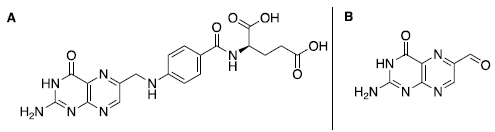
Figure 3. A. Folic acid. B. 6-Formylpterin 2. Image Credit: Merck KGaA
Although the preparation of 6-formylpterin has been reported in a single step from folic acid,5 this reaction was not reproducible in the laboratory. An alternative preparation reported in the literature requires an extensive synthesis from costly starting materials (Scheme 3).6
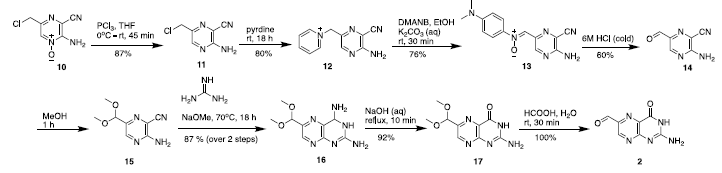
Scheme 3. Synthesis of 6-formylpterin. Image Credit: Freisleben et al., 2002
The reported synthesis begins with pyrazine oxide 10, which is reduced by phosphorus trichloride (PCl3) in the initial step and subsequently coupled with pyridine.
Later substitution with N,N-dimethylaminonitrosobenzene (DMANB) yields intermediate 13, which is hydrolyzed in acid to provide formylpyrazine 14. After acetal protection of the formyl group, pyrazine 15 is coupled with guanidine to form the second pterin ring.
Finally, sodium hydroxide is used to convert the C4 amino group into the required carbonyl, and formic acid is employed to remove the acetal protecting group, revealing the final 6-formylpterin 2.
In addition to being an extensive eight-step synthesis, this route was not ideal owing to the high cost of the starting material 10 (USD 640/g), the use of toxic PCl3 in the initial step, and low atom economy resulting from substitutions using pyridine and DMANB. For this reason, a shorter and more atom-economical strategy for this target was sought with the aid of SYNTHIA®, leading to the development of an alternative preparation from a cost-effective starting material that required just four synthetic steps (Scheme 4).

Scheme 4. Executed synthesis of 2 based on a key step from SYNTHIA®. Image Credit: Merck KGaA
The initial results generated by SYNTHIA® suggested a two-step process derived from a published study that employed selenium dioxide (SeO2) oxidation of methylpterin 19 (Scheme 5).7 The methylpterin precursor was prepared in a single step from commercially available pyrimidinol 18 and 2-oxopropanal following an established protocol.7
Although this strategy was attractive due to its minimal step count and high atom economy, the oxidation was unfortunately unsuccessful in the presence of the unprotected amine.
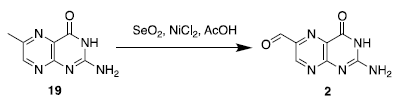
Scheme 5. Key step to 2 proposed by SYNTHIA®. Image Credit: Merck KGaA
To address this limitation, an acetyl protecting group was selected to reduce the impact on atom economy. As a result, 19 was treated with acetic anhydride in acetic acid to produce N-acetyl methylpterin 20.
As anticipated, the SeO2 oxidation of this protected intermediate was successfully achieved following 16 hours of heating at 135 °C in acetic acid/dioxane. Acetyl-formylpterin 21 was isolated in an 80% yield following purification by silica-gel chromatography. The acetyl group was then removed using 0.5 N hydrochloric acid to afford 6-formylpterin 2 in an overall yield of 28%.
In this case study, the key SeO2 step proposed by SYNTHIA® reduced the step count by 50%, improved overall atom economy, and eliminated the use of undesired reagents. This route lowered material expenses by 98% and reduced labor costs by 38%, resulting in an estimated overall cost savings of 77% compared with the published route, based on the same labor assumption described in the first case study.
Green chemistry assessment using DOZN™
The DOZN™ tool applies the 12 principles of green chemistry to quantitatively assess the environmental friendliness of a chemical route or procedure based on three primary areas: resource efficiency, energy efficiency, and the minimization of hazards to human health and the environment. DOZN™ generates a numerical score for the overall process, where lower scores represent a more sustainable process.
DOZN™ was applied to compare the sustainability of the published route with the SYNTHIA®-developed-route for both case studies. In each case, the route designed using SYNTHIA® showed improvement in the DOZN™ score over the published route, as shown by the lower DOZN™ scores.
For the synthesis of 6-formylpterin, DOZN™ indicated a significant enhancement in sustainability with the SYNTHIA® route (44 vs. 61). In contrast, only a small improvement with respect to the 12 principles of green chemistry could be achieved using the lithium chromoionophore (57 vs. 59).
Conclusion
The application of SYNTHIA® Retrosynthesis Software enabled the research and development team to rapidly identify enhanced routes to two distinct target molecules. The final synthetic routes executed in the laboratory featured fewer step counts, higher yields, and improved atom economy relative to the published routes.
In both case studies, the final optimized routes utilized a combination of reactions suggested by SYNTHIA® and those derived from the literature, as well as the research team’s own chemistry experience. These results demonstrate the value of incorporating SYNTHIA® into the chemist’s toolkit to generate innovative ideas and support decision-making in the modern organic chemistry laboratory.
Table 1. Summary of benefits using the SYNTHIA® proposed route. Source: Merck KGaA
| |
Literature Route |
SYNTHIA® Route |
| Case 1 - Lithium Chromoionophore |
|
|
Manufacturing cost
(1 g, USD 150/hr) |
100% |
51% |
| DOZN Score (1 g) |
59 |
57 |
| Case 2 - 6-Formylpterin |
|
|
Manufacturing cost
(1 g, USD 150/hr) |
100% |
23% |
| DOZN Score (1 g) |
61 |
44 |
Acknowledgments
Produced from materials originally authored by S. Sinha, M. Obkircher, M. Yaragani, R. Deokar, S. Kumar MD, and E. Gardener from Merck KGaA.
References and further reading:
- Perkin, W.H. (1896). The origin of the coal-tar colour industry, and the contributions of Hofmann and his pupils. Journal of the Chemical Society, Transactions, 69, p.596. DOI:10.1039/ct8966900596. https://pubs.rsc.org/ct/article-abstract/doi/10.1039/CT8966900596/120410/The-origin-of-the-coal-tar-colour-industry-and-the?redirectedFrom=fulltext.
- Meth-Cohn, O. and Smith, M. (1994). What did W. H. Perkin actually make when he oxidised aniline to obtain mauveine? Journal of the Chemical Society, Perkin Transactions 1, (1), pp.5–7. DOI:10.1039/P19940000005. https://pubs.rsc.org/p1/article-abstract/23/1/5/53439/What-did-W-H-Perkin-actually-make-when-he-oxidised?redirectedFrom=fulltext.
- Kim, S.-H., et al. (2000). Synthesis and X-ray structural characterization of indoaniline dye carrying a monoazacrown moiety. Dyes and Pigments, 46(1), pp.43–48. DOI:10.1016/s0143-7208(00)00027-9. https://www.sciencedirect.com/science/article/abs/pii/S0143720800000279?via%3Dihub.
- Goossens, J.-F., Thuru, X. and Bailly, C. (2021). Properties and reactivity of the folic acid and folate photoproduct 6-formylpterin. Free Radical Biology and Medicine, 171, pp.1–10. DOI:10.1016/j.freeradbiomed.2021.05.002. https://www.sciencedirect.com/science/article/abs/pii/S0891584921002835?via%3Dihub.
- Thijssen, H.H.W. (1973). A simple method for preparing 2-amino-4-hydroxy-6-formylpteridine, a precursor of the pteridine substrate of dihydropteroate biosynthesis. Analytical Biochemistry, 54(2), pp.609–611. DOI:10.1016/0003-2697(73)90394-1. https://www.sciencedirect.com/science/article/abs/pii/0003269773903941?via%3Dihub.
- Freisleben, A., Schieberle, P. and Rychlik, M. (2002). Syntheses of Labeled Vitamers of Folic Acid to Be Used as Internal Standards in Stable Isotope Dilution Assays. Journal of Agricultural and Food Chemistry, 50(17), pp.4760–4768. DOI:10.1021/jf025571k. https://pubs.acs.org/jafcau/article-abstract/50/17/4760/3536221/Syntheses-of-Labeled-Vitamers-of-Folic-Acid-to-Be?redirectedFrom=fulltext.
- Zav’yalov, S.I., Zavozin, A.G. and Ezhova, G.I. (1981). Regioselective syntheses of substituted pteridines. Bulletin of the Academy of Sciences of the USSR Division of Chemical Science, 30(11), pp.2183–2185. DOI:10.1007/bf01094658. https://link.springer.com/article/10.1007/BF01094658.
- Waring, P. and Armarego, W. (1985). Pterins. X. A New Preparation of 6-Hydroxymethylpterin from 6-Methylpterin. Australian Journal of Chemistry, 38(4), pp.629–631. DOI:10.1071/ch9850629. https://connectsci.au/ch/article-abstract/38/4/629/9846/Pterins-X-A-New-Preparation-of-6?redirectedFrom=fulltext.
 About Merck
Merck, a leading science and technology company, operates across life science, healthcare and electronics. More than 62,000 employees work to make a positive difference to millions of people’s lives every day by creating more joyful and sustainable ways to live. From providing products and services that accelerate drug development and manufacturing as well as discovering unique ways to treat the most challenging diseases to enabling the intelligence of devices – the company is everywhere.
Scientific exploration and responsible entrepreneurship have been key to Merck’s technological and scientific advances. This is how Merck has thrived since its founding in 1668. The founding family remains the majority owner of the publicly listed company. Merck holds the global rights to the Merck name and brand. The only exceptions are the United States and Canada, where the business sectors of Merck operate as MilliporeSigma in life science, EMD Serono in healthcare, and EMD Electronics in electronics.
Sponsored Content Policy: News-Medical.net publishes articles and related content that may be derived from sources where we have existing commercial relationships, provided such content adds value to the core editorial ethos of News-Medical.net, which is to educate and inform site visitors interested in medical research, science, medical devices and treatments.