The Human GLP-1R (Luc) HEK293 Reporter Cell was designed to express both the CREB signaling response element and the full-length human GLP-1R receptor (Uniprot: P43220), which could stimulate luciferase-expressing systems with GLP-1R agonists or glucagon-like peptide 1 (GLP-1).
The luminescence signal is modest, and the GLP-1R receptor is not activated in the absence of agonist or GLP-1. The GLP-1R pathway-activated luminescence can be observed in a dose-dependent manner when agonist or GLP-1 is present.
Product details
- MOA (Mechanism of Action) is best represented by genetically altered cell lines
- Increased activity and a longer assay window for a reliable and repeatable cell-based bioassay
- Extensive application data to aid in the development and validation of assays
- Complete traceable record, strict quality control, and verified stability of cell passage
- Commercially licensed parental cell line that was lawfully acquired from a globally renowned cell resource bank
- Global commercial license assistance whenever a regulatory filing is required
Application
Screen for GLP-1R-binding and activating agonists.
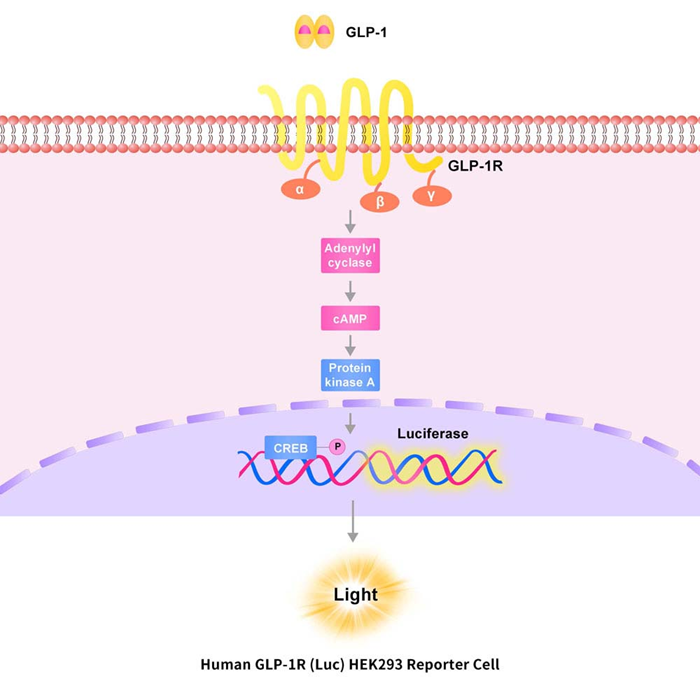
Image Credit: ACROBiosystems
Growth properties
Adherent
Selection marker
Puromycin (2 μg/mL) + Hygromycin B (20 μg/mL)
Complete growth medium
DMEM medium + 10 % FBS
Freeze medium
Serum-free cell cryopreservation medium
Quantity
At least 5 × 10⁶ cells in 1 mL of serum-free cryopreservation medium is contained in one vial.
Storage
Frozen in liquid nitrogen.
Mycoplasma testing
Negative
Sterility testing
Negative.
Instructions for use
Detailed culturing and assay protocol available in the data sheet.
ACRO Quality Management System
- Quality Control Process
- QMS (ISO, GMP)
- Quality Advantages
Performance data
Receptor assay
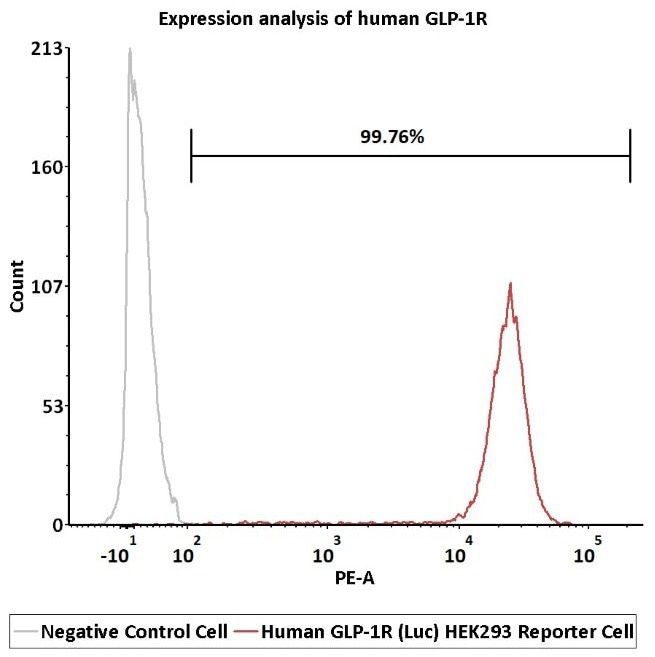
Expression analysis of human GLP-1R on Human GLP-1R (Luc) HEK293 Reporter Cell by FACS. Cell surface staining was performed on Human GLP-1R (Luc) HEK293 Reporter Cell or negative control cell using PE-labeled anti-human GLP-1R antibody. Image Credit: ACROBiosystems
Application
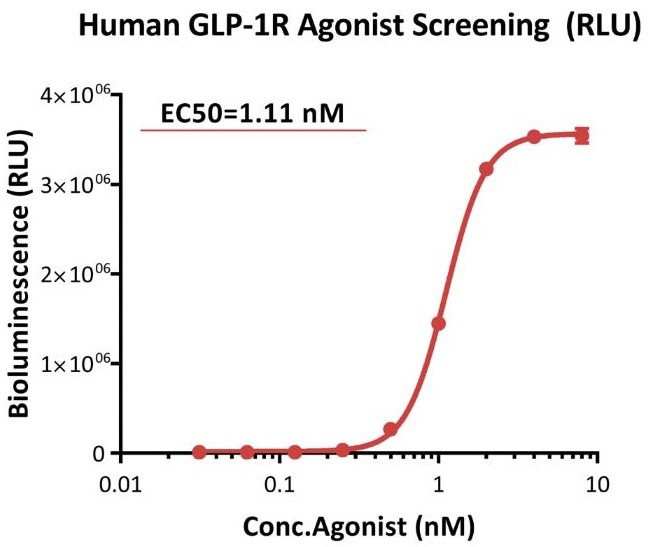
Bioactivity analysis of human GLP-1R agonist (RLU). This reporter cell was incubated with serial dilutions of Tirzepatide (a dual GLP-1R and GIPR agonist). The EC50 of Tirzepatide was approximately 1.11 nM. Image Credit: ACROBiosystems
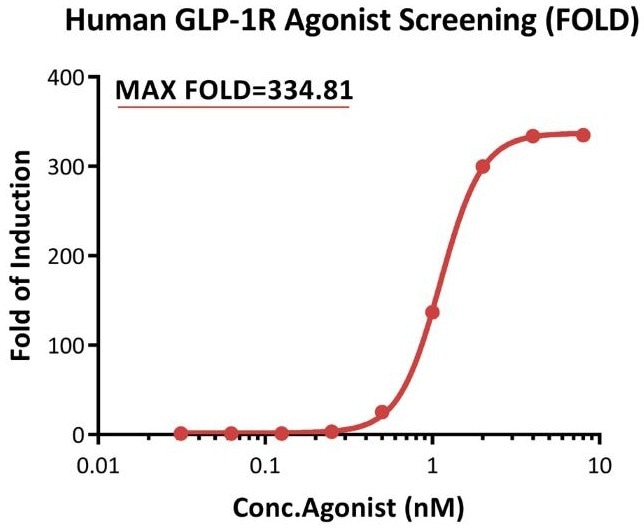
Bioactivity analysis of human GLP-1R agonist (FOLD). This reporter cell was incubated with serial dilutions of Tirzepatide (a dual GLP-1R and GIPR agonist). The max induction fold was approximately 334.81. Image Credit: ACROBiosystems
Signaling bioassay
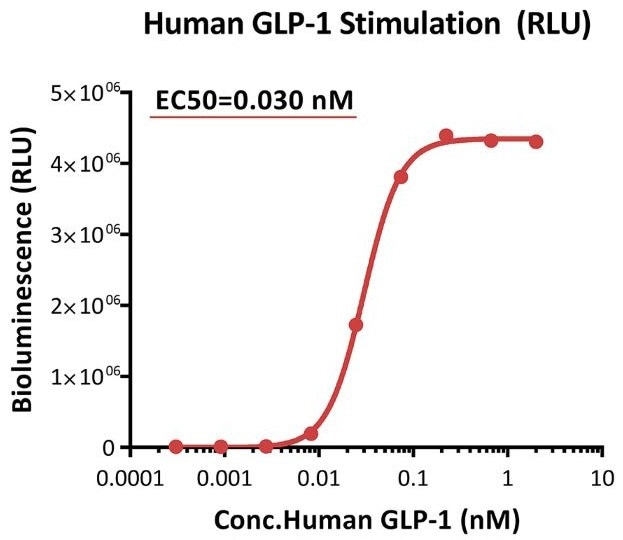
Response to human GLP-1 (RLU). This reporter cell was stimulated with serial dilutions of human GLP-1. The EC50 was approximately 0.030 nM. Image Credit: ACROBiosystems
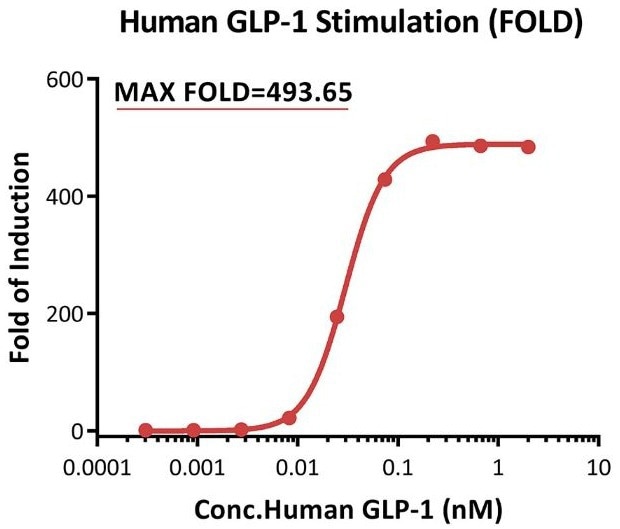
Response to human GLP-1 (FOLD). This reporter cell was stimulated with serial dilutions of human GLP-1. The max induction fold was approximately 493.65. Image Credit: ACROBiosystems
Passage stability
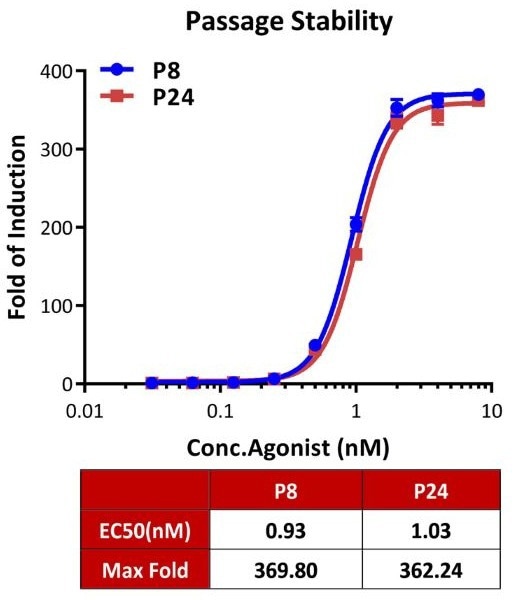
Passage stability analysis by Signaling Bioassay. The continuously growing Human GLP-1R (Luc) HEK293 Reporter Cell was stimulated with serial dilutions of Tirzepatide (a dual GLP-1R and GIPR agonist). Tirzepatide-stimulated response demonstrates passage stabilization (fold induction and EC50) across passages 8-24. Image Credit: ACROBiosystems