A large-scale laboratory screen reveals that widely used chemicals do more than contaminate food and water. They can selectively suppress, favor, and rewire gut bacteria, with potential consequences for microbiome balance and antimicrobial resistance.
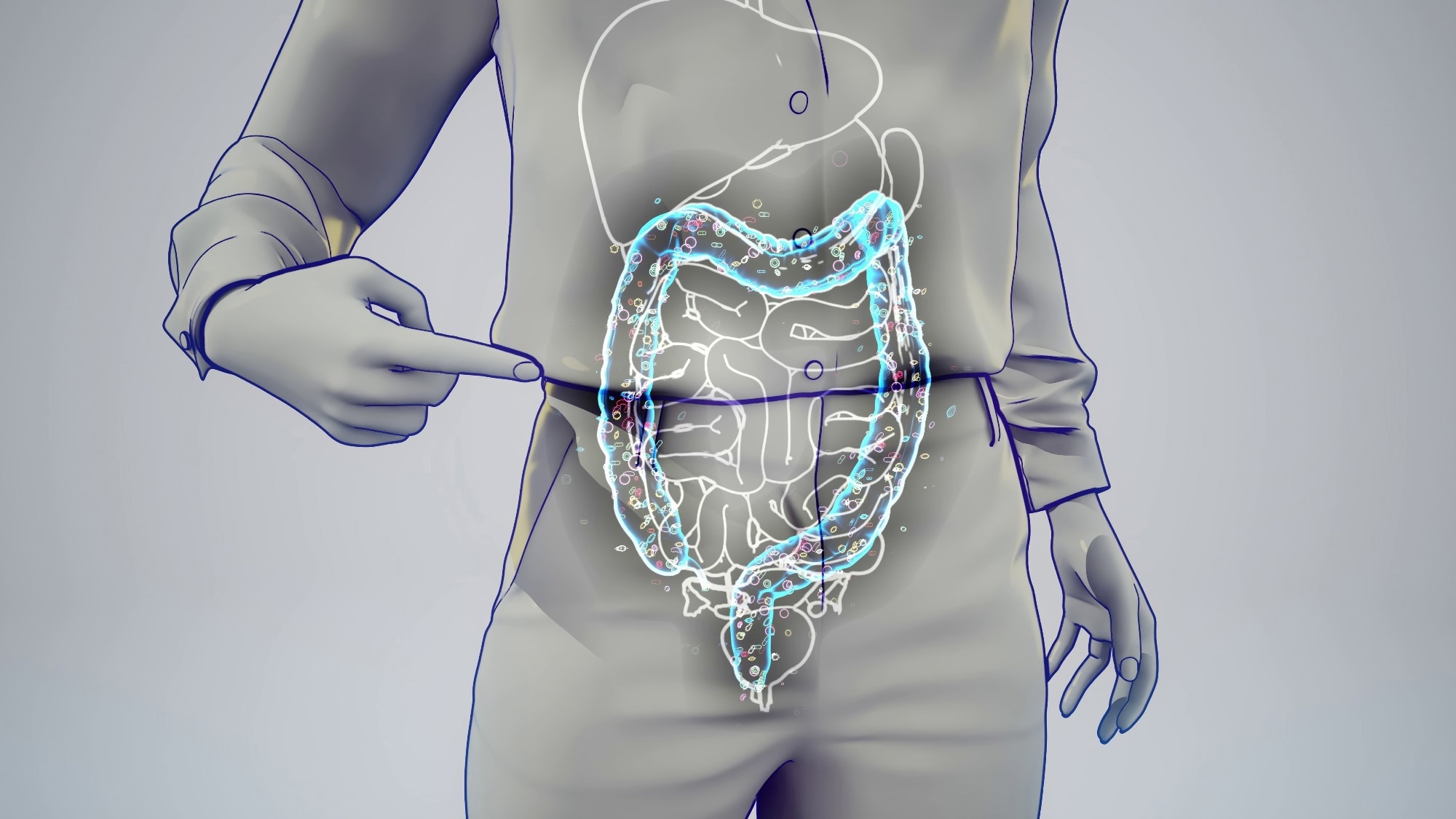
Study: Industrial and agricultural chemicals exhibit antimicrobial activity against human gut bacteria in vitro. Image Credit: Julien Tromeur / Shutterstock
In a recent study published in the journal Nature Microbiology, researchers observed that many agricultural and industrial chemicals exhibit antimicrobial activity against the human gut microbiota and can exert selective pressure on gut bacteria in vitro.
Synthetic chemicals have become indispensable for industry and agriculture. Industrial and agricultural chemicals enter water and food via agricultural application, industrial processing, or environmental pollution. Food and water contamination by chemical pollutants exposes the gastrointestinal tract to xenobiotic compounds. However, little is known about the impact of these contaminants on gut bacteria under controlled laboratory conditions or how they may shape microbial fitness and competition.
Screening Chemical Effects on Gut Microbes
In the present study, researchers investigated the impact of pollutants on gut bacteria using an in vitro screening approach designed to assess bacterial growth inhibition and selection effects. They leveraged an extensive library of 1,076 compounds likely to enter water and food; the library included industrial chemicals, pesticides, pesticide metabolites, and compounds targeting organisms like spiders, rodents, bacteria, fungi, and nematodes.
Testing Growth Inhibition Across 22 Gut Strains
The researchers evaluated the impact of all compounds at 20 μM on the growth of 22 gut bacterial strains selected for their prevalence and abundance in the healthy gut microbiota. Bacteria were grown and monitored for 24 hours; growth was measured as the area under the growth curve. Growth inhibition hits were defined as bacterial-chemical interactions that reduced growth by more than 20%.
Chemicals With Broad and Narrow Antimicrobial Activity
The team found that 168 chemicals inhibited at least one strain. Bacteroidales, particularly Parabacteroides distasonis, were the most sensitive taxa, whereas Akkermansia muciniphila and Escherichia coli were the least sensitive. Fungicides, industrial chemicals, and acaricides were the chemical categories with the most prevalent antimicrobial activity, with approximately one-third of fungicides and industrial chemicals showing inhibitory effects. While most compounds inhibited a few strains, 24 exhibited broad toxicity, inhibiting more than one-third of strains.
Closantel (a livestock antiparasitic), bisphenol AF (BPAF; used in plastics), tetrabromobisphenol A (TBBPA; a flame retardant), emamectin benzoate (an insecticide), fluazinam (a fungicide), and chlordecone (an insecticide) were among the compounds with broad-spectrum inhibitory activity. Further, 150 bacterial-chemical interactions exhibited more than 90% growth inhibition, highlighting strong antimicrobial activity that can drive competitive advantages or losses among gut microbes.
Links Between Chemical Sensitivity and Microbiome Abundance
The number of compounds affecting a species was positively correlated with its relative abundance in human microbiomes, but not with prevalence. Thus, chemicals with narrow- or broad-spectrum activity could influence microbiome composition due to their effects on abundant taxa through differential growth inhibition and selection. Next, the team evaluated how species-level chemical effects translate in bacterial communities. A synthetic, diverse community of 20 gut bacteria was challenged with TBBPA or BPAF to assess community-level responses.
Community-Level Responses to BPAF and TBBPA
BPAF-induced compositional changes were consistent with monoculture effects, although Eubacterium rectale and Fusobacterium nucleatum were protected in the community despite being sensitive in isolation. With TBBPA, Bacteroides thetaiotaomicron dominated the community, despite being susceptible in monoculture, illustrating how community context can reshape fitness outcomes under chemical pressure. Next, the researchers investigated the mechanisms of interaction in species of the order Bacteroidales, given their high sensitivity to pollutants.
Transposon Mutant Library to Identify Tolerance Genes
A transposon (Tn) mutant library of Parabacteroides merdae, containing Tn insertion mutants in over 3,000 non-essential genes, was used to identify genes that modulate the impact of xenobiotics on bacterial fitness. A competition assay was performed against 10 chemicals. Closantel, emamectin benzoate, fluazinam, TBBPA, imazalil sulfate, and BPAF were tested at ≤ 20 μM, while glyphosate, perfluorononanoic acid (PFNA), perfluorooctanoic acid, and propiconazole were tested at ≥ 20 μM.
Cultures inoculated with the mutant library were grown to the early stationary phase, and barcoded Tn sequencing was used to quantify the selection of Tn mutants under chemical challenge. BPAF, closantel, and TBBPA showed the strongest effects in library selection among those tested at ≤ 20 μM. Further, 500 μM PFNA exhibited the most hits overall, whereas 50 μM glyphosate, 20 μM PFNA, and 20 μM perfluorooctanoic acid yielded no significant hits.
Efflux Regulation and Resistance Mechanisms Identified
Notably, the strongest selection was observed with closantel, with over 90% of Tn mutants carrying insertions across > 20 distinct positions in the NQ542_01170 gene, which encodes a transcription regulator homologous to acrR, an efflux repressor, from Bacteroides uniformis. Loss of this regulator increased tolerance to multiple pollutants and also conferred increased resistance to the antibiotic ciprofloxacin, highlighting potential links between pollutant exposure and antibiotic resistance through shared tolerance and efflux pathways. Some transporter Tn mutants exhibited broad pollutant sensitivity, suggesting common tolerance mechanisms in P. merdae.
Conserved Pollutant Tolerance Pathways in Bacteroidales
Further investigations into mutants of B. thetaiotaomicron belonging to a family distant to that of P. merdae revealed shared responses between the two species, supporting conserved mechanisms (i.e., efflux pathways) of pollutant tolerance across the order. In addition, P. merdae Tn insertion mutant gene hits were enriched in various metabolic pathways for most tested compounds that influence bacterial growth and metabolic output.
Pollutant-Driven Selection of Metabolic Pathways
Twenty micromolar TBBPA selection exhibited a significant enrichment of Tn mutants in the branched-chain amino acid (BCAA) degradation pathway. The porA catabolic gene cluster (involved in BCAA degradation into short-chain fatty acids) also showed positive selection under 20 μM TBBPA, 20 μM BPAF, and 500 μM PFNA. Loss-of-function Tn insertion mutants of secondary metabolism genes, NQ542_07535–55, showed positive selection under 500 μM PFNA.
Broad Implications for Microbiome Fitness and Evolution
In sum, the study identified 588 inhibitory interactions between 168 chemicals and human gut bacteria, most of which were not previously known to have antibacterial properties. Industrial chemicals and fungicides had the most impact. Regulation of efflux pumps was a conserved mechanism between B. thetaiotaomicron and P. merdae that shapes tolerance and competitive fitness under chemical exposure.
Genetic selection in P. merdae was enriched for biosynthetic and catabolic genes. Loss-of-function mutations in genes encoding enzymes involved in secondary metabolites provided a growth advantage, raising the possibility that chemical pollutant exposure could influence the selection landscape in the gut, which might alter host-microbiome interaction pathways. However, the experiments were conducted in vitro at defined concentrations, and further in vivo and epidemiological studies are needed to determine whether similar effects occur under real-world human exposure conditions and to define relevant exposure levels.
Journal reference:
- Roux I, Lindell AE, Grieβhammer A, et al. (2025). Industrial and agricultural chemicals exhibit antimicrobial activity against human gut bacteria in vitro. Nature Microbiology, 10(12), 3107–3121. DOI: 10.1038/s41564-025-02182-6, https://www.nature.com/articles/s41564-025-02182-6
 A chemical used in BPA-free products may have a connection to diabetes control