New in-home monitoring data reveal that even modestly warm nights can interfere with the heart’s ability to recover during sleep in older adults, highlighting a hidden health risk of rising nighttime temperatures.
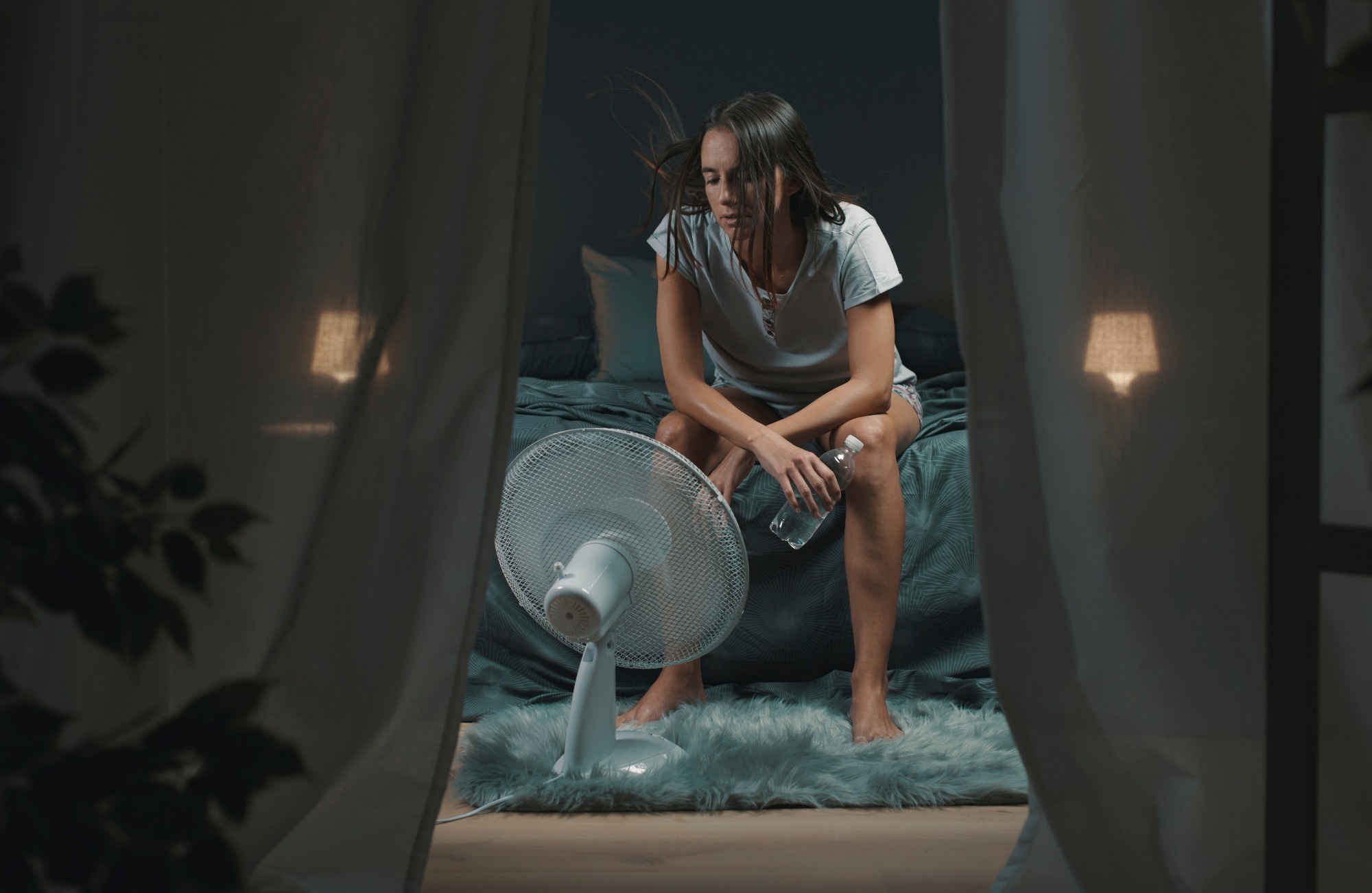 Study: Effect of nighttime bedroom temperature on heart rate variability in older adults: an observational study. Image credit: Stokkete/Shutterstock.com
In a recent study published in BMC Medicine, researchers investigated the effects of nighttime bedroom temperature on HRV in older adults, a key indicator of cardiovascular stress and overnight recovery.
Why warming nights may matter more than hot days
The effects of increases in ambient temperature driven by climate change on morbidity and mortality are well established. While the adverse effects of extreme daytime heat have been documented, little is known about the impact of high nighttime temperatures. Moreover, there are no guidelines for maintaining indoor nighttime temperatures despite WHO recommendations for maximum daytime indoor temperatures.
Tracking bedroom heat and heart function at home
In the present study, researchers evaluated the effects of nighttime temperatures on heart rate and HRV in older adults. Individuals aged 65 years or older were recruited from Queensland, Australia, in September and October 2024. Participants wore physiological monitoring devices on their non-dominant wrist throughout the observational period, which spanned the Australian summer (December 1, 2024, March 17, 2025).
Heart rate was continuously monitored using photoplethysmography (PPG). HRV was estimated from temporal intervals obtained from the PPG signal. A proprietary embedded algorithm computed HRV metrics only during periods when the participants were asleep. HRV data of interest included the frequency domain indices (low-frequency [LF] and high-frequency [HF] bands, and the LF:HF ratio) and the root mean square of successive differences between normal heartbeats (RMSSD).
Environmental monitoring sensors were used to collect data on relative humidity and temperature from participants’ bedrooms and living areas. The primary study outcome was the natural log-transformed RMSSD (lnRMSSD) derived during sleep periods between 9 PM and 7 AM. Secondary outcomes were sleep-derived lnHF, lnLF, and the ln(LF:HF) ratio. Nighttime temperature data were classified into four categories: less than 24 °C, 24, 26 °C, 26, 28 °C, and 28, 32 °C. Temperatures exceeding 32 °C were excluded from analysis due to insufficient exposure time.
Generalized mixed-effects models were used to evaluate the associations between outcomes and temperature categories. Clinically relevant thresholds were defined as a 1.5 standard deviation (SD) decrease in lnRMSSD or a five beats per minute difference in heart rate from normative values. Finally, the team performed secondary analyses restricted to participants not taking medications linked to impaired thermoregulatory pathways and heat sensitivity.
Warmer bedrooms linked to impaired overnight autonomic recovery
In total, the study recruited 47 individuals aged 68 to 77 years. Most participants were female (68 percent) and used prescription medications (70 percent). The median nighttime bedroom temperature was 25.9 °C (interquartile range, 24.6, 26.9 °C) throughout the observation period. The researchers found that reduced lnRMSSD and increased ln(LF:HF) ratio were associated with higher nighttime bedroom temperatures.
The odds of experiencing lnRMSSD reductions were higher when nighttime bedroom temperatures were 24, 26 °C, 26, 28 °C, or 28, 32 °C compared to temperatures below 24 °C. Furthermore, the odds of increases in the ln(LF:HF) ratio and heart rate, as well as reductions in lnLF and lnHF, were higher when nighttime temperatures exceeded 24 °C. These findings were not influenced by medication use.
Nighttime temperature emerges as a cardiovascular health factor
The findings revealed that nighttime bedroom temperatures above 24 °C increased the odds of clinically relevant changes in HRV and heart rate in older adults, especially when temperatures exceeded 26 °C. These changes suggest a shift toward greater physiological stress and altered autonomic balance, characterized by impaired parasympathetic activity and disrupted nocturnal autonomic recovery. Although the interpretation of the LF:HF ratio as a marker of sympathetic dominance remains debated, it should be considered alongside other HRV measures. The results highlight the significance of considering nighttime indoor temperature guidance, with 24 °C or lower emerging as a plausible threshold based on observed physiological responses.
The study’s limitations include a small sample size and the use of proprietary wearables. The cohort was a homogenous population from a subtropical region that was likely acclimated to heat. As such, it remains unclear whether similar results are possible for non-acclimated individuals or those living in arid, hot-dry climates. The study also did not determine participant use of interventions that may increase evaporative heat loss and autonomic responses without altering temperature.
Overall, the findings provide novel physiological evidence linking higher nocturnal temperatures to autonomic disruption, thereby reinforcing the associations between hot nights and adverse health effects. Future studies should investigate interventions that alleviate nighttime heat exposure and assess whether improvements in thermal environments translate to lower cardiovascular strain and better health outcomes.
Download your PDF copy now!
 Strength training shows no added arrhythmia risk in people with arrhythmogenic cardiomyopathy