A landmark Lancet analysis of more than 150,000 trial participants challenges decades of statin side-effect warnings and calls for updated drug labels grounded in randomized evidence.
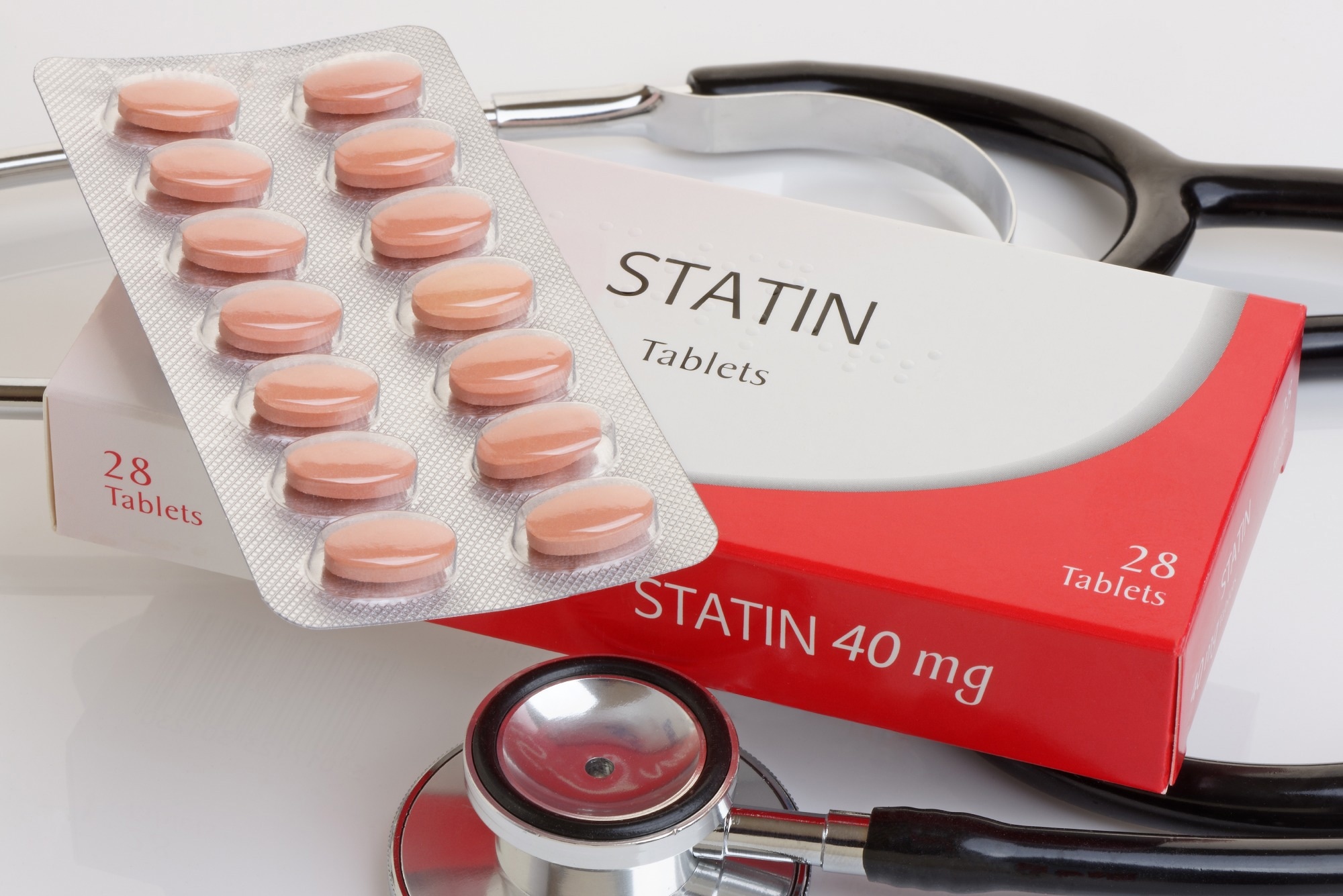 Study: Assessment of adverse effects attributed to statin therapy in product labels: a meta-analysis of double-blind randomised controlled trials. Image credit: roger ashford/Shutterstock.com
The Cholesterol Treatment Trialists' (CTT) Collaboration has recently conducted a meta-analysis of individual participant-level data from randomized clinical trials to evaluate the clinical reliability of potential treatment-related health adversities listed in statin product labels. The findings are published in The Lancet.
Statin labels list many unproven health risks
Statins are a class of medications that prevent heart attack and stroke by lowering low-density lipoprotein (LDL) cholesterol levels and reducing cholesterol buildup in blood vessels. Several large-scale randomized controlled clinical trials have highlighted the efficacy of statin therapy in reducing the risk of major cardiovascular events.
The main documented side-effect of statin therapy is myopathy, characterized by muscle injury and weakness, which occurs in approximately one case per 10,000 person-years. Rhabdomyolysis, a rare severe muscle injury caused by rapid skeletal muscle breakdown, has also been identified as a rare adverse effect of statin therapy, occurring in approximately 2–3 cases per 100,000 person-years. In individuals with glycaemic markers close to the diagnostic threshold, statin therapy has been found to increase the risk of developing type 2 diabetes.
In contrast to randomized clinical trials, non-randomized observational studies have linked statin therapy with a range of health adversities, including hepatic dysfunction, depression, cognitive decline, sleep disturbance, acute kidney injury, and pancreatitis. However, these findings may be subject to bias, as the observational study design does not allow for assessing the causality of therapy-related associations.
Statin products mention details of treatment-related adverse effects on their labels, which are mainly based on findings from non-randomised or non-blinded sources of evidence. Such potentially unreliable information can influence both patients’ and physicians’ ability to make accurate decisions, which in turn may contribute to suboptimal treatment decisions.
In the current study, researchers meta-analyzed individual participant-level data from the Cholesterol Treatment Trialists' (CTT) Collaboration to evaluate whether potential health adversities listed in statin product labels are causally associated with statin therapy.
The Cholesterol Treatment Trialists’ (CTT) Collaboration conducts individual participant data meta-analyses of large-scale (1000 or more participants), long-term (two or more years), randomized controlled trials.
Only four labelled adverse effects confirmed in trials
The research team meta-analyzed participant data from 19 randomized, double-blind trials with 123,940 participants and a median follow-up period of 4.5 years. A total of 66 adverse treatment outcomes listed in statin product labels were included in the reliability assessment.
Among 66 product-listed health adversities related to statin therapy, only four were reported by randomized, double-blinded trials, in addition to well-established muscle outcomes and type 2 diabetes. These adverse events included abnormal liver transaminases, other liver function test abnormalities, alterations in urinary composition, and edema.
The comparative analysis of different therapy intensities revealed that the risks of abnormal liver transaminases and other liver function test abnormalities are associated with high-intensity statin therapy, with the strongest signal observed for atorvastatin 80 mg. However, no such dose-dependent association was observed for alterations in urinary composition or edema.
Benefits of statins outweigh small, well-defined risks
This meta-analysis of participant data from randomized trials revealed that the majority of health adversities listed in product labels (cognitive impairment, depression, sleep disturbance, peripheral neuropathy, and many more) are not causally associated with statin therapy.
These findings indicate that most side-effect information listed in statin product labels is not supported by causal evidence from randomized trials, and that such labelling and other official sources of health information may require revision so that patients and their physicians can make appropriately informed decisions regarding statin therapy. Importantly, the absence of evidence for most outcomes does not prove that very rare adverse effects cannot occur, but indicates a lack of reliable causal support from blinded randomized data.
The study finds a dose-response effect for liver enzyme and liver function test abnormalities. However, no significant impact of high-intensity statin therapy on severe liver outcomes (cholestasis and jaundice, hepatic failure or damage, or hepatitis) has been observed.
Regarding urinary composition alteration and edema, the study identified small excess risks in statin-treated participants compared with placebo, reflecting laboratory changes in urine test measures, but could not detect a dose-response effect, suggesting uncertain clinical relevance of these treatment-related adverse events.
Although the meta-analysis included randomized data from more than 150,000 participants across 23 statin trials, the statistical power to detect very rare adverse events remains limited. Furthermore, the meta-analysis lacks some adverse event data from randomized trials due to privacy concerns among some companies providing the data. However, this missing data accounted for less than 1% of all participants and is unlikely to have any significant modulating effect on the findings.
Overall, the findings confirm that statin therapy increases hepatic transaminase levels and other liver function test abnormalities in a dose-dependent manner, although the absolute excess risks and clinical consequences appear low.
The findings reinforce previous conclusions that the cardiovascular benefits of statin therapy outweigh its known side effects. Regulatory authorities should consider revising and updating statin product labels and other official sources of health information to facilitate accurate risk–benefit analyses of statin therapy.
Download your PDF copy now!
 You don't need 10,000 steps a day to benefit your heart, cardiologists say