A single structured seminar dramatically improved students’ ability to recognize dermatologic conditions in darker skin tones, offering evidence that targeted education can help close diagnostic gaps in diverse patient populations.
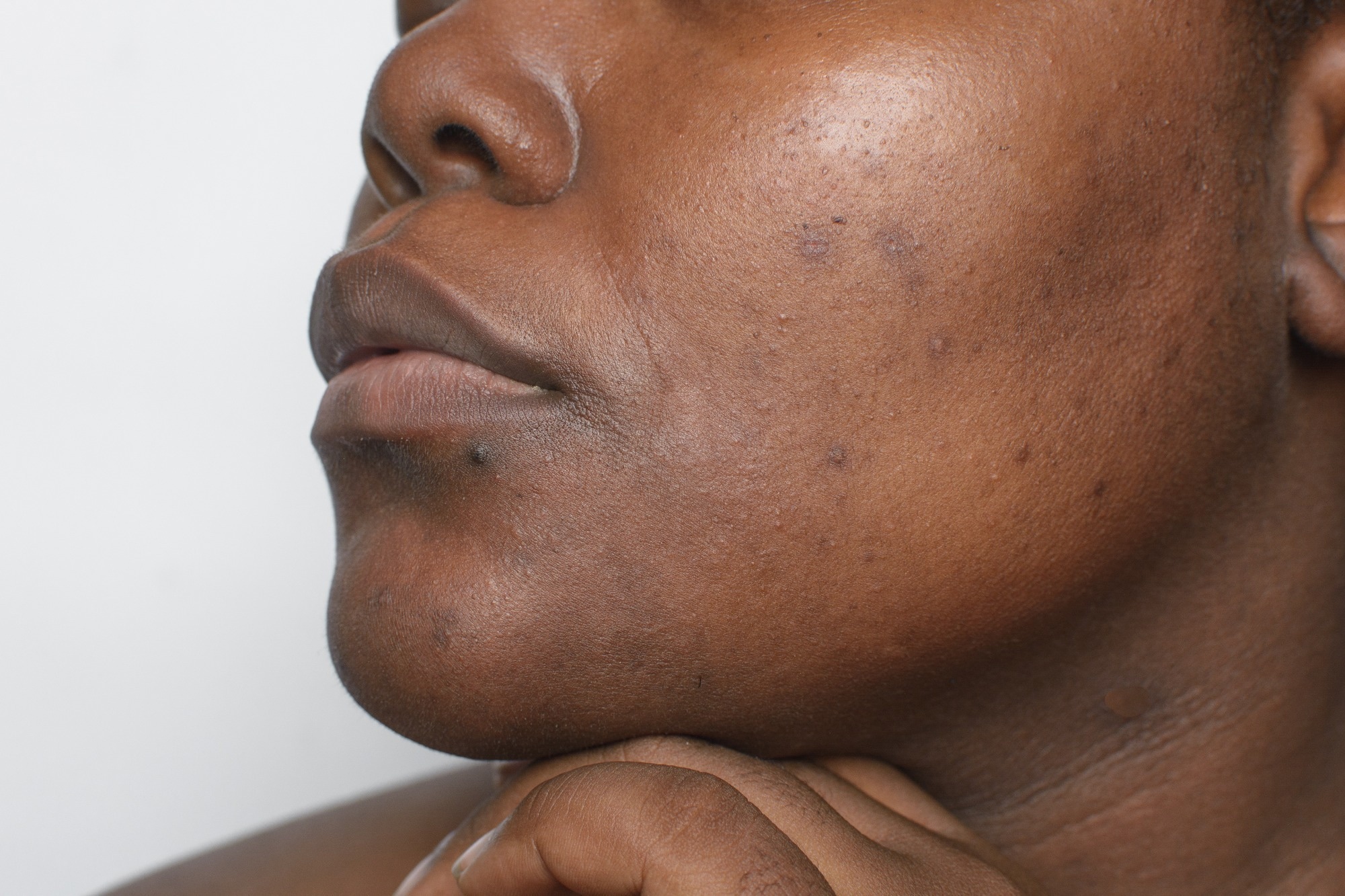 Study: Testing undergraduate medical students’ ability to correctly identify skin conditions in skin of color - A pre-post-study at a medical school in Germany. Image credit: this_baker/Shutterstock.com
Dermatology training often neglects the differences in how lesions appear across skin types, including patients with skin of color (SoC). This contributes to health disparities. A recent study published in PLOS One examined the impact of a mandatory training seminar on undergraduate medical students' ability to identify skin conditions in SoC.
Underrepresentation of darker skin in training
SoC is also defined as Fitzpatrick phenotypes IV–VI, covering a range of highly pigmented skin. Skin conditions affecting SoC are often poorly represented in medical training. Since dermatologic diagnosis is largely a visual-based science, this hinders proper healthcare in people with SoC and may contribute to delayed or incorrect diagnoses.
Previous research has demonstrated that skin conditions affecting SoC are more likely to be misdiagnosed than those affecting light skin. Melasma and keloids are skin conditions that occur more often in SoC, but melanoma occurs more commonly in lighter skin types, indicating the variability in skin disease prevalence with skin color. Also, melanoma in SoC tends to be diagnosed at more advanced stages.
Medical students complain that they are not trained adequately to diagnose skin conditions in SoC. This requires research to identify the most effective pathways to improving medical education in this area, especially given that, in today’s globalized society, every country has a sizable proportion of people from diverse ethnic backgrounds.
The authors of this study incorporated a seminar on skin type diversity into the medical curriculum at the University Medical Center Hamburg-Eppendorf, Germany, in 2023. Students initially reported feeling more competent in managing skin disease following the seminar, and most said they wanted to learn more about SoC in similar courses.
The current study examined whether the seminar effectively enhanced students’ ability to correctly identify skin conditions in SoC through objective pre- and post-seminar testing.
Image-based assessment of eight skin of color conditions
The researchers recruited fourth-year medical students at the University of Hamburg, Germany. The analysis included 142 students who completed both the pre- and post-seminar assessments, most of whom were female. The seminar was conducted in groups of approximately 20 students and introduced eight common skin conditions in SoC, including inflammatory, infectious, autoimmune, and neoplastic conditions. Specifically, the conditions assessed were tinea, melasma, atopic dermatitis, varicella, keloids, vitiligo, psoriasis, and acral lentiginous melanoma.
The seminar was an interactive 90-minute session that included a 45-minute component focused specifically on skin type diversity. It combined short lectures, case-based learning, and group discussions. Students were introduced to the Fitzpatrick skin type classification system and were taught about anatomical and physiological differences between lighter skin and SoC, as well as diagnostic challenges specific to darker skin types. Standardized clinical images were used to familiarize students with common dermatologic conditions in SoC, and the seminar also addressed psychosocial considerations and broader issues of health equity in dermatological care.
The teaching format was based on adult learning principles and emphasized the importance of diagnostic competence for future practice. Students discussed possible diagnoses, drawing on prior clinical exposure, reviewed real-world patient images, and examined a case report illustrating misdiagnosis in SoC to reinforce applied learning and motivation.
Undergraduate students are required to attend at least 85 % of mandatory courses, meaning attendance at the seminar, while compulsory, was not necessarily universal. In addition to this seminar, the dermatology module included 13 45-minute lectures, an interactive 90-minute seminar on infectious diseases, and two 90-minute bedside teaching sessions. At the time the SoC seminar was delivered, at least 75 % of the dermatology curriculum had already been completed; however, none of the earlier material had focused specifically on dermatology in SoC.
Students completed a multiple-choice test using standardized clinical images at the beginning and end of the seminar. The post-seminar test was administered immediately after the session, allowing assessment of short-term learning effects. Different images of the same eight skin conditions were used in the pre- and post-tests, and none of the test images were shown during the teaching session. In addition to objective testing, students rated their interest in dermatology and self-assessed their diagnostic ability and knowledge of skin type differences using a Likert scale.
Diagnostic accuracy jumps from 55 % to 92 %
At baseline, only 27 % of students could identify melasma, and 40 % could identify keloids. Overall, 55 % of the images were correctly identified before the seminar. About 23 % of students reported a high interest in dermatology, and within this subgroup, 68 % of images were correctly diagnosed at baseline.
After the seminar, students correctly identified over 92 % of the eight skin conditions from the displayed images. The largest improvements were seen in melasma (66 %), keloids (51 %), and tinea (48 %). Self-assessed ability to diagnose skin conditions in SoC increased from a mean score of 2 to 3.6 on the six-point Likert scale. Students also reported significantly greater knowledge of the Fitzpatrick classification system and of anatomical and physiological differences between lighter and darker skin types.
Limitations of the study
The study's conclusions are strengthened by using objective, image-based testing rather than relying solely on self-assessment. However, the quasi-experimental pre–post design lacked a control group, so causal conclusions cannot be definitively drawn. Because the post-test was administered immediately after the seminar, the findings reflect short-term knowledge gains and do not provide evidence of long-term retention or real-world diagnostic performance.
In addition, students’ prior dermatological experience, baseline knowledge, and varying levels of interest in dermatology may have influenced outcomes. The use of multiple-choice questions does not fully replicate real-life clinical encounters, and the study was conducted at a single university hospital in Germany, limiting generalizability to other educational or cultural settings.
Curriculum reform may reduce inequities
After the seminar, students were better able to accurately identify eight skin conditions in SoC. This helps address one educational factor contributing to inequitable dermatologic healthcare and may help mitigate disparities in diagnostic accuracy, particularly for serious conditions such as acral lentiginous melanoma.
The use of mandatory targeted seminars could help increase future physicians' overall competence in recognizing lesions in SoC, regardless of their personal interest in dermatology. However, these findings require confirmation in larger and more diverse cohorts, with longitudinal follow-up to determine whether improvements in short-term diagnostic performance translate into sustained clinical competence and measurable reductions in health disparities.
Download your PDF copy by clicking here.
 More major insurance companies covering Kerecis intact fish-skin grafts as new studies show big benefits for burns and diabetic foot ulcers