A new educational game simulates real breastfeeding complications, helping nurses learn how to spot and manage fungal nipple infections that can cause pain and early weaning.
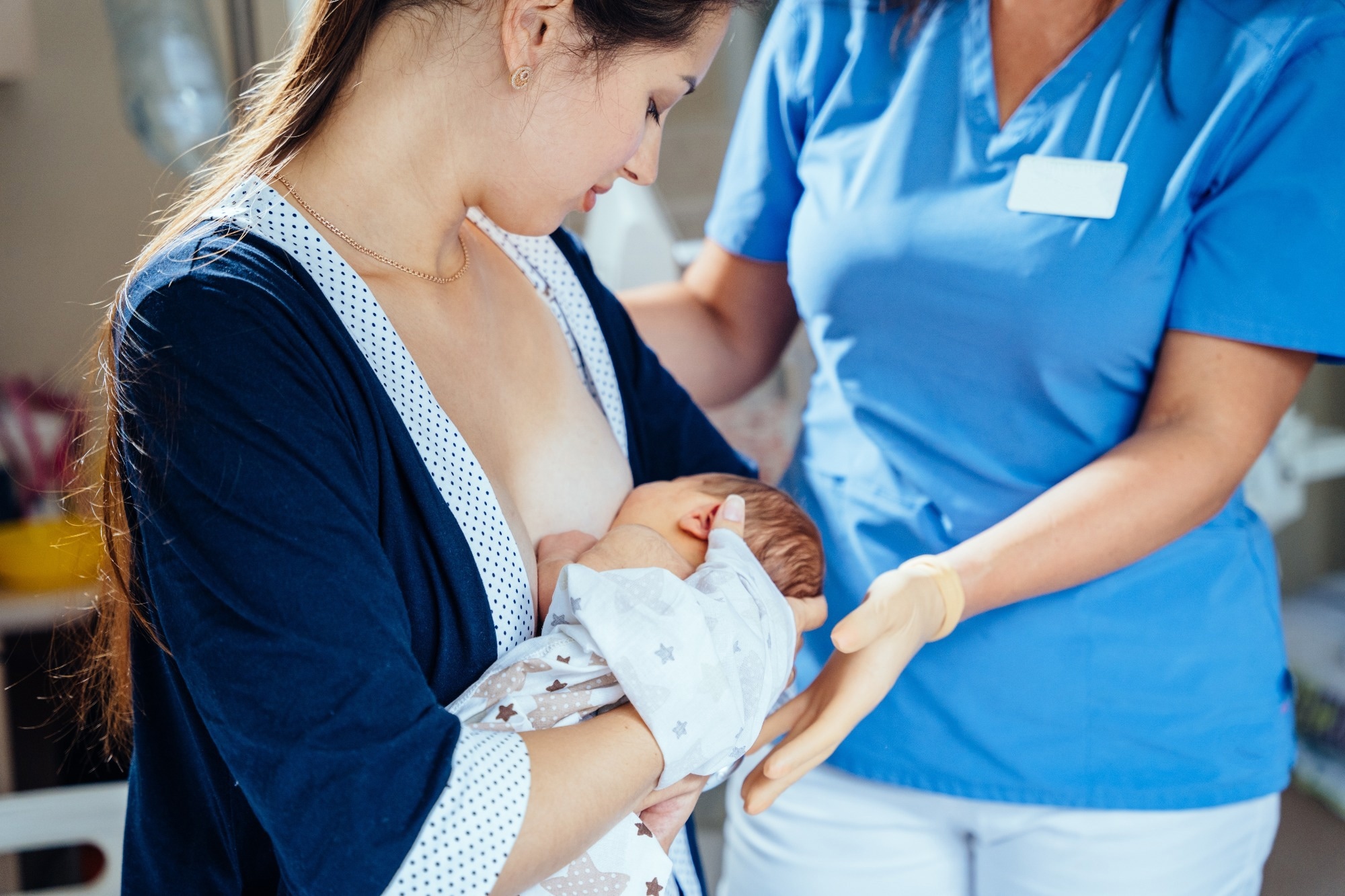 Study: Serious game prototype for nurses on nipple-areolar lesions resulting from fungal infections in breastfeeding. Image credit: Iryna Inshyna/Shutterstock.com
Pain during lactation forces many mothers to discontinue it prematurely, despite its multiple benefits. For instance, fungal infections often cause injury to the nipple and areola, impacting maternal and infant health and well-being. A recent study in the journal PLoS One reports on a prototype “serious game” (an educational simulation) developed to train health workers to identify these conditions.
Painful fungal nipple infections can disrupt breastfeeding
The nipple-areolar region is key to breastfeeding, and the act of suckling puts great tension on these tissues. Fungal infection of this area can lead to lesions and symptoms that make breastfeeding painful.
Such infections are typically caused by the fungus Candida albicans and present with redness, peeling skin, discoloration of the region, itching, pain, or burning sensations. However, clinical signs may be subtle or even absent, complicating diagnosis. At this stage, infection needs to be identified by nurses, who often play a central role in detecting, managing, and monitoring breastfeeding complications in the new mother. Such monitoring helps support health education efforts and awareness about breastfeeding-related conditions.
The researchers aimed to develop training software as a permanent, practical tool for ongoing nurse training at primary healthcare centers. Well-designed educational games encourage learning by increasing motivation and engagement.
Researchers build AleitaGame using clinical breastfeeding cases
This educational software was designed as a serious game, called “AleitaGame”. It was research-based, using clinical cases, appropriate media resources, and valid game-scenario content, and integrated into an expert-approved game. The game development process followed the standard educational software methodological framework, from design through development to completion and feasibility studies.
The researchers first established the learning objectives, which guided the choice of software and computational requirements. The game was designed for use in Basic Health Units (nursing offices). It presents a clinical case scenario, beginning with the history of a nipple-areolar lesion and the accompanying clinical features.
In the second stage, they developed a prototype based on 40 selected documents that described fungal lesions and related injuries. This provided the required content and media resources. The selected software enabled them to achieve their learning goals through gamification strategies. The user interface was designed to be attractive and user-friendly.
Experts evaluate engagement, usability, and educational value
The first version was evaluated by a panel of judges selected for their competence and experience in the field. All were nurses, certified lactation consultants, or had five or more years of experience working directly with lactating women.
The second set of judges were graduates working in technology and education, with an average of 4 years of experience in the field. The game was evaluated for appropriate content, user satisfaction, engagement, and functionality. The judges' suggestions were incorporated into the final version of the prototype.
A separate evaluation study referenced by the researchers, involving 43 participants from a range of professions, demonstrated that it effectively increased knowledge of breast candidiasis. The mean score increased by 0.6 points after the game compared to baseline, and 86 % of the players rated it an excellent game.
Digital scenario prepares nurses for breastfeeding complications
While the game generally scored high for content and presentation, usability scores were somewhat lower. The two groups of judges provided scores diverging by over 1.5 points in some areas. The authors attribute this to the second panel having relatively less expertise and interest in this field. The results suggest that the game could help equip nurses who monitor breastfeeding mothers to recognize fungal infection of the nipple-areola region and associated injury; prevent such injuries; and treat such lesions.
The game also provides knowledge about possible sources of fungal infection in the nipple-areola area, including the infant’s mouth, the diaper area, and the mother’s reproductive tract. It encourages hand hygiene and the washing of frequently contaminated objects, such as toys and fabrics. Moreover, the study discourages the use of pacifiers or bottles.
Fungal infection of the nipple and areola is an impactful but often ignored condition. Such strategies could fill an important need by integrating health education into interactive game scenarios.
This approach can be used for continuing medical education, to facilitate medical student training, or to review existing knowledge. Notably, such games should be based on sound scientific evidence validated by professionals in the field of interest. They should be designed to reinforce learning through multiple attempts, thus improving patient safety.
Such games have been used earlier in multiple medical and paramedical settings. For instance, a game was used to increase knowledge and confidence among nursing students during the recent pandemic and, in a Northern Ireland setting, to familiarize them with the influenza vaccine and its public health relevance.
The preliminary results of this study, based on a small pilot sample, require validation through larger studies and real-world testing. The final version of the game, including this and other scenarios, can be accessed for free at https://aleitagame.github.io/.
Prototype serious game shows promise for nursing training
The researchers successfully developed and validated a prototype serious game to help professionals recognize nipple-areola lesions resulting from fungal infection. It holds promise as a training tool that could facilitate improved patient care for lactating women and their infants.
Download your PDF copy by clicking here.
Source:
Journal reference:
 Can maternal diet prevent infant food allergy? A large trial puts eggs and peanuts to the test