Consumer wearable sensors combined with AI modeling may enable continuous, real-world tracking of cognitive and emotional health, offering a scalable new approach to detecting subtle changes in brain health long before clinical symptoms emerge.
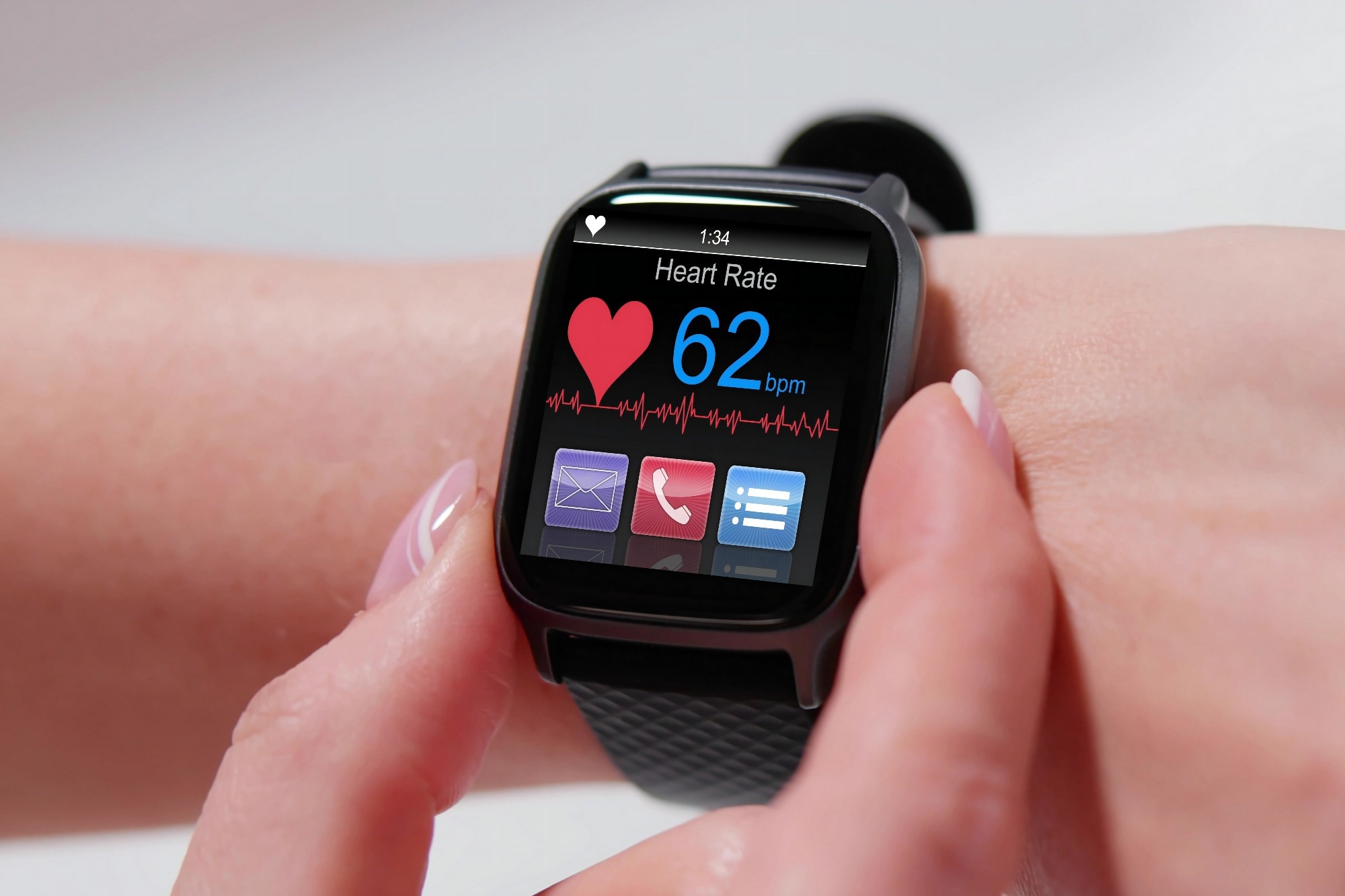 Study: Digital biomarkers for brain health: passive and continuous assessment from wearable sensors. Image credit: Andrey_Popov/Shutterstock.com
A recent study in the journal npj Digital Medicine examines the use of wearable mobile sensors, of commercial rather than laboratory grade, to passively assess cognitive and mental health under real-world conditions.
Currently, brain health is typically assessed through episodic clinical testing and questionnaires. This limits the ability to detect early changes in cognition and mood, because assessments are typically conducted only at isolated time points, though these are key to possible preventive interventions.
Wearable sensors capture daily patterns linked to brain health
Physiological fluctuations in cognition and affect are normal over time. However, clinical assessments of brain health are typically restricted to one or more specific time points. This may reduce sensitivity to subtle or early changes, hinders timely identification of potentially pathologic changes, and is unsuited to population-level monitoring.
The current study proposes an alternative using sensors. Mobile and wearable sensors can continuously collect passive behavioral and physiological data in the real-world environment. This could enable scalable, convenient monitoring of changes in brain function within individuals over time. Such differences are correlated with sleep, physical activity, and environmental factors, including air pollution.
Capturing such natural variability helps to establish baseline parameters and brain health trajectories in the population. This could help identify pathological deviations. For instance, sleep fragmentation is associated with impaired cognitive performance and dementia, as is heart rate and activity.
Such strategies are urgently needed in the face of growing rates of age-related cognitive decline and dementia. Early intervention may help delay or mitigate functional decline, preserving a higher quality of life. Earlier studies on digital biomarkers have focused on individual domains over the short term. The current study used passively and constantly collected longitudinal multimodal data, behavioral, environmental, and physiological, to predict brain health in healthy adults. The aim was to capture small everyday changes in these domains and convert them into digital proxies of brain health.
Combining smartwatch signals with cognitive assessments
The study was part of the Providemus alz project, a longitudinal study that combined remote sensing with active assessments. The aim was to test the feasibility of this model, which attempted to predict repeated measures of brain health from passively collected data on behavior, physiological functions, and environmental factors.
The researchers collected data for ten months from 82 cognitively healthy adults using continuously worn wearable sensors. In addition, active assessment was carried out at four time points. Both patient-reported and performance-related outcomes were evaluated.
AI-assisted modeling was applied to predict cognitive and affective outcomes across the study period using repeated assessments, rather than only end-of-study measures. The model's performance was evaluated by comparing its prediction error with that of a naive population-average predictor, using subject-dependent and wave-dependent cross-validation.
AI modelling and prediction results
Participants wore the sensors 96 % of the time. The use of multimodal data enabled differences in cognition and in mood to be captured at meaningful levels.
The model produced generally low prediction errors across the 21 outcomes assessed. However, compared with the naive population-average predictor, statistically significant improvement was observed for only three outcomes, while one outcome was better predicted by the naive model. For the remaining outcomes, differences were not statistically significant, indicating that larger datasets may be needed to detect small improvements in predictive performance.
Self-reported outcomes appeared more predictable than performance-based ones. Performance-based outcomes were more likely to change across the four evaluation time points, which may explain this difference. The authors also speculate that self-reported measures may be more sensitive to internal and external contextual cues.
Key insights into brain health signals
The highest predictive accuracy was observed with environmental and physiological factors. Across model analyses, the most important predictive metrics included weather, atmospheric pollution, and heart rate. For cognitive outcomes, the predictive metrics were sleep, heart rate, and pollution, with the addition of sleeping heart rate for affective outcomes.
The authors note that pollution is a more important predictive factor for cognitive differences between individuals than sleep heart rate is for affect. This suggests that autonomic reactivity during sleep may be a marker of stable differences in emotional regulation.
Possible mechanisms underlying these observations include the association of neuroinflammation and vascular disease with pollution, which may contribute to the link between pollution and cognitive impairment. Affective states also correlate with increased pollution, albeit less consistently. The researchers suggest that individual risk factors, exposure thresholds, and pollution context all play a role in affective outcomes, unlike the dose-response signal observed with cognition.
The specific correlation between sleep heart rate and affect is consistent with prior reports of impaired emotional regulation following disrupted autonomic regulation at night. In contrast, certain executive aspects of cognition are affected by such disturbances rather than overall cognitive performance.
Environmental exposures were better at predicting different outcomes across individuals. Conversely, behavioral and physiological parameters revealed intra-individual changes in outcome over time. Importantly, these are observational associations and do not establish causal relationships.
This study demonstrates “the feasibility of low-burden, scalable approaches to continuous brain-health monitoring.” Such strategies may eventually support primary care and telemedicine, if validated in larger and more diverse cohorts, as convenient tools to improve the utility of standard follow-up, potentially identify early cognitive and affective impairment for trial recruitment, and map baseline brain health in everyday life.
Advantages and limitations
The study demonstrates the feasibility of using inexpensive consumer-grade wearable sensors and mobile technologies as scalable tools for population-level brain health screening. However, several limitations should be considered. The participant cohort consisted largely of highly educated and digitally literate individuals, who may also have higher baseline cognitive function, which limits the generalizability of the findings to broader populations. In addition, around 25 % of participants completed the active assessments in a non-native language, which may have affected the accuracy of their responses.
Self-reported measures may also have been influenced by social desirability bias. Furthermore, the models relied on daily data summaries rather than finer-grained hourly or minute-level measurements. While this approach improved model interpretability, it likely reduced predictive performance. The relatively small sample size further constrains the robustness and generalizability of the predictive models. Long-term validation of these approaches is still needed, and important concerns around data privacy and potential breaches must also be addressed before such systems can be widely implemented
Everyday wearable data could enable scalable brain health monitoring
This study of cognitively healthy subjects developed quantitative models of variability in everyday cognition and affect at the population level using ordinary consumer-grade technologies.
These findings highlight the potential of everyday technologies for population-level tracking of brain-health and deviations from expected trajectories.
The approach used here represents a shift from diagnosing established disease to exploring the possibility of earlier detection and monitoring of changes in cognitive and affective health. Yet, future studies should include larger, more diverse samples to ensure findings are more generalizable and clinically meaningful.
Download your PDF copy by clicking here.
Journal reference:
-
Matias, I., Haas, M., Daza, E. J., et al. (2026). Digital biomarkers for brain health: passive and continuous assessment from wearable sensors. npj Digital Medicine. DOI: https://doi.org/10.1038/s41746-026-02340-y. https://www.nature.com/articles/s41746-026-02340-y
 Cognitive reappraisal strategy alters sensory brain activity in autistic children