A novel framework reveals why nightmares persist in children, and how building confidence and coping skills could help them take back control of their sleep.
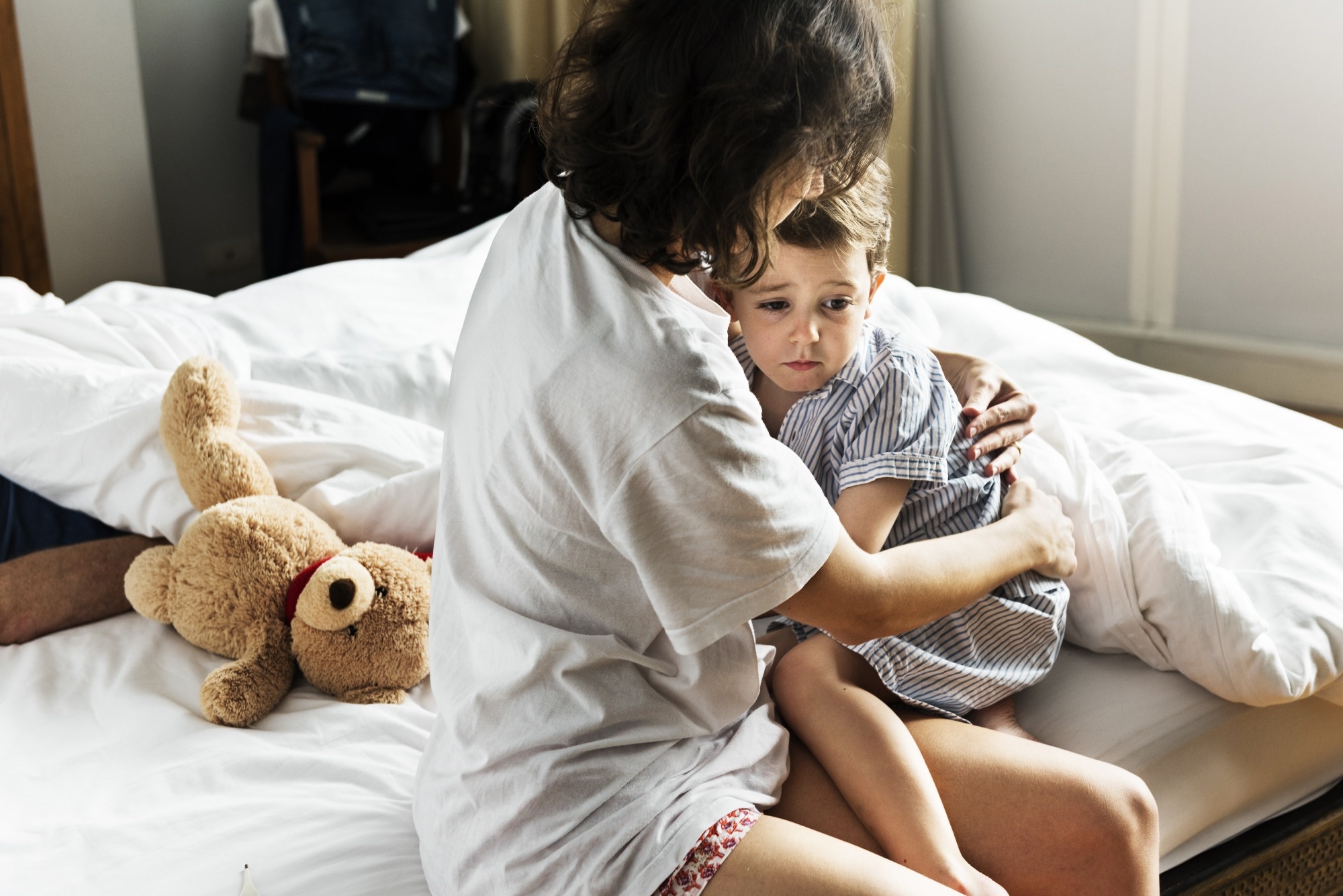 Study: DARC-NESS: a mastery-based cognitive-behavioral model for treating chronic nightmares in youth. Image credit: Rawpixel.com/Shutterstock.com
Nightmare disorder, characterized by the presence of chronic nightmares, can disrupt healthy sleep in childhood and adolescence, hindering normal development. A recent paper in Frontiers in Sleep proposes a novel theory-driven, evidence-informed model for its treatment.
Nightmares break the sleep cycle, reduce total sleep time, and increase wakefulness before the next sleep cycle begins. When they become persistent, normal daytime functioning suffers, and the risk of mental health issues increases. Currently, both educational and cognitive behavioral therapy (CBT) interventions are used to improve sleep quality and duration, but their role in nightmare disorder remains poorly studied. Nightmares are effectively managed in adults, but childhood interventions remain less explored.
Nightmares versus other nighttime disorders
Chronic nightmares can take a significant toll on both mental and physical health, disrupting not only a child’s sleep but often that of family members as well. While they may sometimes signal an underlying mental health condition, nightmares are frequently treated as secondary symptoms of disorders such as posttraumatic stress disorder (PTSD). However, emerging evidence suggests that addressing nightmares directly can meaningfully reduce symptoms, even when they occur alongside other conditions.
Importantly, nightmares are distinct from other nighttime disturbances, including sleep terrors, nighttime anxiety, nocturnal panic attacks, and sleep-related breathing disorders. Accurately distinguishing between these conditions is critical, as they differ in underlying mechanisms and therefore require different treatment approaches.
Nightmares are traditionally categorized as either posttraumatic or idiopathic. Yet in children, this distinction may be less clear-cut. Growing evidence suggests that trauma exposure and difficulties in extinguishing fear may interact along a continuum, shaping the severity of nightmares, as well as related symptoms such as depression and PTSD.
Hypotheses about nightmare cycles
Earlier theories suggest that nightmares are maintained by learned behavioral and cognitive responses to poor sleep, whether caused by insomnia or posttraumatic nightmares (PTN). One influential model, the “3P model”, identifies predisposing, precipitating, and perpetuating factors that interact to maintain sleep disorders.
Others propose that nightmares operate through interacting feedback processes where nightmare-associated anxiety and hyperarousal increase susceptibility to nightmares. The authors suggest that interventions may be more effective if they target the central component in such interacting processes.
Notably, some researchers theorize that normal adaptive dreaming helps the brain extinguish feared memories by reactivating them in a threat-free environment. In contrast, with affect overload, a state in which the child’s emotional distress exceeds the ability to regulate emotions, this process may break down. Poor fear extinction leads to repeated distressing dreams that reactivate fear responses, making the child more likely to experience nightmares.
The DARC-NESS model
The new model, called DARC-NESS, suggests that all nightmares, irrespective of origin (posttraumatic or idiopathic), persist through a common set of interacting components that perpetuate nightmares. These include:
- Dream (nightmare) content
- Appraisals (how the child interprets the experience)
- Resources for regulation: coping with and regulating emotions
- Conditioned arousal: learned physiological activation in response to nightmares
- Nightmare efficacy: the child’s perceived sense of control over nightmares
- Sleep hygiene and patterns
- Sleep quality and quantity
Each of these can help maintain the cycle, but none are universal. For instance, disturbing nightmare content sometimes reminds the child of a feared memory, causing intense emotional disturbance, fear responses, and often awakening. This may contribute to reactivated fear networks over successive nights. Importantly, the model is non-linear, meaning children may enter or move through these processes in different ways.
How the model works
Nightmare treatments mainly operate through several mechanisms, the most prominent being improving nightmare mastery. This is a central feature of the DARC-NESS model, with nightmare efficacy positioned as the core mechanism driving change. It aims to help affected children understand how nightmare cycles are maintained and help them change the pattern.
The model is designed to be a flexible toolkit, enabling a modular, personalized approach that fits each child’s needs. Tools can be introduced in any sequence or combination, depending on the situation and response. These tools aim to help children to:
- Discuss their nightmares
- Externalize nightmare content through drawing or writing, helping children “move the nightmare out of their mind and onto paper”
- Develop cognitive and emotional regulation skills: reassure them about the normalcy of nightmares, help them move beyond fear to mastery through these skills
- Encourage experimentation with self-regulation tools without being discouraged by initial failures
- Improve their sleep patterns: often an early entry point
- Track nightmare patterns using sleep and nightmare diaries, thus monitoring change and reinforcing self-efficacy
Throughout treatment, youth develop a growing sense of agency, the belief that their actions can influence their sleep and nightmares.
The model encourages a collaborative approach, as children and their healthcare providers work together to identify the most relevant components for intervention.
The authors included a detailed case study to illustrate the clinical application of this model. They also report promising reductions in nightmares and improvements in mental health in early studies, and emphasize the necessity for voluntary participation to ensure the highest odds of success.
This modular approach could enable more personalized and efficient treatment of nightmare disorder in children.
Download your PDF copy by clicking here.
 Stalled gut microbiome development triples risk for type 1 diabetes in children