A new study suggests that shifts in the gut microbiome may occur before Parkinson’s disease is clinically diagnosed, raising the possibility of earlier detection in genetically at-risk individuals and even in seemingly healthy individuals.
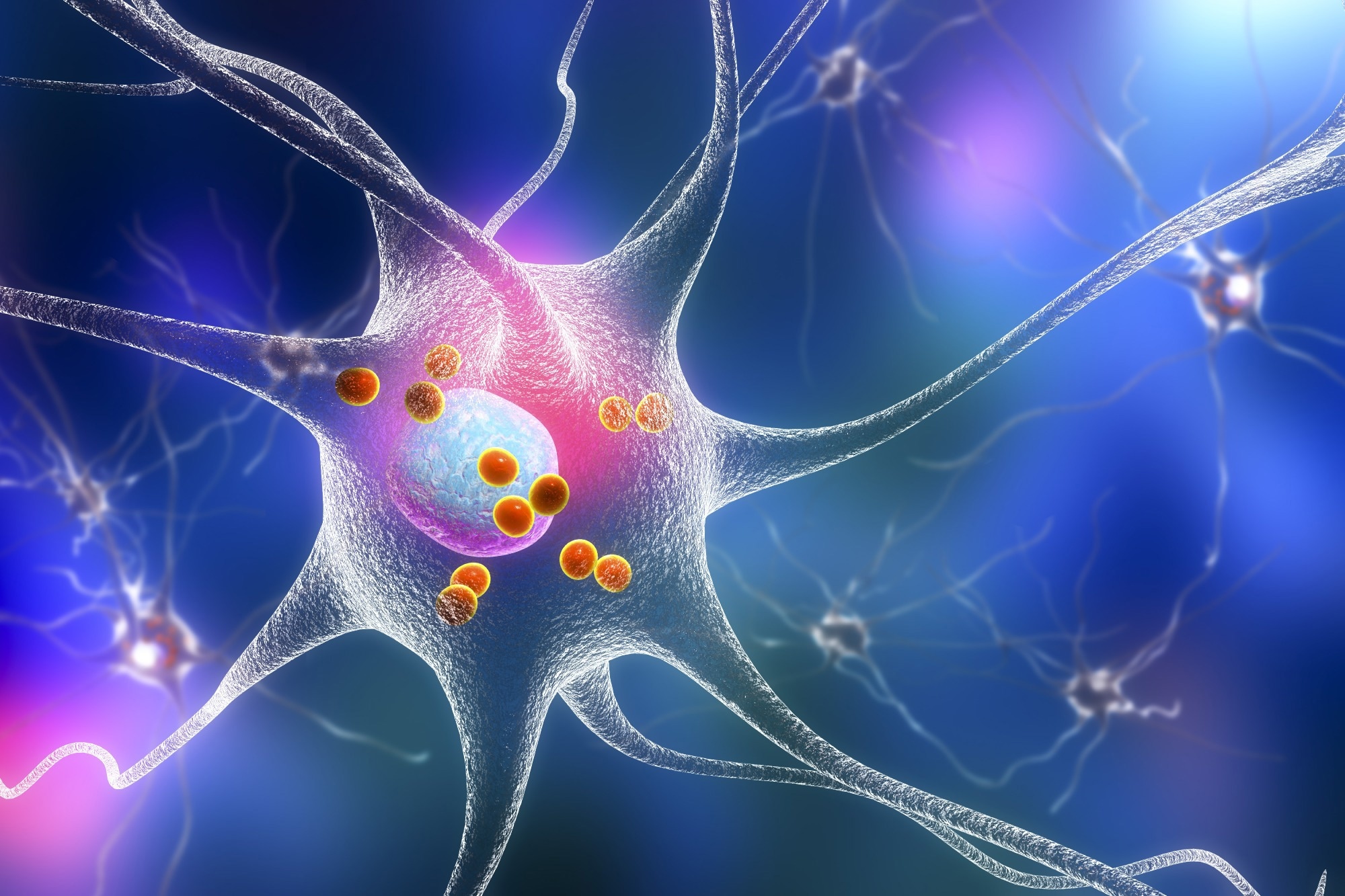
Study: Microbiome signature of Parkinson’s disease in healthy and genetically at-risk individuals. Image Credit: Kateryna Kon / Shutterstock
In a recent study published in the journal Nature Medicine, researchers investigated whether gut microbiome data could be used to identify individuals who may be closer to Parkinson’s disease (PD) onset or progression, rather than directly predict future PD risk.
The study used fecal metagenomics data from a cohort of 464 individuals, including diagnosed PD patients (n = 271), non-manifesting GBA1 variant carriers (GBA-NMC; n = 43), and healthy controls (HC; n = 150) to identify PD-specific microbiome alterations that may reflect a premanifest or prodromal PD state.
Study findings revealed that a large component of the gut microbiome, representing slightly over 25% of microbiome abundance, in at-risk individuals (GBA-NMC cohort) exists in an intermediate state between health and disease. This microbial signature was also observed alongside similar PD-related microbiome alterations across three independent international cohorts, supporting the reproducibility of the PD-associated microbiome pattern across populations.
These findings suggest that the gut microbiome may serve as an early marker of disease proximity in some individuals, but they do not yet establish a clinically validated predictor of future PD.
Parkinson’s Disease Background and GBA1 Risk
Parkinson’s disease (PD) is the world’s fastest-growing progressive neurodegenerative disorder, with recent (2021) records reporting global prevalence of more than 11.77 million individuals, more than double its prevalence just 25 years prior.
PD is characterized by the loss of dopaminergic neurons in the substantia nigra and the aggregation of α-synuclein (α-syn; “Lewy bodies”) within the brainstem and cortical regions, resulting in movement disorders (e.g., tremors and bradykinesia).
Unfortunately, the etiology of PD remains unknown, and disease-modifying therapies remain limited. Furthermore, by the time motor symptoms facilitate clinical diagnosis, dopaminergic loss is often greater than 50%, highlighting the urgent need to identify modalities that can detect people at risk of, or potentially progressing toward, disease during the premanifest phase.
Previous research has established that variants in the GBA1 gene are the most prevalent genetic risk factor, increasing PD risk by up to 30-fold. However, subsequent studies found that only about 20% of people with these GBA1 variants develop the disease.
Scientists have long suspected that the “microbiota-gut-brain” axis might explain this discrepancy and reveal biomarkers of disease proximity, but this hypothesis remains unverified.
Parkinson’s Microbiome Study Design
The present study conducted a multicenter investigation to identify PD-specific microbiome alterations that may help stratify proximity to disease development. The study included 464 participants classified into: 1. PD cohort (271 patients), 2. GBA-NMC cohort (43 individuals), and 3. Healthy controls (HC; 150 individuals).
The study data comprised participants' sociodemographic and medical histories, as well as their fecal samples for shotgun metagenomic assays. These next-generation (next-gen) sequencing technologies were used to generate high-resolution participant-specific microbiome profiles, focusing on clusters of co-abundant genes known as Metagenomic Species Pan-genomes (MSPs).
Primary statistical analysis focused on 627 MSPs present in at least 10% of the cohort. Specifically, Cliff’s delta (𝛿) was employed to assess the coherence of variation between groups, thereby elucidating the magnitude and direction of microbial shifts. Clinical severity was subsequently quantified using the Movement Disorder Society Unified Parkinson’s Disease Rating Scale (MDS-UPDRS).
Study findings were further examined using three independent publicly available cohorts from the United States (n = 725), Korea (n = 146), and Turkey (n = 86), and involved correlating Cliff’s delta values across geographically diverse populations to identify universal microbial signatures of PD.
Gut Microbiome Alterations in Prodromal PD
Statistical analyses identified 176 MSPs differentially abundant in patients with PD compared to HC (103 at q < 0.05). Notably, genetic status (GBA1 carrier vs. non-carrier) was observed to elicit a negligible impact on the microbiome of patients with overt PD (adonis P = 0.46), suggesting that the disease state itself is the primary driver of dysbiosis.
Shotgun metagenomics revealed that PD was associated with taxonomic shifts (Actinobacteriota and Bifidobacteriaceae enrichment) in participants’ gut microbiome composition compared with their HC counterparts. Streptococcus mutans and Bifidobacterium longum populations were significantly upregulated, while butyrate producers like Roseburia intestinalis and Faecalibacterium were significantly depleted.
Analysis of GBA-NMC individuals revealed 142 species that were coherently altered by the PD signature (χ² test, P = 3.9 × 10⁻¹⁶). The average effect sizes for these "coherent species" were lower in the GBA-NMC group than in the PD group, confirming an intermediate state. Notably, variations in 94% of PD-altered species correlated with at least one PD-associated clinical variable.
Finally, the microbiome of confirmed PD patients showed enrichment for modules involved in dopamine and nucleic acid degradation. The authors noted that some dopamine-related functional changes could partly reflect levodopa treatment, whereas the broader microbiome pattern appeared to track more closely with disease duration than with medication exposure. These findings were subsequently synthesized into the "Parkinson’s Disease Microbiome Score-16" (PDMS-16).
In healthy controls, those with high PDMS-16 scores (3–7) exhibited more severe prodromal clinical profiles, including autonomic dysfunction and depression, as well as other PD-like clinical features such as constipation, anxiety, poorer diet quality, and more frequent appendectomy history (P < 0.05).
Microbiome Screening Implications for Parkinson’s Disease
The present study is the first to identify a "prodromal-PD microbiome" that reflects disease proximity in both genetically predisposed and healthy individuals. The findings suggest that microbial dysbiosis evolves consistently from the premanifest stage into overt PD, independent of medication.
While the study is limited by its cross-sectional design and cannot establish which individuals will later develop PD without longitudinal follow-up, these findings suggest that integrating microbiome analysis into existing screening protocols could one day help refine early detection of neurodegeneration and future PD diagnosis.
Journal reference:
- Menozzi, E., Ren, Y., Geiger, M., Macnaughtan, J., Avenali, M., Toffoli, M., Gilles, M., Calabrese, R., Mitrotti, P., Gallo, L., Famechon, A., Del Pozo, S. L., Mezabrovschi, R., Koletsi, S., Loefflad, N., Yalkic, S., Limbachiya, N., Clasen, F., Yildirim, S., . . . Schapira, A. H. (2026). Microbiome signature of Parkinson’s disease in healthy and genetically at-risk individuals. Nature Medicine, 1-11. DOI: 10.1038/s41591-026-04318-5, https://www.nature.com/articles/s41591-026-04318-5
 A personalized elimination diet changed the gut microbiome in people with migraine